Quick Navigation
Let's get one thing straight right off the bat. When you hear "black widow," your brain probably does a quick shuffle. Are we talking about the superhero? Or the spider that gives most people the heebie-jeebies? It's a weird bit of cultural naming, isn't it? One is a beloved, complex character who headlined a billion-dollar movie. The other is an arachnid whose very name warns you of danger. This guide is for anyone who's ever been curious about either one, or maybe both. We're going to dive deep into the world of Natasha Romanoff, the iconic Marvel spy, and then switch gears completely to talk about Latrodectus, the real-world spider. They share a name, but that's about it. Stick around, it's going to be an interesting ride.
Here's the core idea: This isn't just a fan page or a dry biology lesson. It's a practical resource. Whether you're a Marvel fan trying to settle a debate about Natasha's backstory, or a homeowner worried about finding a shiny black spider in your garage, I've tried to pack in what you actually need to know. I've even thrown in some stuff I wish I knew earlier.
Part 1: Natasha Romanoff - The Spy Who Rewrote the Rulebook
Natasha Romanoff, the Black Widow, broke the mold. In a world of super-soldiers and thunder gods, she held her own with sheer skill, intelligence, and a breathtaking amount of grit. Her journey from a shadowy Soviet operative to an Avenger is messy, painful, and incredibly human. It's what makes her resonate. She's not perfect, and her story doesn't have a neat, happy ending. That complexity is why we're still talking about her.
From the Red Room to the Avengers
You can't understand Natasha without the Red Room. It's the root of everything. This wasn't a fancy spy school; it was a brutal program that stole children, like Natasha, and turned them into living weapons. The comics and the MCU have different details, but the core tragedy is the same: her childhood was erased and replaced with training, manipulation, and violence. The Red Room's most infamous creation is the Black Widow program, which produced elite female assassins.
I think the MCU's depiction, especially in the Black Widow film, did a decent job showing the psychological horror of it. These "Widows" were chemically and psychologically subjugated, their free will stripped away. Natasha's entire arc is about clawing back her autonomy, piece by painful piece. Her defection to S.H.I.E.L.D. wasn't just a career change; it was an act of rebellion against the very system that created her.
Skills and Gear: No Superpowers, No Problem
What's in a Black Widow's toolkit? Everything but reliance on powers.
- Master Martial Artist: We're talking about a synthesis of dozens of combat styles—sambo, judo, boxing, karate, you name it. Her fights aren't about brute force; they're about efficiency, using an opponent's momentum against them. Watch her hallway fight in Iron Man 2—it's all disarms, pressure points, and takedowns.
- Espionage Genius: Fluent in multiple languages, a master of disguise, infiltration, and interrogation. She can become anyone, anywhere. This is often her most underrated skill set.
- Peak Human Conditioning: Thanks to the Red Room's treatments, she operates at the absolute limit of human potential: strength, agility, endurance, and healing are all enhanced.
- The Gauntlets: Her iconic bracelets. In the MCU, they deliver the "Widow's Bite"—a powerful electroshock blast. They also house tear gas pellets, grappling hooks, and all sorts of gadgets. In the comics, they've sometimes included "Widow's Line" for swinging.
Her gear is practical, minimalist, and deadly. It reflects her philosophy: be prepared, adapt, and use every advantage.
I have to admit, I was always more drawn to characters like her and Hawkeye in the Avengers. The ones without the flashy powers. There's something more relatable about someone who has to train every single day just to keep up, whose biggest weapon is their mind. It makes their victories feel earned in a different way.
Key Stories and Moments That Defined Her
If you want to get to know the character, these are the moments you can't miss.
The Budapest mission with Clint Barton (Hawkeye) is the cornerstone of her redemption. He was sent to kill her, saw the person beneath the assassin, and gave her a choice. She took it. That act of trust changed both their lives. It's referenced constantly for a reason—it's her origin story as a hero.
In Captain America: The Winter Soldier, she's not just a sidekick. She's the moral compass. While Steve Rogers is fighting a physical war against HYDRA, Natasha is fighting to expose the truth, even if it destroys her own carefully constructed cover. Releasing S.H.I.E.L.D.'s secrets to the world was a huge risk. It showed her commitment to transparency and freedom over easy security.
Then there's Vormir. Her sacrifice in Avengers: Endgame is the ultimate culmination of her arc. She started with "red in her ledger" and spent her life trying to wipe it out. On Vormir, she traded her life for the Soul Stone, not just to save the universe, but to save her found family—specifically, Clint and his family. It was a choice born from love, not duty, and it finally balanced her ledger on her own terms. A tragic, perfect end for her character, even if it hurt to watch.
For deeper dives, the comic storylines Black Widow: The Finely Woven Thread by Nathan Edmondson and Phil Noto is a fantastic modern take on her as a solo operative. And of course, the official Marvel.com character page is the canonical source for her publishing history.
Part 2: Latrodectus - The Real Black Widow Spider
Alright, let's switch from fiction to biology. The real black widow spider belongs to the genus Latrodectus. The name literally means "bandit biter" in Latin, which is pretty metal. The "widow" part comes from the (mostly inaccurate) belief that the female eats the male after mating. More on that myth later.
These spiders have a reputation that precedes them, and it's a mix of justified caution and overblown fear. Are they dangerous? Yes. Are they lurking in every dark corner waiting to murder you? Absolutely not. Let's get the facts straight.
Identification: How to Spot a Black Widow
Not every black spider is a black widow. Misidentification causes a lot of unnecessary panic. Here’s what to look for, primarily for the common Northern Black Widow (Latrodectus variolus) and Southern Black Widow (Latrodectus mactans).
- Females: The ones you hear about. Shiny, jet-black body about the size of a paperclip (legspan about 1.5 inches). The classic identifier is the red hourglass marking on the underside of the abdomen. Sometimes it can be two separate red spots or even an orange-ish hue, but it's almost always there. Their body is round, like a plump grape.
- Males: Tiny, harmless, and often overlooked. They're about half the size of females, brown or grayish, with smaller red markings. They rarely bite and their venom isn't a concern for humans.
- Web: Irregular, tangled, and messy. It's not a pretty orb web. It looks haphazard, strong, and is often built in sheltered, undisturbed places.
You'll find them in quiet, cluttered spaces: woodpiles, sheds, garages, under patio furniture, in meter boxes, or sometimes in basements. They like dry, sheltered spots.
Important: The Brown Widow (Latrodectus geometricus), a close relative, is becoming more common in many areas. It's tan to brown with an orange or yellowish hourglass. Its venom is potent but it's considered less likely to cause severe reactions than the black widow. Still, give it space!
Venom and Bites: Separating Fear from Reality
This is the big question: How dangerous is a black widow bite?
The venom is a neurotoxin called latrotoxin. It doesn't cause tissue death or rotting (that's a myth). Instead, it affects the nervous system, causing muscles to contract painfully.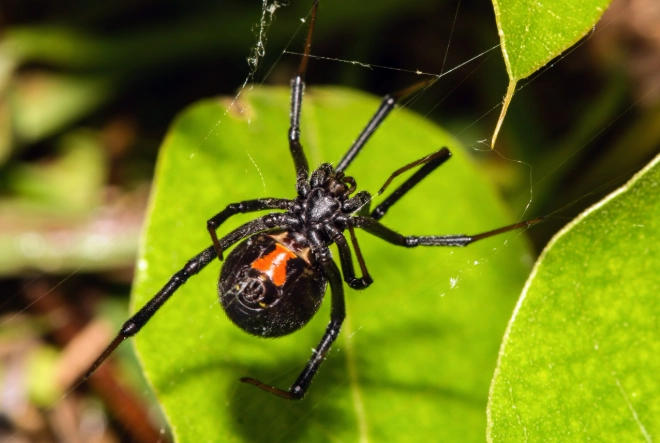
Symptoms of a bite can include:
- Immediate sharp pinprick pain, which may fade quickly.
- Intense muscle pain, cramps, and rigidity (often in the abdomen, back, or shoulders)—this is the hallmark symptom.
- Sweating, nausea, vomiting, headache, and elevated blood pressure.
- The pain can be severe, described as a deep, relentless ache or cramping.
Now, the critical context. Deaths are extremely rare in healthy adults. The last confirmed death in the United States from a black widow bite was in 1983. The individuals most at risk are the very young, the elderly, or those with pre-existing heart conditions. The bite is painful and a medical event, but it is almost never fatal with modern healthcare.
The CDC lists black widows among spiders of medical importance, and they note that antivenom exists and is effective. If you are bitten, the advice is simple: stay calm, clean the wound with soap and water, apply a cold pack to reduce swelling, and seek medical attention, especially if severe symptoms develop. Do not try to suck out the venom or make cuts.
Black Widow vs. Other Common Spiders: A Quick Comparison
| Spider | Primary Color & Markings | Web Type | Venom Potency (to Humans) | Typical Habitat |
|---|---|---|---|---|
| Black Widow (Female) | Shiny black, red hourglass (underside) | Irregular, tangled, strong | Potent neurotoxin (medically significant) | Dry, sheltered, undisturbed areas (sheds, woodpiles) |
| Brown Recluse | Light to dark brown, dark violin marking (back) | Loose, off-white, irregular | Necrotic toxin (can cause tissue damage) | Secluded, indoor areas (closets, attics, behind furniture) |
| Wolf Spider | Brown, gray, or black with patterned bodies | No web (hunter) | Mild, like a bee sting | Ground dweller, often in gardens, under stones |
| Common House Spider | Dirty white to brown, chevron patterns | Messy cobwebs (funnel-like) | Negligible | Corners of rooms, windows, ceilings |
| Jumping Spider | Often fuzzy, black with colorful/metallic markings | Small silk retreats, not for catching prey | Negligible | Active on walls, fences, plants (sunny areas) |
See? The black widow has a very distinct profile. The violin-shaped mark on the brown recluse is on its back, not its belly. Big difference.
What To Do If You Find One (A Practical Guide)
Don't freak out. Seriously. Panic leads to bad decisions. Here's a step-by-step approach.
- Don't Provoke It. A black widow will almost always try to escape. It only bites in defense, usually if it's pressed against skin (like if you put on a glove it's hiding in).
- Isolate the Area. Keep kids and pets away from the spot.
- Decide on Removal. You have options.
- Vacuum it up: Use a vacuum with a hose attachment. Immediately empty the vacuum bag/canister into a sealed plastic bag and put it in the outside trash.
- Insecticidal spray: A direct spray from a commercial insecticide labeled for spiders will work. Follow label instructions.
- Physical smash: If you must, use a long tool and be decisive. Wear gloves and closed-toe shoes.
- Prevent Reinfestation. This is key. Clean up the clutter. Seal cracks in foundations. Use yellow outdoor lighting (which attracts fewer insects, their food source). Wear gloves when handling stored items or firewood. The National Park Service has good general spider safety tips that apply here.
I once found one in my camping gear bag after a trip. My heart skipped a beat. I carefully took the bag outside, shook everything out from a distance, and found her nestled in a rolled-up pair of socks. A long stick and a plastic container became my removal tools. Lesson learned: always check and shake out gear stored in the garage.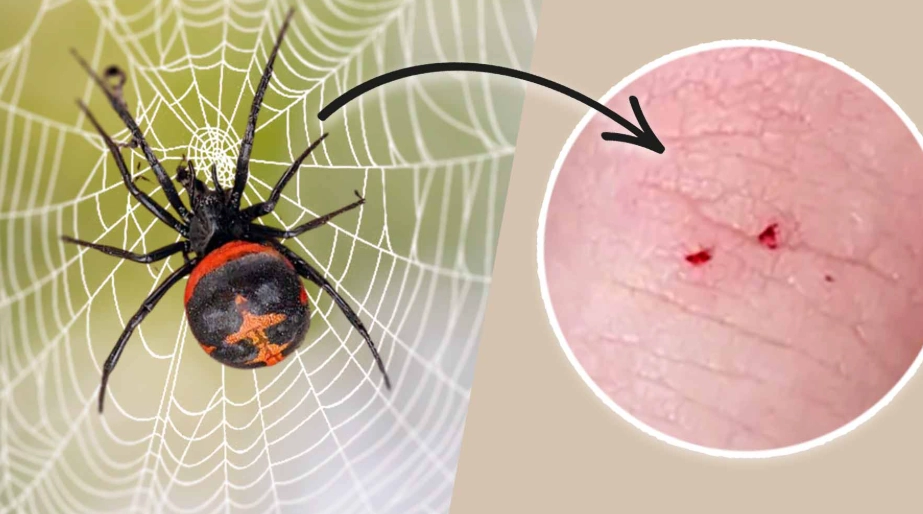
Common Questions Answered (FAQs)
Do black widow spiders really eat their mates?
This is the myth that named them! The truth is, it happens sometimes in captivity where the male can't escape, but it's not the norm in the wild. In nature, the male often performs a special "courtship dance" to avoid being mistaken for prey, and he usually gets away after mating. So while it can happen, calling them "widows" for this habit is a bit of an exaggeration. They're not the spider kingdom's femme fatales by default.
Is the Marvel Black Widow based on the spider?
Only in name and thematic connection. The name "Black Widow" was chosen for the character (first appearing in 1964) to evoke a sense of deadly, stealthy, and dangerous femininity—playing on the spider's reputation. Her skills (espionage, subtlety, a "bite" that can take down bigger opponents) metaphorically align with the spider. But her backstory, abilities, and character are entirely human-crafted fiction.
How can I tell a male from a female black widow spider?
Easily. The female is the classic one: large (about 1.5 inches legspan), shiny black, with the prominent red hourglass. The male is small (often less than half her size), dull-colored (brown/gray), with faint red or pink spots. He looks like a completely different, much less intimidating spider. You'll almost never notice the males.
What is the best treatment for a black widow bite?
First, seek professional medical help. For severe pain and muscle cramps, doctors may use muscle relaxants, pain medication, and, in serious cases, antivenom. The antivenom is derived from horses, so there's a risk of allergic reaction, which is why it's reserved for severe envenomations. The main treatment is supportive care—managing the pain and symptoms until the body processes the toxin, which usually takes several days. Do not use home remedies.
Why did Natasha Romanoff have to die in Endgame?
From a storytelling perspective, it completed her arc. She spent her entire life trying to make up for the "red in her ledger," to do good and save lives. Her sacrifice on Vormir was the ultimate act of redemption—giving her life to save Clint's and, by extension, trillions of others. It was a choice born from love for her found family, not just duty. It was tragic, but it gave her story a definitive and meaningful end, allowing her to be the hero of her own finale. (Though, yes, part of me will always be mad she didn't get more time in the spotlight).
Final Thought: Whether you're a fan of the super-spy or just want to live peacefully alongside the spider, knowledge is your best tool. For Natasha, understanding her past makes her heroism more profound. For the spider, understanding its reality replaces blind fear with sensible caution. Both "black widows" command respect, but for wildly different reasons. Stay curious, stay safe.
And remember, if you're looking for the absolute latest, most accurate info on the spiders, websites like university entomology departments or the UC Statewide Integrated Pest Management Program are gold mines of practical, science-based advice.
LEAVE A REPLY
Your email address will not be published. Required fields are marked *