Quick Guide to Red and Black Bugs
It happens to everyone sooner or later. You're pulling weeds in the garden, moving a pot on the patio, or just glancing at your windowsill, and there it is. A striking, often alarming-looking bug that's mostly black but splashed with bold red. Your brain immediately fires off questions. What is that thing? Is it going to bite me? Should I be worried about my plants? Is it a sign of an infestation?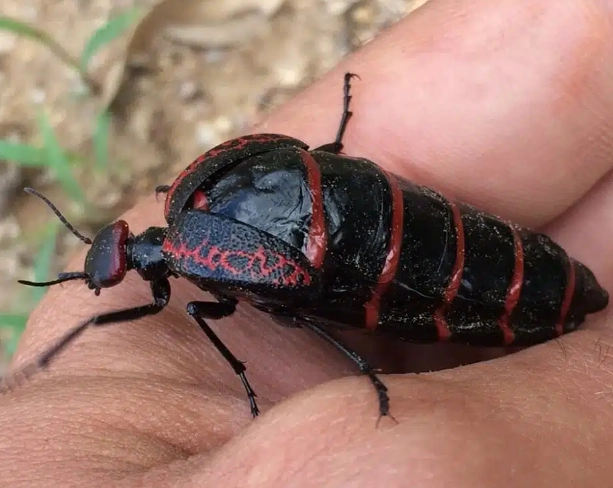
I've been there more times than I can count. The first time I saw a boxelder bug massing on the sunny side of my house, I genuinely thought it was some kind of apocalyptic event. Turns out, they're mostly just a nuisance. But not every black insect with red accents is so benign. That's why I decided to put this guide together. It's the resource I wish I'd had—a plain-English, no-nonsense walkthrough of the most common red and black bugs you're likely to encounter.
We'll go beyond just names and pictures. We'll talk about what they actually do, whether they're friend or foe, and what (if anything) you should do about them. Because let's be honest, knowing it's called "Oncopeltus fasciatus" is less useful than knowing if it's going to suck the life out of your milkweed or not.
The Usual Suspects: A Rogues' Gallery of Red and Black Bugs
Let's meet the candidates. I've grouped them loosely by where you'll find them and the kind of attention they demand.
The Backyard & Garden Crew
These are the ones living off your landscaping. Some are tourists, some are tenants.
Boxelder Bugs (Boisea trivittata): The classic. If you have a boxelder tree (or maple or ash), you know these guys. They're elongated, about half an inch long, black with distinctive red lines along the thorax and wing edges. In fall, they become a social phenomenon, gathering in huge, sun-seeking masses on siding, rocks, and foundations. They want to sneak into your house to overwinter. Are they dangerous? No. They don't bite, sting, or eat your house. But they can stain curtains or walls with their feces if crushed, and let's be honest, a swarm of any insect is unsettling. Their sheer numbers are their main weapon.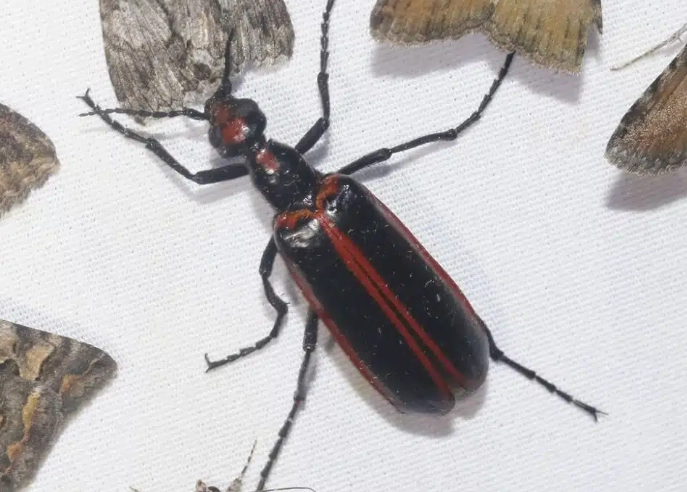
Milkweed Bugs: You'll find these exclusively on—you guessed it—milkweed plants. There are Large Milkweed Bugs and Small Milkweed Bugs. They're a brilliant advertisement of toxicity, wearing black and orange-red as a warning to predators: "I'm full of nasty cardiac glycosides from the milkweed sap." They're true bugs (order Hemiptera) with a distinctive X-shaped pattern on their backs when wings are closed. They cluster on milkweed seed pods. Are they a problem? For you, no. For monarch butterflies? That's a common debate. They compete for the same plant, but healthy milkweed can usually support both. I tend to leave them be; they're part of the milkweed ecosystem.
Then there are the beetles. Oh, the beetles. This is where a black insect with red spots often falls.
Spotted Lady Beetles (Coleomegilla maculata): Not all ladybugs are red with black spots. Some flip the script. These are pinkish or reddish with black spots. But there are also species that are primarily black with red spots. They're fantastic predators of aphids and other soft-bodied pests. Absolute allies in the garden. If you see one, consider it a tiny, spotted guardian.
The "Should I Be Worried?" Contingent
These are the ones that make people nervous, sometimes for good reason.
Black Widow Spiders (Latrodectus species): Okay, it's a spider, not an insect, but it's the quintessential black with red creature people panic about. Shiny, jet-black, globular abdomen with that infamous red hourglass on the underside (sometimes spots or other marks, depending on species). They like quiet, undisturbed places: woodpiles, shed corners, under patio furniture. The fear is real, but the reality is nuanced. Yes, their neurotoxic venom is medically significant. But they are not aggressive. Bites are rare and usually occur from accidental pressure (like putting on a glove they've made a home in). Respect them, give them space, and wear gloves when cleaning out potential habitats. The University of California's Statewide Integrated Pest Management Program has a fantastically detailed, science-based profile that dispels a lot of the myth and provides calm, rational management advice.
Blister Beetles: Some species, like the Black Blister Beetle, are solid black. Others, like the Margined Blister Beetle, are black with a thin gray or red margin. The danger here is cantharidin, a chemical they exude that causes severe skin blistering. The risk is mainly to gardeners who handle them without gloves or to livestock if beetles are baled in hay. Don't crush them on your skin. Just nudge them off plants with a stick or paper.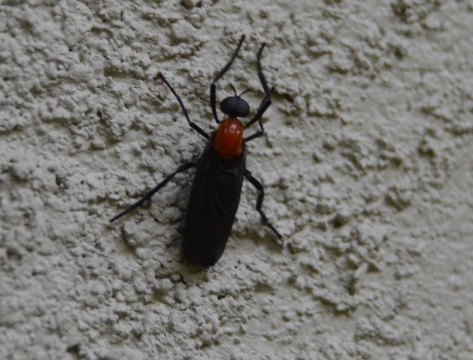
Red-Bellied Black Insects (that aren't widows): This is a tricky one. Many insects have a red or orange underside as a warning (aposematic) coloration. Some ground beetles, for instance. Unless you're an entomologist turning them over, you might not see it. Generally, if it's a beetle with a bright red underside, it's best to admire, not handle.
The Occasional Indoor Invaders
These are the ones that cross the threshold.
Red-and-Black Froghoppers/Spittlebugs: As adults, some are strikingly marked with black and red. You're more likely to see their nymphs' "spittle" on plant stems outdoors. An adult indoors is just a lost tourist. Gently escort it out.
Certain Seed Bugs: A broad category. They might wander in accidentally from nearby weeds or fields. They're looking for seeds, not you or your pantry. Usually solitary, not a sign of infestation.
Your Identification Cheat Sheet
When you spot your mystery bug, run through this mental checklist. It's easier than you think.
| What to Look At | Key Questions | What It Tells You |
|---|---|---|
| Size & Shape | Is it tiny like a ladybug, elongated like a bug, or plump like a beetle? | Broad category. Beetles are often rounder/harder; true bugs are flatter/more shield-like. |
| Red Pattern | Is it spots, lines, an hourglass, a solid band, or just the underside? | This is the biggest clue. Lines often point to boxelder bugs. Spots often point to certain beetles. An hourglass is a black widow. |
| Location | On a milkweed plant? Massing on a sunny wall? In a dark corner of the garage? | Habitat is a massive giveaway. Boxelders sunbathe. Milkweed bugs stay on milkweed. |
| Behavior | Is it solitary or in a huge group? Does it fly away quickly or amble slowly? | Mass gatherings = boxelder bugs or maybe cluster flies (which aren't red). Fast flyers are often beetles. |
| Legs & Antennae | Are the antennae long and thin (bugs) or short and clubbed (some beetles)? | Fine-tuning the ID. Helps distinguish between bug and beetle orders. |
Honestly, just the combination of where you saw it and what the red pattern looks like will get you 90% of the way to an ID for common species. I can't tell you how many emails I get from friends with a photo titled "SCARY BUG!!!" and it's just a harmless boxelder bug posing dramatically on their white trim.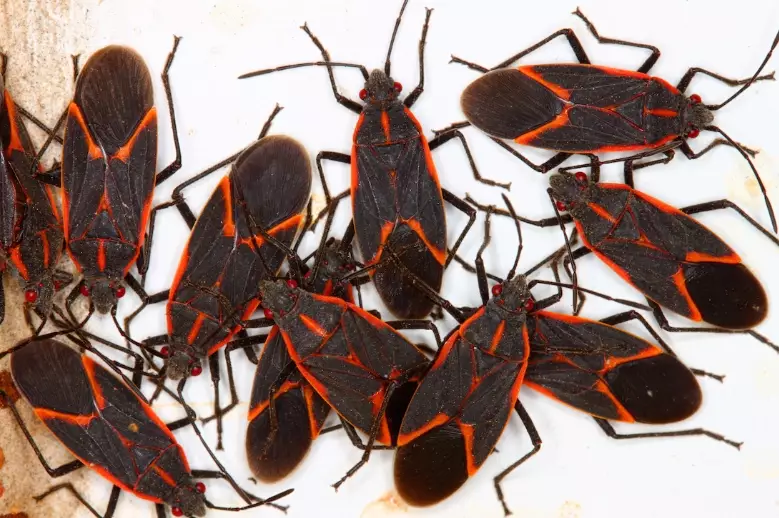
Friend or Foe? The Practical Impact Guide
Knowing the name is step one. Knowing what to do is what matters. Let's cut to the chase.
The Allies (Leave Them Be!)
- Most Lady Beetles (including black with red spots): Voracious aphid eaters. They are your garden's special forces.
- Many Ground Beetles: Often nocturnal predators of slugs, caterpillars, and other soil pests. A bit scary-looking but beneficial.
- Milkweed Bugs: Part of a native plant's ecological web. They're not harming the plant enough to warrant action in most cases.
- Soldier Beetles: Sometimes orange and black, but can be darker. Another predator of garden pests. They're often found on flowers.
My rule of thumb: if the black insect with red markings is on a plant and isn't actively causing visible, widespread damage (like skeletonized leaves), it's probably not an urgent threat. Observe for a day or two.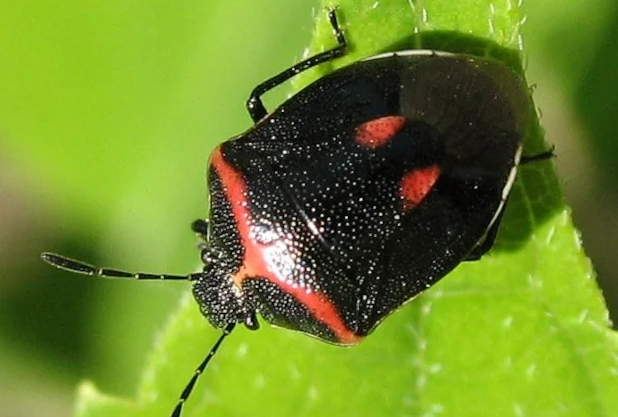
The Nuisances (Manage, Don't Nuke)
- Boxelder Bugs: The issue is invasion, not destruction. The goal is exclusion.
- Seal 'Em Out: Late summer/early fall is key. Caulk cracks around windows, doors, siding, and utility penetrations. Install door sweeps. This is the single most effective thing you can do.
- Vacuum 'Em Up: For clusters indoors, use a vacuum hose. Empty the bag/canister outside immediately to prevent odors. Avoid crushing them.
- Soapy Water: For outdoor clusters, a spray bottle with soapy water (a few tablespoons of dish soap per quart) can be an effective, low-toxicity knockdown. It breaks down their waxy cuticle.
- Blister Beetles: The issue is contact. Wear gloves when gardening in areas they're present. If they're on valuable crops, knock them into a bucket of soapy water. Broad-spectrum insecticides are overkill and will wipe out your beneficial insects too.
I made the mistake once of using a strong residual spray on a boxelder bug hotspot. It worked, kind of. But it also seemed to knock out the spiders and other predators that were helping keep other pests in check. I felt like I'd used a sledgehammer to swat a fly. Lesson learned.
The Potentially Hazardous (Respect & Remove)
- Black Widows: The goal is avoidance and careful removal.
- Wear Gloves: Always when reaching into dark, undisturbed areas like storage boxes, woodpiles, or under decks.
- Remove Habitats: Keep areas around foundations clear of debris, rocks, and wood piles. Seal gaps in sheds and garages.
- Direct Removal: If one is in a problematic spot (like a kid's playhouse), you can vacuum it up carefully or, if you must, use a targeted pesticide spray directly on the spider and its web. The University of Minnesota Extension has clear, sensible guidelines.
Beyond the Backyard: Other Black and Red Insects You Might Encounter
The cast of characters gets bigger if you travel or live in different regions.
Firebugs (Pyrrhocoris apterus): Common in Europe. Bright red and black, often seen in large groups at the base of trees. Completely harmless, but a stunning sight.
Harlequin Bugs (Murgantia histrionica): A stink bug relative that is a serious pest of cabbage, kale, and other brassicas in the southern US. It's a calico pattern of black and bright red-orange. Very distinctive, very damaging to those specific crops.
Some Assassin Bugs: This family includes the beneficial Wheel Bug (gray) but also the concerning Kissing Bug (brown/black, not typically red). A few species have red accents. They are predators, but handle with care as they can deliver a painful defensive bite.
The key takeaway? Context is everything. A black and red beetle in a forest is likely a predator or decomposer. The same colors on a crop plant might signal a pest.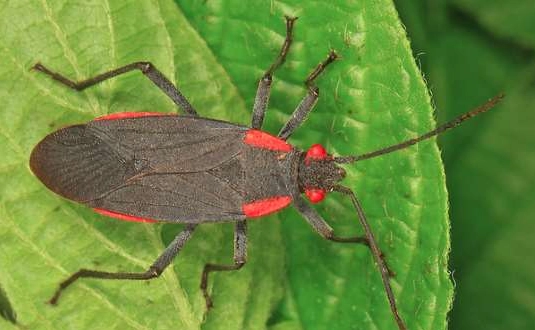
Answers to the Questions You're Actually Asking (FAQ)
See? Most of the answers aren't about killing things. They're about understanding, slight adjustments, and targeted actions. The goal isn't a sterile, bug-free zone—that's impossible and ecologically poor. The goal is balance and co-existence, with intervention only when the scale tips too far.
Wrapping It Up: A Shift in Mindset
Finding a black insect with red markings doesn't have to be a scary moment. It can be a moment of curiosity. A chance to learn a tiny piece of the incredibly complex natural world operating right outside your door (and sometimes inside it).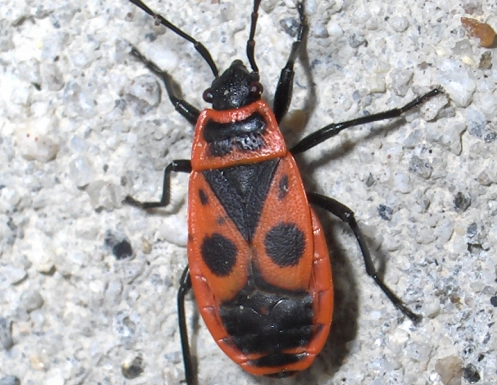
My own journey from panic to (mostly) calm identification took time. I still jump if something crawls on me unexpectedly—that's human nature. But I don't reach for the spray can as my first instinct anymore. I reach for my phone's camera, or sometimes, I just watch.
These insects, from the beneficial lady beetle to the nuisance boxelder, are all just trying to survive. They're following ancient programming to find food, shelter, and mates. By taking a breath, observing, and using a guide like this, you can figure out which ones need to be shown the door, which ones deserve a thank you for their pest control services, and which ones just need to be left alone to do their thing in a corner of the garden.
That knowledge, more than any pesticide, is the real power. It turns a potential freak-out into a moment of understanding. And honestly, that feels a whole lot better.
LEAVE A REPLY
Your email address will not be published. Required fields are marked *