Let's be honest. Most of us have frozen mid-step, spotting a dark shape scurrying across the floor, and wondered two things: "What is that?" and "Should I be worried?" The world of spiders is vast—over 48,000 species—but the ones you're likely to meet fall into just a few key groups. Understanding these different types of spiders isn't about memorizing a textbook; it's about replacing fear with knowledge. You'll learn that the vast majority are harmless roommates who eat the actual pests, and you'll know exactly which ones (very few) deserve a wider berth.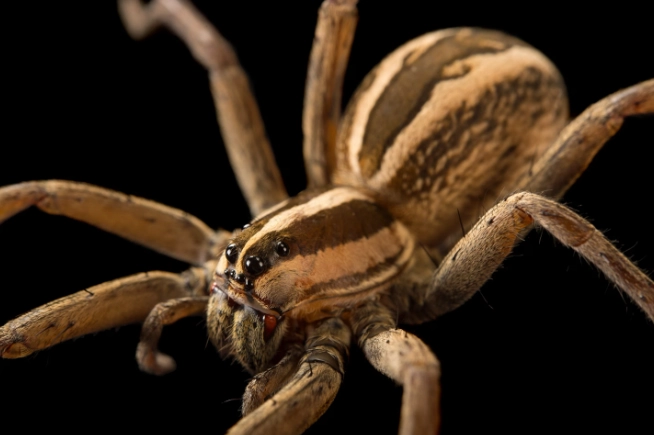
What's Inside This Guide
Spider Basics: What Makes a Spider a Spider?
Before we dive into types, let's clear up a common mix-up. Spiders are arachnids, not insects. The difference matters. Insects have six legs, three body parts, and usually wings. Spiders have eight legs, two main body parts (cephalothorax and abdomen), and no wings. They also have fangs (chelicerae) and produce silk from spinnerets. This silk is a marvel—used for webs, egg sacs, draglines, and even as a "parachute" for baby spiders to disperse, a behavior called ballooning.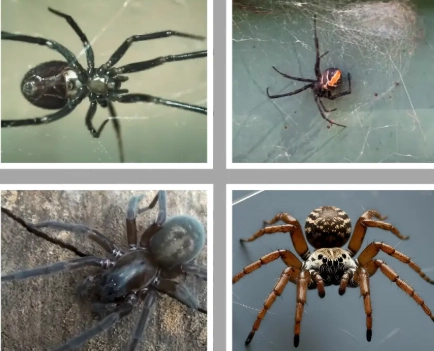
One of the biggest mistakes beginners make is assuming all web-builders are the same. Web architecture is a major clue to a spider's family. Orb weavers make the classic circular webs. Funnel weavers build sheet-like webs with a retreat tunnel. Cobweb spiders make messy, three-dimensional tangles. And then there are the hunters—wolf spiders, jumping spiders—that barely use silk for webs at all, preferring to chase down their meals.
The Usual Suspects: Common Household Spiders
These are the spiders you're most likely sharing your space with. They're generally shy, non-aggressive, and more interested in catching flies than bothering you.
| Spider Type (Family) | Key Identifying Features | Typical Habitat & Behavior | Risk Level |
|---|---|---|---|
| Common House Spider (Parasteatoda tepidariorum) |
Tan to brown with chevron patterns on a bulbous abdomen. Messy, tangled cobwebs. | Corners of ceilings, window frames, basements. Sits in the web waiting for prey. | Harmless. Bite is very rare and medically insignificant. |
| Cellar Spider / Daddy Long-Legs (Pholcidae) |
Extremely long, thin legs. Small, grayish body. Often vibrates rapidly in its web if disturbed. | Dark, undisturbed corners of basements, garages, and crawl spaces. | Harmless. Urban myths about potent venom are false. They are fragile. |
| Jumping Spider (Salticidae) |
Compact, fuzzy bodies. Often iridescent or brightly colored. Large, forward-facing eyes giving excellent vision. | Windowsills, walls, outdoors on foliage. Active daytime hunters that pounce on prey. | Harmless & Beneficial. Curious but not aggressive. Their movement is quick and jerky. |
| Wolf Spider (Lycosidae) |
Large, hairy, and robust. Usually brown or gray with camouflaging stripes. Carries egg sac attached to spinnerets. | Ground dwellers. Often enter homes in fall. Fast runners that hunt at night. | Low Risk. Can bite if provoked (e.g., trapped in clothing), causing local pain and swelling, but not dangerous. |
I used to be terrified of wolf spiders because of their size and speed. Then I learned a fascinating detail: the females carry their hatchlings on their backs for over a week. Seeing one scuttle by with a hundred tiny spiders clinging to her changed my perspective entirely—it was a parent, not a monster. They're just looking for a quiet place.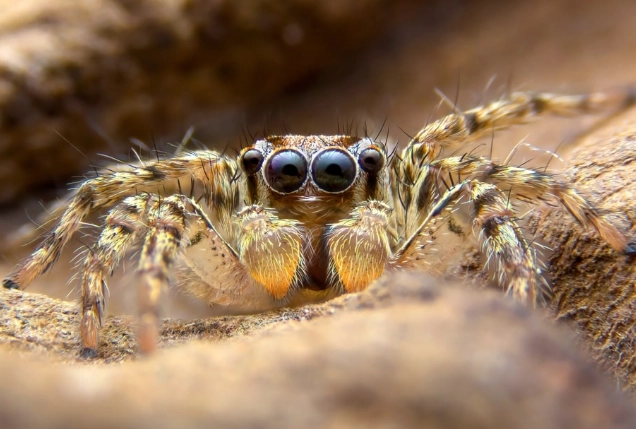
Orb weavers, like the striking Black and Yellow Garden Spider (Argiope aurantia), are outdoor artists but sometimes build webs near porch lights. Their large, zig-zag patterned webs are masterpieces of engineering. They look intimidating but are utterly harmless to people.
Spiders With Medical Significance: What You Really Need to Know
This category is small but important. "Medically important" means their venom can cause significant symptoms in humans. Critical point: These spiders are not out to get you. They are reclusive and bite only in defense, typically when pressed against skin (like in a shoe, glove, or bed).
Widow Spiders (Latrodectus species)
The infamous Black Widow (shiny black with the red hourglass) is the poster child, but there are brown widows too. Their venom is a neurotoxin. The bite itself might feel like a pinprick, but pain and muscle cramping can develop in the abdomen, back, and chest. It's serious and requires medical attention, but thanks to effective antivenom, fatalities are extremely rare in the modern era. You'll find them in undisturbed clutter: woodpiles, sheds, under outdoor furniture.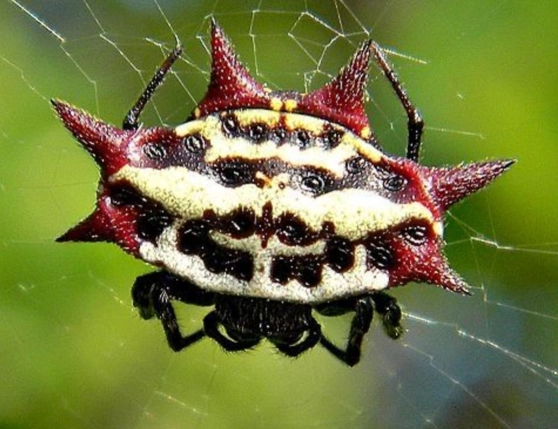
Recluse Spiders (Loxosceles species)
The Brown Recluse is the most well-known. Identification is tricky. Look for the dark violin-shaped mark pointing towards the abdomen, but this can be faint. A more reliable sign is their eyes: most spiders have eight eyes in two rows; recluses have six eyes arranged in three pairs. Their venom can cause necrotic lesions (tissue death) in some people, but severe reactions are not the norm. They live up to their name—reclusive. They hide in cardboard boxes, closets, and behind furniture. The range of the Brown Recluse is primarily the central and southern United States; many sightings outside this area are misidentifications.
Expert Insight: There's a massive over-diagnosis of "spider bites." Studies, including one cited by the U.S. National Library of Medicine, show that most skin infections blamed on spiders are actually caused by bacteria (like MRSA), other arthropods, or medical conditions. A true spider bite is a rare event. If you didn't see the spider bite you, be very skeptical.
Other Notable Species
In Australia, funnel-web spiders (not to be confused with harmless funnel-weavers) are highly dangerous, but they have effective antivenom. Their aggressive stance—rear legs up, fangs bared—is a clear warning. Hobo spiders, once thought to be necrotic in the Pacific Northwest, have been largely exonerated by recent research; their medical significance is now considered doubtful.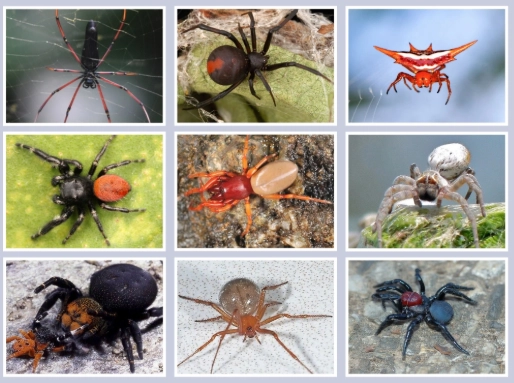
Practical Spider Identification Tips
You don't need to be an entomologist. Follow this simple process:
1. Observe from a Safe Distance. Use zoom on your phone camera. Note the size, color patterns, hairiness, and web type (if any).
2. Check the Eyes (If Possible). Eye arrangement is a gold standard for experts. A macro photo can help. Jumping spiders have huge front eyes. Recluses have the six-eye pattern.
3. Consider Location and Context. A spider in a messy web in your basement is likely a common house spider. A large, fast-running spider on the floor at night is probably a wolf spider. A glossy black spider with a red mark in a woodpile is a widow.
4. Use Reliable Resources. Don't just Google "brown spider." Use curated guides from university entomology departments (like the University of California's IPM Program) or reputable museums. Online communities like iNaturalist are great for crowdsourcing IDs from photos.
My personal rule? If it's in a web and not a glossy black with a red hourglass, I leave it alone. It's working. If it's a wandering hunter indoors, I gently catch it with the glass-and-paper method and release it outside. It takes 30 seconds and feels better than squashing a useful predator.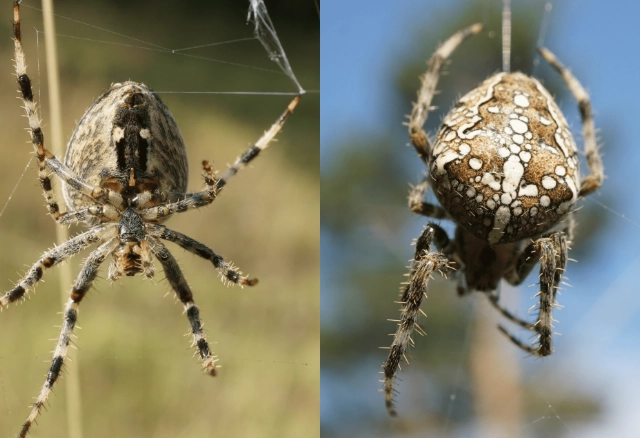
Your Spider Questions Answered
The next time you see a spider, take a breath. Look closer. You're probably looking at a dedicated pest controller or an amazing little hunter, not a threat. By learning the different types of spiders, you take the mystery—and much of the fear—out of the equation. You'll know which ones to appreciate from afar, and which ones to simply let be as they go about their business in your home's ecosystem.
LEAVE A REPLY
Your email address will not be published. Required fields are marked *