You've probably never given deer mice much thought. Maybe you've seen a blur of brown and white scurry across a hiking trail, or found small, dark droppings in a corner of your garage. For most of my life, that was my relationship with them too—just another part of the background wildlife. That changed after a season spent in a remote cabin in Colorado, where these tiny rodents were our only constant neighbors. I started noticing their intricate runway systems under the sagebrush, their fondness for stealing birdseed, and their delicate, two-toned fur. I also learned, with a jolt of sobering reality, about their role as the primary carrier of hantavirus in North America. That's the deer mouse paradox: a fascinating, ecologically vital creature that also poses a serious, if often misunderstood, health risk. This guide isn't about fear-mongering; it's about understanding. We'll strip away the myths, learn how to identify them, appreciate their role, and most importantly, learn how to coexist safely.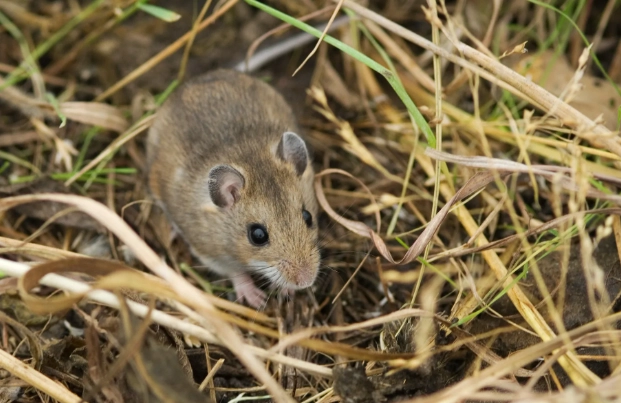
What's Inside?
- How to Identify Deer Mice: A Step-by-Step Guide
- The Unsung Hero: Deer Mice as a Keystone Species
- The Hantavirus Connection: Understanding the Real Risk
- Is Your Home at Risk? Spotting Signs of Deer Mouse Activity
- Building a Fortress: A Practical Prevention Strategy
- The Critical Cleanup Protocol for Droppings and Nests
- Your Deer Mouse Questions, Answered
How to Identify Deer Mice: A Step-by-Step Guide
You can't manage what you can't identify. Mistaking a deer mouse for a house mouse is common, and it leads people to underestimate the situation. Here’s how to tell them apart with confidence.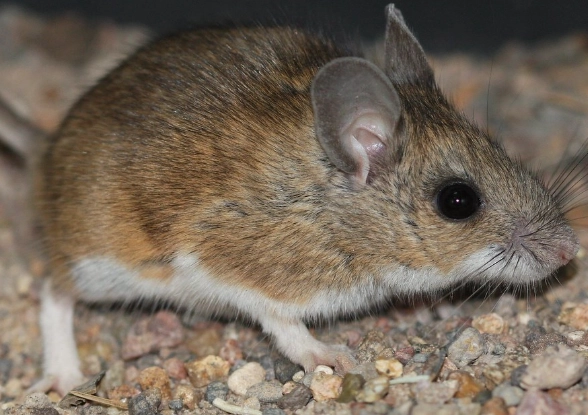
First, look at the coat. This is the most reliable visual cue. A deer mouse (Peromyscus maniculatus) has a distinct two-tone pattern. Its back and sides are a greyish or reddish-brown, but its underside—the belly, feet, and the underside of the tail—is stark white. The line of demarcation is sharp, like it was painted. A house mouse is uniformly grey or light brown all over, maybe with a slightly lighter belly, but never that crisp, high-contrast look.
Next, observe the tail. A deer mouse's tail is bicolored—dark on top, white below—and is about as long as its head and body combined. It's also quite furry. A house mouse's tail is mostly hairless, scaly, and uniformly colored (dark or flesh-toned).
Then, consider the ears and eyes. Deer mice have larger, more prominent ears and bigger, black, bead-like eyes relative to their head size. They look more "alert" and "deer-like," which is where their name comes from. House mice have smaller, more proportional features.
Finally, think about location and behavior. Deer mice are wild, rural, and semi-rural rodents. They thrive in fields, forests, woodpiles, and sheds. They're excellent climbers and jumpers. House mice are classic commensals, evolved to live almost exclusively with humans in our structures. If you see a mouse in the middle of your kitchen at 2 PM, it's almost certainly a house mouse. Deer mice are more reclusive and nocturnal; seeing one inside often means it's trapped or there's a significant entry point from an outdoor habitat.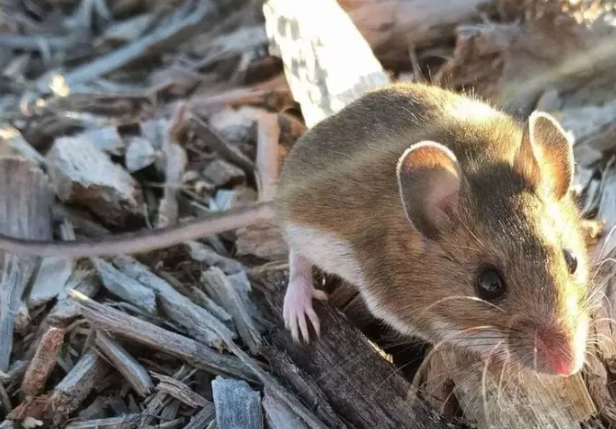
The Unsung Hero: Deer Mice as a Keystone Species
Before we talk about risks, it's crucial to acknowledge their ecological value. Calling them pests does a disservice. In many ecosystems across North America, deer mice are a keystone species. Their daily activities have an outsized impact on their environment.
Their most significant role is seed dispersal. Deer mice are scatter-hoarders. They collect thousands of seeds—from grasses, shrubs, and trees—and bury them in small caches all over their territory. They have remarkable spatial memory, but they inevitably forget some of these caches. Those forgotten seeds germinate, leading to forest regeneration and plant diversity. Researchers have found that the health of certain oak and pine forests is directly tied to deer mouse activity.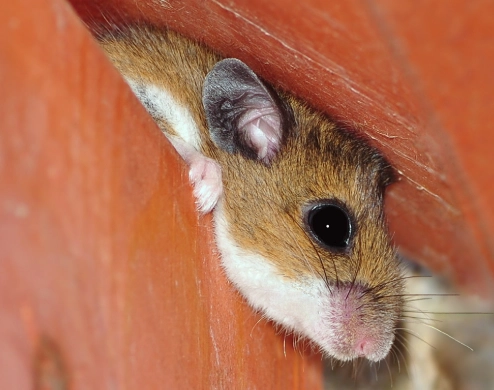
They're also a critical link in the food web. They are a primary food source for a huge range of predators: owls, hawks, foxes, coyotes, snakes, and weasels. A decline in deer mouse populations can ripple upward, affecting the survival of these predators' young.
I remember watching a great horned owl silently patrol the meadow behind that Colorado cabin every evening. Its success that year was directly tied to the population of deer mice in the field. Seeing that connection firsthand shifted my perspective from seeing them as a nuisance to recognizing them as a vital thread in the tapestry of the landscape. Our goal shouldn't be eradication in the wild—that's impossible and ecologically harmful—but creating a clear boundary between their wild habitat and our domestic spaces.
The Hantavirus Connection: Understanding the Real Risk
This is the part that worries people, and for good reason. Deer mice are the primary reservoir for Sin Nombre virus, the strain that causes Hantavirus Pulmonary Syndrome (HPS) in North America. Let's break down the facts without the hype.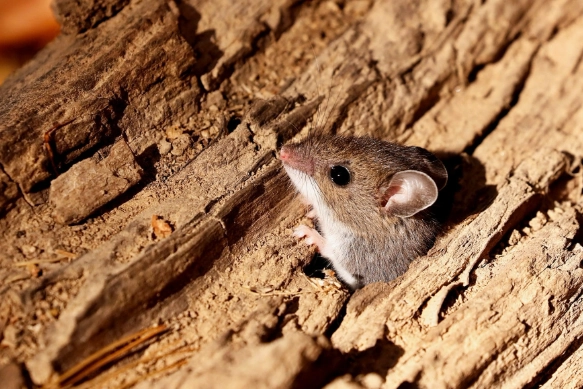
The virus is shed in the saliva, urine, and droppings of infected deer mice. The key risk to humans is inhalation. The virus becomes airborne when dried droppings or nesting material are disturbed—think sweeping a dusty garage, cleaning a long-vacant shed, or even vigorously shaking out a sleeping bag that's been in storage. It does not spread from person to person.
Now, let's talk numbers, because context is everything. According to the U.S. Centers for Disease Control and Prevention (CDC), HPS is extremely rare. Since its identification in 1993, there have been fewer than 900 total cases reported in the United States. Compare that to the tens of millions of people who live, work, and recreate in deer mouse territory.
But here's the critical nuance that most articles gloss over: rarity doesn't mean insignificance. The disease is severe. Early symptoms mimic the flu—fever, muscle aches, fatigue. It rapidly progresses to severe respiratory distress. The mortality rate is around 38%. This creates a low-probability, high-consequence risk profile. You don't need to live in fear, but you must have respect and follow specific protocols.
| Risk Factor | High-Risk Scenario | Low-Risk Scenario |
|---|---|---|
| Location | Rural cabin, farm outbuilding, wooded shed rarely opened. | Urban apartment, regularly cleaned suburban garage. |
| Activity | Spring cleaning of a rodent-infested storage space without ventilation or PPE. | Observing a live deer mouse outside from a distance. |
| Exposure | Directly handling live mice or disturbing accumulations of dry droppings/nests. | Finding a single fresh dropping on a counter (clean with disinfectant). |
The takeaway? The risk is highly situational. It's concentrated around specific, avoidable activities. Panic is not a useful tool. Knowledge and procedure are.
Is Your Home at Risk? Spotting Signs of Deer Mouse Activity
Deer mice are explorers. They seek shelter, especially as seasons change. Your home is a potential fortress of warmth and food. You need to learn to read the signs they leave behind.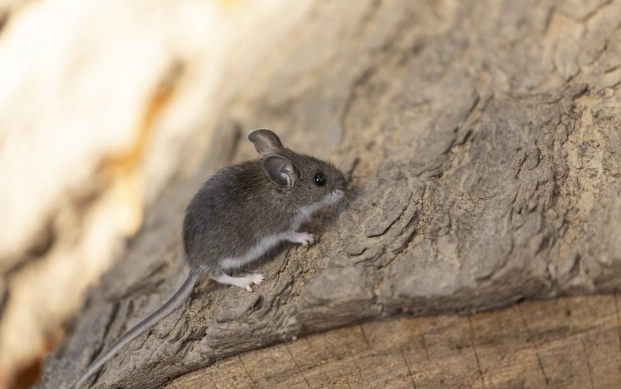
Droppings are the most obvious clue. Deer mouse droppings are small (about 1/8 to 1/4 inch long), dark, and shaped like a grain of rice with pointed ends. Fresh ones are dark and soft; older ones become grey, hard, and crumbly. You'll often find them concentrated along walls, in cupboards, drawers, or in boxes. A common mistake is assuming a few droppings mean just one mouse. It rarely does.
Listen for sounds. At night, you might hear light scratching, scurrying, or gnawing sounds coming from inside walls, attics, or crawl spaces. They're most active after dark.
Look for nesting material. Deer mice shred whatever they can find: insulation, paper, fabric, dried plant matter. A nest looks like a messy ball of shredded material, often hidden in an enclosed space like a stored appliance, furniture, or a void in the insulation.
Check for entry points. This is proactive detection. In daylight, walk the exterior perimeter of your home, garage, and shed. Look for any gap larger than a dime. Pay special attention to where utilities enter (pipes, wires, cables), gaps under doors, vents without proper screening, and roofline intersections.
I learned this the hard way. In that Colorado cabin, we found a nest in a dresser drawer filled with old linens. The entry point? A tiny, pencil-sized hole where the plumbing for the sink came through the wall behind the dresser. We never heard a thing.
Building a Fortress: A Practical Prevention Strategy
Prevention is 90% of the battle, and it's less about high-tech solutions and more about diligent, low-tech exclusion. Think of it as mouse-proofing.
Step 1: The Great Seal-Up
This is non-negotiable. Grab a flashlight and some caulk and get to work. Use appropriate materials:
- Small cracks & gaps: Silicone or acrylic latex caulk.
- Larger holes (up to golf ball size): Stuff with copper mesh (they can't chew through it like steel wool), then seal over with caulk or expanding foam.
- Gaps under doors: Install door sweeps or thresholds.
- Vents and chimneys: Cover with 1/4-inch hardware cloth (metal mesh).
Step 2: Remove the Welcome Mat
Make your property less attractive.
- Landscaping: Keep grass trimmed, and move woodpiles, compost bins, and dense shrubbery at least 20 feet away from your home's foundation.
- Food sources: Use sealed metal or thick plastic bins for bird seed, grass seed, and pet food. Pick up fallen fruit from trees. Secure trash cans with tight-fitting lids.
- Clutter: Eliminate outdoor clutter like unused pots, piles of lumber, or old equipment that provides hiding spots.
Step 3: Strategic Trapping (If Needed)
If you have an active infestation inside, trapping is safer than poison. Poisons can cause mice to die in inaccessible walls, creating odor and secondary pest problems. Use snap traps.
- Bait them with a tiny bit of peanut butter or a nut tied on with thread.
- Set them perpendicular to walls, with the trigger end facing the wall, as mice tend to run along edges.
- Wear gloves when handling traps and carcasses. Place the dead mouse in a plastic bag, seal it, and dispose of it in the trash.
The Critical Cleanup Protocol for Droppings and Nests
If you find evidence, don't freak out and grab a broom. Follow this protocol religiously. It's the single most important action to prevent infection.
- Ventilate: Open all doors and windows to the area. Let it air out for at least 30 minutes. Leave the area during this time.
- Protect Yourself: Put on rubber, latex, or vinyl gloves. An N95 respirator mask is highly recommended for any significant cleanup (not just a dust mask).
- Disinfect, Don't Disturb: NEVER sweep or vacuum dry droppings. Prepare a disinfectant: a bleach solution (1.5 cups household bleach per 1 gallon of water) or a commercial disinfectant labeled as effective against viruses. Thoroughly spray the droppings, urine, and nest until soaked. Let it sit for 5-10 minutes.
- Clean Up: Using paper towels, carefully pick up the soaked material. Place all waste, used towels, and gloves into a sealed plastic bag. Dispose of it in your regular outdoor trash.
- Final Disinfection: Mop or wipe down the entire area with the disinfectant. Wash your hands thoroughly with soap and warm water after removing gloves.
For heavy infestations in confined spaces (like an attic or crawlspace), consider hiring a professional pest control company experienced in biohazard cleanup.
Your Deer Mouse Questions, Answered
Understanding deer mice is about holding two ideas in your head at once. They are remarkable little animals that keep our wild places healthy. And they are potential carriers of a serious pathogen. By learning to identify them, respecting their ecology, and implementing smart, consistent barriers between their world and ours, we can mitigate risk without resorting to fear or unnecessary harm. It starts with looking at that tiny, two-toned rodent not just as a pest, but as a creature with a story—one we need to understand for our own safety and the health of the environment we share.
LEAVE A REPLY
Your email address will not be published. Required fields are marked *