You’re pressure washing the house, or maybe just admiring the paint job, and there they are. Clusters of odd, tubular mud structures clinging to the siding, tucked under the eaves, or crammed into a corner of the garage. Your first thought might be "termites," but a closer look reveals something else entirely. These are the handiwork of the mud dauber, a creature that lives in the gray area between beneficial insect and home-invading nuisance. Most people get it wrong from the start, assuming they're dealing with a hostile swarm. The reality is far more interesting, and knowing the difference can save you a lot of unnecessary worry—and pesticide.
What You’ll Find in This Guide
What Exactly Are Mud Daubers?
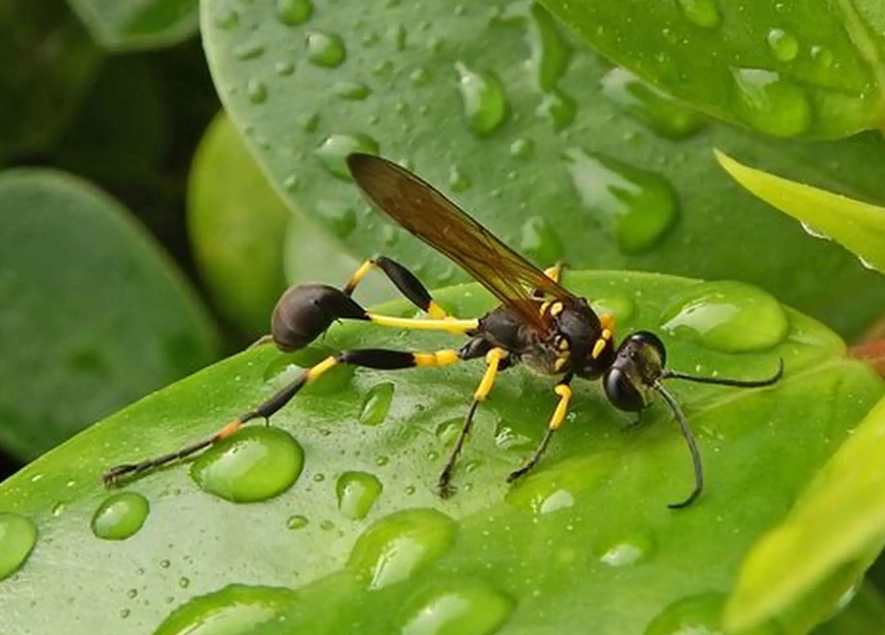
Let's clear this up. Mud daubers are solitary wasps. That word "solitary" is the key most websites gloss over. Unlike yellow jackets or hornets, they don't live in big social colonies with hundreds of sisters defending a queen. A female mud dauber is a lone operator. She finds a mate, then gets to work building a nursery entirely by herself. She mixes soil with her saliva to create that signature mud, forming it into tubes or globular cells. Here’s the fascinating and slightly gruesome part: she’s not stocking that nursery with honey or pollen. She’s a hunter.
Her prey? Spiders. Primarily black widows, orb weavers, and other common garden spiders. She paralyzes them with a precise sting (a venom designed for arachnids, not to cause us pain) and stuffs them into each mud cell. Then she lays a single egg on the immobilized spider buffet, seals the cell, and moves on to build the next one. When the egg hatches, the larva has fresh food waiting. It’s a brutal but incredibly efficient system of natural pest control.
How to Spot the Difference: Mud Dauber vs. Other Stingers
This is where panic sets in. People see a wasp-like insect and a nest, and the brain screams "Danger!" But not all buzzing architects are created equal. Misidentifying a mud dauber nest for a yellow jacket nest can lead to a very bad, very stinging day if you handle it wrong.
| Feature | Mud Dauber | Yellow Jacket / Social Wasp |
|---|---|---|
| Nest Material | Mud, clay. Looks like dried dirt tubes or globs. | Paper (chewed wood fibers). Feels like cardboard. |
| Nest Location | Open, exposed sites: walls, eaves, attics, sheds. | Enclosed, protected spaces: underground, wall voids, attics. |
| Insect Behavior | Solitary, non-aggressive. Flies alone. Ignores people. | Social, highly defensive. Swarms to defend nest. |
| Nest Re-use | Rarely. Old nests are abandoned. New mud is built fresh each season. | Often. Colonies can grow in the same location for years. |
| Primary Food | Spiders (for larvae). Nectar (for adults). | Other insects, human food/sugars, meat. |
The visual is the biggest giveaway. If the nest looks like it's made of dirt and is stuck to the *outside* of a structure, it's almost certainly a mud dauber. If it's a gray paper ball hanging from a tree branch or you hear buzzing from inside a wall, you're dealing with something far more territorial.
The Sting Danger: Separating Fact from Fear
Here’s the non-consensus view that gets me in trouble with the "kill all wasps" crowd: Mud daubers pose almost zero threat to humans under normal circumstances. I’ve watched them build nests on my porch light for seasons. I’ve gently shooed them away from doorways. Not once have I been threatened.
Why? Their solitary nature. They have no colony to defend. A female’s entire evolutionary drive is to build nests and hunt spiders. Stinging you serves no purpose for her and wastes energy. She will only sting if you physically grab her, pinch her, or if she gets trapped against your skin. Even then, their venom is mild compared to social wasps. For most people, it’s a minor, temporary pain—more like a sharp pinch than the fiery agony of a yellow jacket.
The males, which you often see flitting around curiously, are completely harmless. They have no stinger at all.
A Step-by-Step Guide to Safe Nest Removal
Okay, you’ve identified it as a mud dauber nest and you still want it gone—maybe for aesthetics, or it’s in a high-traffic area. Good news: you don't need a hazmat suit or a can of poison. Here’s the safe, effective method I’ve used for years.
1. Timing is Everything
Wait until dusk or early dawn. Wasps are cold-blooded and far less active when temperatures drop. This is when the female is most likely to be inside the nest or away from it. You can also watch the nest for a few minutes during the day. If you don't see any coming or going for 15-20 minutes, it’s likely inactive (the larva is still developing inside) or abandoned.
2. Gear Up (Minimally)
Wear gloves and long sleeves. Safety glasses aren’t a bad idea if the nest is overhead—you don’t want falling mud in your eyes. You are not preparing for war; you are preparing for light demolition.
3. The Removal Process
Do not spray it first. Insecticide is almost never necessary and kills the wasp needlessly. Instead, take a putty knife, a stiff paint scraper, or even an old credit card. Gently slide the tool behind the mud structure and pry it away from the surface. Have a plastic bag or a small container ready to catch the pieces as they fall. Work carefully to avoid breaking the nest apart against your wall.
If the nest is in a hard-to-reach spot, you can use a vacuum cleaner with a hose attachment. Hold the hose close and suck the whole nest off. Immediately dispose of the vacuum bag or empty the canister outside.
4. Clean-Up and Discourage Return
Once the nest is off, use a damp cloth to wipe away any residual mud rings or stains. If you’re concerned about the spot being attractive again, you can lightly spray the area with a soapy water solution. The goal is to remove the visual and textural cue that says "good building site here."
Long-Term Prevention: Making Your Home Less Appealing
Stopping mud daubers is less about declaring chemical warfare and more about simple home maintenance. They’re looking for three things: mud, protected building sites, and spiders to eat.
Seal Entry Points: This is your number one task. Go around your house with a tube of quality exterior caulk. Fill cracks in the siding, gaps around window and door frames, and holes where pipes or wires enter. Pay special attention to the undersides of roof eaves and soffits. Use copper mesh or steel wool for larger gaps before sealing over them—it’s harder for them to build on.
Install Screening: Cover attic vents, crawl space vents, and any other openings with fine mesh (1/8 inch or smaller) hardware cloth.
Manage Spider Populations: Since spiders are their food source, reducing spiders around your home makes it a less desirable hunting ground. Regularly sweep away webs from corners, under decks, and around light fixtures. Keep vegetation trimmed back from the house.
Disrupt Mud Sources: If you have a persistent problem, look for their mud source—often a damp patch of bare soil near a downspout or a leaking hose bib. Fixing the moisture issue or covering the soil with mulch or gravel can help.
Your Mud Dauber Questions, Answered
Are mud daubers aggressive and will they sting me?
What's the safest way to remove a mud dauber nest from my siding?
How can I stop mud daubers from building nests on my house every year?
I found a nest with holes in it. Is it still active?
Look, at the end of the day, mud daubers are more of a curiosity than a crisis. They’re fascinating natural pest controllers that occasionally have questionable taste in real estate. A little knowledge—knowing they're not out to get you, knowing how to remove a nest safely, and taking steps to seal up your home—turns a potential pest problem into a non-issue. You might even find yourself, like I have, watching their meticulous work with a bit of respect before gently encouraging them to set up shop a little farther from the front door.


Comments