You're enjoying a quiet afternoon on the porch when you hear it—that distinct, low-pitched buzz. A sleek, brown insect with dangly legs lands on the railing. Your mind races. Is it a bee? A hornet? Should you run? Most likely, you've met one of North America's common brown wasps, probably a paper wasp. They're not the mindless villains we often make them out to be, but having them set up shop too close to home is a problem. Let's cut through the fear and get practical. This guide is about identification, smart prevention, and safe removal when necessary.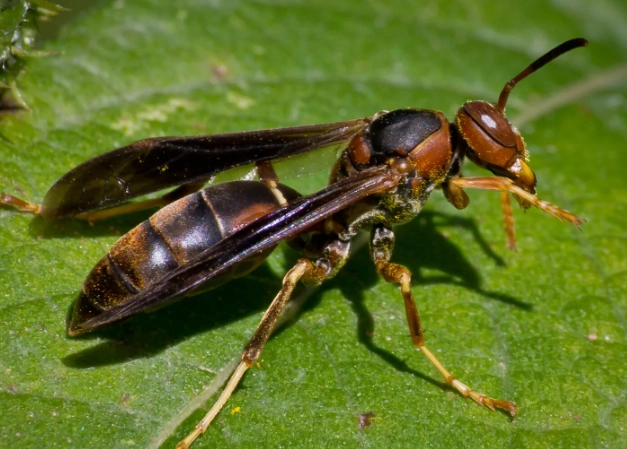
What’s Inside: Your Quick Navigation
How to Identify a Brown Wasp (It's Not Always a Yellowjacket)
Calling every stinging insect a "bee" or a "yellowjacket" is the first mistake. Misidentification leads to the wrong response. The classic brown wasp you see building an umbrella-shaped nest under eaves is almost certainly a paper wasp.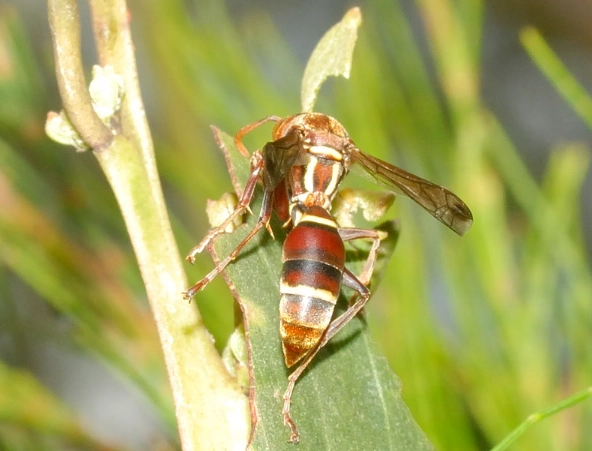
I once spent an hour trying to "bee-proof" my shed before realizing the insects were predatory paper wasps that had zero interest in my soda can. Here’s what to look for:
- Body Shape: Slender, with a pronounced "waist" (petiole) separating the thorax and abdomen. Their legs dangle noticeably in flight.
- Color: Ranges from reddish-brown to dark brown, often with yellow or orange markings. They lack the bold, alternating black and yellow bands of a yellowjacket.
- Nest: The biggest giveaway. Paper wasps build open-comb nests that look like a honeycomb umbrella, often with visible hexagonal cells. You'll see the wasps sitting on it. It's not enclosed in a paper ball like a hornet's nest.
- Behavior: Generally less aggressive than yellowjackets when away from the nest. They're pollinators and predators, often seen flying slowly around flowers or hunting caterpillars.
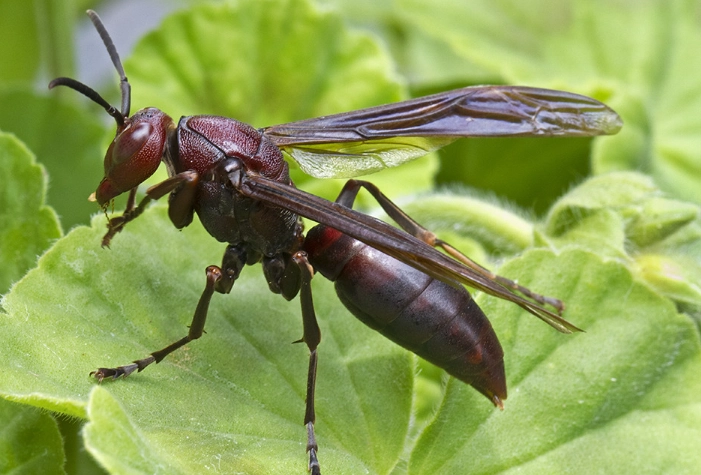
| Feature | Paper Wasp (Common Brown Wasp) | Yellowjacket | Honey Bee |
|---|---|---|---|
| Primary Color | Reddish-brown to dark brown with muted markings | Bright, alternating black and yellow bands | Golden brown/amber with black stripes, fuzzy |
| Body Shape | Slender with a very thin waist | Stocky with a short waist | Plump and hairy |
| Nest Appearance | Open-comb, umbrella-shaped, gray paper | Enclosed paper ball, often underground | Wax combs inside a cavity (hive) |
| Aggression Level | Low away from nest, defensive near nest | Highly aggressive, especially in late summer | Defensive only, dies after stinging |
Why Brown Wasps Choose Your Home (And How to Make It Less Appealing)
Paper wasps aren't looking for trouble. They're looking for real estate that offers shelter, proximity to food (your garden pests), and building materials. Your house is a perfect cliff face.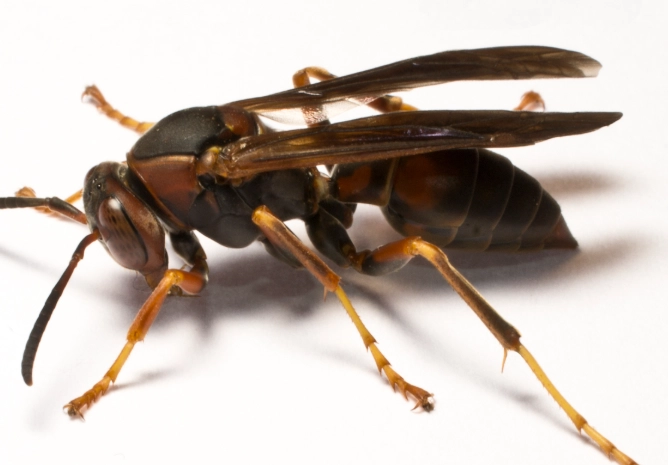
The queen emerges in spring, alone. She scouts for a protected spot. An overhang, an eave, the inside of a grill cover, a porch light fixture, even a mailbox. She chews wood fibers from your fence or deck, mixes it with saliva, and starts building those first few cells. If you can stop her in these early weeks, you save yourself a huge headache by August.
The Early-Season Scouting Checklist (Do This in Spring)
Walk around your property with a different eye. Look for sheltered, horizontal surfaces.
- Eaves and Soffits: Check every corner. A starter nest can be as small as a quarter.
- Window Frames and Door Frames: Especially upper corners.
- Under Decks and Porches: A prime, shaded location.
- Inside Outdoor Electrical Boxes: They love the warmth and shelter.
- Garden Sheds and Playhouses: Check the roof joints and under the ledge.
If you see a tiny nest with a single wasp on it, that's the queen. You can often knock it down with a long broom after dusk—she'll likely relocate. It's the most humane and effective time to act.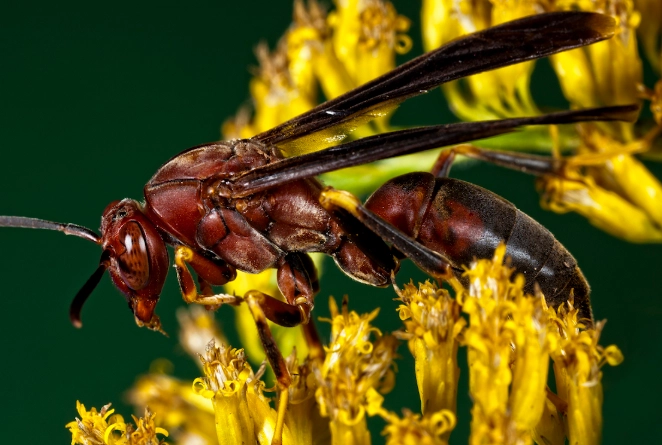
Long-Term Deterrence: Make Your Property a "No-Vacancy" Zone
This isn't about killing wasps; it's about discouraging them from moving in.
Seal Entry Points: Use caulk to fill gaps in siding, around pipes, and in attic vents. Repair torn window screens.
Manage Food Sources: They eat insects. A healthy population of birds and other predatory insects can help. But also, keep tight lids on outdoor trash cans—spilled sugars attract them indirectly by attracting their prey.
Remove Building Materials: This is rarely mentioned. If you have untreated, weathered wood (an old fence, a pile of lumber), consider sealing or painting it. It makes the fibers harder for the queen to pulp into paper.
Use Decoy Nests: The evidence is anecdotal, but many seasoned gardeners and I swear by them. Paper wasps are territorial. Hanging a commercial or homemade fake paper nest (a brown paper bag crumpled into a ball) in early spring can trick a scouting queen into thinking the area is already occupied.
Safe Wasp Nest Removal: A Step-by-Step Protocol
You found a nest. It's bigger than a golf ball. Now what? Rushing in with a can of spray at 2 PM is how people get hurt. Here's the methodical, safe approach.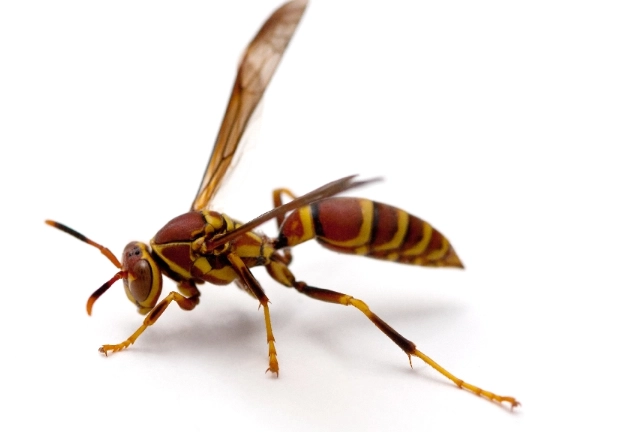
Step 1: Assess and Plan
How big is the nest? A fist-sized nest might have 20-30 wasps. A dinner-plate-sized nest can harbor hundreds. Location is critical. A nest on a second-story eave requires a ladder, adding fall risk. Is it near a door you use constantly? These factors determine if it's a DIY job.
Step 2: Gear Up
No shorts and sandals. Wear long sleeves, pants, socks, shoes, and gloves. Tuck your pants into your socks. A hat and veil are ideal, but at minimum, wear sunglasses. Have an escape route planned.
Step 3: The Right Product at the Right Time
Timing is everything: Treat the nest after dark or just before sunrise. All wasps will be inside, sluggish, and less aggressive. Use a flashlight with a red filter or cover a standard flashlight with red cellophane—wasps don't see red light well.
Product: Buy a wasp and hornet jet spray that shoots a stream 10-20 feet. Read the label. Stand at the maximum distance indicated, upwind so the spray doesn't blow back on you.
Step 4: Execution and Retreat
Aim directly at the nest entrance (usually the bottom) and soak it thoroughly for the amount of time the label says (often 10-15 seconds). Then immediately and calmly walk away. Do not stand and watch. Do not swat at any wasps that may emerge. Return to the safety of your house.
Step 5: Cleanup and Prevention
Wait at least 24 hours. The next day, during daylight, tap the nest from a distance with a long pole. If no activity, it's safe to knock it down and dispose of it in a sealed bag. Then, scrub the area with soap and water or a mixture of vinegar and water. This removes the pheromone scent that can attract other wasps to rebuild in the same spot.
When to Absolutely Call a Professional Exterminator
I've called pros more than once. It's not an admission of defeat; it's smart risk management. Call one if:
- The nest is inside a wall void, attic, or chimney. Wasps inside structures can chew through drywall and emerge inside your home.
- It's in a high-risk location: above a doorway, near a children's play area, or anywhere requiring extensive ladder work.
- The nest is very large (bigger than a grapefruit). The colony's defensive response will be intense.
- You are unsure of the species. It could be a more aggressive type like bald-faced hornets.
- You've tried and failed. A partially agitated colony is more dangerous.
A good exterminator, like those certified by your state's pest management association, will have protective gear, professional-grade insecticides, and the experience to handle it quickly. They can also offer longer-term exclusion services.
LEAVE A REPLY
Your email address will not be published. Required fields are marked *