You wake up with itchy, red bites in a line or cluster. Your mind races. Could it be bed bugs? Before you panic or dismiss it, you need to know what you're looking for. Bed bugs aren't just the flat, brown, apple-seed-sized adults you see in cartoons. They go through a whole lifecycle, and the younger stages look completely different. Missing the early bed bug stages is the number one reason infestations get out of hand. I've seen it too many times—people treat for the adults but leave the eggs and nymphs behind, only to have the problem explode again in weeks.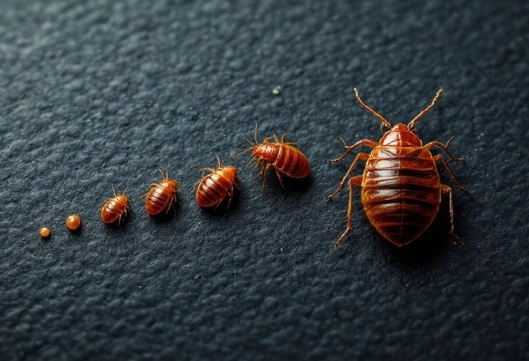
What's Inside This Guide?
The 5 Bed Bug Life Stages Explained
Let's break down the bed bug life cycle from start to finish. It's a process of incomplete metamorphosis, meaning the young nymphs look like tiny versions of the adults, they just need to grow and molt. The entire cycle, under ideal conditions (around 70-80°F with a ready blood meal), can take as little as a month. In cooler conditions, it can stretch to several months.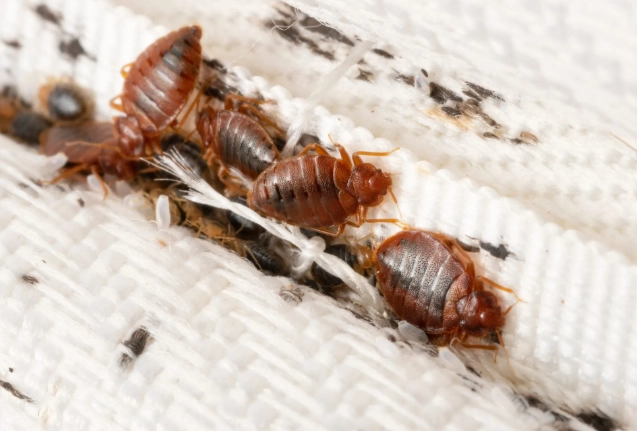
| Life Stage | Approximate Size | Key Characteristics & Color | Duration (Under Ideal Conditions) |
|---|---|---|---|
| Egg | ~1mm (pinhead) | Pearl-white, oval, often in clusters. | 6 to 10 days to hatch. |
| 1st Stage Nymph | ~1.5mm | Translucent or pale yellow. Visible only after feeding. | Must feed to molt to next stage. |
| 2nd Stage Nymph | ~2mm | Similar to 1st stage, slightly larger. | Must feed to molt. |
| 3rd Stage Nymph | ~2.5mm | Color begins to darken to a tan hue. | Must feed to molt. |
| 4th Stage Nymph | ~3mm | Clearly visible, brownish color. | Must feed to molt. |
| 5th Stage Nymph | ~4.5mm | Nearly adult size, dark brown. | Final molt into adult. |
| Adult | ~5-7mm | Flat, oval, brown to reddish-brown. Swells and darkens after feeding. | Can live 6-12+ months, laying 1-5 eggs daily. |
Here's the kicker most people don't realize: a bed bug must have a blood meal to molt and progress to each next stage. That means every single nymph you see is actively looking to bite you or a family member. An infestation isn't a future problem—it's a current, feeding one.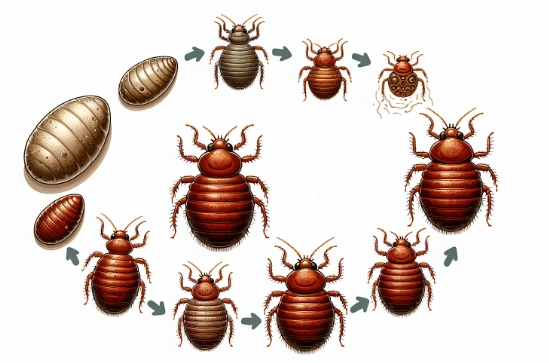
How to Identify Each Bed Bug Stage
Knowing what's in the table is one thing. Spotting these bugs in the wild, often in poor lighting, is another. Let's get practical.
Stage 1: The Eggs – Your Biggest Challenge
Bed bug eggs are masterpieces of evasion. At about 1mm long, they're the size of a pinhead or a grain of salt. Their pearl-white color helps them blend into seams, cracks, and even wood grain. They're sticky when laid, so they adhere to surfaces. You won't typically find a single egg; females lay them in clusters.
Stages 2-5: The Nymphs – The Stealth Feeders
This is where most visual confusion happens. First-stage nymphs are almost invisible until they feed. Unfed, they are translucent. After feeding, they become a bright, vivid red from the blood inside them, then slowly digest it and return to a pale color. As they progress through the stages, they become darker and more easily seen.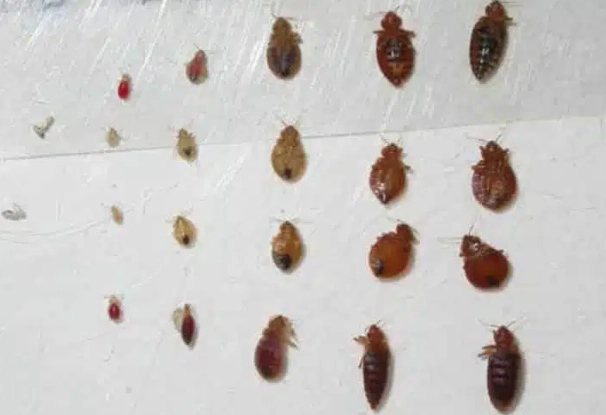
A key identifier across all nymph stages is their body shape. They share the same flat, oval shape as adults, just smaller. If you crush one (use tape, not your fingers), it may leave a small blood spot if it has fed recently.
Stage 6: The Adult – The Poster Bug
The adult bed bug is what everyone pictures. Unfed, it's a flat, broad-oval, mahogany-brown bug about the size and shape of an apple seed. After a full blood meal, its body elongates and swells, becoming a darker, reddish-brown and looking more like a bloated seed. This feeding-and-shrinking cycle is a telltale sign.
Why Spotting Nymphs and Eggs is Non-Negotiable
Think of an infestation like a weed problem. If you only pull up the visible adult weeds (the adults) but leave the roots and seeds (eggs and nymphs), the problem comes back stronger. Here’s the brutal math a lot of DIY treatments fail to account for.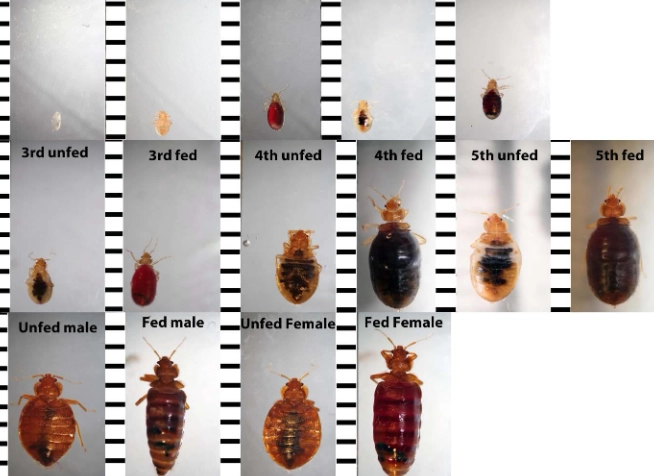
Let's say you find and kill 10 adult bed bugs. If half were mature females, they could have already laid 50-100 eggs that are now hidden. Those eggs will hatch into nymphs you can barely see. If you only sprayed a contact killer on the areas where you saw the adults, you've done nothing to those eggs and likely missed many nymphs. In 3-4 weeks, you have a new generation, often now resistant to the chemical you just used.
This is why identification isn't an academic exercise. It dictates your treatment strategy. Finding mostly adults suggests a more established, but possibly localized, infestation. Finding numerous tiny nymphs and eggs signals an active breeding site that needs aggressive, comprehensive targeting.
What to Do If You Find Any Stage of Bed Bug
Stay calm. Panic leads to poor decisions, like throwing out your furniture (they'll just crawl out of the bag and spread) or bombing with store-bought foggers (which drives them deeper into walls).
- Confirm Your ID: If possible, capture a specimen in a clear zip-top bag or on clear tape. Compare it to high-resolution photos from authoritative sources like university entomology departments (e.g., Cornell University's Entomology Department or the University of Kentucky's bed bug resources).
- Contain the Area: Do not move items from the infested room to other rooms. This is the fastest way to spread them.
- Begin Non-Chemical Control: Encase your mattress and box spring in certified bed bug-proof encasements. This traps any bugs inside to die and prevents new ones from harboring there. Start a meticulous vacuuming campaign, focusing on seams, cracks, and edges. Empty the vacuum into a sealed bag and dispose of it outside immediately.
- Evaluate Treatment Options: For anything beyond a very early, isolated case, professional help is usually the most effective and fastest route. Look for a licensed pest control professional experienced with bed bugs who uses an Integrated Pest Management (IPM) approach. This combines methods like steam, targeted insecticides, desiccants (like diatomaceous earth or CimeXa), and monitoring.
Common Identification Mistakes (Even Smart People Make)
I've been to countless callbacks where the homeowner was sure they had bed bugs, or sure they didn't. Often, they were tripped up by these look-alikes.
Mistake 1: Confusing carpet beetle larvae for bed bug nymphs. Carpet beetle larvae are fuzzy, have distinct bands, and are wider at the rear. They eat fabrics, not blood, but their hairs can cause allergic reactions that look like bites. People see the “bugs” and the “bites” and connect the wrong dots.
Mistake 2: Assuming “no adults” means “no problem.” If you're getting bites but only find a few tiny, pale nymphs, you might think it's not a big deal. Those nymphs are proof of a breeding population. Where there are young, there are eggs and adults hiding nearby.
Mistake 3: Misidentifying other stains as eggs. Dust, lint, salt crystals, or even old glue droplets can look like eggs. The defining features of bed bug eggs are their consistent oval shape, opalescent white color, and the fact they are often clustered and cemented in a hidden harbor.
Mistake 4: Thinking they're too clean to have bed bugs. Bed bugs are hitchhikers, not a sign of dirtiness. They come in on luggage, used furniture, or a visitor's bag. Cleanliness affects how easy they are to find, not whether you can get them.
LEAVE A REPLY
Your email address will not be published. Required fields are marked *