You're petting your dog or cat, and you feel a tiny, gritty speck. You look closer and see a minuscule, dark brown insect darting through the fur. Before you can pinch it, it's gone. That frustrating encounter sums up the flea problem perfectly. They're masters of evasion, and their primary superpower is their size. So, just how big are fleas? The short answer is: incredibly, almost unbelievably small. An adult flea typically measures between 1 to 3 millimeters in length. To visualize that, think of the period at the end of this sentence, or a sesame seed. That's your adversary.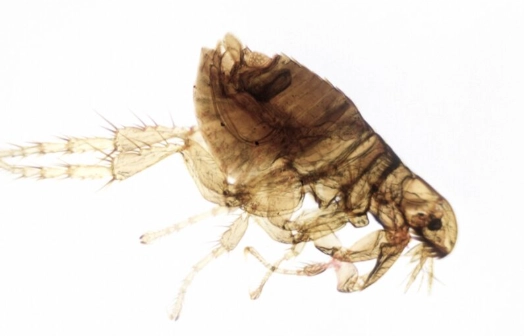
What You'll Find in This Guide
The Actual Size of Fleas: A Millimeter-by-Millimeter Breakdown
Let's get specific. Throwing around "1-3 mm" doesn't fully capture the challenge. Different life stages present different-sized problems.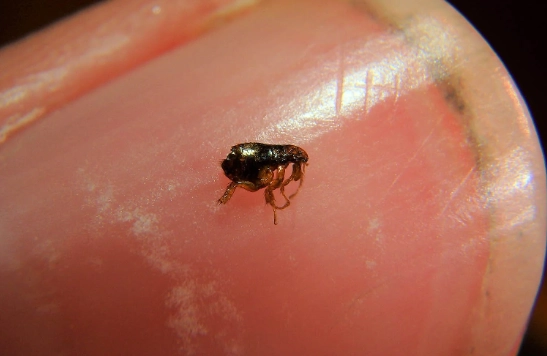
| Life Stage | Average Size | Visual Comparison | Key Characteristic |
|---|---|---|---|
| Adult Flea | 1.5 - 3.3 mm | Sesame seed, grain of sand, poppy seed | Laterally flattened body, dark reddish-brown, visible legs for jumping. |
| Flea Egg | ~0.5 mm | Grain of salt, speck of dust | White/pearly, oval. They are not sticky and fall off the pet into the environment. |
| Flea Larva | Up to 5 mm (when mature) | Small grain of rice (but translucent) | Whitish, legless, worm-like. Avoids light, burrows deep in carpets/cracks. |
| Flea Pupae (Cocoon) | ~5 mm | Small piece of lint or debris | Sticky, camouflaged with environmental dust. Nearly indestructible stage. |
Here's the kicker most articles miss: the size you see isn't the whole story. A flea's body is laterally compressed—flattened side-to-side like a coin standing on its edge. This anatomical trick allows it to slide effortlessly between hairs on your pet's skin. A "3 mm" flea presents a profile that's much harder to catch than a 3 mm round beetle would be.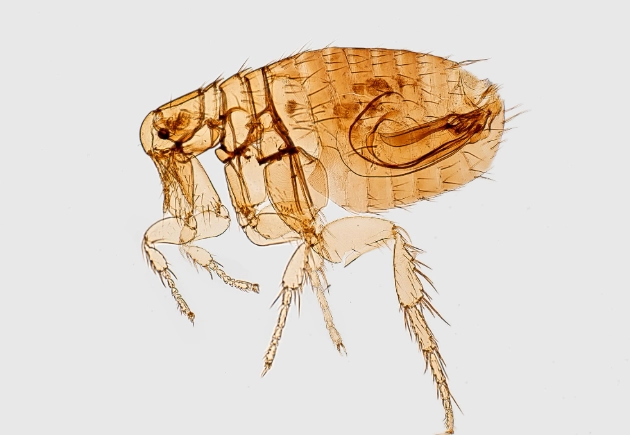
According to entomology resources from institutions like the CDC and university extension departments, the most common flea in the U.S., the cat flea (Ctenocephalides felis), averages about 2-2.5 mm. Dog fleas are slightly larger, but good luck telling them apart without a microscope.
Pro Tip: Don't waste time trying to measure a flea you catch. If it's a dark, fast-moving speck that jumps, it's a flea. The exact millimeter won't change your treatment plan. Focus on confirming its presence and moving to eradication.
Why Their Tiny Size is a Huge Problem
Their diminutive stature isn't just a curiosity; it's the core reason fleas are so successful and infuriating. Think about these three major advantages their size grants them.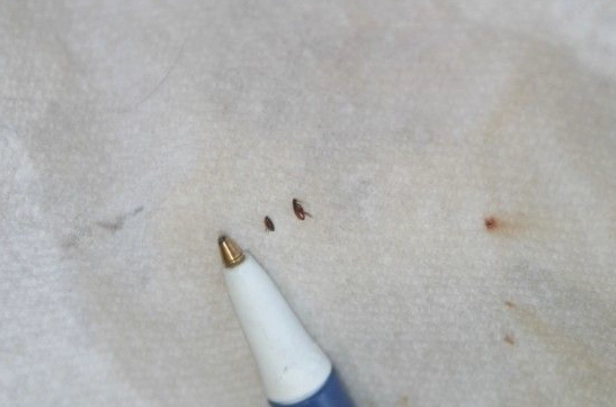
1. Stealth and Evasion
Their small size makes them nearly invisible in a pet's fur, especially on darker-coated animals. By the time you see an adult flea, the infestation is often well-established, with hundreds of eggs and larvae already in your home. They can hide in seams of furniture, deep within carpet fibers, and in floor cracks—places you'd never think to look.
2. Environmental Persistence
Flea eggs and larvae are masters of disguise. Eggs look like dandruff or salt. Larvae look like tiny, moving fibers. Pupal cocoons look like random dust bunnies. Because they're so small and camouflaged, routine vacuuming often misses a significant portion. You might clean up 80% and feel accomplished, but that remaining 20% is enough to restart the cycle in two weeks.
3. Rapid Movement and Jumping Power
This is the most impressive feat. Relative to their size, fleas are the best jumpers in the animal kingdom. A 2 mm flea can jump nearly 200 times its body length horizontally. That's like a human jumping over three football fields. This isn't just a fun fact; it explains how they move from pet to pet, from the carpet onto your ankles, and why swatting at them is usually futile.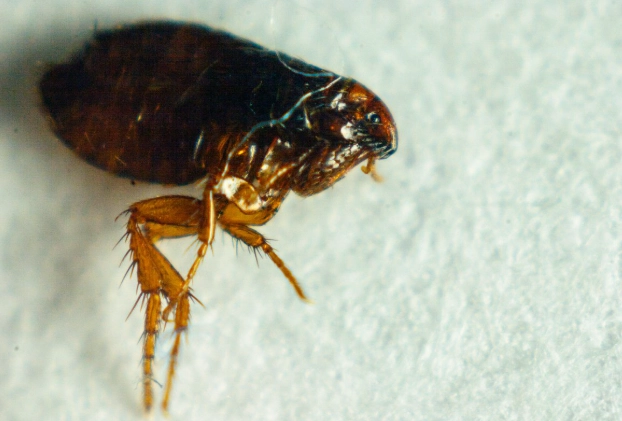
How to Spot Something So Small
Since you can't rely on seeing the flea itself easily, you need detective tactics. Here’s what I’ve learned from years of dealing with this (unfortunately).
The White Sock Test: Put on a pair of tall white socks and walk slowly through rooms where your pet spends time, especially carpeted areas. The dark fleas will jump onto the socks, making them visible.
The Flea Comb is Your Best Friend: Get a fine-toothed metal flea comb. Comb your pet over a white paper towel or plate. You're looking for two things: the live fleas themselves (which will get trapped in the teeth) and "flea dirt." Flea dirt is digested blood feces. To confirm it's not regular dirt, put the black specks on a damp paper towel. If they dissolve into a reddish-brown halo (blood), you've got proof.
Monitor Pet Behavior: Excessive scratching, licking (especially at the base of the tail), and restlessness are huge red flags. Pets develop something called Flea Allergy Dermatitis (FAD), where they react severely to flea saliva. For them, one flea bite can cause weeks of misery.
Common Misconceptions About Flea Size
Let's clear up some confusion that can lead to misidentification and failed treatments.
"If it's big enough to see clearly, it's not a flea."
Wrong. If you have good eyesight or your pet has light fur, you can absolutely see adult fleas. They are visible. The problem is they're rarely stationary long enough for a good look.
"Smaller fleas are just babies."
Not necessarily. A freshly emerged adult is not significantly smaller than an older one. Size variation within the adult stage is due to species, sex (females are often larger), and how recently they've fed. A tiny flea and a slightly less tiny flea are both adults capable of reproducing.
"Fleas can fly."
This is a big one. Fleas do not have wings and cannot fly. Their incredible jumping ability creates the illusion of flight. Knowing this helps with identification—if it's flying, it's likely a fungus gnat, fruit fly, or another small insect.
Your Flea Size Questions, Answered
I saw a tiny black bug on my dog that didn't jump. Was it a flea?
Probably not an adult flea. Fleas are renowned jumpers. What you likely saw could be a "flea dirt" speck, a piece of debris, or another parasite like a louse or tick nymph (which move but don't jump). Use a flea comb for a definitive check. If it doesn't jump when disturbed on a white surface, rule out an adult flea.
Can flea eggs or larvae be seen with the naked eye?
Barely, and only if you know what you're looking for. Eggs are like tiny salt grains. You'll usually see them as a collective "white pepper" sprinkle in pet bedding, not individually. Larvae are a bit larger but translucent and hide from light. You're more likely to find evidence of larvae (shed skins, feces) than see a live one crawling around. This is why treating the environment is non-negotiable—you're targeting what you can't easily see.
Are "sand fleas" or "beach fleas" the same size as pet fleas?
This is a classic naming confusion. Creatures called sand fleas are often tiny crustaceans (amphipods) or other insects. They might bite, but they are biologically different from the cat/dog flea (Ctenocephalides spp.) that infests homes. Their size can be similar, but the source and habitat are completely different. Your home infestation is almost certainly from the classic pet flea.
If fleas are so small, will a flea collar or shampoo that kills adults solve the problem?
This is the most critical misconception. No. Killing visible adults addresses less than 5% of the problem. The other 95% (eggs, larvae, pupae) are in your environment—your carpet, sofa, and car. Adulticides provide temporary relief but fail to break the life cycle. You need an Integrated Pest Management (IPM) approach: treat the pet with veterinarian-recommended products (often oral or topical), and treat the home with insect growth regulators (IGRs) that stop eggs/larvae from developing, combined with thorough, frequent vacuuming to physically remove stages.
I found a larger bug (4-5mm) that jumps. Is it a super-sized flea?
Unlikely. While engorged female fleas can get a bit plumper, they don't typically elongate to 5mm. You might be looking at a springtail (which jumps but is softer-bodied and often found in damp soil/plants) or a flea beetle (a garden pest). The lateral flattening and hard, dark body are key flea traits. When in doubt, trap it and search online for "common household jumping insects" or consult an exterminator. Misidentification leads to using the wrong treatment.
Understanding how big fleas are—or rather, how small—is the first step in winning the battle. It explains why they're hard to find, easy to underestimate, and why a half-measure approach always fails. They're engineered for survival at a miniature scale. Your response needs to be thorough, persistent, and targeted at every stage of their life, not just the ones you can see. Start with a flea comb and a plan for your home, and you'll be on your way to reclaiming your space from these tiny titans.
LEAVE A REPLY
Your email address will not be published. Required fields are marked *