You wake up with a line of itchy red welts. Your mind races. Could it be bedbugs? Before panic sets in, you need to know exactly what you're looking for. The phrase "what do bedbugs look like" isn't just about curiosity—it's the critical first step in solving a potential nightmare. Many people get it wrong, wasting time and money on the wrong treatments. I've been in pest management for over a decade, and I can tell you that misidentification is the single biggest mistake people make. This guide will give you the eyes of an expert.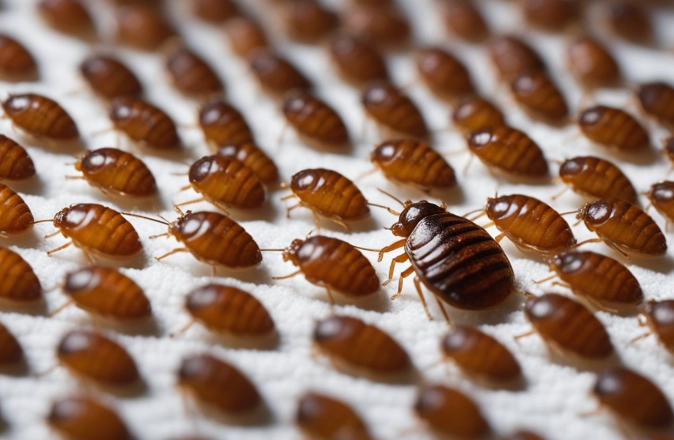
Let's cut through the vague descriptions. We'll go beyond "small brown bugs" and dive into the specific, visual details that separate bedbugs from their look-alikes. We'll cover their size at every life stage, their color before and after feeding, their preferred hiding spots (it's not just the mattress seam), and the subtle secondary signs most people completely overlook.
What You'll Learn in This Guide
The Adult Bedbug: Your Primary Target
An unfed adult bedbug is your baseline. Think of a flat, oval-shaped apple seed. Not round like a ladybug, but distinctly elongated. Their bodies are designed for hiding in cracks as thin as a credit card.
Size: About 5-7 millimeters long. That's roughly the size of Lincoln's head on a U.S. penny.
Color: This is where it gets interesting. An unfed adult is a mahogany or rusty brown. But after a blood meal, they undergo a dramatic change. They become engorged, elongating slightly, and their color shifts to a dark, reddish-brown—like a swollen cranberry. The body loses its flat profile and becomes more cylindrical and taut. This post-feeding transformation is a dead giveaway if you see it.
Key Features: Look for horizontal, band-like lines across their abdomen. They have a short, broad head with prominent antennae. Adults do have wing pads, but they are vestigial—they cannot fly or even jump. Their movement is a deliberate crawl.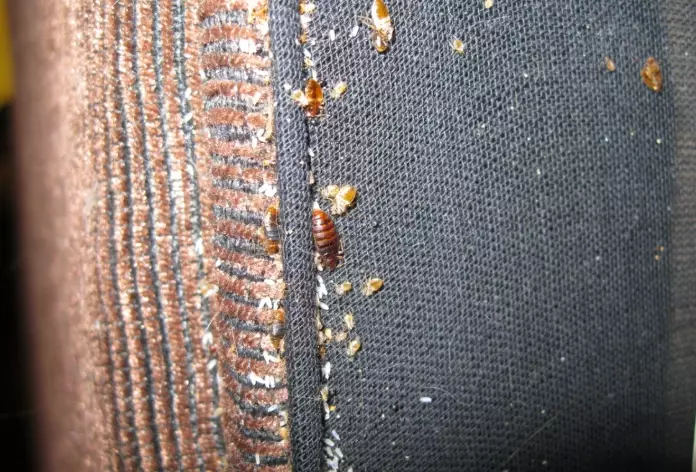
From Egg to Adult: How Appearance Changes
If you only look for adults, you'll miss 90% of the infestation. The younger stages and eggs are far more numerous and just as important to spot.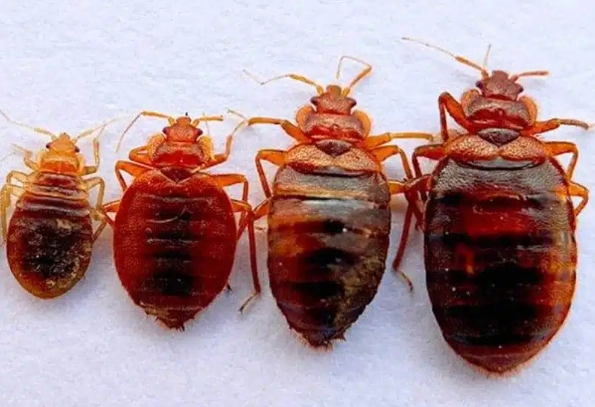
| Life Stage | What It Looks Like | Size Comparison | Key Identifying Feature |
|---|---|---|---|
| Eggs | Tiny, pearly-white, and oblong. They look like miniature grains of rice, but much smaller. They have a sticky coating that glues them to surfaces. | A pinhead or a grain of salt. About 1mm long. | Clustered in dark crevices, often near adult hiding spots. Nearly impossible to see without magnification. |
| 1st Stage Nymph | Translucent or pale yellow. After its first blood meal, a dark spot of digested blood is visible inside its abdomen. | A poppy seed. About 1.5mm. | Almost invisible on light-colored sheets. The visible gut content after feeding is a unique clue. |
| 2nd-5th Stage Nymphs | Gradually darken from tan to the rusty brown of adults. They become less translucent with each molt. | From sesame seed to apple seed size. | You will find their shed skins (exuviae). These are pale, papery, hollow replicas of the bug at each stage. |
| Adult | As described above: flat, oval, rusty brown unfed; engorged, elongated, dark red fed. | Apple seed. | Band-like abdomen, cannot fly. |
The shed skins are a major sign most homeowners miss. They look like live bugs but are empty, crumble easily, and are often found in clusters where the bugs hide. Finding these is concrete proof of an active population, even if you don't see a live one immediately.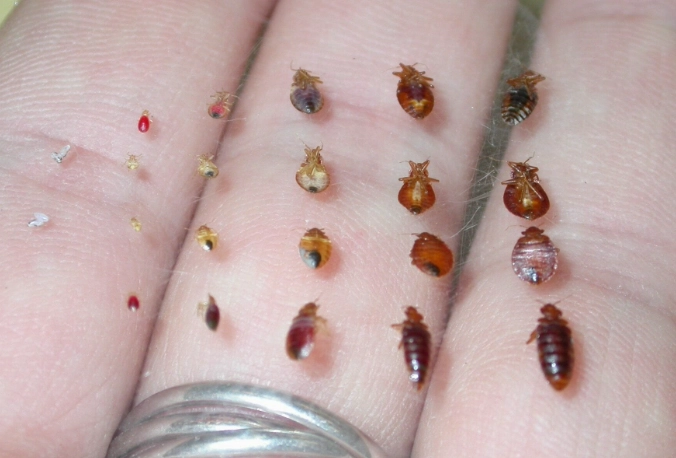
Is That a Bedbug? Common Imposters
This is where my field experience really matters. I've been called out for "bedbugs" that turned out to be carpet beetles, booklice, even spider beetles. Misidentifying these wastes everyone's time.
Bat Bugs vs. Bed Bugs: These are virtually identical to the naked eye. The difference is in the fringe hairs on the pronotum (the upper body segment behind the head), which are longer in bat bugs. This requires a microscope. The real clue is location: if you find them in an attic or near a chimney, think bat bug. They prefer bat blood but will bite humans if their primary host is gone.
Other Look-Alikes: Booklice are tiny, soft-bodied, and pale, often found in damp books. Spider beetles are rounder with a bulbous abdomen. Neither have the flat, oval profile of a bedbug.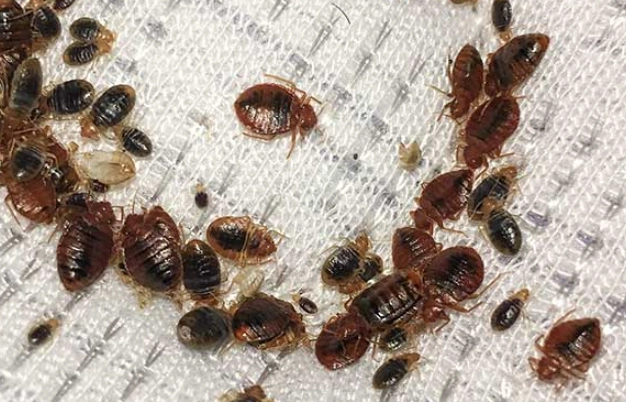
The Expert's Inspection Checklist: Where to Look
Knowing what they look like is useless if you don't know where to look. They are cryptic. Start within 5 feet of where you sleep or sit for long periods.
- The Bed: Don't just glance. Remove all bedding. Examine every seam, stitch, and piping of the mattress and box spring. Pull back the fabric stapled to the underside of the box spring—this is a prime harbor. Check the bed frame, especially screw holes, joints, and where the frame attaches to the headboard.
- Furniture: Check all seams and folds of upholstered chairs and sofas. Look underneath, between cushions, and where the fabric meets the frame.
- Perimeter Zones: Peel back the edge of carpeting near baseboards. Check behind loose wallpaper, inside electrical outlets and switch plates (turn off power first!), and in the folds of curtains.
- Personal Items: Look in the seams and pockets of luggage, backpacks, and the binding of books on a bedside table.
You're not just looking for bugs. You're looking for evidence: the dark, rusty black spots of their excrement (which can bleed like a marker on fabric), tiny blood smears on sheets from crushed bugs, and those pale yellow shed skins.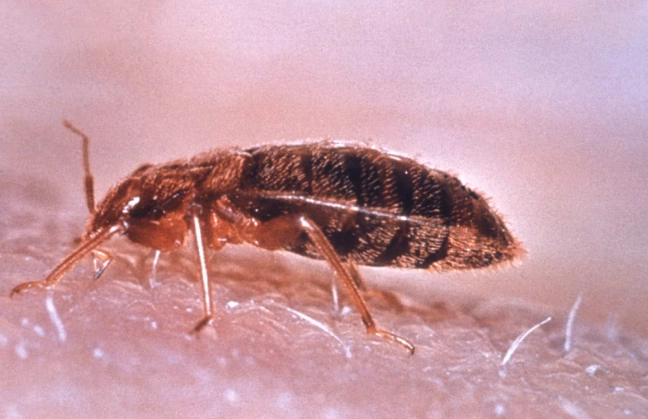
The 3 Most Common Bedbug ID Mistakes (And How to Avoid Them)
After hundreds of inspections, I see the same errors repeatedly.
Mistake 1: Assuming they're only in dirty places. This is a myth that causes dangerous delays. Bedbugs are hitchhikers. They are just as happy in a five-star hotel as a cluttered apartment. Their presence is not a reflection of cleanliness.
Mistake 2: Relying solely on bite patterns. Bite reactions are highly variable. Some people have no reaction at all. Others get large, itchy welts. The classic "breakfast, lunch, and dinner" line of bites is a clue, but its absence doesn't rule out bedbugs. Never use bites alone for a diagnosis.
Mistake 3: Giving up the search too easily. A light, early infestation can be incredibly hard to find. You might only see a few fecal spots or one shed skin. If you have strong reason to suspect them (e.g., returning from travel with bites), but your initial search is negative, monitor for 7-10 days. Use climb-up interceptors under bed legs. They will trap bugs trying to reach you, providing undeniable proof.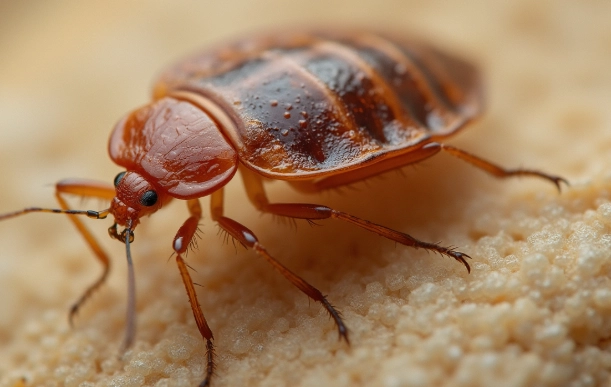
Your Bedbug Identification Questions Answered
I have itchy bites but can’t find bugs. Could it still be bedbugs?
Absolutely. In early infestations, the population can be very small and incredibly adept at hiding. The bugs may only come out to feed when the room is perfectly dark and still, then retreat deep into a wall void or behind a baseboard. Bites are a symptom, not proof. You need to find physical evidence: the bugs themselves, their black fecal spots, eggs, or shed skins. Consider placing passive monitors like interceptors for a week or two.
Can you see bedbugs crawling on you during the day?
It's rare. They are nocturnal and averse to light. Seeing one crawl on you in broad daylight usually indicates a very large, established infestation where their harborage is overflowing. More commonly, you might see one on a sheet if you turn on a light suddenly in the middle of the night.
What's the difference between a bedbug stain and just a dirt mark?
Bedbug fecal spots have a specific look. They are dark black or rusty brown. The key test: they often "bleed" like a marker if you wipe them with a damp cloth or a drop of water. They don't brush off like dust; they smear. They are also typically found in clusters or lines along mattress seams, not as random, solitary spots.
I found one bug. How many are likely hiding?
If you see one adult, especially a female, there is almost certainly an established population. A single mated female can start an infestation. By the time you spot a wandering adult, there are often eggs and nymphs hidden nearby. Don't fall into the trap of thinking "it's just one." Treat the finding as a red flag for a thorough inspection.
Do bedbugs have a smell?
A heavy, established infestation can produce a sweet, musty, almost coriander-like odor. It comes from their scent glands. However, by the time a human nose can detect it, the infestation is usually quite large. Don't rely on smell for early detection. Use your eyes and a flashlight.
Identifying bedbugs correctly is a skill that combines knowing their precise visual characteristics with a systematic, patient search pattern. Forget the Hollywood version of bugs swarming over a bed. Real-world detection is about spotting subtle clues: a few dark specks in a mattress tuft, a single pale skin behind a headboard, or the distinct, elongated shape of a bug hiding in a screw hole. Use this guide as your visual manual. If you do find confirming evidence, don't panic. Accurate identification is the first and most crucial step toward effective elimination.
LEAVE A REPLY
Your email address will not be published. Required fields are marked *