You're admiring a bright white daisy in your garden when you notice something odd. One of the "petals" has legs. And it's holding a paralyzed bee. Congratulations, you've just met a member of the Thomisidae family, better known as the crab spider. Forget webs and silk traps. These spiders are the special forces of the arachnid world, relying on pure stealth, powerful ambush tactics, and a wardrobe of disguises that would make a chameleon jealous. They're fascinating, mostly harmless to us, and play a unique role in your backyard's ecosystem. Let's pull back the petals and see what makes them tick.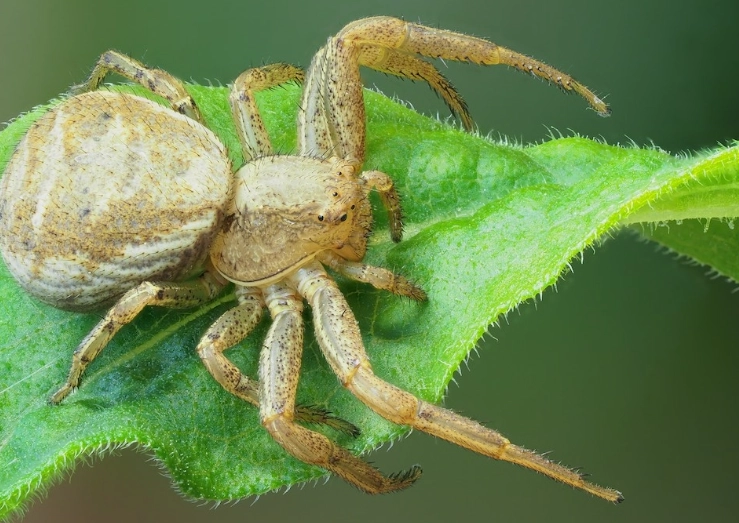
What's Inside?
What Exactly Are Crab Spiders?
Thomisidae is a huge family, with over 2,100 species worldwide. They didn't get the "crab" nickname by accident. Their body shape is flat and wide, and they hold their front two pairs of legs out to the side, ready to strike, much like a crab's claws. This posture gives them a low, stable profile perfect for hugging flower heads or bark.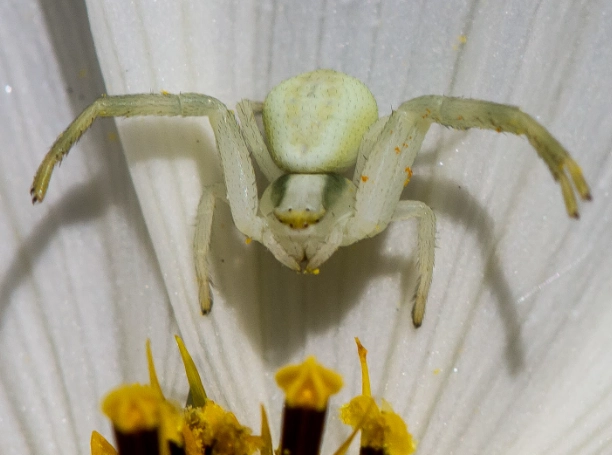
Here's the first thing most people get wrong: they assume all crab spiders build webs. They don't. At all. They are classic ambush predators. They find a prime hunting spot—usually a flower buzzing with insect traffic—plant themselves, and wait. For hours. Sometimes days. Their patience is absolute.
Another common misconception is that they are all brightly colored. While many famous ones are (like the flower crab spider, Misumena vatia), plenty of species are dull browns, greys, or greens, perfectly suited for blending into tree bark, leaf litter, or soil. Their diversity is their survival strategy.
Quick Profile: Crab spiders are solitary, non-aggressive towards humans, and possess venom meant for small insects like flies, bees, and butterflies. Their bite is rarely felt by people and is medically insignificant. They are a sign of a healthy, insect-rich environment.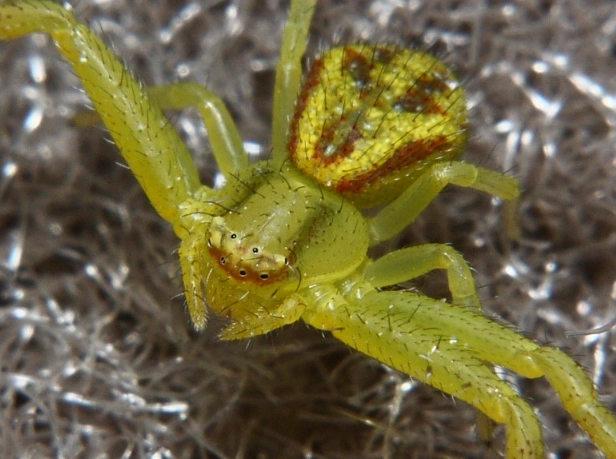
How to Identify a Crab Spider: A Step-by-Step Visual Guide
Spotting a crab spider is a game of "I Spy." Here’s how to win.
Step 1: Look for the Stance
Forget the web. Look at the posture. Is the spider sitting flat against a surface with its front legs splayed out laterally, ready to grab? That's your first major clue. Orb weavers and wolf spiders have a more forward-facing, "ready-to-run" stance.
Step 2: Check the Front Legs
Crab spiders have robust, powerful front legs that are often noticeably larger and thicker than their back legs. These are their primary weapons for seizing prey. In many species, these legs are also covered in spines to help grip struggling insects.
Step 3: Note the Eyes and Color
Their eight eyes are often arranged in two curved rows on the front of a broad "face." But honestly, from a distance, you won't see the eyes. Color and location are bigger giveaways. Is it sitting on a flower, not in a web near it? Is its color a near-perfect match for the petal or leaf? You're likely looking at a Thomisid.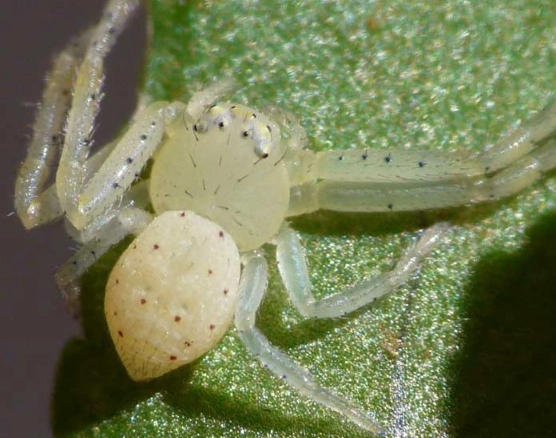
To clear up confusion, here’s how they stack up against other common garden spiders:
| Spider Type | Hunting Method | Typical Posture | Common Garden Location |
|---|---|---|---|
| Crab Spider (Thomisidae) | Ambush (no web) | Legs splayed sideways, flat on surface | Center of flowers, on leaves/bark |
| Orb Weaver (Araneidae) | Silk Web | Often sits in center of its circular web | Between plants, fence corners |
| Jumping Spider (Salticidae) | Active Hunter (jumps) | Compact, forward-facing, visibly curious | On sunny walls, plant stems |
| Wolf Spider (Lycosidae) | Active Hunter (runs) | Long legs, poised to chase | On ground, in leaf litter |
The Art of the Ambush: How Crab Spiders Hunt
This is where crab spiders become truly remarkable. Their entire existence is built around one perfect moment.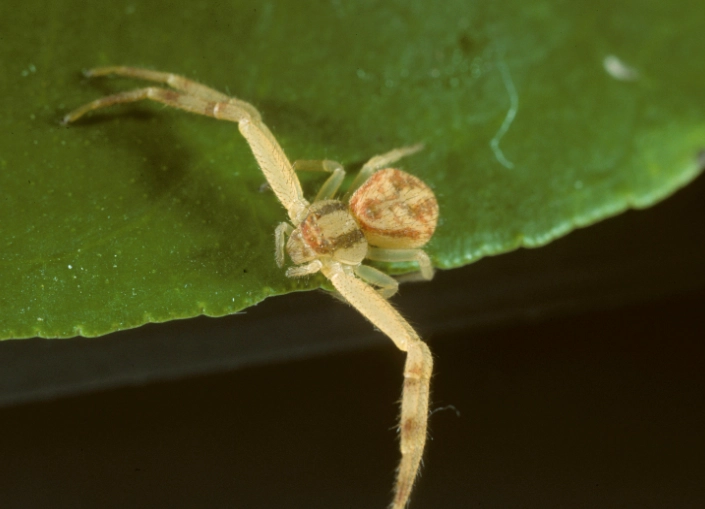
They don't chase. They become part of the scenery. I once watched a white crab spider on a daisy for a week. It never moved from its spot. When a honeybee finally landed, the strike was faster than I could blink. The spider lunged, sunk its fangs into the bee's neck, and held on. The bee struggled for a few seconds, then went still. The spider then drained its fluids right there on the flower. No drama, just brutal efficiency.
The color-changing ability of some species, like the flower crab spider, is a slow process, taking days. It's not instant like in movies. They migrate pigments in their skin to match yellow or white flowers. It's an energy-intensive trick, so they don't do it for fun. They do it because it works.
Their venom is neurotoxic, designed to quickly immobilize fast-flying insects. For a human? It's like getting poked by a tiny pin. I've been bitten once while handling one (my fault, not its). It felt like the slightest prick, with no redness or swelling afterward. The spider was just telling me to back off.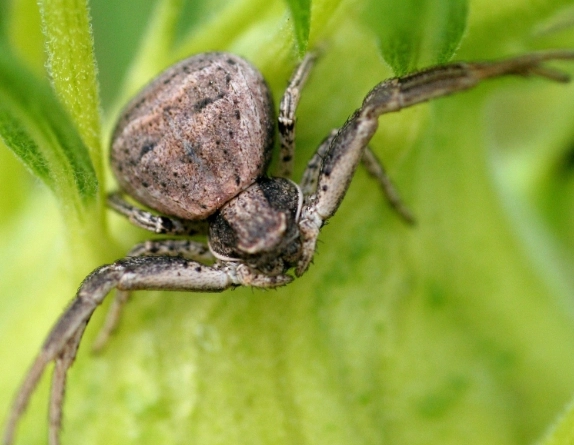
Crab Spiders in Your Garden: Friend or Foe?
Let's settle this. Crab spiders are beneficial garden allies, but with a nuanced role.
They are not pest control in the traditional sense. They won't decimate your aphid population—they prefer bigger, juicier targets. Their menu includes pollinators: bees, butterflies, flies, and wasps. This is where gardeners get nervous. "They're killing my bees!"
Here's the expert perspective you rarely hear: their impact is minimal and natural. A healthy bee colony won't be threatened by a few crab spiders. In fact, by culling slower or weaker pollinators, they might play a subtle role in maintaining pollinator fitness. They are part of the food web, not an outlier. They also eat plenty of non-beneficial insects like flies and some moths.
Think of them as part of your garden's biodiversity, a sign that your space is lively enough to support a top-tier ambush predator. Removing them is unnecessary and disrupts a natural balance. The best practice? Observe and appreciate. They are living art and a lesson in patience.
Where and When to Find Crab Spiders
You don't need to go to a nature reserve. Your local patch is perfect.
Prime Locations:
- Flower Heads: The #1 spot. Especially white and yellow composite flowers like daisies, goldenrod, and sunflowers. Check the very center.
- Leaf Surfaces: Green species blend seamlessly on shrubs and broad-leaved plants.
- Tree Bark: Flatter, darker species mimic lichen and bark textures.
- In Leaf Litter: Some species hunt on the forest floor.
Best Time: Late spring through summer, on warm, sunny days when insect activity is high. They are less active early in the morning or on cool, cloudy days.
Pro Tip for Photographers: Move slowly. Get your eye level with the flower. They rely on motionless camouflage, so if you approach gently, you can get incredibly close. A macro lens will reveal stunning details—the velvety texture of their bodies, the intricate patterns, the grip of those powerful front legs.
For authoritative information on specific species and their ranges, resources like the Australian Museum or the British Spider Recording Society pages are excellent references.
Your Crab Spider Questions, Answered
Are crab spiders dangerous to humans or pets?
No. Their venom is not medically significant for humans, dogs, or cats. A bite might cause a tiny, temporary pinch or minor localized redness at most, akin to a mild mosquito bite. They are not aggressive and will only bite if directly pressed against skin, which is hard to do given their habitat.
I found a crab spider on my flowers. Should I remove it to protect my bees?
I strongly advise against it. Their predation is a natural check within the ecosystem. A single spider captures a negligible number of pollinators compared to the hundreds your garden hosts daily. Removing it is an overreaction that removes a fascinating native predator. Observe it as a sign of a complex, healthy garden.
Can crab spiders change to any flower color?
Not even close. This is a common overstatement. Only certain genera, like Misumena, have this ability, and they are generally limited to a range between white and yellow. They cannot turn pink, purple, or blue. The change is also slow, driven by hormonal cues, and reversible. Most crab spiders have a fixed color that matches their preferred habitat.
What happens to crab spiders in the winter?
They typically overwinter as eggs or immature spiderlings (spiderlings) in sheltered spots like under bark, in leaf litter, or in curled dead leaves. The adult females of many species die after laying their eggs in a silken sac in late summer or fall. You won't see adults active once frost hits.
How can I attract crab spiders to my garden?
Don't "attract" them as you would a bee with a bee hotel. Instead, cultivate a diverse, pesticide-free garden with a long season of blooming flowers. Plant native species that attract a variety of insects (their prey). Provide structure with shrubs, trees, and areas of undisturbed leaf litter. If you build a robust insect community, the predators, including crab spiders, will come on their own.
LEAVE A REPLY
Your email address will not be published. Required fields are marked *