You're puttering in the garden and spot a long-legged, somewhat gangly insect sitting motionless on a leaf. It looks awkward, almost clumsy. You'd never guess it's one of the most efficient killers in the insect world. That's the assassin bug for you. Master of disguise, patient hunter, and owner of a weapon that would make any horror movie villain jealous. Let's clear something up right away: the name isn't hype. These bugs are genuine ambush predators, and their hunting strategy is a brutal marvel of evolution. But here's the twist most articles miss: the vast majority of the 7,000+ assassin bug species are harmless to humans and are actually your garden's best friend. The problem, and the source of all the fear, boils down to one notorious family member: the kissing bug. Understanding that distinction is where most people get tripped up.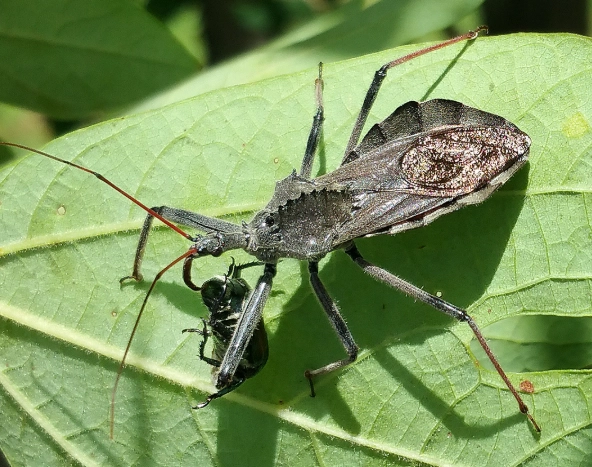
What You'll Discover in This Guide
- What Exactly Is an Assassin Bug? (Identification & Basics)
- The Assassin's Toolkit: How They Hunt and Feed
- Assassin Bugs and Humans: Friend or Foe?
- How to Identify Common Assassin Bug Species
- What to Do If You Encounter an Assassin Bug
- Beyond the Bite: The Ecological Role of Assassin Bugs
- Your Assassin Bug Questions Answered (FAQ)
What Exactly Is an Assassin Bug? (Identification & Basics)
Assassin bugs belong to the family Reduviidae, a huge group within the true bugs (order Hemiptera). Forget beetles or flies—true bugs have piercing-sucking mouthparts, and assassin bugs have perfected this tool into a weapon. The classic look? A medium-sized bug (often 0.5 to 1.5 inches long) with a slender, elongated body. The head is narrow with prominent, often curved, beady eyes. The most telltale feature is the proboscis—that beak-like mouthpart. It's not just for show; it's a fused, rigid straw they use to inject and suck.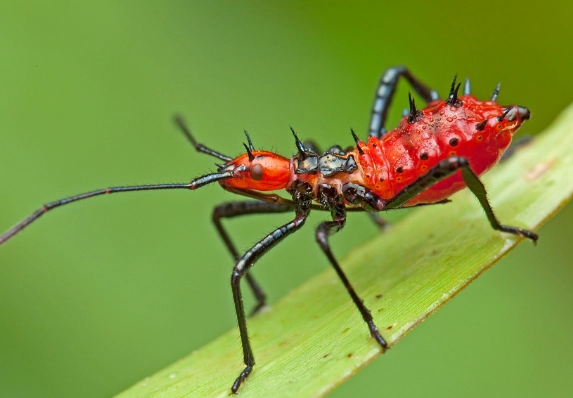
Where do you find them? Almost anywhere. Gardens, woodlands, under bark, in leaf litter. They're ambush predators, so they love places with good cover where prey will wander by. Their coloration is usually cryptic—browns, grays, greens—helping them blend into bark or foliage. Some tropical species are fantastically camouflaged to look like moss or lichen.
I've spent years observing them, and the first mistake people make is assuming anything with a "pointy nose" is an assassin bug. Leaf-footed bugs and stink bugs have similar beaks but are plant-feeders. The assassin's posture is different. It's often alert, front legs sometimes slightly raised, ready to grab. A plant-feeder just sits there, docile.
The Assassin's Toolkit: How They Hunt and Feed
This is where they earn their name. The hunt is a two-step process: immobilize, then digest.
The Proboscis: A Multi-Purpose Weapon
That curved beak is a hypodermic needle. When prey (a caterpillar, aphid, other bug) gets within range, the assassin bug strikes with shocking speed. It plunges the proboscis into the victim. But it doesn't just suck out bodily fluids like a vampire. That would be too slow, and the prey might escape. Instead, it injects a potent salivary cocktail. This saliva is the real killer. It contains powerful enzymes and neurotoxins that paralyze the prey almost instantly and begin dissolving its internal tissues. Think of it as external digestion. After a few moments, the assassin bug sucks up the resulting nutrient-rich soup.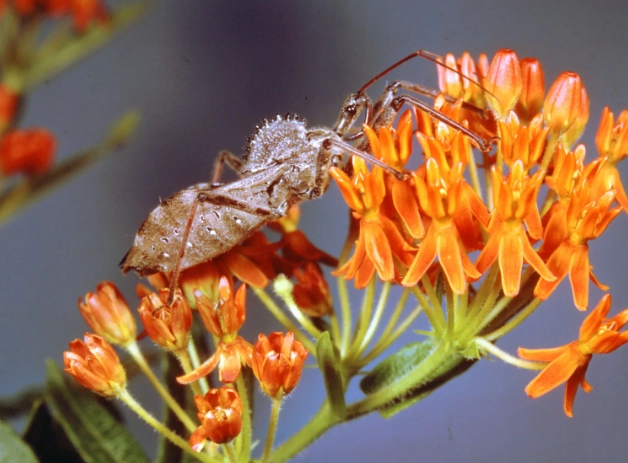
Ambush vs. Active Hunting: Two Strategic Styles
Most are pure ambush predators. They'll sit for hours, perfectly still, waiting. Some, like the thread-legged bugs, will even use a dab of sticky glue or debris on their legs to snag flying insects out of the air. Others, like the wheel bug (one of the largest North American species), are more active patrollers. I once watched a wheel bug stalk a large caterpillar across a branch, moving with a deliberate, slow grace before delivering a decisive stab. The caterpillar was motionless in seconds.
The feeding process can take a while—sometimes 10-15 minutes for a large meal. The bug will often pivot the prey around to find the best angle, a strangely methodical sight.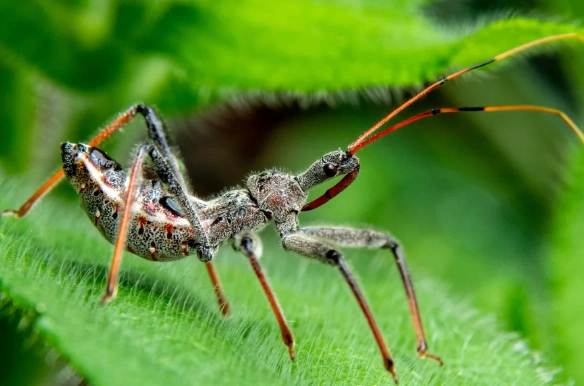
Assassin Bugs and Humans: Friend or Foe?
This is the critical section. The family Reduviidae is a tale of two extremes.
The Garden's Ally: Beneficial Assassin Bugs
The overwhelming majority of species are beneficial insects. They are voracious predators of common garden pests. Aphids, cabbage worms, Japanese beetles, leafhoppers, caterpillars—you name it, an assassin bug will likely eat it. Having a few in your garden is like hiring a tiny, highly efficient security force that works for free. Species like the spined assassin bug or the masked hunter are common in North American gardens and are entirely harmless unless you deliberately harass them. I actively encourage them in my vegetable patch. Seeing a spined assassin bug nymph (which looks like a tiny, red-and-black ant mimic) taking down an aphid colony is deeply satisfying pest control.
The Dark Side: Kissing Bugs and Disease
Now for the infamous exception: kissing bugs (subfamily Triatominae). These are a specific group of assassin bugs adapted to feed on the blood of vertebrates, including humans. They are primarily found in the Americas, from the southern United States through Central and South America. Their common name comes from their habit of biting sleeping people on the face, often around the lips or eyes.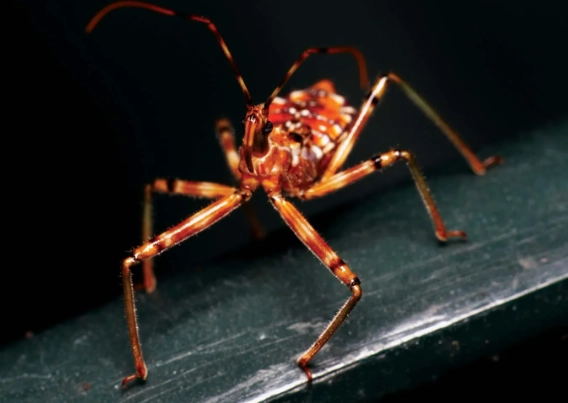
The bite itself isn't the main issue (though it can be painful and cause allergic reactions in some). The real danger is that they can transmit the parasite Trypanosoma cruzi, which causes Chagas disease. This is a serious, chronic illness that can lead to heart and digestive problems years after the initial infection.
This is the source of the public fear around "assassin bugs." But it's crucial to understand: not all assassin bugs are kissing bugs, and most kissing bug species are not commonly found in human dwellings. The risk is highly specific to certain regions and circumstances. According to information from the Centers for Disease Control and Prevention (CDC), vector-borne transmission in the U.S. is considered rare, but awareness is key.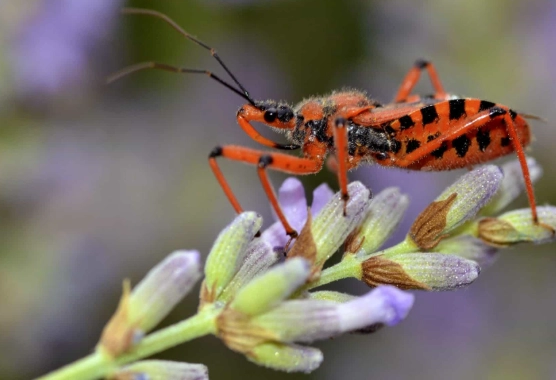
How to Identify Common Assassin Bug Species
Knowing who's who can turn fear into appreciation. Here’s a quick guide to some frequently encountered species.
| Species (Common Name) | Key Identifying Features | Habitat & Role | Interaction with Humans |
|---|---|---|---|
| Wheel Bug (Arilus cristatus) | Large (over 1 inch), dark gray, with a distinctive cog-like "wheel" on its thorax. | Gardens, woodlands. Eats large pests like beetles and caterpillars. | Beneficial. Can deliver a painful defensive bite if handled. Best observed, not touched. |
| Spined Assassin Bug (Sinea diadema) | Brown, with spiny projections on its thorax. Nymphs are red and black. | Common in gardens and meadows across North America. | Highly beneficial. Shy, rarely bites. A gardener's best friend. |
| Masked Hunter (Reduvius personatus) | Nymphs cover themselves in dust and debris for camouflage, appearing as a "walking lint ball." Adults are all black. | Often found in homes, hunting bed bugs and other small insects. | Generally beneficial (eats pests). Can bite if pressed against skin. A sign of other insect issues. |
| Kissing Bug (Various Triatoma species) | Conical head, long thin legs, body edges often have a striped pattern of light and dark. | Rodent nests, dog kennels, cracks in poor-quality housing. Seeks blood meals. | Potential disease vector. Should not be handled. Contact local health authorities if suspected. |
| Thread-Legged Bug (Subfamily Emesinae) | Extremely long, thread-like legs and body. Looks fragile, like a walking stick insect. | Hangs from vegetation, uses front legs coated in sticky resin to catch flying insects. | Harmless and fascinating. No threat to humans. |
What to Do If You Encounter an Assassin Bug
Your response should be dictated by context.
In the Garden or Outdoors: Leave it alone. Use the identification guide above. If it's a wheel bug, spined assassin bug, or any other non-kissing bug species, congratulate yourself on having a natural pest controller. Observe from a respectful distance. Never try to pick one up with bare hands. Their defensive bite is a memorable lesson in pain.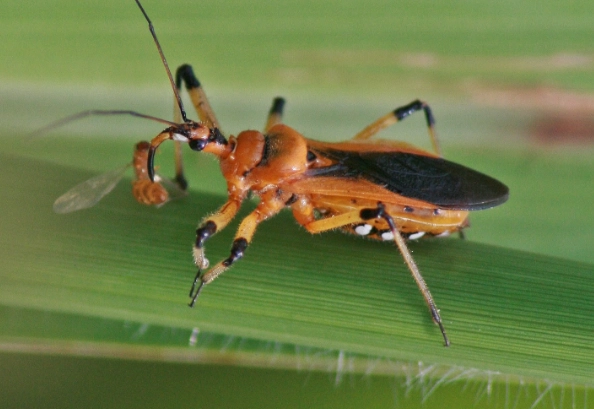
In Your Home: This requires more caution. First, identify it. Is it a masked hunter (black, or a dusty nymph)? It's likely there hunting other insects, like carpet beetles or bed bugs. You might want to capture it and release it outside, using a cup and paper. If you cannot confidently rule out a kissing bug, do not crush it. Capture it carefully in a sealed container. This is important: according to public health guidance, you should contact your local health department or a university entomology extension service for proper identification. Crushing a potential kissing bug can expose you to the parasite.
If Bitten: Wash the area thoroughly with soap and water. Apply ice to reduce swelling and pain. Most bites from common assassin bugs are no worse than a bee sting, but watch for signs of a severe allergic reaction. If you suspect the bite came from a kissing bug, especially in an endemic area, seek medical advice and mention the possibility of Chagas disease exposure.
Beyond the Bite: The Ecological Role of Assassin Bugs
Viewing them only through the lens of danger misses the bigger picture. These insects are vital components of a healthy ecosystem. They are mid-level predators, helping to control populations of herbivorous insects that could otherwise defoliate plants. This regulation supports plant health and biodiversity. In agricultural settings, their role as natural biocontrol agents is increasingly recognized as a sustainable alternative to pesticides. Research from institutions like the University of Florida's Entomology Department highlights their importance in integrated pest management (IPM) programs. They are not mindless killers; they are a key cog in the ecological machine, maintaining balance.
LEAVE A REPLY
Your email address will not be published. Required fields are marked *