Let's be honest, most of us just call them all "flies" and reach for the swatter. But that buzzing annoyance near your kitchen compost isn't the same creature lurking around your bathroom drain. Knowing the different kinds of flies in your home is the first, and most overlooked, step in actually solving the problem for good. It's not just about annoyance; some species are harmless, while others are serious health risks, carrying pathogens from garbage and sewage right onto your food. I learned this the hard way years ago, battling what I thought was a fruit fly issue that turned out to be a drain fly infestation—the treatments are completely different.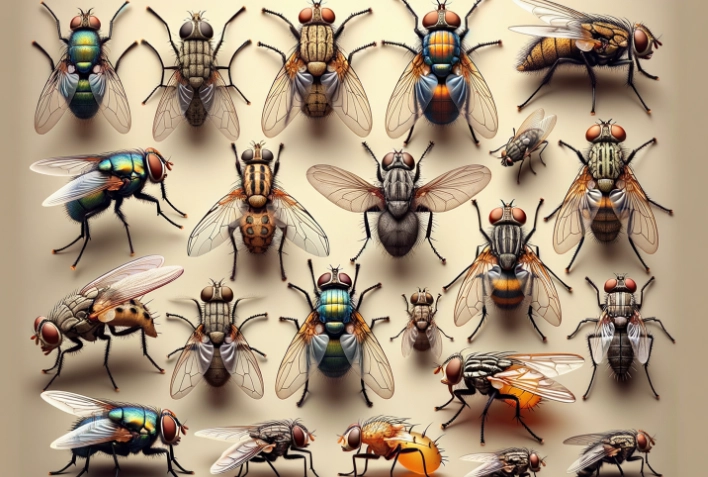
Quick Navigation: What's Buzzing In Here?
Why Knowing Your Flies Matters More Than You Think
Spraying a generic insecticide at a cluster of flies might give you momentary satisfaction, but it's a band-aid solution. If you don't know which fly you're dealing with, you can't find and eliminate its breeding source. That's the golden rule. Fruit flies breed in fermenting organic matter (think overripe bananas, a forgotten potato). Drain flies breed in the gelatinous gunk inside sink and shower pipes. Blow flies and flesh flies seek out dead animals (a mouse in the wall, sadly) or rotting meat.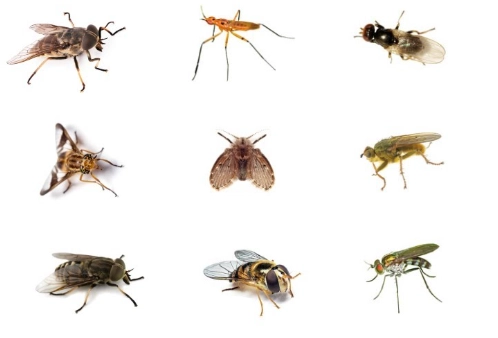
Misidentifying them means you'll waste time and money. Pouring bleach down a drain for a fruit fly problem does nothing. Putting out vinegar traps for drain flies is equally futile. This targeted approach is the core of Integrated Pest Management (IPM), a strategy endorsed by experts like those at the University of Kentucky's Entomology Department. It's about smart strategy, not chemical warfare.
Meet the Usual Suspects: Common Flies in Homes
Here are the characters you're most likely to encounter. Pay attention to their favorite hangouts—it's a dead giveaway.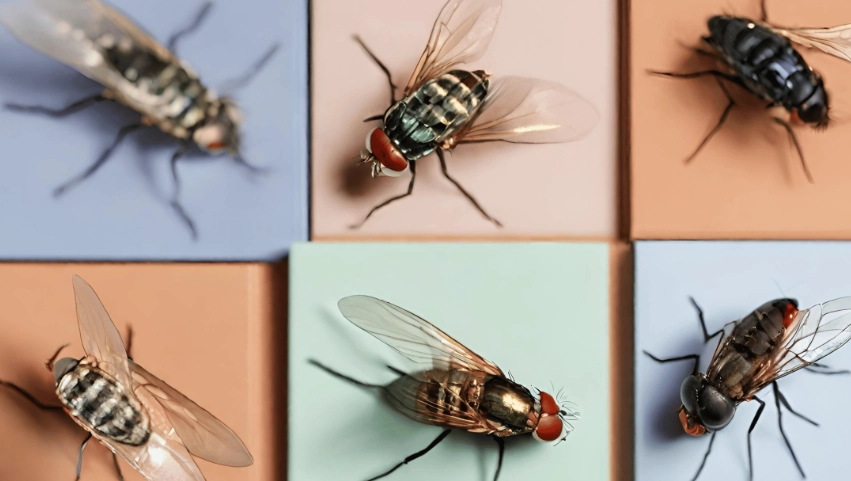
House Fly (Musca domestica)
The classic. Grey, about 1/4 inch long, with four dark stripes on the thorax. They're the ultimate generalists. You'll see them on windowsills, near trash cans, and patrolling kitchen counters. Their breeding grounds are disgusting: animal feces, moist garbage, compost piles. They can transmit over 100 pathogens, including salmonella and E. coli, by vomiting and defecating on surfaces. They're the number one fly you want to keep out.
Fruit Fly (Drosophila melanogaster)
Tiny (1/8 inch), tan or light brown, with bright red eyes. They have a slow, drifting flight pattern. If you see them hovering over a fruit bowl, wine glass, or recycling bin, you've found them. They breed in the thin film of yeast on fermenting fruits and vegetables. A single overripe tomato can spawn hundreds. They're more of a nuisance than a major health threat, but an infestation is a sign your kitchen hygiene needs a tune-up.
Drain Fly (Psychodidae)
Also called moth flies. They look fuzzy, with heart-shaped wings and a moth-like silhouette when at rest. Dark grey or black. They don't fly well; they sort of hop and flutter along walls, especially near sinks, showers, and floor drains. The larvae live and feed in the built-up biofilm inside pipes. Seeing them is a clear sign you need to clean your drains mechanically, not just pour chemicals.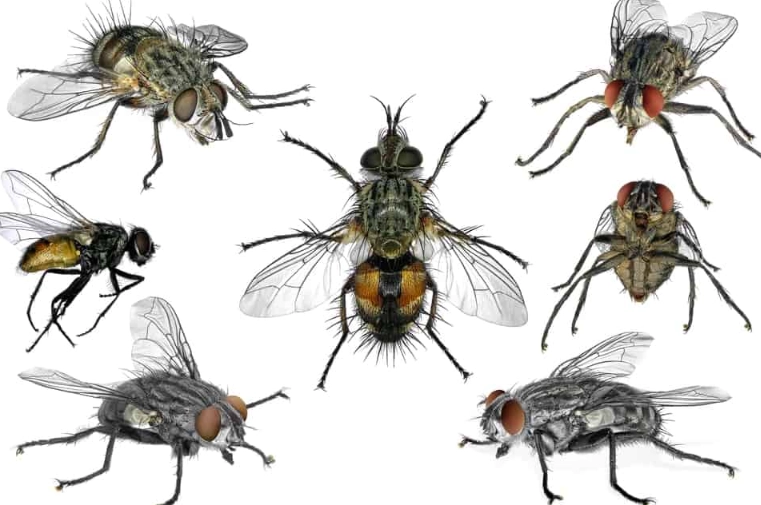
Cluster Fly (Pollenia rudis)
Larger and slower than house flies, with a dark grey checkered abdomen and golden hairs on the thorax. They're a seasonal nuisance. In late fall, they seek shelter in attics and wall voids to overwinter. On warm winter days, you might find dozens sluggish and confused in your living room. They don't breed indoors and aren't associated with filth; their larvae are parasites of earthworms. The problem is their sheer numbers and the fact they die in your walls, attracting other pests.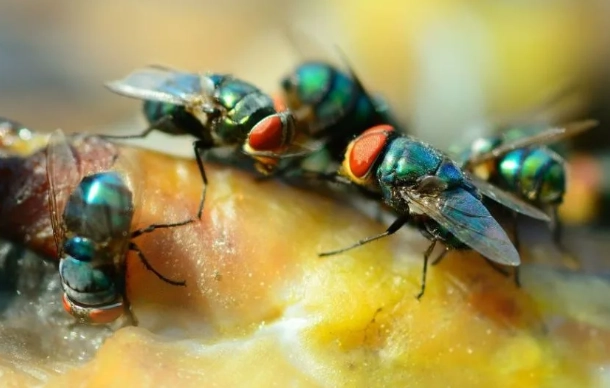
Blow Fly & Flesh Fly (Calliphoridae & Sarcophagidae)
These are the metallic ones. Blow flies are shiny blue, green, or copper. Flesh flies are grey with a checkerboard abdomen and often have red eyes. Their presence inside a living area is a major red flag. They are attracted to decaying animal matter. Finding them indoors usually means there's a dead rodent, bird, or other animal carcass in an attic, wall, crawl space, or chimney. They are powerful fliers and can get in through small gaps.
How to Identify Flies Like a Pro (Without a Microscope)
Forget trying to count wing veins. Use this simple decision tree based on behavior and location.
Step 1: Location, Location, Location. Where are you seeing them most?
- Kitchen, near fruit or trash: Think Fruit Fly or House Fly.
- Bathroom, basement, near drains: Almost certainly Drain Flies.
- Attic, upper floors, windows in fall/winter: Likely Cluster Flies.
- Random room, especially with a foul odor: Alarm bells for Blow/Flesh Flies.
Step 2: Observe Their Behavior.
- Fast, direct flight: House Fly, Blow Fly.
- Slow, hovering flight: Fruit Fly.
- Weak, hopping flight along walls: Drain Fly.
- Slow, clumsy, especially in cool weather: Cluster Fly.
Step 3: The Size and Color Check. This confirms your guess.
- Tiny & tan/red-eyed: Fruit Fly.
- Medium & grey/striped: House Fly.
- Fuzzy & dark/moth-like: Drain Fly.
- Large & metallic: Blow/Flesh Fly.
- Large & dark/dull with golden hairs: Cluster Fly.
One subtle mistake I see often? People confuse large house flies with cluster flies. If it's buzzing fast in July, it's a house fly looking for garbage. If it's bumbling against your window in November, it's a cluster fly looking for a way back to its attic hideout. The response for each is totally different.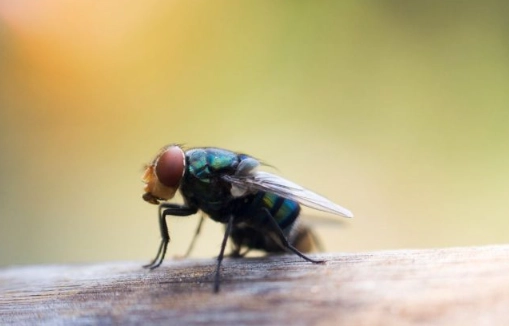
How to Prevent Flies from Taking Over
Prevention is 90% of the battle and is always better than reaction. This isn't about being perfectly clean, but about being strategically tidy.
For House Flies & Fruit Flies:
- Take out the trash and recycling every single night during warm months. Don't let it sit.
- Store fruits and vegetables in the refrigerator, or in sealed containers on the counter.
- Rinse bottles and cans before putting them in recycling.
- Keep compost bins sealed tightly and located well away from the house.
- Clean up pet waste in the yard immediately.
- Install and maintain fine-mesh screens on all windows and doors. Check for tears.
For Drain Flies:
- Regularly clean sink and shower drains. Use a pipe brush or a mixture of baking soda, vinegar, and hot water weekly.
- Ensure floor drains have water in their traps (pour a cup of water down unused drains monthly to prevent evaporation).
- Fix any leaky pipes that create constant moisture.
For Cluster Flies:
- In late summer, seal every possible entry point into your attic and siding. Caulk gaps, install chimney caps, repair soffit vents.
- This is a structural task, but it's the only effective long-term solution.
Effective Fly Control Methods That Actually Work
If you already have an infestation, identification tells you which tool to use.
Trapping and Elimination
Fruit Flies: The classic apple cider vinegar trap works wonders. Put a half-inch of vinegar in a glass, add a drop of dish soap (breaks surface tension), and cover with plastic wrap poked with tiny holes. They go in but can't get out. Place it right next to their breeding source.
House Flies: Sticky fly ribbons or UV light traps placed away from dining areas can catch adults. But remember, trapping alone won't stop an infestation if the breeding site (your trash area) isn't cleaned up.
Drain Flies: Traps won't work. You must physically remove the breeding film. Use a stiff pipe brush. Follow with an enzymatic drain cleaner (not a harsh chemical, which they can survive) to break down the organic matter. This can take a few weeks of consistent treatment.
Blow/Flesh Flies: You must find and remove the carcass. This is non-negotiable. Use your nose, look for stains on ceilings or walls, and be prepared for an unpleasant search. After removal, clean the area with a disinfectant and seal the entry point they used.
When to Call a Professional
For a severe, persistent house fly infestation linked to a hidden problem (like a broken sewer line), or for a large-scale cluster fly invasion in your walls, call a licensed pest control professional. They have the tools and insecticides for targeted perimeter treatments and can perform detailed inspections you might miss.
LEAVE A REPLY
Your email address will not be published. Required fields are marked *