You hear them first. That rhythmic chirping on a summer night, a sound so iconic it's practically the soundtrack of the season. But when you go looking for the source, flipping over a log or peering into the grass, what are you actually looking for? The mental image most people have of a "cricket" is surprisingly vague. Is it just a small, jumpy, brown bug? Let's get specific. Identifying a cricket isn't just about satisfying curiosity—it's the first step in understanding the little musician in your backyard, or figuring out if the insect in your basement is a harmless guest or something else entirely.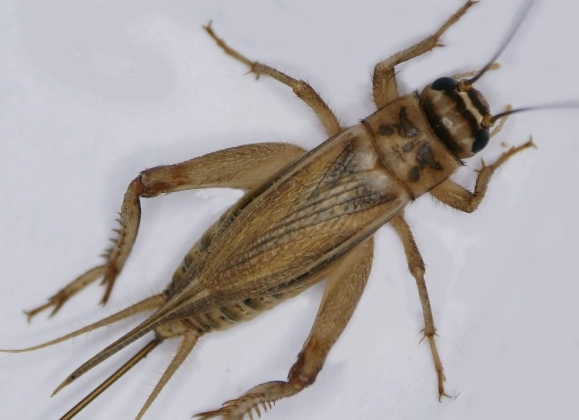
Your Quick Guide to Cricket Identification
The Cricket Body Blueprint: A Part-by-Part Breakdown
Forget generic descriptions. A cricket's body is a masterpiece of specialized engineering. Here’s exactly what to look at, piece by piece.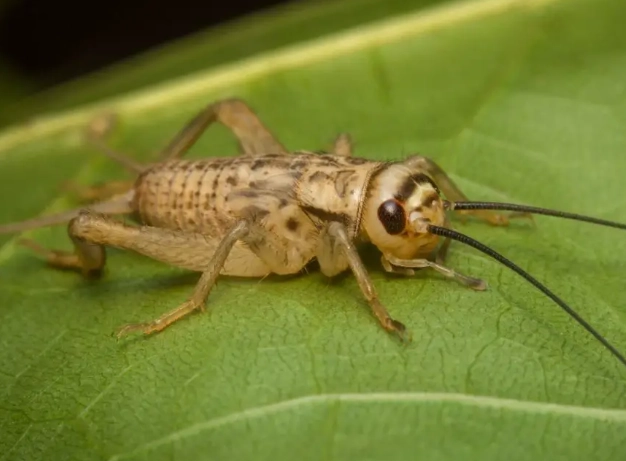
Head and Sensory Gear
The head is where you'll notice some of the most cricket-like features. First, the antennae. These aren't just short little feelers. They're long, thin, and whip-like, often longer than the cricket's entire body. They're constantly in motion, tasting and smelling the air. Right between the antennae, you'll see three small dots—these are the ocelli, or simple eyes, which detect light and dark. The large, prominent compound eyes are on the sides of the head, giving them a wide field of view. The mouthparts are designed for chewing, which is why they can nibble on fabrics or paper if they wander inside.
The Thorax: Power Center for Motion and Music
This middle section is the engine room. Attached here are the three pairs of legs, each with a different job. The front legs are relatively slender. The middle legs are for walking and stability. The real powerhouses are the hind legs. They're massively enlarged, muscular, and built for explosive jumping. If you look closely at the hind leg, you'll see it's segmented and has spines that help with traction.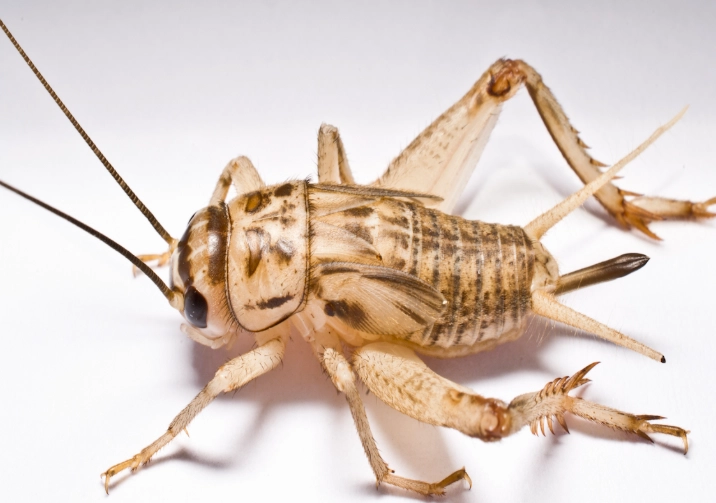
Now, for the signature feature: the wings. Most adult crickets have two pairs. The forewings are leathery and stiff, lying flat over the back. The hind wings, when present, are membranous, folded fan-like underneath like a hidden parachute. Not all crickets fly, but many can. On the forewings of males, you'll find the file and scraper—the musical instrument. One wing has a raised vein with tiny teeth (the file), the other has a hardened edge (the scraper). Rubbing them together creates the chirp.
Abdomen and the Telltale Tail
The abdomen is the segmented rear section. At the very end, you'll find the cerci—two tail-like appendages that are sensory organs. Both males and females have them. The absolute dead giveaway for identifying a female cricket is the ovipositor. It's a long, needle-like or sword-like tube extending straight out from the tip of the abdomen, between the cerci. Its sole purpose is for laying eggs deep into soil or plant stems. No other common backyard insect has this specific combination of a long ovipositor with long antennae.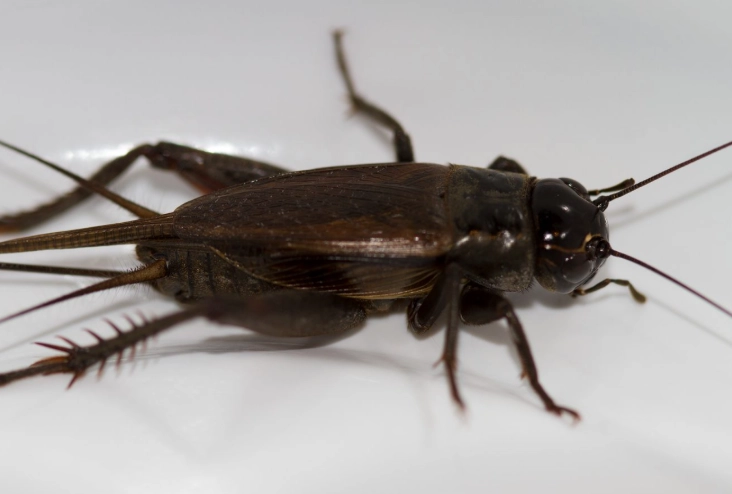
| Body Part | Key Feature | What It's For | Identification Tip |
|---|---|---|---|
| Antennae | Long, thin, thread-like | Sensing smell, touch, taste | Much longer than body. Constantly moving. |
| Hind Legs | Enlarged, muscular | Powerful jumping | Noticeably thicker than other legs. |
| Forewings | Leathery, held flat over back | Protection & sound production (in males) | Often have veins; cover hind wings if present. |
| Ovipositor (Female) | Long, needle-like tube | Laying eggs in soil/plants | The single best feature to confirm "cricket" and identify gender. |
| Cerci | Two short appendages at tail | Sensory perception | Present on both sexes, at the base of the ovipositor in females. |
Beyond the Basics: Cricket Species and Their Unique Looks
"Cricket" isn't just one thing. Think of it like "dog." There are different breeds. The three you're most likely to encounter have distinct looks and habits.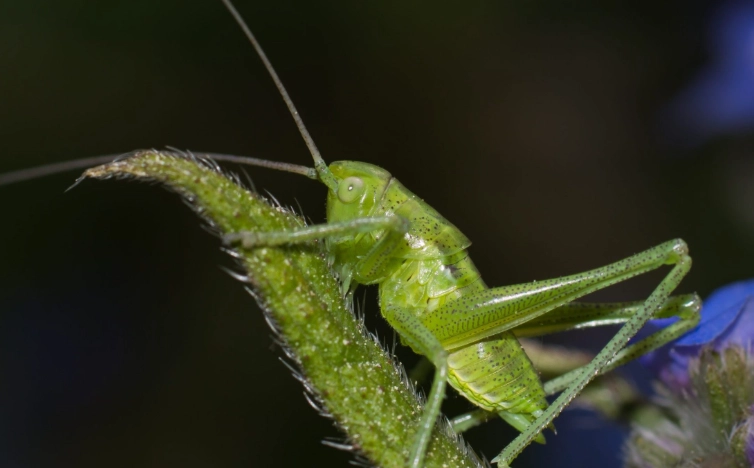
The House Cricket (Acheta domesticus): This is the classic lab cricket and often the one that invades homes. They're a light yellowish-brown, often with three darker bands crossing the head. About 3/4 to 1 inch long. They're attracted to warmth and can show up in basements or kitchens. Their song is a familiar, steady chirp.
The Field Cricket (Gryllus spp.): These are the loud black crickets of late summer fields. They're shiny black or very dark brown, robust, and about 1 inch long. You'll find them in meadows, along roadsides, and in gardens. They rarely come indoors on purpose but might blunder in. Their chirp is louder and more rhythmic than the house cricket's.
The Tree Cricket (Oecanthus spp.): These are the elegant, pale green or white musicians of bushes and trees. They're slender, almost delicate-looking, with long antennae and wings that look more translucent. They're masters of camouflage on leaves. Their song is a high-pitched, continuous trill or series of soft chirps, often sounding more melodic.
Common Lookalikes: Cricket vs. Grasshopper vs. Katydid
This is where most people get tripped up. They're all orthopterans, but the differences are clear once you know the rules.
Cricket vs. Grasshopper: The biggest mix-up. Grasshoppers are daytime actors; crickets are the night shift. Physically, look at the antennae. Cricket antennae are long and thin. Grasshopper antennae are short and thick, like little clubs. Grasshoppers also have much shorter ovipositors (if visible at all), and their hearing organ is on the abdomen, not the front legs like in crickets. Grasshoppers are often more colorful and chunkier.
Cricket vs. Katydid: Katydids are closer cousins. They also have long antennae. The giveaway? Katydids are almost universally leaf-green and have bodies that are laterally flattened (taller than they are wide). Their wings are often leaf-shaped, and their ovipositor is broad and sword-like, not thin and needle-like. Katydids also tend to be larger overall.
I once spent twenty minutes trying to photograph what I thought was a rare cricket, only to realize it was a juvenile katydid. The antennae tricked me, but its bright green color and the shape of its body gave it away. That's the moment I learned to check multiple features.
How to Spot a Cricket: A Practical Field Guide
Knowing the parts is theory. Finding one is practice. Here’s how I go about it.
Listen First, Look Second: Your ears are the best tool. On a warm evening, follow the sound. Crickets chirp to attract mates, so you're hearing males. The sound comes from them rubbing their wings together, usually while perched at the entrance to a small burrow or hiding under a leaf.
Where to Look: Move slowly with a flashlight. Shine it along the ground at the base of plants, along sidewalk edges, under loose stones or mulch, and around woodpiles. House crickets near buildings will be in warm, damp areas like near boiler rooms, drains, or under debris. Go slow. Any sudden vibration will send them jumping.
The Observation Approach: When you find one, don't grab it. Crouch down and watch. See how it uses those antennae? Notice the body posture. Is it tucked low or sitting up? Can you spot the ovipositor? If it's a male and it feels safe, it might start chirping right in front of you. That's a magical moment—seeing the whole body vibrate with each pulse of sound.
A common mistake is using too bright a light or moving too abruptly. They're sensitive to vibration and shadow. A red-light flashlight is less likely to spook them, but a standard one on a dim setting works if you're gentle.
Your Cricket Identification Questions, Answered
What's the one feature that immediately tells me it's a cricket and not a grasshopper?
I see a long "stinger" on the back end. Is it dangerous?
Why do some crickets look shiny and black, while others are pale brown?
Do all crickets have wings and can they all fly?
I found a cricket inside. Does its appearance tell me if it's an infestation or just a stray?
LEAVE A REPLY
Your email address will not be published. Required fields are marked *