You see it bumbling against the window screen on a damp spring evening—a long-legged, gangly insect that looks like a mosquito on steroids. Your first instinct might be to swat it, fear a bite, or worry about an infestation. Hold that thought. What you're likely seeing is a crane fly, one of the most misunderstood and misidentified insects in our backyards. The crane fly vs mosquito confusion is so common it leads to unnecessary panic and, worse, misapplied pest control that can do more harm than good.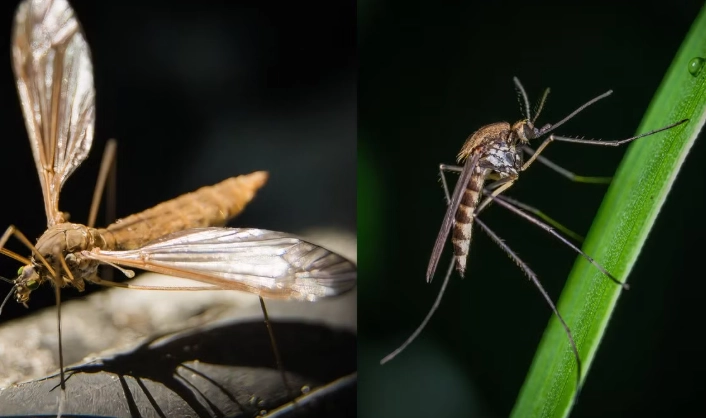
I’ve spent years watching people react to these insects. The mix-up is understandable, but the consequences of not knowing the difference are real. You might waste money on the wrong treatments, harm beneficial creatures, or overlook a genuine mosquito problem brewing nearby. Let's clear the air, or rather, the porch light.
What’s Inside: Your Quick Guide
How to Tell a Crane Fly from a Mosquito in 5 Seconds
Forget complex entomology. Use this quick visual checklist the next time one lands near you.
The Legs Test: This is the fastest giveaway. Crane flies have ridiculously long, fragile legs that seem to dangle and break off easily. A mosquito’s legs are slender but proportional and sturdy-looking.
The Body Shape: Think of a crane fly as a slender stick figure with a V-shaped groove on its thorax. It looks awkward in flight. A mosquito has a compact, humpbacked profile designed for agile, darting movement.
The Mouthparts: Can you see a prominent, needle-like proboscis? If yes, that’s a female mosquito ready to feed. Crane flies have no such stabbing beak. Their mouthparts are vestigial; most adult crane flies don’t eat at all.
Here’s a detailed breakdown to cement the differences: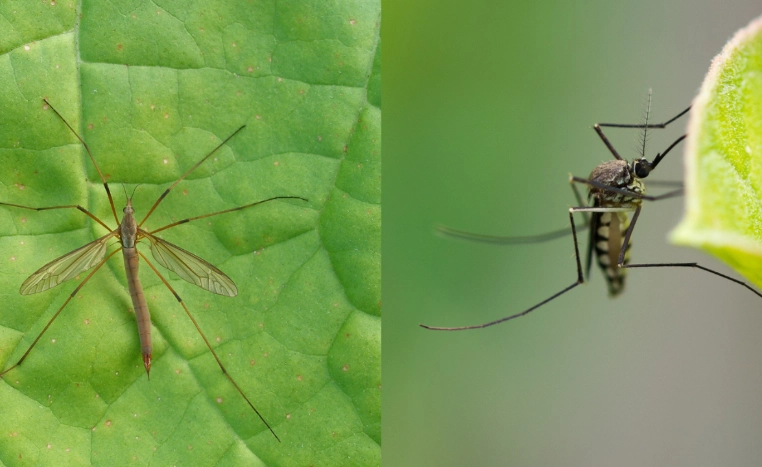
| Feature | Crane Fly ("Mosquito Hawk") | Mosquito |
|---|---|---|
| Size | Larger, body 1-2 inches, wingspan up to 2.5 inches | Smaller, body ~0.25-0.5 inches |
| Legs | Extremely long, thin, fragile, easily detach | Long but proportional, sturdy for perching |
| Body | Slender, stick-like; thorax has a V-shaped groove | Compact, humpbacked, narrow abdomen |
| Mouthparts | No biting or piercing ability; non-functional in adults | Long, needle-like proboscis (females) for piercing skin |
| Wings | Two large, prominent wings; often held out at rest | Two narrow wings; often folded over body at rest |
| Flight Pattern | Erratic, bumbling, weak, often crashes into things | Agile, darting, direct, can hover |
| Sound | Generally silent | Distinctive high-pitched whine near ears |
One evening, I watched a crane fly slowly navigate a patio table, its legs splayed like a daddy longlegs. A guest immediately recoiled, calling it a "giant mosquito." That moment perfectly captured the public perception gap. They’re visually similar from a distance, but up close, they’re worlds apart.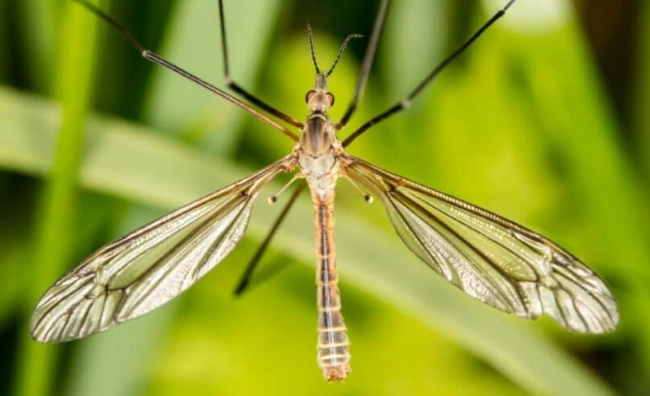
Lifecycle & Behavior: Why One is a Nuisance, The Other a Threat
This is where the confusion has real stakes. Their lifecycles explain why we should care about correctly identifying them.
The Brief, Harmless Life of a Crane Fly
Most of a crane fly’s life is spent as a larva in the soil or moist decaying matter. These larvae, often called "leatherjackets," are cylindrical, grayish-brown, and look like worms. They feed on decomposing plant roots and organic matter—they’re essentially tiny, underground composters. This larval stage can last up to a year.
The adult crane fly is a short-lived reproductive stage. They emerge, often in large numbers after rain, to mate and die within a few days. They don’t have functioning mouthparts to bite or sting. They don’t feed on blood. They don’t even eat your plants. Their sole purpose is to find a mate and lay eggs for the next generation of soil processors. That frantic flying near your light? It’s just clumsy navigation, not an attack.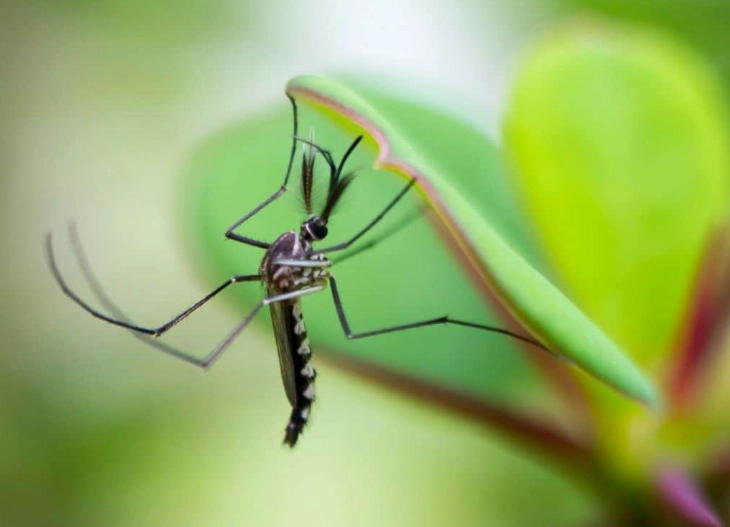
The Persistent Danger of Mosquitoes
Mosquitoes have a lifecycle tied to standing water. Females lay eggs in anything from a bottle cap to a pond. The larvae (wrigglers) and pupae (tumblers) live in this water, breathing through siphons. This aquatic phase is the critical control point.
Adult female mosquitoes require a blood meal to develop their eggs. This necessity makes them vectors for diseases like West Nile virus, Zika, and various encephalitis strains. Their biology is built around finding and biting hosts. The male mosquitoes, which feed on nectar, are harmless, but it’s the females we encounter and fear.
The behavioral contrast is stark: one is a soil-dwelling decomposer with a harmless aerial phase; the other is an aquatic-born parasite and disease vector.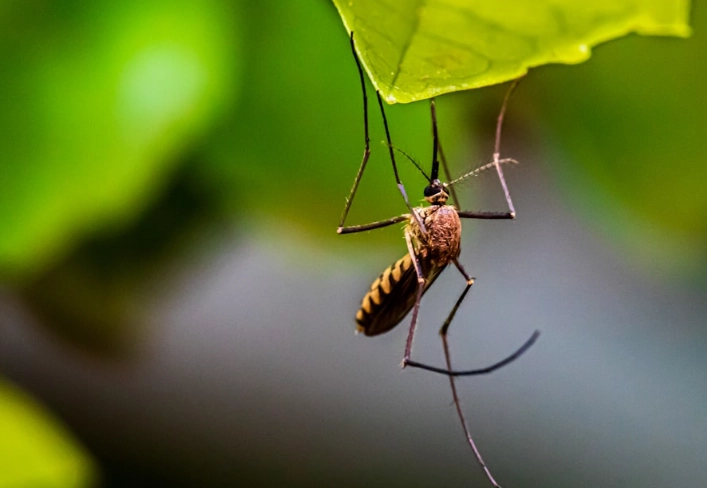
The Surprising Ecological Role of Crane Flies
This is the part most pest control articles gloss over. Crane flies are not pests. They’re beneficial insects, and treating them as enemies disrupts local ecology.
Crane fly larvae are vital decomposers. By breaking down thatch and organic matter in soil, they improve soil aeration and nutrient cycling. They’re a food source for birds, frogs, beetles, and spiders. A healthy population of crane flies indicates a healthy, biologically active soil ecosystem.
I once consulted on a property where the owner had repeatedly sprayed insecticides to kill "those huge mosquitoes." The crane flies were gone, but so were the earthworms and ground beetles. The lawn developed a thick thatch layer and became more susceptible to fungal disease. We solved the problem not with more spray, but by encouraging soil health and explaining the insect’s role. The crane flies returned to manageable numbers, and the lawn improved.
The Biggest Control Mistake Everyone Makes
The cardinal sin is using broad-spectrum insecticide sprays meant for mosquitoes on crane flies. It’s ineffective and destructive.
Why it fails:
1. Misplaced Target: Crane fly adults are already at the end of their life. Killing them does nothing to reduce future numbers, as the next generation is developing safely underground as larvae.
2. Ecological Collateral Damage: That spray also kills pollinators (bees, butterflies), natural mosquito predators (dragonflies, damselflies, spiders), and other beneficial insects. You’re wiping out your own pest control army.
3. It Creates a Worse Problem: By eliminating predators and competitors, you can inadvertently create an ecological vacuum that allows true pests, including mosquitoes, to rebound stronger.
The real issue isn't the crane flies you see; it's the perception of threat. The control effort should be directed by correct identification.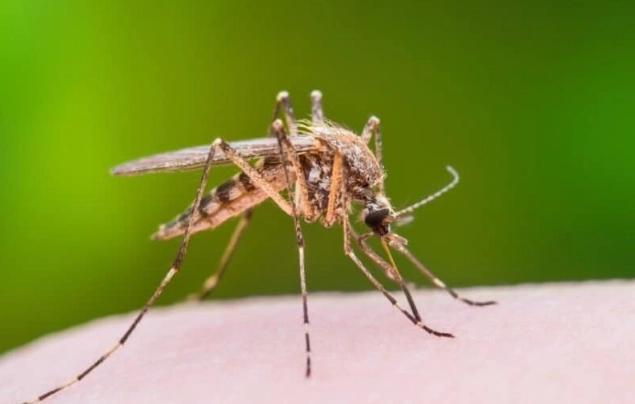
Effective Strategies: What to Do for Each Insect
Your action plan depends entirely on which insect you’re dealing with.
If You Have Crane Flies:
Do Nothing (The Best Option): Tolerate them for their brief adult life. They are harmless. Use a vacuum or a glass and paper to remove them from indoors if they bother you.
Long-Term Cultural Control (If Larvae Are Damaging Lawn): Significant leatherjacket damage is rare in healthy lawns. If suspected, promote a healthy lawn: aerate, dethatch, avoid overwatering, and encourage birds. Insecticidal control of larvae is a last resort and requires proper identification (are they even crane fly larvae?). Consult resources from your local university extension office for guidance.
If You Have Mosquitoes:
This requires a targeted, integrated approach.
Source Reduction is EVERYTHING: This is the non-negotiable first step. Weekly, walk your property and eliminate standing water. Tip over buckets, unclog gutters, refresh bird baths, cover rain barrels, and fill in depressions. Mosquitoes can breed in a tablespoon of water.
Use Bacterial Larvicides: For water you can’t eliminate (ponds, plant saucers, tree holes), use Bacillus thuringiensis israelensis (Bti) products like mosquito dunks or bits. This bacteria specifically targets mosquito and black fly larvae and is harmless to other wildlife. It’s a proactive, effective tool.
Protect Yourself: Use EPA-registered repellents (DEET, picaridin, oil of lemon eucalyptus) when outdoors. Wear long sleeves and pants at dawn and dusk. Install and repair window screens.
Consider Professional Mosquito Control: If needed, hire a company that uses integrated pest management (IPM) principles. They should inspect for breeding sites, use larvicides, and only use targeted adulticide sprays as a last resort, applied to vegetation where mosquitoes rest, not as a broad-area fog.
Your Top Questions, Honestly Answered
The crane fly vs mosquito debate boils down to knowledge over instinct. One is an awkward, harmless recycler. The other is a savvy, potential disease carrier. By learning to spot the difference—focus on those legs and that body shape—you save yourself worry, protect your local ecosystem, and can direct your energy towards genuinely effective mosquito control. The next time that long-legged visitor appears, you can look at it not with fear, but with understanding. It’s just a crane fly, doing its part in the cycle of things, completely unaware of the giant mosquito reputation it never deserved.
LEAVE A REPLY
Your email address will not be published. Required fields are marked *