You’re puttering in the garden, moving a pot, and there it is. A long-legged, dusty-looking insect with a head that tapers to a sharp point. It doesn’t scurry away like a beetle. It turns, slowly, almost deliberately. That’s your first clue you’re not looking at a common bug. You’re looking at an assassin bug, one of the most effective and ruthless small predators on the planet. Forget spiders; this is a bug that hunts other bugs, and its methods are straight out of a horror movie. But is it a friend or a foe to you? The answer, like the insect itself, is complex.
This guide cuts through the myths. We’ll cover exactly what an assassin bug is, how its infamous bite works, why you might want a few in your garden, and the critical differences between it and its dangerous look-alike, the kissing bug.
What You'll Find in This Guide
What Defines an Assassin Bug?
Let's get scientific for a second. "Assassin bug" isn't one species. It's a common name for the entire family Reduviidae, which contains over 7,000 species worldwide. They're part of the order Hemiptera, the true bugs, which means they have piercing-sucking mouthparts. But while aphids use theirs to sip plant sap, assassin bugs have turned theirs into a weapon.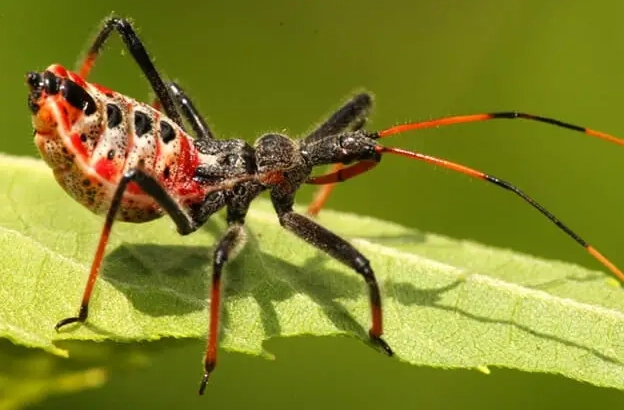
Their entire existence is built around predation. They are obligate predators, meaning they must eat other animals to survive. They don't nibble on your plants. They hunt.
The Hunting Tool: That pointed head? It's called a rostrum. Think of it as a hypodermic needle attached to a straw. It's how they deliver their signature move.
The Signature Kill: Not Venom, But Enzymes
Here’s where people get it wrong. I’ve read articles calling it venom. It’s more precise to call it a potent cocktail of digestive enzymes. The process is chillingly efficient:
- Ambush or Pursuit: Some species camouflage themselves on flowers (like the bee assassin), while others actively stalk prey through leaf litter.
- The Strike: They impale their victim (a caterpillar, beetle, or even another bug) with their rostrum.
- The Injection: They inject salivary enzymes that paralyze the prey and begin digesting its tissues from the inside out. This turns the insides into a liquid soup.
- The Meal: They suck up the pre-digested slurry. All that’s left is an empty husk.
It’s external digestion. They’re essentially drinking a bug smoothie they prepared moments before. Gruesome, but incredibly effective for controlling pest populations.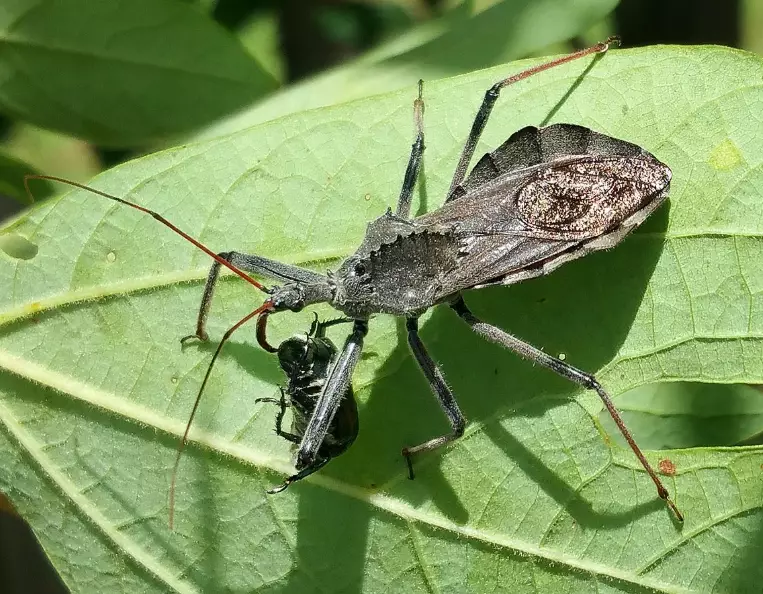
How to Identify an Assassin Bug
You can't rely on a single color or pattern. Assassin bugs come in browns, grays, blacks, and even bright reds and oranges. Identification is about a combination of structural features and behavior.
Key Physical Traits:
- Elongated Head: The head is narrow, cylindrical, and distinct from the body, with two prominent, often dark, compound eyes.
- Rostrum: A prominent, curved, beak-like mouthpart that tucks under the body when not in use. It’s not flimsy; it looks sturdy and weaponized.
- Body Shape: Generally oval or elongated, with a texture that can be rough, hairy, or dusty-looking. The wheel bug, a common North American species, has a distinctive cog-like crest on its thorax.
- Legs: Long, suited for grasping. The front legs are often thicker and more robust for holding struggling prey.
Behavioral Giveaways:
- Deliberate Movement: They don’t zip around. They walk with a slow, purposeful gait. If startled, they might fly, but often they hold their ground.
- Hunting Posture: You might see one with its rostrum extended, probing the air, or with its front legs raised slightly, ready to grab.
- Common Habitats: Gardens (especially on flowers, where prey congregates), under loose bark, in woodpiles, leaf litter, and sometimes on exterior house walls attracted to lights at night.
The Life of a Predator
From egg to adult, they’re killers. Females lay clusters of barrel-shaped eggs, often on leaves or stems. The nymphs that hatch look like tiny, wingless, often red or orange versions of the adults. And they start hunting almost immediately.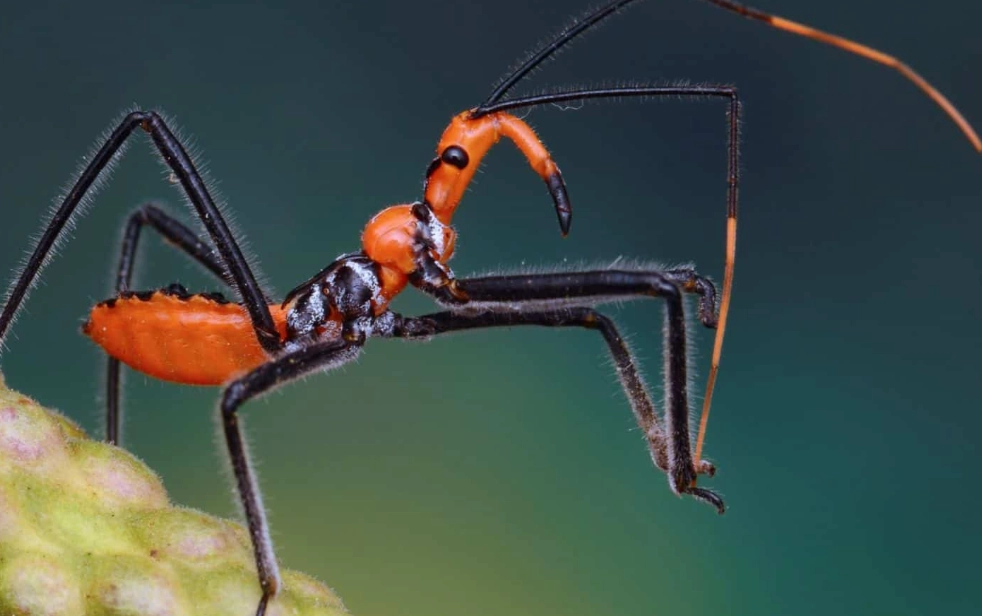
A common mistake is to assume these brightly colored nymphs are a different, harmless insect. They’re not. They’re just baby assassins. I’ve watched a group of them swarm a caterpillar ten times their size, a lesson in cooperative takedowns.
They molt several times, growing wings in their final stage. The entire lifecycle, depending on species and climate, can take a few months to over a year.
The Assassin Bug Bite: Understanding the Risk
This is the number one concern for most people, and rightly so. An assassin bug bite is not like a mosquito bite. It’s a defensive weapon, used when the bug feels threatened (like being accidentally pressed against your skin).
The Reality: The bite is immediately, intensely painful. People often describe it as a sharp, burning, or electric shock-like sensation. The pain can last for hours. The area typically swells into a red, hardened welt that can be itchy and sore for several days. In some individuals, it can cause a more severe localized allergic reaction.
What to do if you’re bitten:
- Wash the area thoroughly with soap and water.
- Apply a cold pack to reduce swelling and pain.
- Use an over-the-counter hydrocortisone cream or oral antihistamine for itching.
- Monitor the site. If you develop signs of a spreading infection (increasing redness, warmth, pus) or a severe systemic reaction (difficulty breathing, dizziness), seek medical attention immediately.
The key takeaway? Respect, don’t panic. They have no interest in biting you. The bite is a last resort. Avoid handling them directly.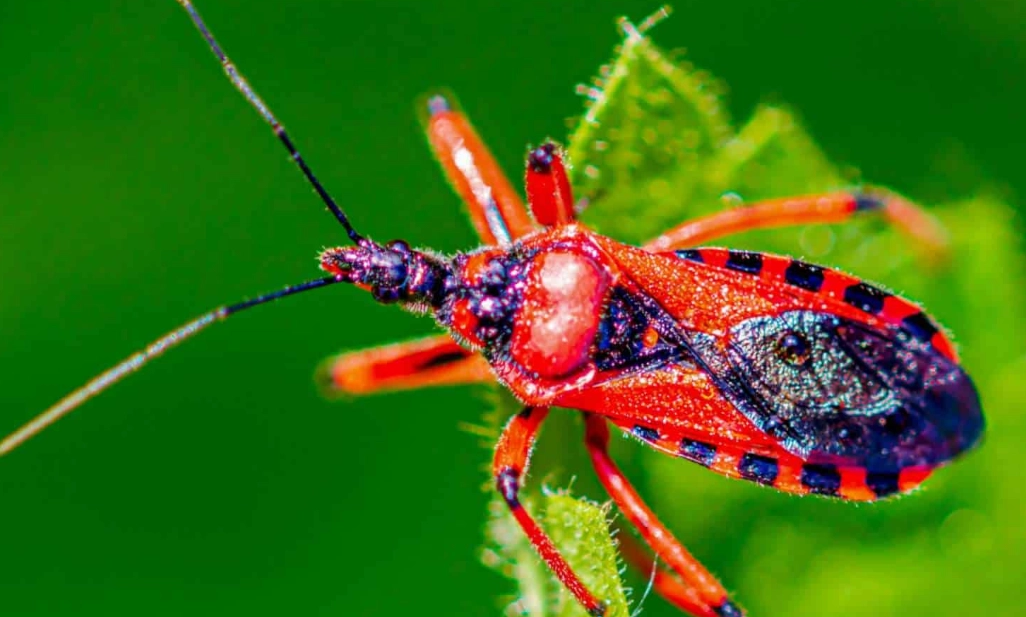
Beneficial Insect or Pest?
In the vast majority of cases, assassin bugs are beneficial insects. They are voracious consumers of common garden pests. A study from the University of Florida’s Entomology department highlights their role in controlling populations of aphids, caterpillars, beetles, and even other problematic bugs.
Top Garden Pests They Help Control:
- Caterpillars (including cabbage loopers, armyworms)
- Aphids and other small, soft-bodied insects
- Colorado potato beetles and other leaf beetles
- Japanese beetles
- Even other nuisance bugs like stink bugs
So, if you see one in your tomato patch, think twice before squashing it. It’s likely working for you, for free. The trade-off for this free pest control is the small, avoidable risk of a painful bite.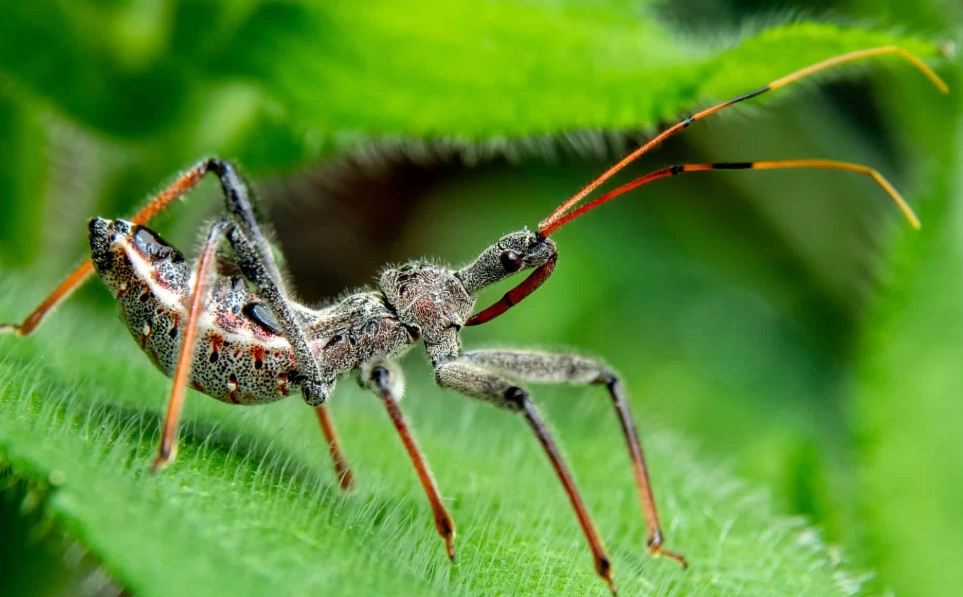
Assassin Bug vs. Kissing Bug: Critical Differences
This is the most important distinction to make. Kissing bugs (subfamily Triatominae) are a type of assassin bug, but they are medically significant because they can transmit the parasite that causes Chagas disease. They look similar, but key differences exist.
Do not confuse your local predatory assassin bug with a kissing bug. In the United States, kissing bugs are primarily found in southern states like Texas, Arizona, and New Mexico, and their behavior is different.
| Feature | Common Predatory Assassin Bug (e.g., Wheel Bug) | Kissing Bug |
|---|---|---|
| Primary Food Source | Other insects (predator) | Blood of vertebrates (mammals, birds, humans) (parasite) |
| Typical Habitat | Gardens, fields, woodlands | Nests of rodents, dens, chicken coops, and cracks in poor-quality human housing |
| Rostrum Position at Rest | Tucked tightly under the head/body, often not visible from above. | Protrudes straight forward from the head, visible from above. |
| Head Shape | Long, narrow, cylindrical. | More cone-shaped, with a distinct "neck" behind it. |
| Markings | Variable, often cryptic. | Often has a distinctive band of orange or red stripes around the edge of the abdomen. |
| Behavior Towards Humans | Avoids contact, bites only in defense. | Seeks out humans/animals at night to feed on blood, often biting the face. |
If you suspect you have found a kissing bug, do not crush it. The CDC recommends capturing it in a container and contacting your local health department or university extension service for identification. You can find more information on the CDC's page on Chagas disease vectors.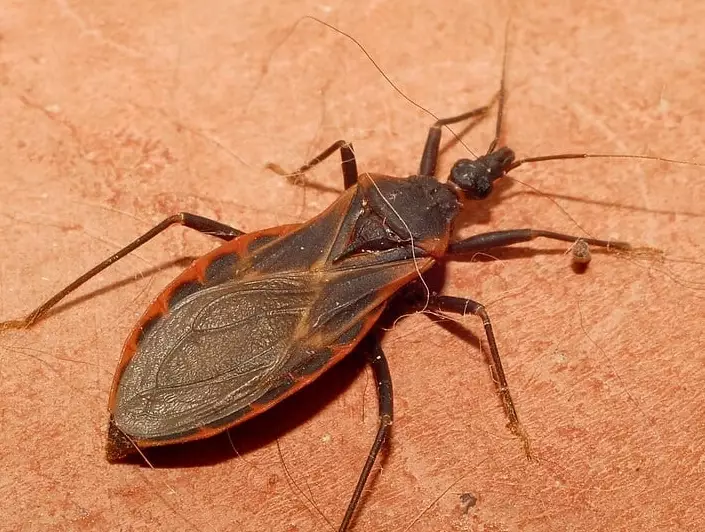
What to Do If You Find One
Your action depends entirely on location.
Outdoors in the Garden: Leave it alone. It’s a beneficial predator. Observe it from a respectful distance. You’ve got a tiny bodyguard.
Indoors or on a Patio: They usually wander in by accident. The goal is relocation, not execution.
- Gently coax it onto a piece of paper or into a cup.
- Carry it outside and release it in a shrub or garden area.
- Wear gloves if you’re nervous, but using a container is safer than trying to sweep it with a bare hand.
To Prevent Entry: Seal cracks around windows and doors, repair screens, and reduce exterior lighting at night which attracts their prey (and thus, them).
Comments