What You'll Find in This Guide
You see a small, dark spider on your windowsill. It doesn't run in a frantic zigzag. Instead, it turns its head—you can almost swear it's looking at you—and then, with unnerving precision, leaps several times its body length to a new spot. Your first thought might be alarm. A jumping black spider sounds like something from a horror movie. But hold that thought. In 99.9% of cases, you've just met one of the most fascinating and benign housemates in the arthropod world.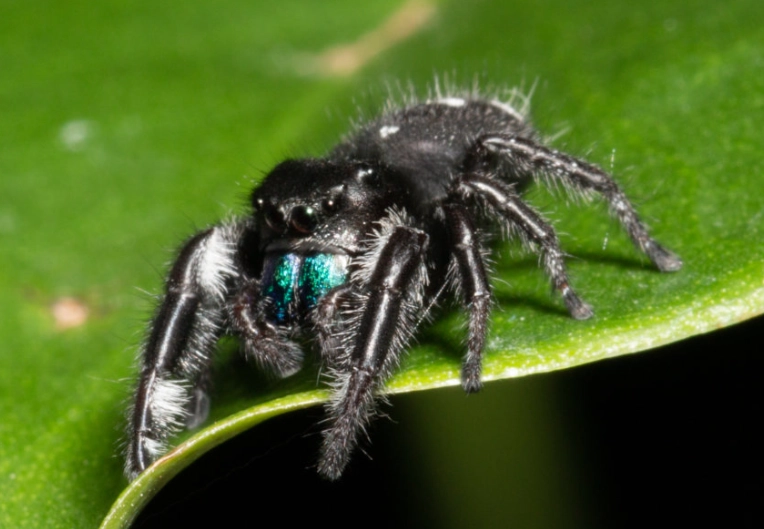
I've kept and observed jumping spiders for years, and the panic around them is almost entirely misplaced. This guide will cut through the myths. We'll look at what a jumping black spider really is, which specific species you're likely encountering, whether you should be concerned, and what to do if you'd rather they lived outside.
What Exactly Is a Jumping Black Spider?
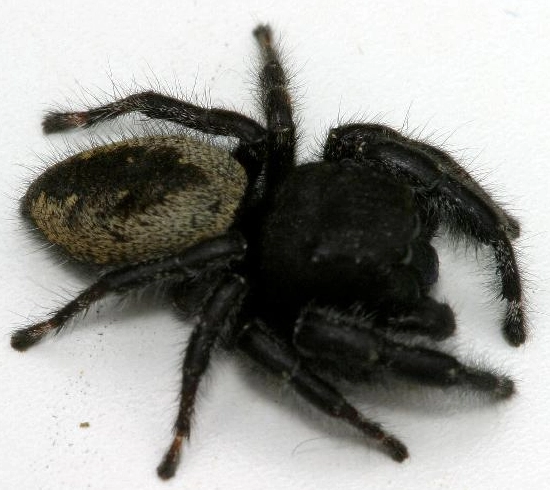
"Jumping black spider" isn't a formal scientific name. It's a descriptive term people use for any jumping spider (family Salticidae) that appears predominantly black or dark-colored. Jumping spiders are a massive family, with over 6,000 species worldwide. They're the acrobats of the spider world, known for their incredible vision, curious behavior, and complete lack of web-building for catching prey (they hunt like tiny cats).
Their "black" appearance can be misleading. Many appear jet black from a distance but, under bright light, reveal iridescent chelicerae (mouthparts), colorful hairs, or subtle patterns. The key is their behavior: the stalking, the head-turning, and the explosive jump.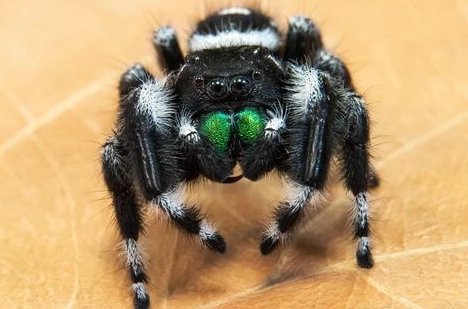
A crucial point most guides miss: People often mistake the rapid, darting runs of a wolf spider or a ground spider for "jumping." True jumping spiders move in deliberate, calculated hops. They often pause between movements to reassess their surroundings with those large, forward-facing eyes. If it's just sprinting chaotically, it's probably not a jumper.
Common Black Jumping Spiders in Homes
You're not likely to find dozens of different species indoors. A few cosmopolitan species have become adept at living alongside humans. Here are the most frequent black or dark-colored jumpers you'll meet:
| Common Name | Scientific Name | Key Identifying Features | Typical Size | Habitat Note |
|---|---|---|---|---|
| Bold Jumper | Phidippus audax | Black body, often with a distinct white or orange triangular spot on the abdomen. Iridescent green or blue chelicerae (mouthparts). | 8-15 mm (female larger) | The most common home-invading jumper in North America. Loves sunny windowsills. |
| Zebra Jumper | Salticus scenicus | Black with stark white vertical stripes, giving a zebra-like pattern. Very compact body. | 5-7 mm | Common on exterior walls, fences, and sometimes indoors on windows. Worldwide distribution. |
| Gray Wall Jumper | Menemerus bivittatus | Often appears dark gray or brownish-black. Males have prominent white "sideburns." Flattened body for clinging to walls. | 8-10 mm | A global traveler, found in warm regions worldwide. Perfectly adapted to building exteriors and occasionally indoors. |
| Pantropical Jumper | Plexippus paykulli | Dark brown to black. Males have a striking white central stripe flanked by two darker stripes running head to abdomen. | 9-12 mm | As the name suggests, found in tropical and subtropical areas globally, often in and around buildings. |
I find Bold Jumpers (Phidippus audax) inside most often, especially in late summer and fall when young spiders are dispersing. That little white triangle on its back is a dead giveaway. If you see one with iridescent green "fangs," you've got a Bold Jumper.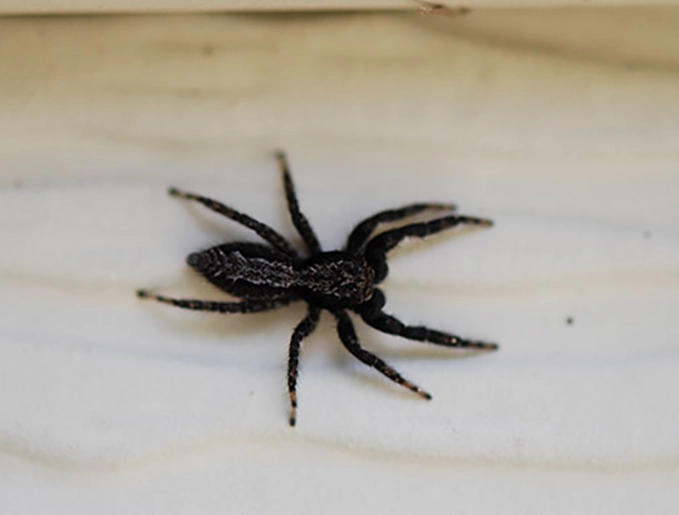
Are Jumping Black Spiders Dangerous?
Let's be direct: No. Jumping spiders are not dangerous to humans or pets.
They possess venom, as almost all spiders do, but it is evolved to subdue tiny insects like flies, mosquitoes, and moths. Their fangs are physically incapable of penetrating human skin in any meaningful way for most people. A jumping spider might bite in extreme self-defense if you crush it, but the sensation is typically less than a mosquito bite or a mild pinch, often leaving no mark at all.
Their primary defense mechanism is to run away or jump away. They are not aggressive. In fact, their excellent vision means they are acutely aware of your size and see you as a landscape feature, not prey. The University of California's Statewide Integrated Pest Management Program notes that jumping spiders are "considered very beneficial" and are not pests (UC IPM).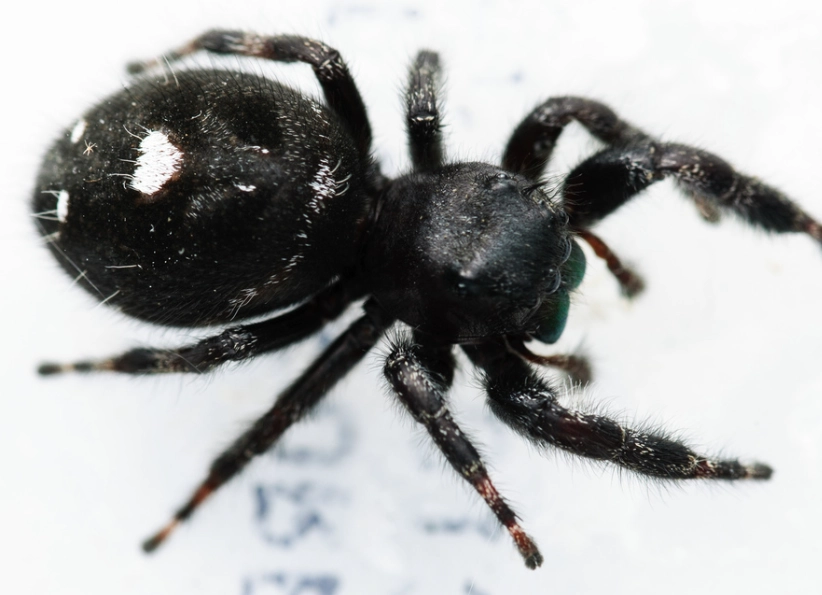
The Real Benefit: Free Pest Control
This is where reframing your thinking pays off. A jumping spider in your home is a dedicated, non-toxic pest control agent. It will tirelessly hunt:
Mosquitoes that sneak in. Fruit flies around your kitchen. Moths that threaten your clothes. Small cockroach nymphs. It's working for free, 24/7. I've watched a Bold Jumper clear a cluster of fungus gnats from a houseplant in an afternoon. They're remarkably efficient.
How to Identify a Jumping Spider vs. Other Spiders
Misidentification causes unnecessary fear. Here’s a quick breakdown to separate jumpers from common look-alikes.
Jumping Spider Signature Traits:
- Face: Two enormous, forward-facing principal eyes that make them look "cute" or attentive. You can often see them turn their head to look at you.
- Posture: Compact, stout body. They often sit with their legs tucked under them, ready to spring.
- Movement: Characteristic hops. They may walk, but their movement is punctuated by sudden, accurate jumps. They do not build webs to catch prey.
- Webs: They may build small, silken "retreats" or sleeping bags in corners, but not intricate orb webs or sheet webs for hunting.
Common Imposters:
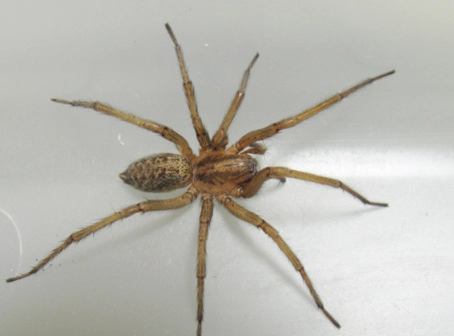
- Wolf Spiders: Often brown and hairy, with a similar size range. Key difference: They have a distinctive eye pattern (two large eyes on top of a row of four, then two smaller below) and are ground-based runners, not jumpers. They also carry their egg sacs attached to their spinnerets.
- Black House Spider/Basement Spider: These are web-builders (funnel webs). They are dark but have a more elongated abdomen and spend almost all their time in their messy web, waiting.
- Ground Spiders: Fast runners with elongated spinnerets. They lack the compact, front-heavy build and huge anterior eyes of a jumper.
When in doubt, look at the face. If it seems to have two big headlights staring back, it's a jumper.
Why Are Jumping Spiders in My House?
They're not there to bother you. They're there because your house provides excellent hunting grounds. Think about it from their perspective:
Shelter: Consistent temperature, no rain, fewer bird predators. Prey Concentration: Windowsills and light fixtures are insect magnets. Dispersal: Young spiders, called spiderlings, balloon on silk threads to find new territories. Some inevitably land on your house and wander in through a crack or open window.
They usually prefer dry, warm, and sunny spots. A windowsill, the top corner of a sliding glass door frame, or near an entryway light are prime real estate.
How to Safely Remove or Discourage Them
Even if you appreciate their role, you may not want them on your kitchen counter. Never use a general insecticide spray. It's overkill, potentially harmful to you and pets, and eliminates a beneficial predator.
The Cup and Card Method: This is the gold standard. Gently place a clear cup over the spider. Slide a stiff piece of paper or card under the cup's mouth, trapping the spider inside. Carry it outside and release it in a sheltered spot like a shrub or under an eave. They're hardy and will quickly adapt.
Long-Term Deterrence: If you're seeing many, address the root cause: their food source.
- Seal entry points: Check window screens, door sweeps, and utility line entries for gaps.
- Reduce indoor insects: Use tight-fitting lids on trash cans, store food properly, and address moisture issues that attract prey insects.
- Exterior lighting: Switch porch lights to yellow bug lights or LED lights that are less attractive to flying insects, which in turn reduces the spider's buffet.
I recommend the release method. It's simple, humane, and reinforces the idea that these are just small animals out of place, not monsters.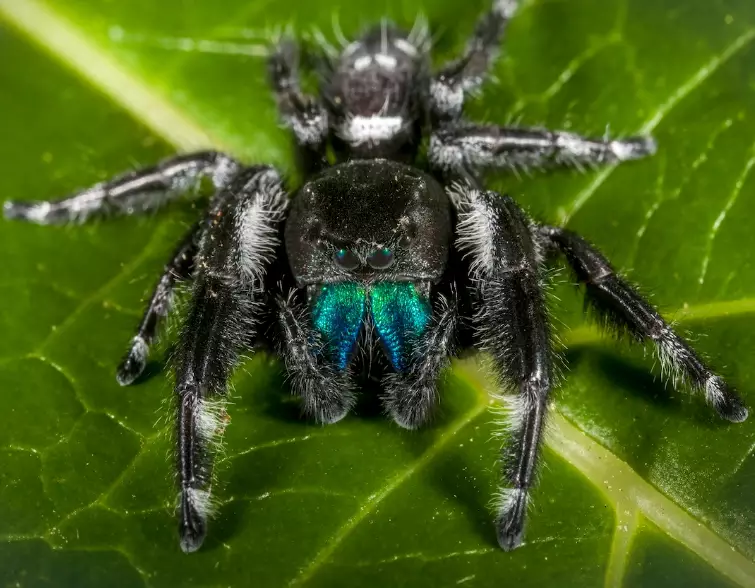

Comments