You see a dark shape scuttle under the fridge. Your first thought is disgust, your second is panic. What kind of cockroach is it? Is it the start of a major infestation, or just a lone wanderer? The truth is, not all cockroaches are created equal. Misidentifying your six-legged intruder can lead you down the wrong path for control, wasting time and money. I've spent years dealing with these pests, both professionally and in my own homes, and I can tell you that understanding the different types of cockroaches is the single most important step in getting rid of them for good.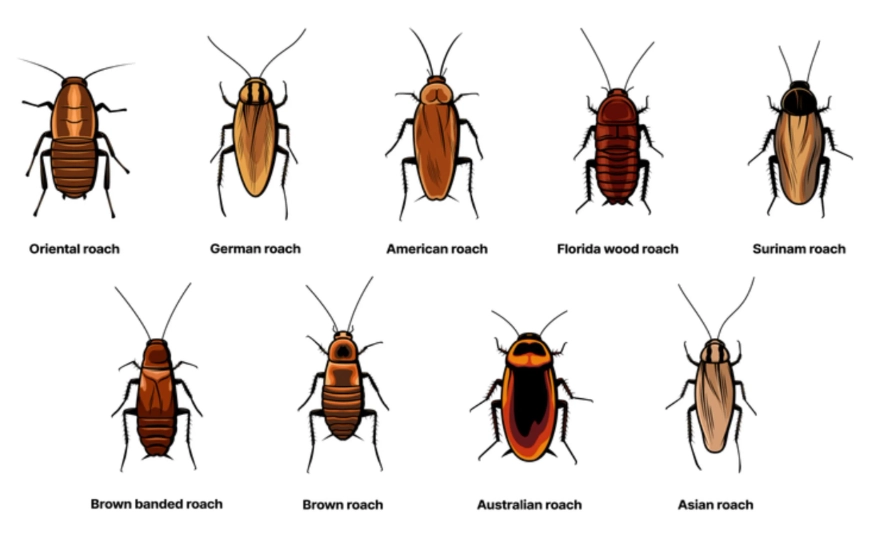
Quick Navigation: What You'll Learn
The Four Most Common Home-Invading Cockroaches
If you find a cockroach indoors in North America or Europe, chances are high it's one of these four. Their habits and preferred hangouts differ significantly.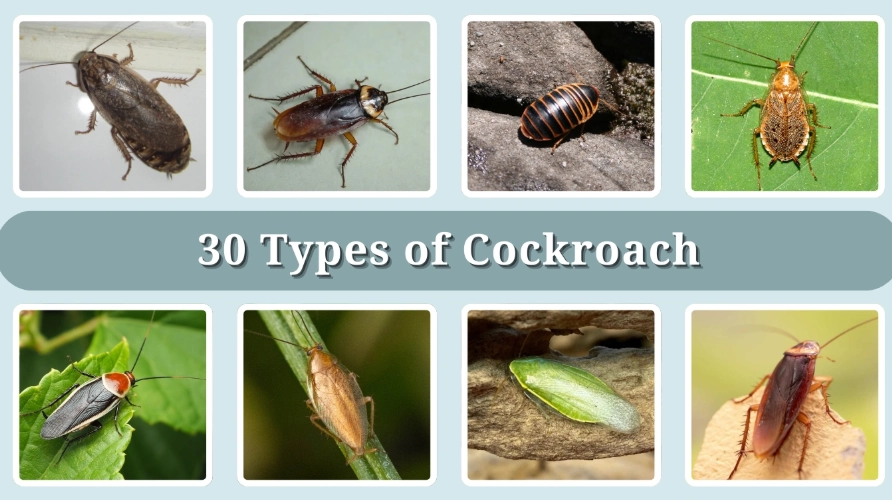
| Species | Size & Color | Key Identifying Mark | Primary Habitat (Inside) | Speed & Behavior |
|---|---|---|---|---|
| German Cockroach | Small (1/2 to 5/8 inch). Light brown to tan. | Two dark, parallel stripes running from the head to the base of the wings. | Kitchens, bathrooms - near moisture and warmth. Inside appliances, cabinets, drawers. | Very fast. Prefers to hide, rarely flies. The #1 indoor pest species globally. |
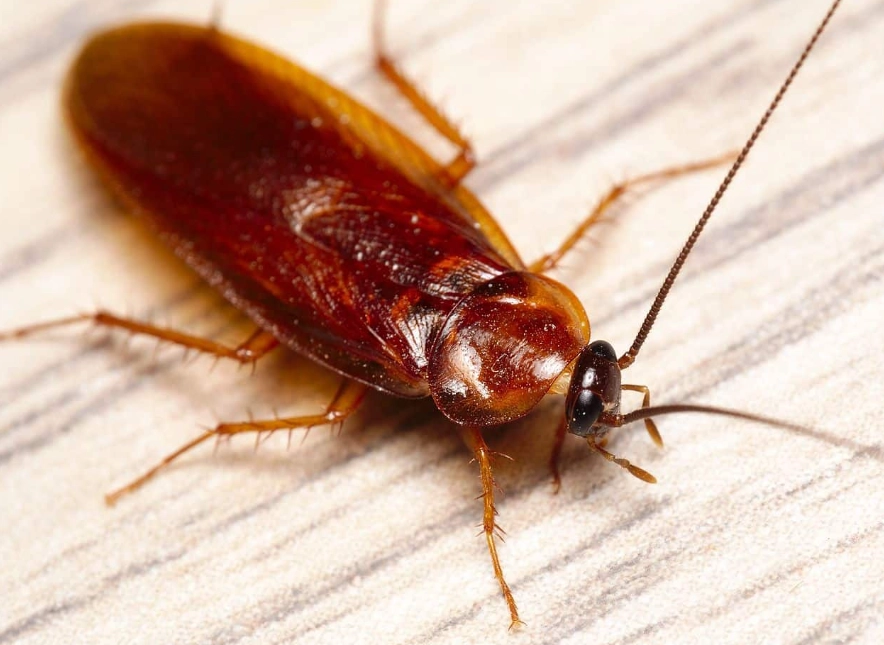
| American Cockroach | Large (1.5 to 2 inches). Reddish-brown. | A yellowish figure-8 pattern on the back of its head (pronotum). | Basements, crawl spaces, sewers, drains. Often comes up from floor drains. | Fast, capable of flight (especially in warm weather). Often called a "water bug" or "palmetto bug." |
| Oriental Cockroach | Medium (1 to 1.25 inches). Dark glossy black or dark brown. | Shiny, greasy-looking body. Wings are underdeveloped on females (look like wing pads). | Cool, damp areas: basements, under sinks, around leaky pipes, under mulch outdoors. | Slower moving. Emits a strong, musty odor. Tolerant of cooler temperatures. |
| Brown-Banded Cockroach | Small (1/2 inch). Light brown. | Two light, irregular bands across the wings and abdomen. Bands are more pronounced in nymphs. | Warm, dry areas away from water: upper cabinets, ceilings, behind pictures, inside electronics. | Active, can jump when startled. Males can fly. Often found scattered throughout a room, not clustered. |
Here's a nuance most guides miss: people often confuse young American cockroach nymphs with adult German cockroaches because of size. Look at the markings, not just the length. A tiny American nymph won't have the full figure-8 yet, but it also won't have the German's twin stripes. It'll just be a uniform reddish-brown.
How to Accurately Identify a Cockroach Species
Don't just guess. Follow this simple process next time you spot one (or find a dead one).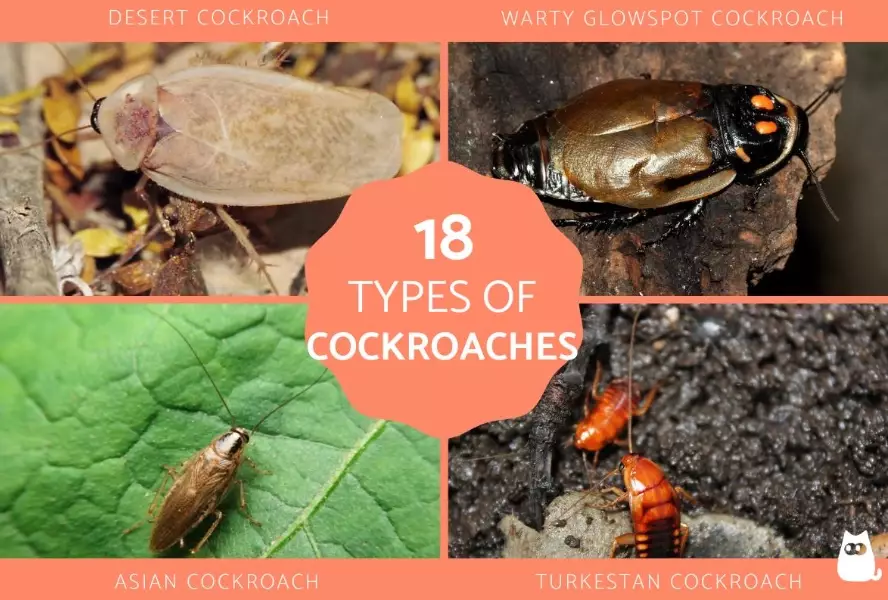
Step 1: Size and Color Assessment
Is it under an inch, or is it a monster over 1.5 inches? The color can be misleading under different lights. A brown-banded roach can look tan, a German roach can look almost amber. Use size as your first major filter.
Step 2: Look for the "Trademark" Markings
This is the most reliable method. Get a good look if you can.
- Stripes? Think German.
- A "Figure-8" on the head? Think American.
- Glossy black and smelly? Think Oriental.
- Light bands across the body? Think Brown-banded.
If it's too fast, try to note the overall shape. Oriental roaches look more beetle-like and robust. German roaches are more oval and flat.
Step 3: Note the Location and Context
Where did you see it? This is a huge clue.
Found a large one in the basement near a floor drain? Almost certainly an American cockroach that's come up from the sewer system. It might be a solitary invader, not necessarily an indoor breeder. Small ones in a kitchen drawer? That's the classic German cockroach MO. Finding them high up on a bedroom wall or in a TV stand? Brown-banded cockroaches love those dry, elevated spots.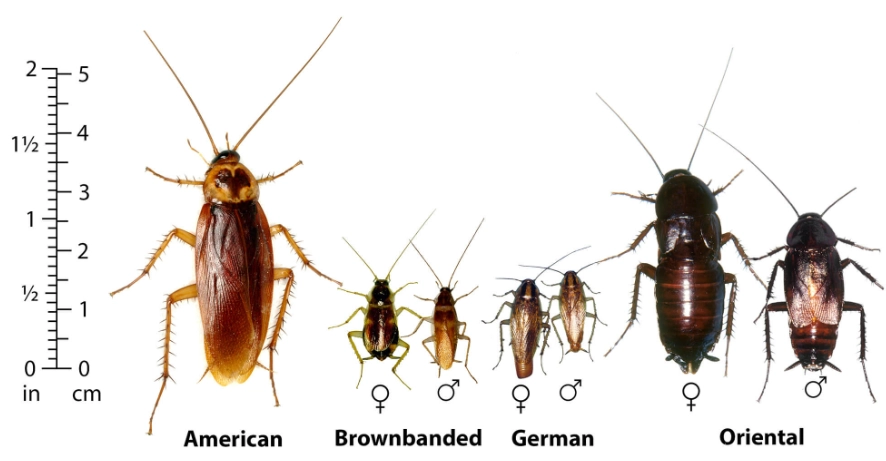
Less Common (But Important) Cockroach Species
While the "Big Four" cause 95% of indoor problems, a few others are worth knowing, especially if you live in specific regions.
Smokybrown Cockroach: Common in the southeastern US. Looks like a sleek, uniform dark brown American cockroach but slightly smaller (about 1.5 inches). They are strong fliers attracted to lights and often invade attics or upper floors from surrounding trees. If you're in Florida or Georgia and find large roaches in your attic, it's probably these.
Australian Cockroach: Another large species, similar to the American. Its key mark is a prominent yellow margin on the front part of the wings and a yellow streak on the side of the pronotum. It's common in subtropical areas and greenhouses. It can fly well.
Wood Cockroaches: These are often accidental invaders. They are usually lighter brown and the males have long, functional wings. The crucial difference? They feed on decaying organic matter outdoors (leaves, mulch, wood) and cannot survive long indoors. They often come in with firewood. If you find a roach that seems clumsy indoors and dies within a day or two, it might be a wood roach. Don't panic and start a full-scale kitchen fumigation.
Tailored Prevention and Elimination Strategies
Generic advice like "keep things clean" is useless. You need a plan based on your specific adversary.
For German and Brown-Banded Cockroaches (The Indoor Breeders)
These are the toughest because they live and breed entirely inside your sanctuary. Sprays often fail because they just scatter. The core strategy is Insect Growth Regulator (IGR) combined with gel baits.
An IGR (like hydroprene or pyriproxyfen) is a hormone mimic that stops roaches from maturing and reproducing. You spray it as a fine mist in harborage areas. It's non-toxic to pets and humans but breaks the breeding cycle. Pair this with gel baits placed in tiny dots (not globs) along edges, inside cabinets, and behind appliances. The roaches eat the bait, share it with others, and the colony collapses from within. I've seen people waste hundreds on repeated spray treatments that never work, while a $30 IGR canister and two tubes of gel bait solve the problem in a month.
For American and Oriental Cockroaches (The Outdoor-Invaders)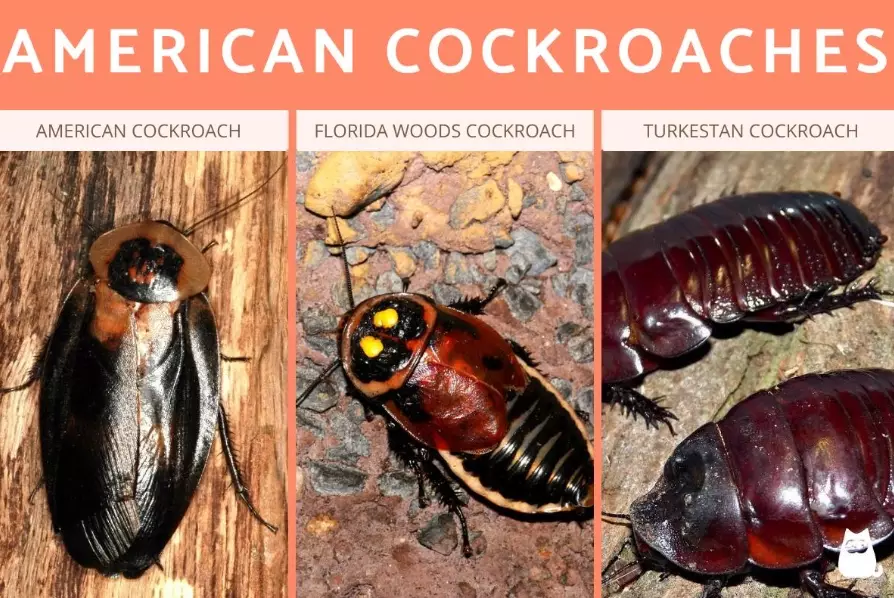
The goal here is to keep them outside. They often come from sewer lines, mulch beds, or dense landscaping.
- Install drain covers on basement floor drains.
- Seal cracks in the foundation and around utility pipes.
- Move mulch and leaf litter at least 6 inches away from your home's foundation.
- Use a perimeter spray or granular insecticide around the outside foundation, focusing on doorways and potential entry points.
- Indoors, sticky traps placed along baseboards in basements and crawl spaces can monitor and catch invaders.
For large, occasional American cockroaches, a well-placed sticky trap is often more effective and safer than spraying chemicals everywhere.
Your Top Cockroach Questions Answered
Probably not a self-sustaining indoor infestation. This pattern is classic for American or Oriental cockroaches that are entering from the outside (sewer, crawl space, gaps). They are solitary foragers. The problem is an entry point, not necessarily a breeding nest inside your walls. Focus on exclusion: sealing cracks, installing drain covers, and managing the habitat outside your home. An infestation is signaled by frequent sightings, especially of smaller nymphs (babies), and finding them in kitchen/bathroom areas.
Three reasons make them a nightmare. First, their reproductive rate is absurd—one female can produce 30,000 offspring in a year. Second, they have evolved resistance to many common pesticides. Third, and most critically, their social behavior. They aggregate in large groups and practice coprophagy (eating each other's feces). This allows them to share nutrients and also spread insecticide resistance. A spray might kill the foragers, but the hidden harborages with egg cases and nymphs remain untouched. That's why baiting and IGRs, which they carry back to the nest, are the only consistently effective tools.
 Can different types of cockroaches interbreed with each other?
No. This is a common myth. German cockroaches cannot breed with American cockroaches. They are completely different species, like dogs and cats. You will never find a hybrid. This is good news for identification, as the characteristics of each species remain distinct. You won't encounter confusing intermediate forms.
This is the brutal reality of multi-unit housing, especially with German or Brown-banded cockroaches. They travel through wall voids, plumbing chases, and electrical outlets. Your neighbor's infestation becomes your infestation. No amount of cleaning in your unit alone will stop them if the source is next door. In this case, you must use long-lasting perimeter defenses. Apply a thin layer of diatomaceous earth or a desiccant dust (like CimeXa) behind outlet and switch plate covers and under baseboards. Use gel baits consistently. Most importantly, document everything and pressure your landlord or property manager to coordinate a building-wide treatment. Spot-treating a single unit is like putting a band-aid on a broken pipe.
Not necessarily more dangerous in terms of disease, but it changes the dynamic. Flying is usually a dispersal mechanism for adult males looking for mates or for species escaping overcrowding or heat. American, Smokybrown, and Australian cockroaches are strong fliers. A flying cockroach inside often means it just flew in from outdoors through an open door or window. However, if you see German cockroaches (which rarely fly) actually taking flight, it can be a sign of extreme population pressure in their hiding spots. So, the species matters more than the act of flying itself.
Comments