快速导览
- Why the Confusion? The Great Mayfly Mix-Up
- The Anatomy of Harmlessness: Why Mayflies Can't Bite
- What About Their Spiky Legs and Tails? Do They Prick?
- The Real Nuisance: Swarms, Slip Hazards, and Smells
- Mayfly vs. The Biters: A Handy Identification Table
- Dealing with a Mayfly Swarm (Without Insecticide)
- Your Mayfly Questions, Answered
- The Bigger Picture: Why Mayflies Matter
- Final Takeaway: Knowledge Over Fear
So you're seeing these clouds of insects near the lake, covering streetlights and car windshields, and the first thing that pops into your head is probably, "Great, are these things going to bite me?" I get it. I've been there. A few summers back, I was camping up near Lake Erie during the famous mayfly hatch. You couldn't open your mouth without fearing you'd inhale a few. My first instinct? To swat and duck. But after a while, and a lot of reading (and talking to some entomologists), I realized I was panicking over nothing. So, let's cut straight to the chase.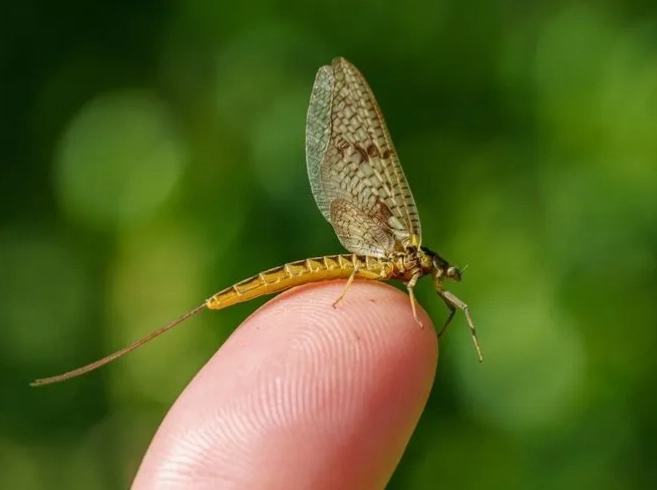
The Short Answer: No. Mayflies do not bite, sting, or chew. They are physically incapable of harming humans or pets in that way. The adult stage of a mayfly's life is so short—often just 24 to 48 hours—that its mouthparts are completely non-functional. They don't even have a functioning digestive system as adults. Their sole purpose is to reproduce and die. So, you can relax.
But I know that's not enough. Just saying "they don't bite" doesn't explain why they swarm so aggressively, why people sometimes report itchy reactions, or how to tell them apart from the bugs that do bite. That's what we're going to unpack here. We'll go deeper than just the simple yes or no, because understanding the "why" behind it makes the answer stick.
Why the Confusion? The Great Mayfly Mix-Up
The question "do mayflies bite" is so common because mayflies are masters of bad timing and worse public relations. They emerge in massive, synchronized swarms that can look downright apocalyptic. When you're surrounded by thousands of flying insects, assuming they're hostile is a natural human defense mechanism. But more importantly, they're often mistaken for other insects that are genuine nuisances.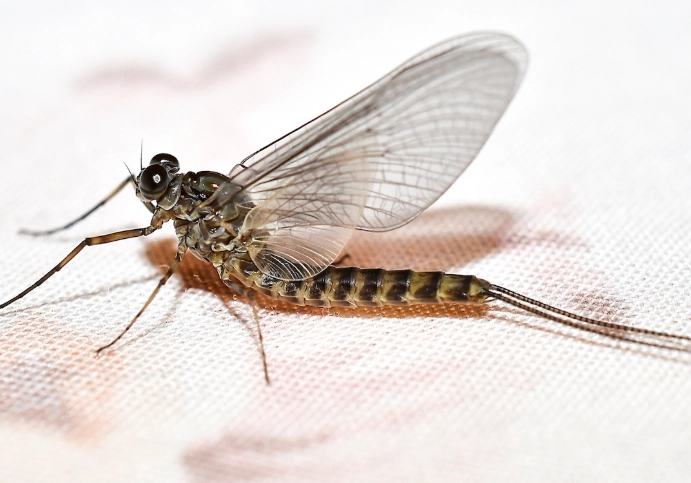
Let's clear up the usual suspects. People often confuse mayflies with:
- Midges ("No-See-Ums" or Biting Midges): This is the #1 mix-up. Non-biting midges look very similar to mayflies—small, flying, and swarming near water. But biting midges are a different family entirely, and the females have a nasty bite. If you're getting bitten by tiny flies near water, it's almost certainly not a mayfly.
- Mosquitoes: Both are associated with water, but that's where the similarity ends.
- Flying Ants: During nuptial flights, swarming ants can resemble mayfly swarms.
I made the midge mistake myself. One evening by a pond, I got covered in itchy welts and blamed the mayflies I saw earlier. Felt pretty silly later when I learned the truth. It's an easy error, but an important one to correct.
Myth Buster: The idea that mayflies bite likely stems from this visual confusion with biting midges, coupled with the psychological discomfort of having so many insects around. Your brain connects the swarm (cause) with any subsequent skin irritation (effect), even if the irritation came from a different source entirely.
The Anatomy of Harmlessness: Why Mayflies Can't Bite
To really believe that mayflies are harmless, it helps to know why. It's all in their biology. Their life cycle is one of the most dramatic in the insect world, and it directly explains their lack of threat.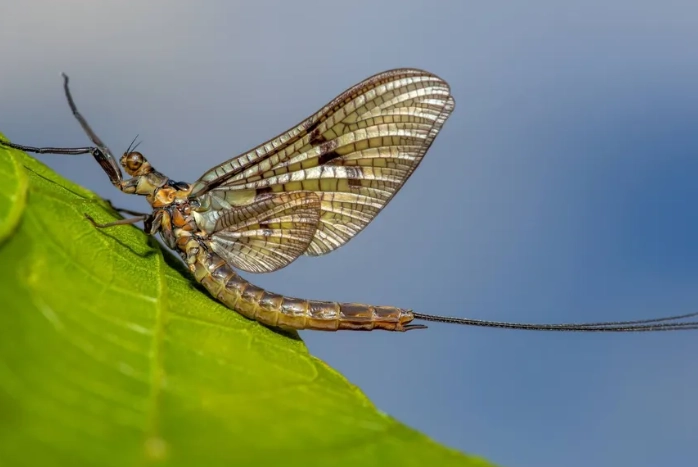
Mayflies have a unique life stage called the subimago. After living as underwater nymphs for up to two years, they emerge as a dull-colored, winged but not-quite-sexually-mature subimago. They then molt one final time into the sparkling, mature imago—the adult you see swarming. This final molt is rare in the insect world.
Here’s the crucial part: The adult mayfly has no functional mouthparts. Its mandibles (jaws) are vestigial—tiny and useless. Its digestive system shuts down. It doesn't eat. It doesn't drink. All its energy comes from reserves stored during its lengthy nymph stage.
Think about that. An animal that doesn't eat has absolutely zero reason to bite you. It's not looking for a blood meal like a mosquito or a deer fly. It's not defending a nest like a wasp. It's on a single-minded, final mission to find a mate, reproduce, and then its life is over, often within a day. Asking if a mayfly bites is like asking if a soap bubble can punch you—it's just not built for that.
What About Their Spiky Legs and Tails? Do They Prick?
Another worry people have. Mayflies have delicate, filamentous tails (cerci) and legs that might feel tickly or prickly if one lands on you. But this is a sensory illusion. They cannot break human skin. Their legs are for clinging to surfaces during mating swarms, not for piercing. The sensation is purely psychological discomfort or the light touch of many tiny legs. No venom, no saliva injection, nothing. If you have sensitive skin or allergies, the dust from their shed wings and bodies might cause minor irritation, but that's a far cry from a bite.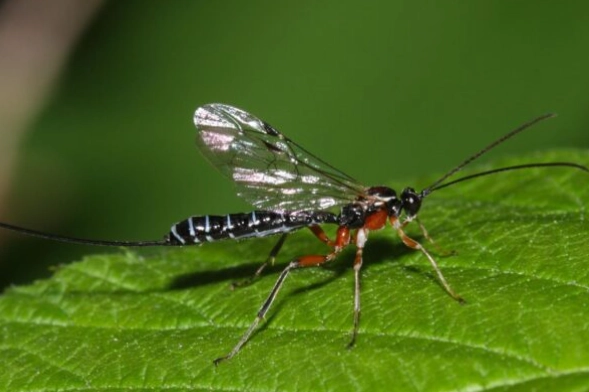
The Real Nuisance: Swarms, Slip Hazards, and Smells
Okay, so they don't bite. But let's be honest, they can still be a massive pain. This is where the legitimate complaints come in, and ignoring them would make this article feel disconnected from reality. When mayflies swarm, they do it with gusto.
- Sheer Numbers: They can cloud bridges, cover roads, and pile up under streetlights inches deep. Driving through a swarm can reduce visibility and clog radiators.
- The Slip Factor: Piles of dead mayflies on sidewalks, decks, and roads become incredibly slippery, especially when wet. This is a genuine safety hazard.
- The Smell: As millions of them die and decompose, they can produce a fishy, unpleasant odor. Not dangerous, but definitely not pleasant.
This is the real "mayfly problem." It's not about personal harm, but about civic inconvenience. Towns near large lakes like Erie or Michigan have street sweepers on standby during peak hatch periods. So while you don't need to worry about a mayfly bite, you might want to worry about your footing!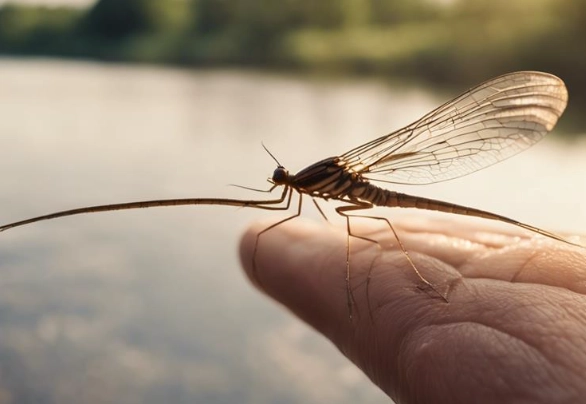
Mayfly vs. The Biters: A Handy Identification Table
Since confusion is the root of the fear, here's a clear breakdown. If you're getting bitten, compare what's bothering you to this table. It should help you pinpoint the real culprit.
| Feature | Mayfly (Adult) | Biting Midge ("No-See-Um") | Mosquito |
|---|---|---|---|
| Ability to Bite | NO. Physically impossible. | YES. Females need blood for eggs. | YES. Females need blood for eggs. |
| Mouthparts | Vestigial/non-functional. | Sharp, cutting mandibles. | Long, piercing proboscis. |
| Wings | Two pairs, triangular, held upright like a sailboat. | One pair, small and rounded, held flat over body. | One pair, long and narrow. |
| Body Size & Shape | Slender, 0.2 to 1 inch. Long, thread-like tails (2-3). | Tiny (~1/16 inch), stocky, humpbacked appearance. | Slender, long legs, prominent proboscis. |
| Swarm Behavior | Massive, dancing clouds over water/landmarks at dusk. | Small, persistent clouds that follow you; most active dawn/dusk. | Solitary or small groups; not true swarms. |
| Associated Sensation | Tickling, crawling. No pain. | Sharp, burning bite followed by intense itching. | Subtle prick, followed by itchy welt. |
| Adult Diet | Nothing. Does not feed. | Females: blood. Males: plant nectar. | Females: blood. Males: plant nectar. |
See the difference? The mayfly stands out completely. If the bug has its wings sticking straight up and has those long tails, you can be 99.9% sure it's harmless. The ones that bite look and act totally different.
Dealing with a Mayfly Swarm (Without Insecticide)
Since they don't bite, killing them with sprays is pointless and ecologically harmful. Mayflies are a critical food source for fish, birds, and other insects. They're also excellent indicators of clean water. So, here's a more sensible approach.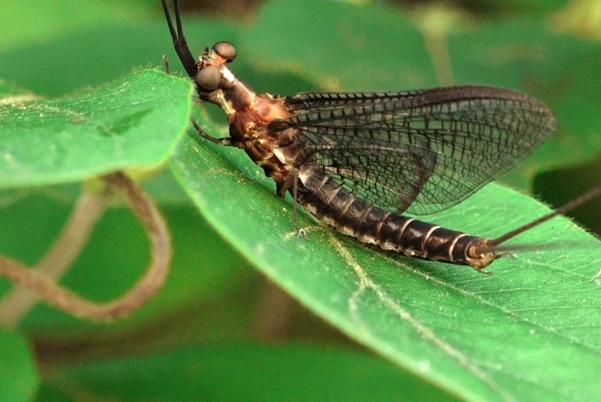
Mayflies are phototactic—drawn to light. Switching to yellow "bug" bulbs or simply turning off porch lights during a hatch can dramatically reduce the number that end up at your door.
On a patio or deck, a strong fan creates wind that disrupts their flight. They're weak fliers and will avoid the area.
The swarm will be over in a few days. Seriously. Their adult lifespan is measured in hours. Patience is the most effective tool.
Use a broom or a leaf blower to clear piles from walkways before they become a slippery hazard. A garden hose works well too. It's not glamorous, but it's effective.
I learned the light trick the hard way. Left my bright garage light on one night and came back to what looked like a mayfly convention. Never made that mistake again.
Your Mayfly Questions, Answered
The Bigger Picture: Why Mayflies Matter
Once you get past the initial swarm shock, mayflies are actually incredible creatures. Their synchronized emergence is a natural wonder. More importantly, they are a keystone species in freshwater ecosystems. Their presence in large numbers indicates good water quality, as the nymphs are highly sensitive to pollution. Organizations like the U.S. Environmental Protection Agency (EPA) sometimes use mayfly populations as bioindicators to assess the health of rivers and lakes.
They are also a fundamental food source. Trout fishermen create intricate "mayfly" lures because fish key in on them. Birds feast on the adults. Removing mayflies from the ecosystem would have a catastrophic ripple effect. So, while a swarm on your porch is annoying, it's also a sign of a healthy environment nearby. The University of Minnesota Department of Entomology has some great public resources that delve into their ecological importance if you're curious to learn more.
Final Takeaway: Knowledge Over Fear
So, do mayflies bite? No. Absolutely not. It's a biological impossibility. The fear comes from misunderstanding and mistaken identity. Once you know what you're looking at—those upright wings, the delicate tails, the harmless swarming—you can replace that knee-jerk fear with a bit of curiosity, or at least tolerant annoyance.
The next time someone asks you, "Do mayflies bite?" you can tell them with confidence: not a chance. They're just fragile, short-lived insects putting on one of nature's most spectacular, if messy, shows. Your biggest concern should be watching your step on the sidewalk, not swatting at your skin.
And honestly, that's a relief. In a world full of mosquitoes, ticks, and other biters, it's nice to know one common insect is completely innocent. Even if it is a bit of a sloppy housemate for a few days each summer.
LEAVE A REPLY
Your email address will not be published. Required fields are marked *