Quick Navigation
Let's be honest. You're probably here because you've seen a trail of tiny, dark ants marching across your kitchen counter, maybe near the sink or that fruit bowl you forgot about. You squish one, lean in out of curiosity (or disgust), and get a whiff of something... odd. Not quite chemical, but a weird, musty, almost like rotten coconut or a stale blue cheese. Congratulations, you've just met the odorous house ant, Tapinoma sessile.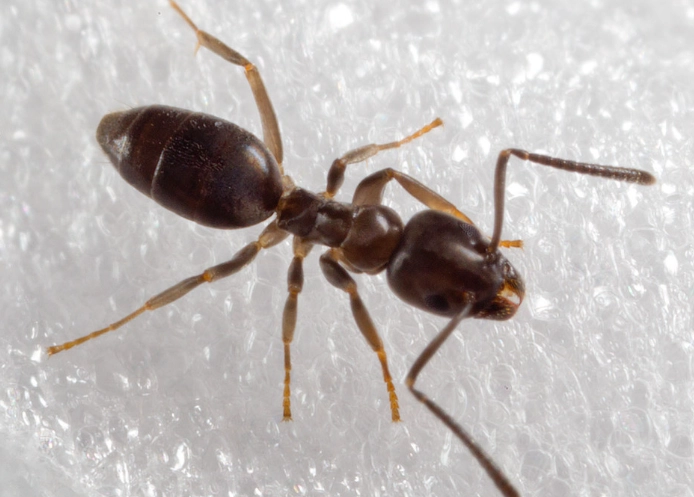
I remember the first time I identified them in my own home. I was convinced they were pavement ants or something more sinister. But that smell was the dead giveaway. It's a signature trait that makes this ant both fascinating and incredibly frustrating to deal with. They're one of the most common household ants in North America, and if you're reading this, chances are they've decided your home is their new favorite buffet.
What Exactly Is an Odorous House Ant?
Before you declare war, you need to know your enemy. Misidentifying your ant problem means you could be using the wrong tactics from the get-go. So, let's break down what makes an odorous house ant tick.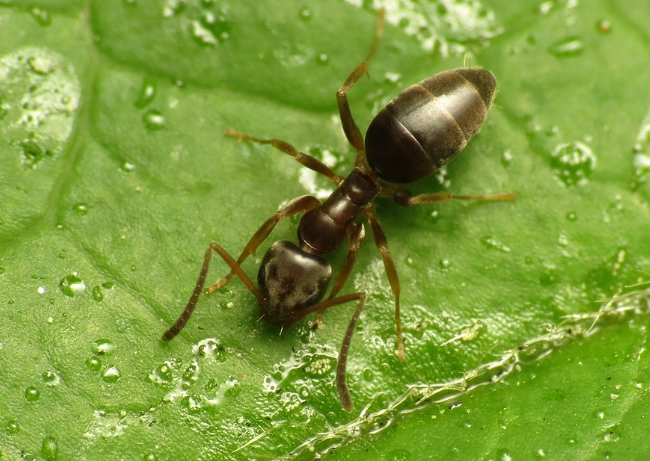
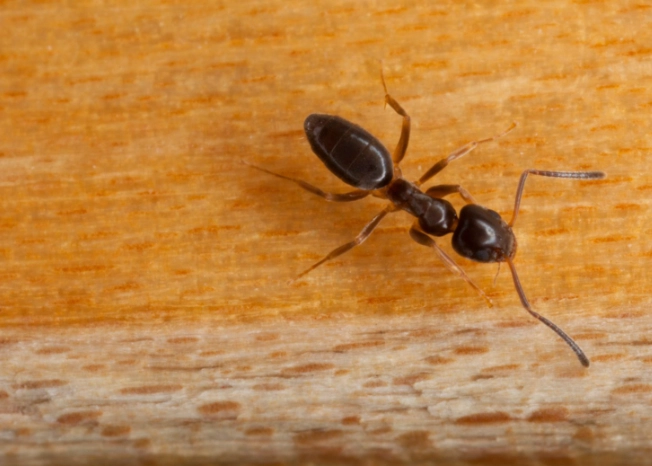
Physically, they're pretty small. Workers are usually about 1/16 to 1/8 of an inch long. They're dark brown to black, and if you look really closely (maybe with a magnifying glass), you'll notice their antennae have 12 segments without a distinct club at the end. But let's be real, most of us aren't getting that close. The real party trick is their node. Or, more accurately, the lack of one.
Most ants have a one or two-segmented bump between their thorax and abdomen called a petiole node. The odorous house ant's profile is smooth. It's a single, uninterrupted connection. This is a key ID feature you can sometimes spot.
But the name says it all. Crush one between your fingers (not that I recommend making a habit of it), and you'll release the odor from their anal glands. It's a defensive mechanism. Descriptions vary from rotten coconut, to over-ripe pineapple, to a chemical-like smell. To me, it's always smelled like someone left a cheap coconut sunscreen in a hot car for a month. It's unmistakable once you know it.
Biology and Behavior: Why They're Such a Nuisance
Understanding their lifestyle explains why they're so good at invading our space. These ants are what entomologists call "polydomous" and "polygynous." Fancy words for a simple, annoying reality.
- Polydomous: They don't live in one big nest. Instead, a single colony spreads out across multiple, interconnected satellite nests. You might have a nest in a wall void, another under the mulch outside your foundation, and another under a patio stone. They all work together. Kill one nest, and the others just regroup.
- Polygynous: A single colony can have multiple queens. Lots of queens mean lots of egg-laying, which means the colony can recover and grow rapidly. It's like a resilient corporate structure with multiple CEOs.
Their diet is another key to the problem. They love sweets. Honeydew from aphids and scale insects is a favorite outdoors. Indoors, it's syrup, soda drops, fruit juice, pastries—you name it. But they're also opportunistic and will go for greasy or protein-based foods. That forgotten chip crumb under the couch? That's a five-star meal for them.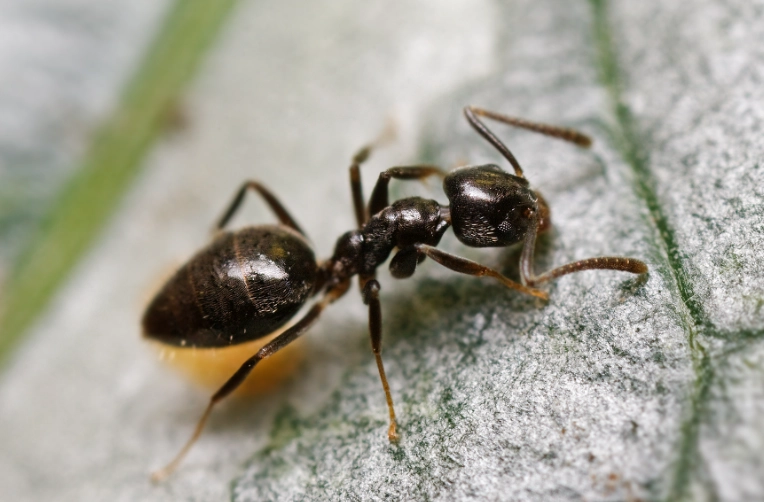
They forage in those iconic, meandering trails. Unlike some ants with rigid highways, their trails can seem a bit disorganized, but they're effective. Workers lay down pheromone trails to food sources, creating a feedback loop that brings more and more ants.
The Real Problem: Are Odorous House Ants Dangerous?
This is the first question most people have. The short answer is no, not in the way we typically fear. Let's be clear about the risks.
They do not sting. They can bite, but it's rare, weak, and more of a pinch. They aren't aggressive defenders like fire ants. Their main defense is to run away and, of course, emit that odor.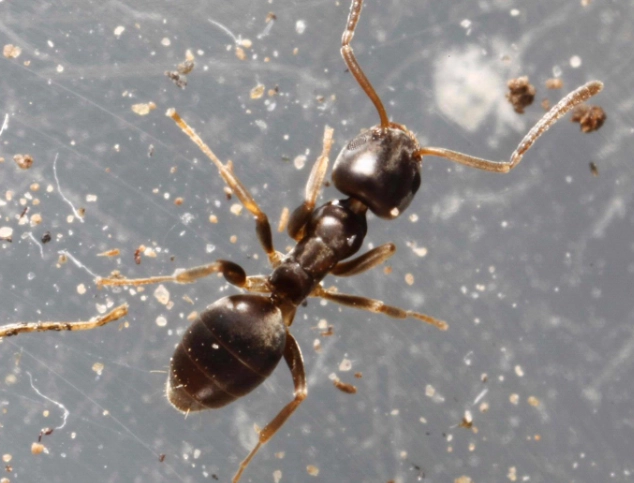
The real dangers are more indirect:
- Food Contamination: This is the big one. As they crawl over food, food preparation surfaces, and storage areas, they can mechanically transport bacteria like Salmonella and E. coli. An odorous house ant infestation in your kitchen is a legitimate sanitation issue.
- Nuisance and Stress: Let's not downplay this. A constant stream of ants is mentally taxing. It makes you feel like your home isn't clean or secure. It's a persistent irritation.
- Potential for Electrical Issues: In rare cases, large colonies nesting in wall voids or electrical boxes have been known to cause short circuits by chewing on insulation or simply by their conductive bodies bridging connections. It's uncommon, but it happens.
So, while you don't need to fear for your health from a bite, you absolutely should take them seriously as unwanted contaminants and a sign that your home's defenses have a breach.
Your Action Plan: From Identification to Elimination
Alright, let's get down to business. Getting rid of odorous house ants is a process. Skipping steps is why people fail and call them "impossible." We're going to build a fortress, not just swat at scouts.
Step 1: Inspection and Finding the Trails
Put down the spray can. Your first job is detective work. Grab a flashlight and maybe a magnifying glass if you have one.
- Follow the Trail Backwards: Don't just look at where they're going (the food). See if you can trace the line of ants back to where they're coming from. This might lead you to a crack in the baseboard, a gap around a pipe under the sink, or an electrical outlet.
- Look for the Entry Point: Common entry points include gaps around doors/windows, utility line penetrations (cable, phone, pipes), cracks in the foundation, and where siding meets the foundation.
- Check Outside: Go outside near where you see indoor activity. Look for nests under stones, mulch, landscape timbers, leaf litter, piles of lumber, or in rotting logs. Watch for ant activity on the foundation walls.
The goal here isn't to kill yet. It's to map their movement. Knowing their highways is half the battle.
Step 2: Sanitation - Cutting Off the Food Supply
This is the most boring, most critical, and most often neglected step. You can have the best baits in the world, but if you're providing a competing, easier food source, they'll ignore your traps.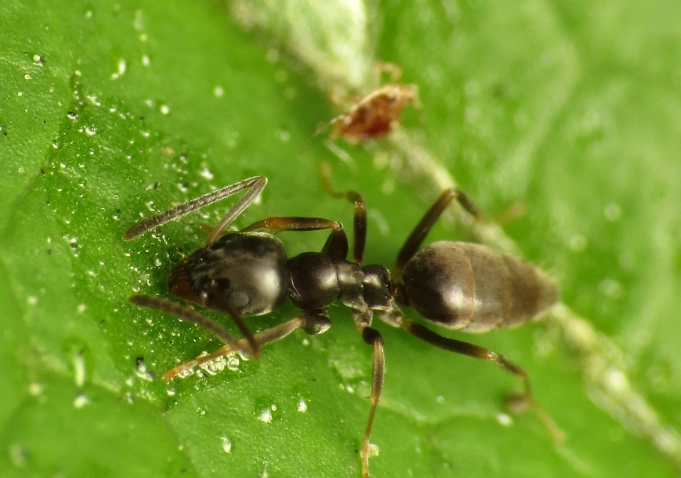
Your kitchen needs to become a fortress. Here's the checklist:
- Wipe down all counters and tables every single night. No exceptions. Crumbs, sticky spots, grease splatters—all of it.
- Store all food in airtight containers. This goes for sugar, cereal, pasta, pet food (huge attractant!), and even things like fruit. Don't leave ripe bananas or apples on the counter.
- Take out the trash and recycling frequently. Rinse out soda cans, juice bottles, and food containers before they go in the bin.
- Fix leaky faucets and pipes. Moisture is a huge attractant. A damp area under the sink is a five-star resort for ants.
- Clean under and behind appliances. The toaster crumb tray, the grease under the stove, the drip pan of the fridge—these are ant goldmines.
I know, it sounds like a lot. But think of it this way: you're not just cleaning for ants. You're creating a cleaner, less inviting home for all sorts of pests. It's a good habit that pays off.
Step 3: Exclusion - Sealing Them Out
Now, use the information from your inspection. Your mission is to physically block their highways.
- Use a quality silicone or acrylic latex caulk to seal cracks and crevices around baseboards, window frames, and door frames.
- Apply weather stripping to doors and windows that don't seal tightly.
- Use expanding foam or steel wool (they can't chew through it) to seal larger gaps around utility lines entering the house.
- Outside, caulk cracks in the foundation and where siding meets the foundation.
- Trim back tree branches, shrubs, and other vegetation so they aren't touching the house, creating a natural bridge.
This step is permanent prevention. It's work, but it protects you from future invasions of all kinds, not just odorous house ants.
Step 4: Choosing Your Control Methods
Here's where we talk about the actual products. With their multiple-queen, multiple-nest structure, contact sprays are largely useless for long-term control. You kill the foragers you see, but the nest(s) deep in the wall or underground just send more. The key is using products that the workers take back to the nest.
Ant Baits: The Gold Standard
For odorous house ants, baits are typically your best bet. The idea is simple: you offer a toxicant mixed with an attractive food. The workers carry it back to the nest, share it through trophallaxis (mouth-to-mouth food sharing), and eventually feed it to the queens and larvae, poisoning the entire colony.
But baiting has a learning curve. You might see more ants at first. That's a good sign! It means they've found the bait and are recruiting others. Don't spray them! Let them feast and carry the poison home.
You often need to try different baits. Their food preferences can change seasonally (sweets in spring/summer, more proteins in fall). I've had the best luck with a two-pronged approach:
- A sugar-based gel bait placed near their trails. Brands like Terro (borax-based) are famous for this and work well on odorous house ants.
- A protein/grease-based granular bait placed outdoors near suspected nesting areas or entry points.
Place baits in protected areas where pets and children can't reach them, like under appliances, inside cabinets along edges, or in bait stations outdoors.
When to Consider Non-Repellent Insecticides
Sometimes, baiting alone isn't enough, especially with a severe, established infestation. This is where you might consider a professional or a carefully applied DIY treatment with a non-repellent insecticide.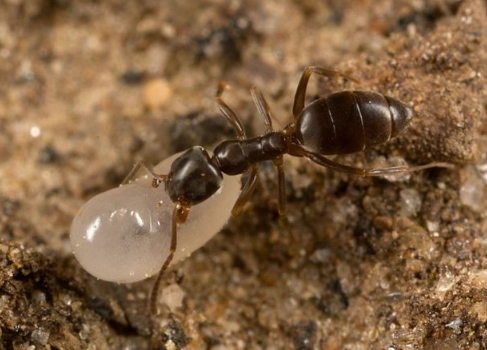
Unlike Raid or other "bug bombs," non-repellent products are undetectable to ants. They walk through the treated zone, pick up the insecticide on their bodies, and carry it back to the nest before dying, effectively contaminating the nest. Products containing fipronil (like Termidor SC, for professional use) or indoxacarb are examples.
To help you visualize the bait strategy versus the spray-and-pray method, here's a comparison that really lays it out.
| Control Method | How It Works | Pros | Cons | Best For... |
|---|---|---|---|---|
| Sweet Liquid/Gel Baits (e.g., Terro, Advion Ant Gel) | Workers feed on sugary liquid and carry borax or other slow-acting toxins back to the nest, killing the colony. | Extremely effective against sugar-loving foragers. Easy for homeowners to use. Targets the hidden colony. | Can attract more ants initially. Pets/kids may be interested. May not work if ants are seeking protein. | Initial indoor infestations, trails leading to sweets, DIYers. |
| Protein/Grease Baits (Granular or Station) | Attracts ants seeking protein/oils. Carried back to nest to feed larvae and queens. | Covers the other half of their diet. Great for outdoor placement near nests. | Less attractive when ants are on a sugar binge. Can be less palatable than natural foods if sanitation is poor. | Outdoor nest targeting, supplementing gel baits, seasonal shifts in diet. |
| Aerosol Contact Sprays (Common store brands) | Kills ants on contact via direct chemical exposure. Often has a repellent effect. | Immediate gratification. Kills the ants you see. | Worst long-term strategy. Repels ants, fracturing trails and making baiting harder. Doesn't touch the nest. Creates "budding" of new satellite nests. | Only for killing a single scout ant away from trails. Not for treating an active trail. |
| Non-Repellent Spray/Trench (e.g., products with fipronil, often pro-grade) | Creates an undetectable toxic zone. Ants cross it, get a lethal dose on their bodies, and die later, contaminating the nest. | Can provide a long-term barrier. Very effective against complex colonies. No repellency. | Often requires professional application. More expensive. Must be applied precisely per the label. | Severe, persistent infestations where baits have failed. Creating a protective barrier around the home's perimeter. |
When to Call a Professional Pest Control Company
There's no shame in calling for backup. In fact, it's often the smartest and fastest move. Consider it if:
- You've tried diligent sanitation, exclusion, and baiting for 3-4 weeks with no reduction in activity.
- The infestation is widespread, with ants in multiple, non-adjacent rooms (suggesting multiple satellite nests in the walls).
- You can't locate or access the likely nest sites (e.g., deep in a wall, under a slab foundation).
- You simply don't have the time or desire to manage a multi-week IPM program yourself.
A good pest management professional (PMP) will do a thorough inspection, identify the species (they'll know that smell too!), and likely use a combination of methods you can't easily access as a homeowner, like specialized non-repellent insecticides applied as a perimeter treatment or into wall voids. They also offer follow-up visits, which is crucial for a pest like the odorous house ant that can rebound.
Odorous House Ants: Your Questions Answered
1. Do odorous house ants cause structural damage like carpenter ants?
No. This is a critical distinction. Carpenter ants excavate wood to create galleries for their nests, which can weaken structures over time. Odorous house ants do not eat or damage wood. They nest in existing cavities—wall voids, under floors, in insulation. They are a nuisance and contaminant, not a structural pest. If you see sawdust-like frass, you have carpenter ants, not odorous house ants.
2. Are the baits safe around my pets and kids?
Commercial ant baits are formulated to be low-hazard when used as directed. The active ingredients (like borax) are in very small amounts within a sweet liquid. The primary risk is not acute poisoning but gastrointestinal upset if a pet or child consumes a large amount of the bait itself. Always place baits in areas inaccessible to pets and children, like behind the fridge, under the stove, or inside a secured bait station. If you're extremely concerned, consult the product's Safety Data Sheet (SDS) or talk to your pediatrician/veterinarian.
3. I see winged ants inside! Is that worse?
Seeing winged "reproductives" or "swarmers" indoors is a sign of an established, mature colony nesting inside your home. They are the future kings and queens, and they emerge to mate and start new colonies. While alarming, it doesn't mean the infestation is suddenly more dangerous—just that it's been there long enough to reach a reproductive stage. It's a strong signal to intensify your control efforts or call a professional immediately. Don't confuse them with termite swarmers! Ant swarmers have elbowed antennae, a pinched waist, and front wings longer than hind wings.
4. What's the deal with "ghost ants"? Are they the same?
They're close relatives but different species. Ghost ants (Tapinoma melanocephalum) are in the same genus. They're smaller, with a dark head and thorax but a pale, almost translucent abdomen. They also emit a similar odor when crushed. Their biology and control are very similar to odorous house ants, but they are more tropical and a major pest in places like Florida. If you're in the northern US or Canada, you almost certainly have odorous house ants. In the deep south, you could have either. A pro can tell you for sure.
Long-Term Prevention: Keeping Them From Coming Back
Let's say you've won the battle. The trails are gone. Now, how do you keep it that way? This is about turning your reaction into a routine.
- Maintain your sanitation habits. Don't let the counters get cluttered again. Keep food sealed.
- Monitor with occasional bait. In spring and early summer—their peak activity periods—place a single bait station in a problem area (like under the kitchen sink) as an early warning system. If you see ants on it, you know to crack down before it becomes a full-blown infestation.
- Keep up exterior maintenance. Re-caulk as needed. Keep mulch beds thin and at least 6-12 inches away from the foundation. Store firewood away from the house and off the ground.
- Manage aphids and other honeydew-producing insects on plants near your house. This removes a major outdoor food source that attracts odorous house ant colonies to your property in the first place. The University of California Statewide Integrated Pest Management Program has excellent resources on managing aphids.
Think of it like dental hygiene. You don't just brush once after a cavity. You build habits to prevent the next one.
Dealing with odorous house ants is frustrating, but it's not mysterious. It boils down to a simple, if somewhat tedious, formula: Correct ID + Rigorous Sanitation + Physical Exclusion + Strategic Baiting = Victory. Avoid the temptation of the quick-kill spray. It feels good for a second but usually makes the problem worse in the long run.
These ants are a testament to how successful a simple, adaptable organism can be. They've evolved to exploit our homes perfectly. But with a little knowledge and a lot of persistence, you can show them the door and keep it closed. Start with the crumbs, seal the cracks, and be patient with the baits. Your ant-free kitchen is waiting.
LEAVE A REPLY
Your email address will not be published. Required fields are marked *