Quick Navigation
Let's talk about bed bugs. Just saying the name probably makes you feel a bit itchy, right? I know the feeling. A few years back, a friend came back from a trip with some unwanted souvenirs in her luggage, and helping her deal with that mess was an education in itself. It's surprising how little most people know about how these pests actually live and grow. Understanding the stages of a bed bug isn't just for entomologists – it's your first line of defense in spotting an infestation early and getting rid of it for good.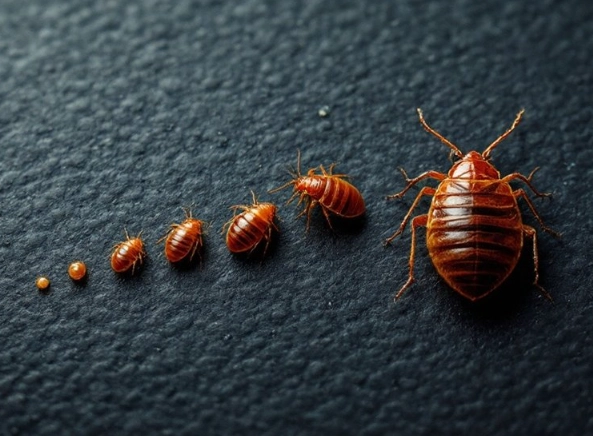
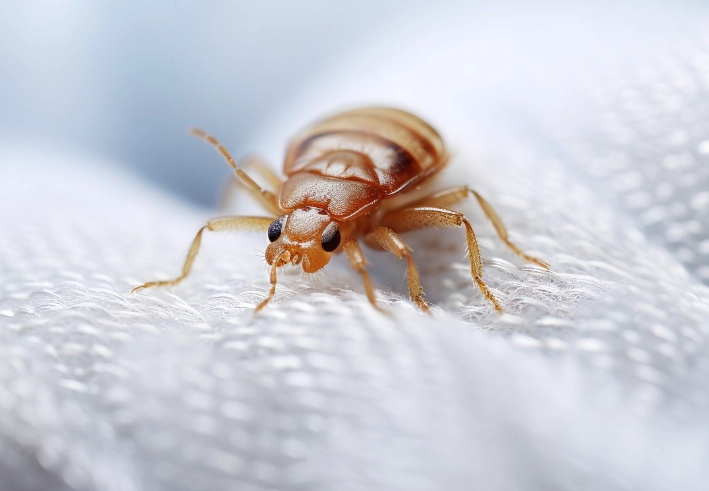
Most folks picture a bed bug as one thing: a flat, brown, apple-seed-looking bug. But that's just the adult. From the moment it hatches, a bed bug goes through a fascinating and frankly, resilient, transformation. If you only know what the adult looks like, you're missing 80% of the problem. The younger stages are masters of hide-and-seek.
The Bed Bug Life Cycle: A Step-by-Step Breakdown
Unlike butterflies with their dramatic metamorphosis, bed bugs undergo what's called "incomplete metamorphosis." That means the baby bug, called a nymph, looks basically like a miniature version of the adult, just paler and without mature reproductive organs. They have to grow by molting – shedding their skin – and they need a blood meal to do it every single time.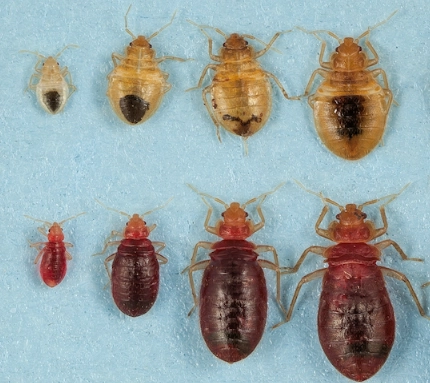
The entire journey, under ideal conditions (think: a cozy 70-80°F with a human host readily available), can take as little as a month. But here's the kicker – it can also stretch out for several months if meals are scarce or temperatures are cooler. Their adaptability is what makes them such a nightmare.
I remember my friend pointing at a tiny, pale speck on a mattress seam and asking, "Is that dust?" It wasn't dust. It was a first-stage nymph. That moment really drove home how easy it is to miss the early stages of a bed bug infestation.
The Five Nymphal Instars: The Growing-Up Years
This is the core of the growth process. After hatching from the egg, a bed bug must pass through five juvenile stages, called instars. Each stage ends with a molt, leading to the next, slightly larger stage. The need for a blood meal before each molt is the critical weak point in their lifecycle that we can sometimes exploit.
| Life Stage | Approximate Size | Color & Appearance | Key Facts & Challenges for Detection |
|---|---|---|---|
| Egg | ~1mm (pinhead) | Pearl-white, oval; often in clusters | Sticky, glued to surfaces; extremely hard to see without magnification. Can hatch in 6-10 days. |
| 1st Instar Nymph | 1.5mm (poppy seed) | Nearly translucent; turns reddish after feeding. | This is the stage most mistaken for debris. They MUST feed to molt. Very vulnerable to desiccation (drying out). |
| 2nd Instar Nymph | 2mm | Pale yellow/tan; abdomen visible after feeding. | Becomes slightly more visible. Still excellent at hiding in minute cracks. |
| 3rd Instar Nymph | 2.5mm | Light brown/tan coloration starts. | Easier to spot with the naked eye, especially if recently fed. The classic bed bug shape becomes clear. |
| 4th Instar Nymph | 3mm | Medium brown. | Now clearly a bed bug. Leaves more noticeable fecal spots (dark specks) and shed skins. |
| 5th Instar Nymph | 4.5mm | Darker brown, close to adult color. | Final juvenile stage. After feeding and molting from this stage, it becomes a reproductive adult. |
| Adult | 5-7mm (apple seed) | Reddish-brown; long, oval, flat. Swollen & elongated after feeding. | Can live 6-12+ months. Females lay 1-5 eggs per day. Primary dispersers and the most commonly recognized stage. |
Looking at that table, the progression is pretty logical. But what it doesn't show is the sheer number. One female can lay hundreds of eggs in her lifetime. So you're never dealing with one bug at one stage of development; you're dealing with a mixed-age colony. That's why treatments have to be thorough and persistent – you need a method that gets eggs, all nymphal stages, and adults.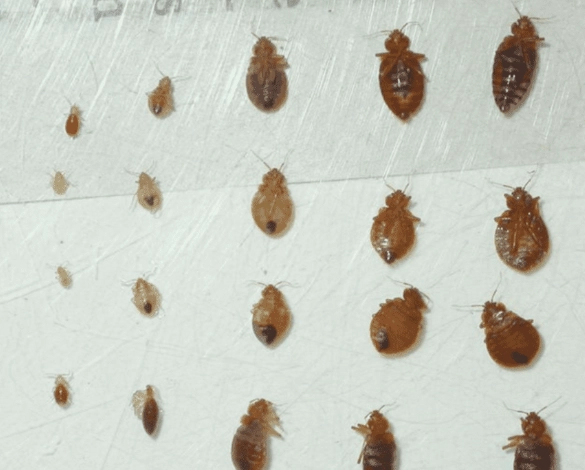
Spotting the Different Stages: A Practical Identification Guide
Okay, so you know the theory. How do you apply it in your dimly lit bedroom at 2 AM with a flashlight? Let's get practical.
Eggs and Early Nymphs: This is the hardest part. You need good light and patience. Don't just look on the mattress surface. The edges are where the seams are – perfect hiding spots. Use a credit card or a thin tool to run along the seam, forcing anything inside out into view. Eggs look like tiny grains of salt, but they're sticky. First instar nymphs are the color of the mattress fabric until they feed, then they look like moving drops of blood. It's creepy.
Mid-Stage Nymphs (2nd-4th Instar): These are easier. You'll start to see the proper bug shape. Look for their shed skins – these are golden, papery, empty shells that look just like a live bug but are hollow. Finding a lot of shed skins is a huge red flag; it means a population is actively growing. The molts are a dead giveaway of the various bed bug nymph stages.
Adults and Late-Stage Nymphs: These are the obvious ones. You'll find them, their dark fecal spots (which bleed like a marker on fabric), and sometimes even a musty, sweet odor if the infestation is large. Adults are the ones most likely to wander, hitching rides on bags or clothes.
How Their Life Cycle Affects Control Strategies
This is where the rubber meets the road. Why does all this biology matter? Because every pest control method has strengths and weaknesses against different life stages.
- Heat Treatment: The gold standard, in my opinion, if you can afford it. Professional-grade heat (raising room temp to 120-135°F) kills all stages – eggs, nymphs, adults. It's the only method that truly tackles the entire colony in one go, provided it's done correctly. No lifecycle stage is immune to sufficient heat.
- Insecticide Sprays: Here's the catch. Many common sprays have poor "ovicidal" (egg-killing) activity. They might kill nymphs and adults on contact, but eggs can survive and hatch later. Professionals use insect growth regulators (IGRs) that disrupt molting, or combination formulas. Always check the label for what life stages a product claims to control. The U.S. Environmental Protection Agency (EPA) has a search tool for registered bed bug products, which is a more reliable source than random online reviews.
- Diatomaceous Earth (DE) / CimeXa: These desiccant dusts work mechanically, scratching the waxy coating on a bug's shell, causing it to dry out. They can be effective against all mobile stages (nymphs and adults) but do nothing to eggs. The upside? Bugs can't develop resistance to it. The downside? It works slowly and needs to remain dry and undisturbed in voids and crevices.
- Mattress Encasements: A fantastic, non-chemical tool. They don't kill bugs, but they trap any already inside the mattress/box spring, preventing them from feeding. This can break the feeding cycle needed for nymphs to molt. Any bugs already elsewhere in the room, of course, are unaffected.
The takeaway? A single method rarely works. Effective control usually involves an integrated approach that accounts for the vulnerabilities at each point in the bed bug life cycle. For severe cases, the Centers for Disease Control and Prevention (CDC) explicitly recommends working with a experienced pest management professional.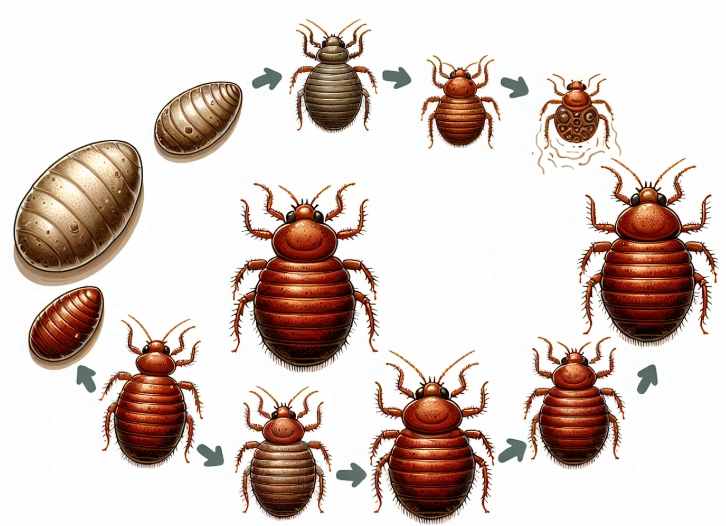
Your Top Questions About Bed Bug Stages, Answered
Prevention: Stopping the Cycle Before It Starts
Knowing the stages of a bed bug is ultimately about prevention. If you can stop a single pregnant female from getting in, or spot the first signs of the earliest nymphs, you save yourself a world of trouble and expense.
- Inspect Secondhand Items: That cute vintage chair or thrift store bargain? Give it a ruthless inspection along seams, crevices, and underneath. All stages, especially eggs and early nymphs, can hitch a ride this way.
- Be Hotel-Smart: Before you put your luggage on the bed or unpack, do a quick check. Pull back the sheets, check the mattress seams near the headboard, and look behind the headboard if possible. Keep your luggage on a luggage rack or in the bathtub, which is a less likely habitat.
- Reduce Clutter: I know, everyone says this. But it's true. Clutter is a paradise for bed bugs at any stage. It gives them endless harborage sites, making inspection and treatment a nightmare.
- Consider Preventative Encasements: Putting good-quality, bed-bug-proof encasements on your mattress and box spring doesn't just trap existing bugs; it also eliminates the major hiding spots on your bed, making future inspections much easier. The seams of your bed are their favorite nursery.
Look, bed bugs are a pain. There's no sugar-coating it. They're resilient, sneaky, and psychologically draining. But a lot of the fear and helplessness comes from not understanding what you're up against. They're not magic. They're insects with a specific biology and a predictable, if annoying, life cycle.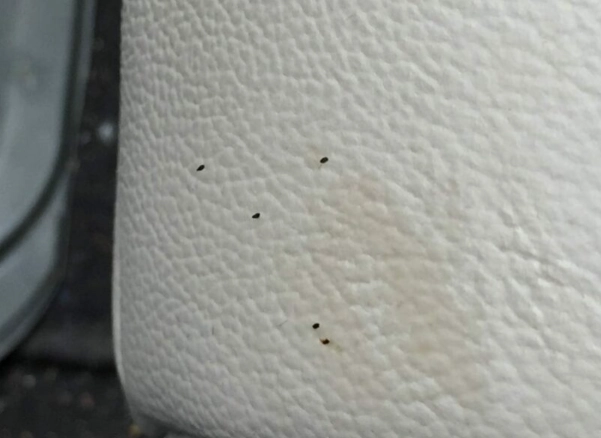
By learning the stages of a bed bug – from that nearly invisible egg to the blood-engorged adult – you take away their biggest advantage: your ignorance. You know what to look for, where to look, and why a single treatment often fails. You become a smarter defender of your own home.
Whether you're just being cautious, suspect a problem, or are in the middle of dealing with one, keep this guide in mind. Focus on the evidence of the lifecycle: the eggs, the shed skins, the different-sized nymphs. That evidence tells the real story of the infestation's size and age. And with that knowledge, you can make better decisions, work more effectively with professionals if needed, and finally get back to sleeping soundly.
LEAVE A REPLY
Your email address will not be published. Required fields are marked *