Quick Navigation
Let's get this out of the way first. If you're here, you probably typed "black yellow garter snake" into Google. Maybe you saw one slithering through your mulch, or maybe you're just fascinated by that classic, bold color combo in nature. I get it. There's something incredibly striking about that jet black background punctuated by brilliant yellow stripes.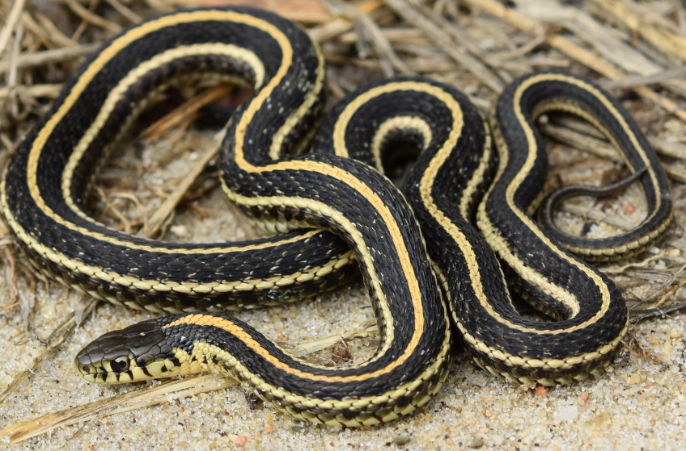
But here's the thing that trips a lot of people up. "Black and yellow garter snake" isn't the name of just one specific snake. It's a description that fits several different species and subspecies within the garter snake family. It's like searching for "red car" – you could get a Mustang, a Corvette, or a Civic. They're all red cars, but they're very different under the hood.
That's the core of the confusion, and it's where most quick articles stop. They'll show you a picture of one snake and call it a day. But if you're trying to figure out exactly what's in your backyard or considering one as a pet, you need to dig deeper. The care, temperament, and even legality can vary between these similar-looking snakes.
My own journey with these snakes started years ago, turning over logs in a damp forest. The flash of yellow was unmistakable. I thought I knew what I was looking at, but a herpetologist friend quickly pointed out the subtle differences in scale patterns that I'd completely missed. It was a humbling lesson in looking beyond just color.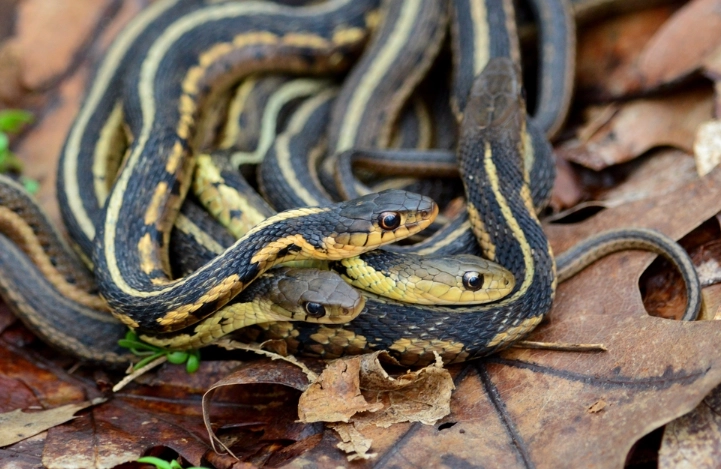
What Exactly Is a "Black and Yellow Garter Snake"?
When people say this, they're usually picturing a snake with a dominant black, brown, or olive base color, running from head to tail, with one or more longitudinal stripes that are bright yellow, sometimes leaning towards a golden or even a greenish-yellow hue. The belly is often a paler yellow or greenish-white, sometimes with black checkering.
These snakes belong to the genus Thamnophis, which is the group for all garter and ribbon snakes in North America. They're non-venomous (though they do have a mild venom in their saliva for subduing prey, harmless to humans), incredibly widespread, and generally quite tolerant of human presence. That's why you see them so often.
But which one are you seeing? That's the million-dollar question.
Meet the Usual Suspects: A Quick Rundown
Several garter snake species can rock the black-and-yellow look, depending on their region and individual variation. Here are the top contenders you're most likely to encounter:
- The Eastern Garter Snake (Thamnophis sirtalis sirtalis): This is the classic. The most widespread and commonly encountered of the bunch. Its coloration is famously variable, but a very common morph features that dark background with a bold yellow or whitish dorsal stripe. The side stripes can be less pronounced. If you're in the eastern half of the U.S. or Canada and see a black and yellow snake, odds are good it's this guy.
- The Plains Garter Snake (Thamnophis radix): A strong competitor in the looks department. Often has exceptionally bright, lemon-yellow stripes. A key visual clue? Look for the side stripes on the third and fourth scale rows up from the belly, and the distinctive orange or red blotches on the sides of the head. Common in the central U.S. and Canada.
- Other Regional Players: The San Francisco Garter Snake (Thamnophis sirtalis tetrataenia) is the celebrity of the group – stunningly beautiful with red and blue stripes alongside the black and yellow, but endangered and only found in a tiny part of California. The Butler's Garter Snake (Thamnophis butleri) is a smaller, chunkier species with a narrow head, found in the Great Lakes region.
See what I mean? Just saying "black and yellow" doesn't narrow it down much.
Key Takeaway: Don't rely on color alone. Location is your first and best clue. A black and yellow garter snake in Florida is almost certainly an Eastern, while one in Iowa is more likely a Plains. After that, you need to look at the finer details.
Black and Yellow Garter Snake Identification: Beyond the Stripes
This is where we separate the casual observers from the true enthusiasts. If you want to be sure, you have to get a little nerdy about it. I keep a simple mental checklist when I'm trying to pin down an ID.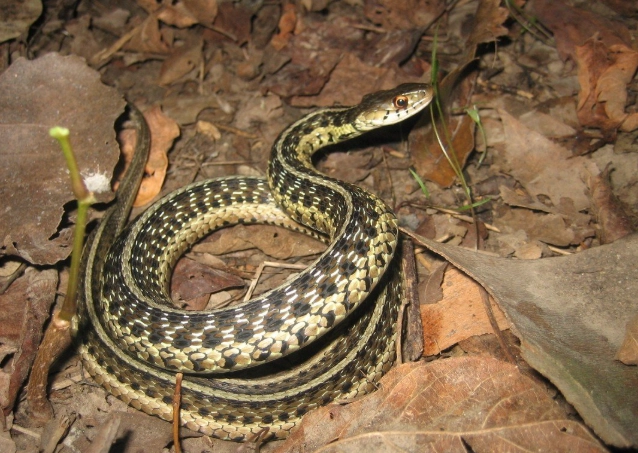
First, count the stripes. Most have three: one down the center of the back (the dorsal stripe) and one on each side, running along scale rows 2 and 3. But sometimes the side stripes are faint or missing.
Second, look at the head. Is it narrow or broad? Are there any distinct markings? Those orange/red spots near the jaw on a Plains Garter Snake are a dead giveaway.
Third, and this is the tricky one for beginners, look at the scales. The scale texture (keeled vs. smooth) and the layout of the scales on the head (called head scalation) are critical for herpetologists. For example, the number of upper lip scales (labial scales) can differ between species.
To make this easier, here's a comparison table for the two most commonly confused black-and-yellow garters over a large part of the continent:
| Feature | Eastern Garter Snake (Thamnophis sirtalis sirtalis) | Plains Garter Snake (Thamnophis radix) |
|---|---|---|
| Primary Range | Eastern North America, from Atlantic to the Rockies. | Central North America, Great Plains region. |
| Dorsal Stripe Color | Yellow, cream, or white. Can be uneven. | Typically a bright, clear lemon-yellow. Often very vivid. |
| Side Stripe Position | Usually on scale rows 2 and 3. | Key ID point: On scale rows 3 and 4. |
| Head Markings | Usually a pair of small, light spots on top of the head. No distinct red/orange. | Key ID point: Distinct orange or red blotches on the side of the head, near the jaw. |
| Overall "Look" | Highly variable. Background can be black, brown, greenish. Stripes can be bold or faint. | Often more contrasty and "clean" looking, with a strong black background and vivid yellow. |
| Habitat Preference | Extremely adaptable: woods, fields, marshes, gardens, parks. | Strongly associated with prairies, grasslands, and edges of waterways. |
If you're still unsure after checking these features, the best resource is to consult a detailed, location-specific field guide or a reputable online database like the Reptile Database, which is maintained by taxonomic experts.
I remember confusing a particularly dark Eastern Garter for a different species entirely until I noticed the faint side stripe pattern. It's easy to do.
Your Black and Yellow Garter Snake Questions, Answered
Here's the nuance that causes confusion. Garter snakes (including black and yellow ones) are technically considered "mildly venomous" but it's a rear-fanged venom (they have to chew to deliver it) that is only effective on their small prey like frogs and worms. For you? The worst you might get is a bit of localized swelling or itching if you have a rare allergic reaction, similar to a bee sting. The primary risk from a bite is from bacteria, not venom. Clean it like you would any small cut.
Their main defense is to musk – releasing a foul-smelling substance from their cloaca. Trust me, it's effective. It's worse than a bite.
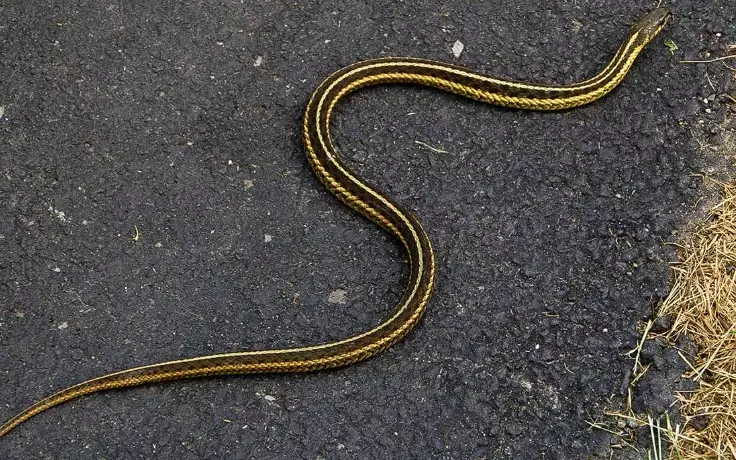
But – and this is a big but – you should never take one from the wild to keep as a pet. Wild-caught snakes are often stressed, carry parasites, and may never settle into captivity. They also play an important role in their local ecosystem. Always seek out a captive-bred snake from a reputable breeder. Captive-bred animals are healthier, more acclimated to people, and their purchase doesn't impact wild populations.
Is a black and yellow garter snake a good pet? For the right person, yes. They're active, interesting to watch, and don't require massive enclosures. But they're not display pets you ignore. They need interaction and proper care.
- Earthworms and nightcrawlers (a huge favorite)
- Frogs, toads, and their tadpoles
- Small fish
- Slugs and leeches
- Occasionally small rodents or insects
In captivity, the diet is simplified but should still be varied. The staple for many keepers is chopped nightcrawlers and frozen/thawed pinky mice (for larger adults). Some also offer pieces of fish like tilapia or salmon. The key is ensuring the diet is balanced and supplemented with calcium and vitamins, as an all-fish diet can lead to a thiamine deficiency.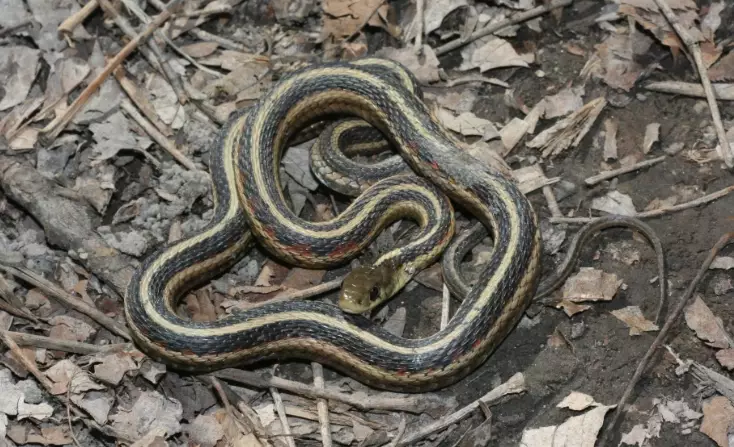
Feeding time is always interesting. They have a great feeding response.
So, thinking of getting one? Let's talk about that reality.
The Realities of Keeping a Black and Yellow Garter Snake
It's not all Instagram-perfect moments. Let's be honest about the pros and cons.
The Good: They are hardy, active during the day (diurnal), which is fun, and their care is less intensive than for many tropical snakes. A 20- to 40-gallon long tank can work for an adult. They don't require extremely high temperatures – a basking spot of 85-90°F and an ambient side in the 70s is perfect. They're also one of the few snake species that can be kept in small, same-species groups (communally) if done correctly with enough space, which is fascinating to observe.
The Not-So-Good: They can be nervous and musky when first acquired. That smell is no joke; it can linger on your hands. They are escape artists par excellence. Any tiny gap in the lid of their enclosure will be found and exploited. Their diet, while simple, can be off-putting to some (handling worms and thawed rodents). And they are very active – they need clutter, branches, and hides to explore, not just an empty tank. A bored garter snake is a stressed garter snake.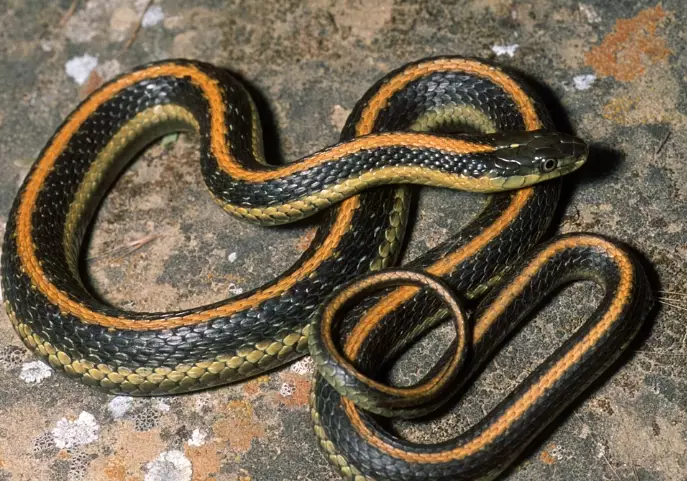
My first setup was admittedly lacking. I had the heat right, but not enough hiding places. The snake was always trying to burrow under the paper towel because it felt exposed. Lesson learned.
Basic Care Setup Checklist
If you're serious, you'll need this:
- Enclosure: Secure, front-opening or top-opening tank with a VERY tight-fitting, locked lid. Ventilation is important.
- Substrate: Aspen shavings, coconut fiber, or even paper towel for simplicity. Avoid cedar or pine (toxic).
- Heat: An under-tank heater on one side, regulated by a thermostat (this is non-negotiable for safety). A basking lamp can supplement.
- Lighting: A standard day/night light cycle is fine. UVB lighting is not strictly necessary but is increasingly recommended for potential health benefits.
- Hides & Enrichment: At least two snug hides (one on warm side, one on cool side). Fake plants, cork bark, branches to climb on. They use all the space.
- Water: A large, heavy water bowl big enough for the snake to soak in. Change water daily.
It's a commitment of time and money. Don't skimp on the thermostat or secure lid.
Conservation and Coexistence
This is a part of the conversation that often gets missed. The good news is that most black and yellow garter snake species, like the Eastern and Plains, are common and listed as "Least Concern" by the IUCN. Their adaptability has served them well.
However, that doesn't mean they're invincible. Habitat loss is a constant pressure. The San Francisco Garter Snake is the stark reminder – its beautiful coloration couldn't save it from urban development, and it's now federally endangered.
What can you do? If you find one in your yard, consider yourself lucky. They are excellent pest control, eating slugs, grubs, and rodents. Please don't kill them. If you must move one, gently guide it into a bucket with a broom and release it in a nearby wooded or brushy area. Never use glue traps outdoors, as they are indiscriminate and cause terrible suffering to snakes and other wildlife.
Supporting habitat conservation in your area indirectly helps all wildlife, including these snakes. You can also contribute to community science by reporting sightings to apps like iNaturalist, which helps scientists track populations. Institutions like the Smithsonian and various university biology departments often use this data for research.
The bottom line? Black and yellow garter snakes are a successful part of the North American landscape. Our goal shouldn't just be to identify or own them, but to understand and respect their role in the environment. They're a sign of a healthy, functioning ecosystem right outside our doors.
Wrapping It Up
So, the next time you see that flash of yellow against black in the grass, you'll know there's more to the story. You're not just looking at a "black yellow garter snake." You're looking at a specific animal with its own identity – an Eastern, a Plains, or another member of the clan. You'll know it's harmless, helpful, and fascinating.
Whether your interest is pure curiosity, photography, or you're considering inviting one into your home as a pet, knowledge is key. Respect their space in the wild, and if you choose captivity, commit to providing the best care possible. They're resilient creatures, but they thrive on attention to detail.
I still get a thrill every time I see one. That bold pattern never gets old. It's a little piece of wild, living artwork, and understanding it just makes it more beautiful.
LEAVE A REPLY
Your email address will not be published. Required fields are marked *