In This Guide
So, you're curious about the scorpion ks. Maybe you saw a cool picture online, or a friend has one, and now you're wondering what it's really like to have one of these ancient critters living in your house. I get it. They look like something from a sci-fi movie, all armored and mysterious with that iconic curved tail.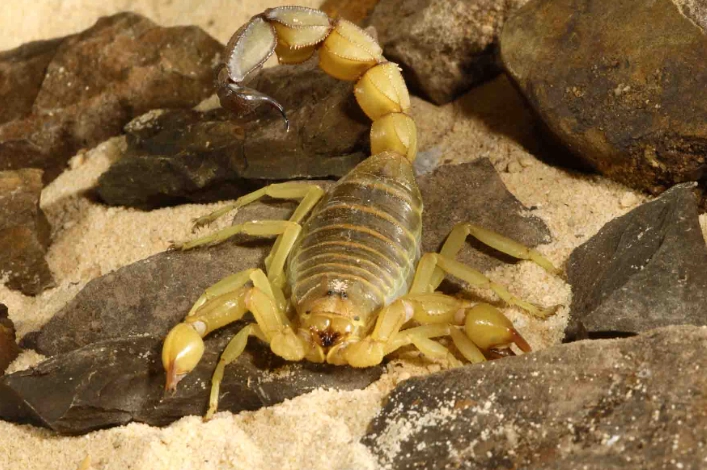
Let's cut straight to the point. Getting a scorpion ks isn't like getting a hamster. You can't exactly cuddle it. But if you're fascinated by unique, low-maintenance pets that are living pieces of natural history, you're in the right place. I've kept a few different arachnids over the years, and I'll tell you the good, the bad, and the honestly kinda annoying parts. This guide is everything I wish I'd known before I got my first one.
What Exactly is a "Scorpion KS" Anyway?
First things first, "scorpion ks" isn't one specific scientific name. It's a bit of a catch-all term you'll see in the pet trade, often referring to a few popular species that are considered good for keepers. Usually, when people say scorpion ks, they're talking about species known for being somewhat hardy and having a manageable temperament (for a scorpion). Think of it like a nickname for a group of beginner-friendly scorpions.
The most common species sold under the scorpion ks label are often from the genus Heterometrus (Asian Forest Scorpions) or Pandinus (like the Emperor Scorpion). These are the larger, often dark-colored, tropical species. They're popular because they tend to be less defensive than their desert cousins, though they can still pack a punch if provoked. It's crucial to know which scorpion ks you're actually getting, as care can differ.
I made the mistake early on of not asking for the exact species. I just bought a "scorpion ks." Big mistake. Turns out, my first one had slightly different humidity needs than what the generic advice online said. It stressed the animal out for a bit until I figured it out. Always ask the breeder or store for the scientific name.
Popular "Scorpion KS" Species You Might Encounter
Here’s a quick breakdown of the usual suspects. This table should help clear up the confusion.
| Common Name (Often sold as KS) | Likely Scientific Name | Key Traits | My Experience |
|---|---|---|---|
| Asian Forest Scorpion | Heterometrus spinifer | Large, black, loves humidity, burrows. Common "starter" scorpion ks. | My first. A great digger, often hid. Very low drama. |
| Emperor Scorpion | Pandinus imperator | Very large, glossy black, strong pincers. Classic pet scorpion. | Impressive to look at, but surprisingly shy. Rarely saw it out. |
| Giant Forest Scorpion | Heterometrus swammerdami | One of the largest species. Requires significant space. | Only kept one briefly. Massive and needed a huge tank. Not for beginners. |
| Vietnamese Forest Scorpion | Heterometrus laoticus | Similar to others but sometimes more readily available. | More active at night than my others. Fun to observe with a red light. |
See? Not all scorpion ks are created equal. Knowing which one you have is step zero. For most beginners asking about a scorpion ks, they're probably being offered an Asian Forest or an Emperor. The care advice here will focus on these tropical forest types, as they're the most common "ks" pets.
Setting Up the Perfect Scorpion KS Home
This is where most people mess up. They think a small kritter keeper with some sand is fine. For a desert species, maybe. For your tropical scorpion ks? That's a death sentence. These guys come from humid forest floors.
The enclosure is everything. It's their whole world. Get it wrong, and your scorpion will be stressed, stop eating, and eventually die. Get it right, and it will thrive for years with minimal fuss. Here’s the breakdown.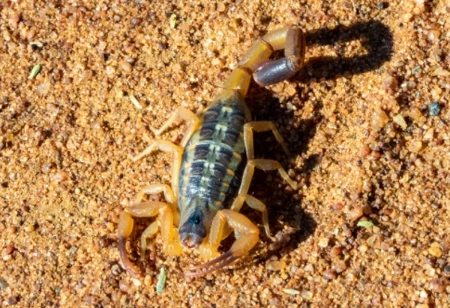
Tank Size and Type
Bigger is not always better for solitary animals, but too small is torture. For one adult scorpion ks (like an Asian Forest), a 10-gallon tank (20" x 10" x 12") is the absolute minimum I'd recommend. A 15 to 20-gallon long tank is better. They need more floor space than height. A secure, ventilated lid is non-negotiable. These guys are stronger than they look and can push up weak screens.
I used a glass aquarium with a locking mesh lid. Worked perfectly. Avoid tall, narrow tanks. They're terrestrial and need room to roam a bit at night.
The Substrate Debate: Dirt is Good
Forget sand. Forget gravel. Your scorpion ks wants to dig. It's a natural behavior that reduces stress. You need a moisture-retaining substrate.
- Coconut fiber (coir): The gold standard. Holds humidity well, packs down for burrowing, and is cheap. Buy it in a brick and hydrate it.
- Peat moss or topsoil: Also excellent, but make sure it's additive-free (no fertilizers, pesticides).
- Mix it up: I use a 70/30 mix of coconut fiber and organic potting soil. It holds burrows like a dream.
You need enough substrate to let the scorpion burrow. At least 4-6 inches deep. I pack it down firmly on one side and leave it looser on the other. They'll choose their spot.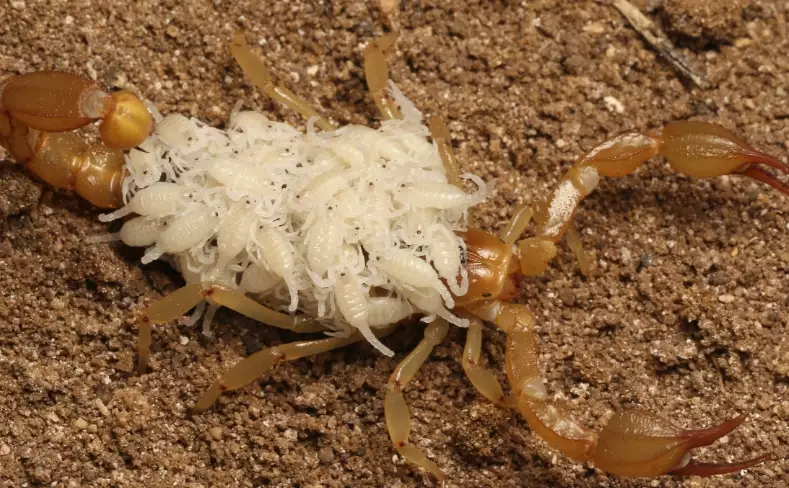
Heat and Humidity: The Tropical Duo
This is the most critical part of scorpion ks care, and where I see the most questions.
Temperature: Aim for a gradient. One side of the tank should be around 75-80°F (24-27°C), and the warm spot should be 82-85°F (28-29°C). Use an under-tank heating pad placed on one side of the tank (on the outside, under the glass). Never use heat rocks inside the tank. They can cause severe burns. Use a digital thermometer to check the temp at the substrate level, not the air.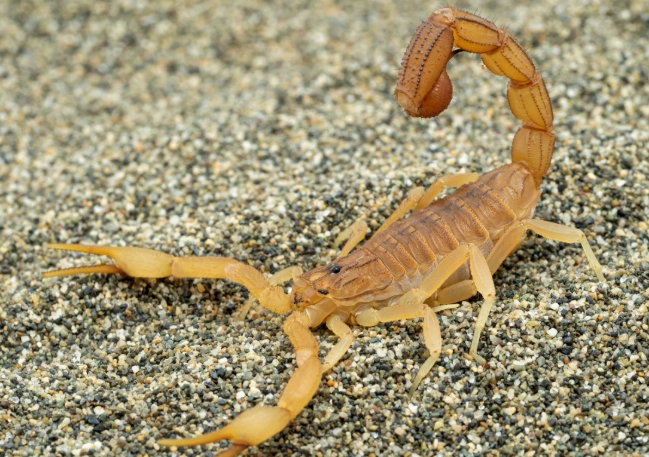
Humidity: This is non-negotiable for a forest scorpion ks. You need 70-80% humidity. Buy a hygrometer. To maintain it:
- Use a deep, moisture-holding substrate.
- Mist the enclosure lightly with dechlorinated water every other day, focusing on the substrate, not the scorpion.
- Provide a large, shallow water dish (with a sponge or pebbles to prevent drowning).
- You can partially cover part of the mesh lid with plastic wrap to retain moisture, but ensure some ventilation remains.
Low humidity leads to a fatal condition called "dessication" – they essentially dry out and can't molt properly. I learned this the hard way with my first molt. The humidity was too low, and the scorpion got stuck. It was a stressful rescue mission with a damp paintbrush. Not fun.
Hides and Decor
Scorpions are pet holes. They want to feel secure. Provide at least one, preferably two, hides. Cork bark flats or rounds are perfect. Half a flower pot buried in the substrate works too. You can add some leaf litter (oak or magnolia, baked to sterilize) for a natural look and extra cover.
Avoid sharp decorations. Their exoskeleton is tough, but they can still get injured. Fake plants are fine, but real, low-light plants like pothos can work if you have good lighting (not for the scorpion, for the plant).
Feeding Your Scorpion KS: It's Not a Daily Chore
One of the perks of a scorpion ks is how little they eat. An adult might only eat once every 1-2 weeks. Juveniles eat more frequently. Overfeeding is a bigger risk than underfeeding.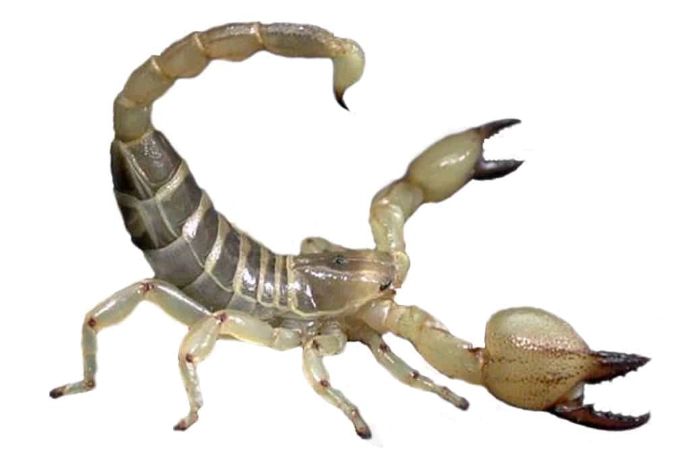
What to feed: Live prey only. They hunt by vibration and smell.
- Gut-loaded crickets: The staple. "Gut-loaded" means the crickets are fed nutritious food before being fed to your scorpion.
- Dubia roaches: My personal favorite. Nutritious, can't climb smooth glass, don't chirp.
- Mealworms or superworms: Occasional treats. Don't use these as a staple; they're fatty and can bite.
How to feed: Drop 1-2 appropriately sized prey items (no bigger than the scorpion's body) into the tank at night. Remove any uneaten prey in the morning. A hungry cricket can nibble on a molting or resting scorpion, causing serious harm.
What if your scorpion ks refuses to eat? Don't panic immediately. They can fast for weeks, even months, especially before a molt or if temperatures are slightly low. Just remove the prey and try again in 5-7 days.
The Big Question: Handling and Safety
I'm going to be brutally honest: you should not handle your scorpion ks. Full stop.
They are not domesticated. They do not enjoy it. They experience it as a terrifying predator attack. Handling causes immense stress and dramatically increases your risk of being stung. Even a "docile" species can have a bad day. The venom potency varies, but a sting from an Emperor or Asian Forest scorpion ks is often compared to a bee or wasp sting—painful, potentially causing swelling and localized reaction, and dangerous if you're allergic.
The only times you should touch your scorpion are for essential tank maintenance. And even then, use tools. Gently herd it into a large, clear deli cup with a soft paintbrush. Never grab it from above—that's how a predator attacks. If you must handle it (and again, you shouldn't), do it low over a soft surface like a bed, so if it falls or bolts, it won't be injured.
The enjoyment of a scorpion ks comes from observation, not interaction. Watching it meticulously dig a burrow, sense a cricket with its pectines (those comb-like organs on its belly), and execute a perfect hunt is incredibly rewarding. It's like having a tiny, armored dinosaur.
Health and Common Problems
A healthy scorpion ks is alert, has a plump tail (metasoma), and a shiny exoskeleton. It will burrow or sit calmly in its hide during the day.
Here are the big things to watch for:
- Dessication (Drying Out): The tail looks thin and shriveled, the body seems shrunken. Cause: Humidity is too low. Fix: Soak the scorpion very briefly in shallow, lukewarm water ("pede soak") and immediately correct enclosure humidity.
- Failed Molt: You see pieces of old exoskeleton stuck to the body. This is an emergency. Cause: Low humidity or poor nutrition. Fix: Raising humidity is critical. You can try to very carefully remove stuck pieces with a damp cotton swab, but this is risky. Prevention (correct humidity) is key.
- Mites: Tiny white or red specks moving on the scorpion or in the enclosure. Cause: Usually introduced via feeder insects or substrate. Fix: Remove all substrate, bake new substrate, clean the entire tank. Provide a "mite bath"—a shallow dish with a 50/50 water and olive oil mix—the scorpion can walk through it, and the oil suffocates mites. This is a huge pain to deal with.
- Refusal to Eat/Lethargy: Could be pre-molt, low temperature, or illness. Check your temps and humidity first. If parameters are good, leave it alone and don't offer food for a week.
Veterinary care for invertebrates is extremely specialized and hard to find. Your best bet is prevention through perfect husbandry. The Arachnoboards community is an invaluable resource for troubleshooting health issues, filled with experienced keepers.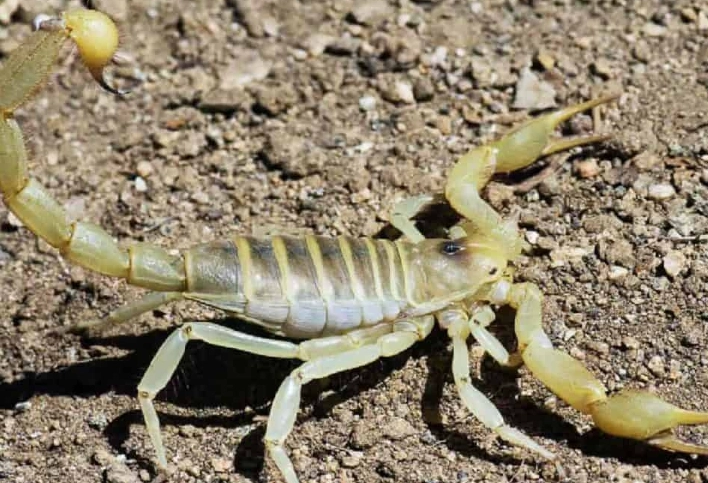
Answering Your Scorpion KS Questions
Let's tackle some of the specific things people search for.
A long time. Seriously. With good care, many of the common pet species like the Emperor can live 5-8 years, sometimes even longer. I've heard of them hitting 10. This isn't a short-term commitment. When you get a scorpion ks, you're signing up for a pet that could be with you through a big chunk of your life.
This is a hot topic. Some species, like certain Heterometrus, are sometimes kept communally by very experienced keepers. The keyword is experienced.
For 99% of people, especially beginners asking about a scorpion ks, the answer is NO. They are cannibalistic. You will eventually end up with one fat scorpion. Housing them together creates constant stress, competition for food and hides, and almost always ends badly. Don't do it. One scorpion, one tank.
It's tricky. The most reliable way for a beginner is to look at the pectines (those comb-like sensory organs on the underside). In general, males have longer, more pronounced pectines with more "teeth," and they are often longer and more slender. Females tend to be broader and stockier. Honestly, unless you're breeding, it doesn't matter much for care. Your scorpion ks will be just fine whether it's a he or a she.
Avoid big chain pet stores if you can. Their animals are often wild-caught, stressed, and mislabeled. Seek out a reputable breeder online or at a reptile/exotic pet expo. Breeder-born animals are healthier, acclimated to captivity, and you'll know the exact species. Websites like MorphMarket have scorpion sections with breeders. Ask questions about the animal's origin and feeding history.
Final Thoughts: Is a Scorpion KS Right for You?
Let's wrap this up with some straight talk. A scorpion ks is an amazing pet for the right person. It's for the observer, the natural history nerd, the person who finds beauty in intricate behaviors rather than affection.
It's low maintenance in terms of daily chores but high maintenance in terms of requiring very specific, stable environmental conditions. You need to be diligent about heat and humidity. You need to be comfortable with feeding live insects. You need to respect the animal for what it is—a potentially dangerous wild creature you've invited into a glass box.
If you've read this far and are still excited, not deterred, then you might just be ready for the unique challenge and reward of keeping a scorpion ks. Start your research with the exact species, get your enclosure set up and running perfectly for a week before you buy the animal, and connect with the community. It's a fascinating hobby that offers a window into a truly ancient form of life.
And remember, the goal isn't to have a pet you hold. The goal is to create a perfect little slice of a tropical forest floor and have the privilege of watching one of its most perfect inhabitants simply exist.
LEAVE A REPLY
Your email address will not be published. Required fields are marked *