What You’ll Find
- Why Are Some Spiders White? It's Not Always What You Think
- Meet the Usual Suspects: Common White or Pale House Spiders
- The Real Risk Assessment: Are White Spiders Poisonous?
- Your Action Plan: How to Get Rid of White Spiders in the House
- When to Call a Professional
- Clearing the Air: Your Top Questions Answered
- Wrapping It Up: Knowledge Over Fear
Let's be honest. Spotting a pale, ghostly spider scuttling across your floor or hanging in a corner can give anyone a jolt. It looks different. It feels alien. Your mind immediately jumps to the worst-case scenario. Is it dangerous? Are there more? How did it get in? I remember the first time I saw one in my own basement – a small, almost translucent thing on a messy web near the boiler. I froze for a second before the questions started racing.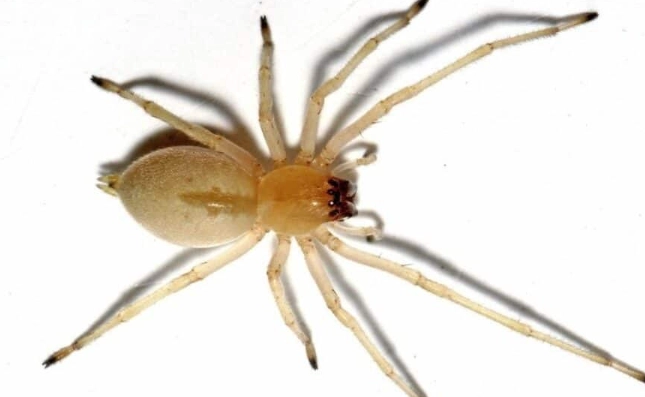
That moment of panic is completely normal, but it's also where mistakes happen. Reaching for the nearest shoe or can of bug spray might feel right, but understanding what you're dealing with is the first, most crucial step. This guide is here to cut through the fear and give you clear, actionable information about white spiders in the house. We'll go from "What is that?" to "It's handled," covering identification, real risks, and strategies that actually work.
Why Are Some Spiders White? It's Not Always What You Think
First, let's clear something up. When we talk about white spiders in the house, we're usually describing one of three things:
- True Pale or White-Colored Spiders: Some species are naturally light-colored, often as camouflage.
- Recently Molted Spiders: This is a big one. Spiders shed their exoskeleton (a process called molting) to grow. Right after molting, their new "skin" is soft and pale, sometimes almost pure white, before it hardens and darkens over hours or days. That startlingly white spider might just be one that recently changed its clothes.
- Certain Parts Look White: Some spiders have distinctive white markings on an otherwise darker body, which can make them appear white from a distance or in certain light.
The color alone rarely tells you about danger. It's the combination of color, body shape, leg posture, web type, and behavior that gives you the real ID.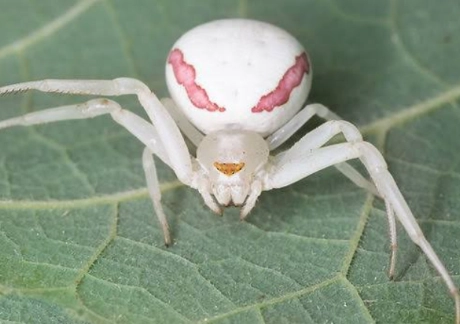
Meet the Usual Suspects: Common White or Pale House Spiders
Very few spider species are uniformly white. More commonly, the white spiders in the house you encounter fall into a few familiar categories. Misidentification is rampant online, so let's get specific.
The Cellar Spider (Pholcidae)
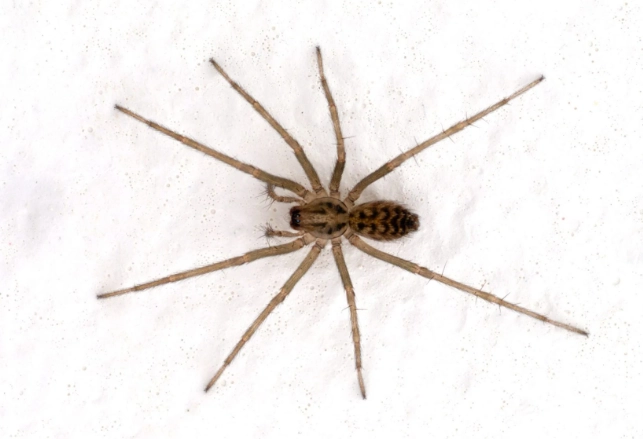
Often called "daddy long-legs" (though that name is shared with harvestmen, which aren't spiders). These are the wispy, fragile-looking spiders with incredibly long, thin legs and a small, grayish or pale tan body. They build messy, tangled, non-sticky webs in ceiling corners, basements, and garages.
I have a few that have taken up permanent residence in the corner of my garage window. I leave them be. They're quiet roommates that keep the fly population in check.
The Yellow Sac Spider (Cheiracanthium inclusum)
This is a likely candidate for a pale, off-white to light yellow spider found indoors. They are small to medium, with a slightly elongated body and darker tips on their jaws. Crucially, they do not build webs to catch prey. They are active hunters at night, creating small, silken "sac" retreats in ceiling corners, behind pictures, or at the tops of walls where they rest during the day.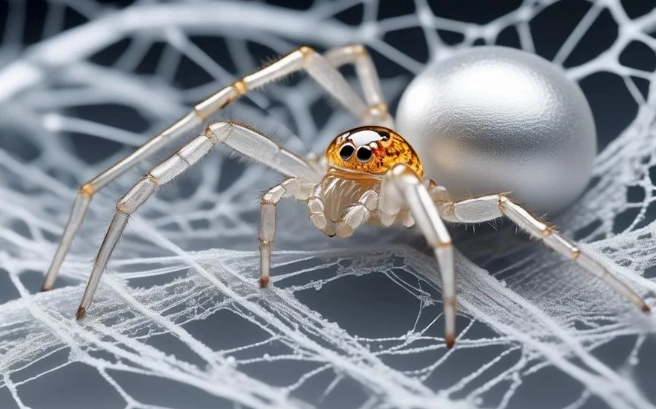
The American House Spider (Parasteatoda tepidariorum)
Extremely common. While typically brown with mottled markings, they can appear quite pale, especially younger ones or in certain lighting. They build the classic, messy, tangled cobwebs in windowsills, eaves, and unused corners. They are timid and harmless.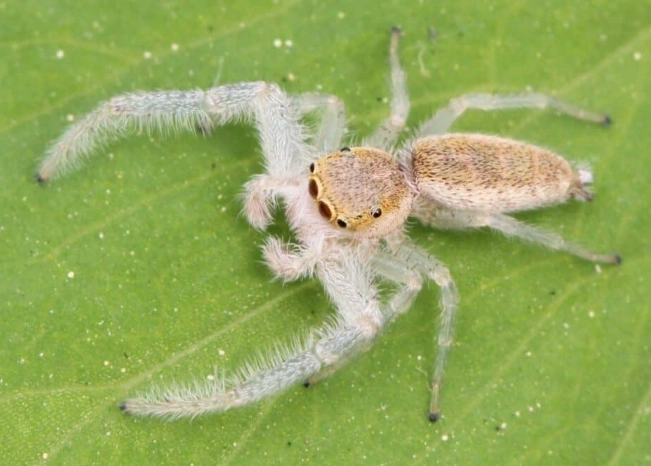
The Ghost Spider (Anyphaenidae)
This family includes some spiders that are genuinely pale, sometimes with a ghostly greenish or white appearance. They are nocturnal hunters, often found on foliage but sometimes wander indoors. They are harmless.
So, is it a harmless cellar dweller, a wandering hunter, or just a spider that's having a pale day? Let's compare.
| Spider Type | Typical Color | Web Type | Habitat in Home | Risk Level |
|---|---|---|---|---|
| Cellar Spider | Pale gray/tan | Messy, tangled cobweb | Ceiling corners, basements, garages | None |
| Yellow Sac Spider | Pale yellow to off-white | No catching web; silken daytime retreat sac | Ceiling/wall junctions, behind objects | Low (mild bite if provoked) |
| American House Spider | Brown with patterns (can look pale) | Classic, messy cobweb | Windows, corners, eaves | None |
| Recently Molted Spider | Very pale/white (any species) | Depends on species | Anywhere | Depends on species (often low) |
The Real Risk Assessment: Are White Spiders Poisonous?
This is the million-dollar question. The word "poisonous" is misused here; we mean "venomous." All spiders (with very few exceptions) have venom to subdue prey. The question is: Is their venom medically significant to humans?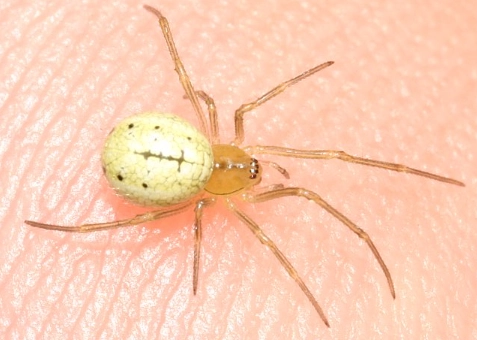
For the vast majority of white spiders in the house in North America and Europe, the answer is no. Their venom is not potent enough to cause serious health issues for humans. A bite might be irritating, like many insect bites, but it won't send you to the hospital.
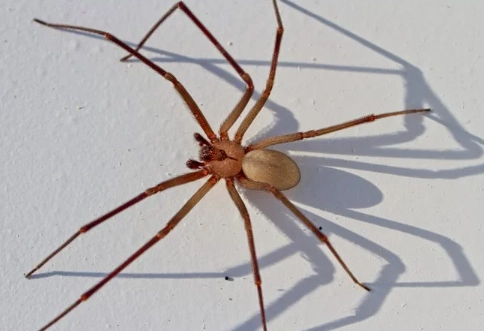
The two spiders of major medical concern in the US—the black widow and the brown recluse—are not white. Black widows are shiny black with a red hourglass. Brown recluses are a uniform tan to dark brown with a distinctive dark, violin-shaped marking.
So why the fear? I think it's the unfamiliarity. A brown spider is a spider. A white spider feels like an unknown. Our brains are wired to fear the unknown more than the known threat. Understanding that most pale house spiders are simply variants of common, low-risk species is the first step to calming that fear.
Your Action Plan: How to Get Rid of White Spiders in the House
Even if they're mostly harmless, not everyone wants spiders as roommates. That's perfectly fair. An effective approach has two parts: immediate removal and long-term prevention. And please, skip the myths like chestnuts or peppermint oil sprays as a sole solution—they're not reliably effective.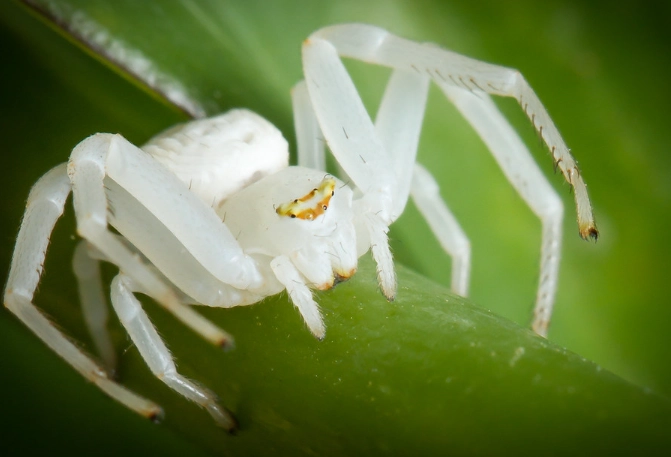
Immediate, Non-Chemical Removal
- The Jar and Card Method: The gold standard for humane removal. Place a clear jar or cup over the spider. Slide a stiff piece of paper (index card, magazine insert) underneath, trapping it. Carry it outside and release it away from your house. This works for virtually every spider and is safe.
- The Vacuum Cleaner: Your powerful ally. Use the hose attachment to suck up spiders, egg sacs, and webs. Immediately empty the vacuum canister or bag into an outdoor trash bin to prevent escapees. This is my go-to for cellar spider webs in high corners.
- Web Removal: Regularly sweep down webs with a broom or duster. Removing the web discourages the spider from staying, as it represents a significant energy investment. Do this regularly in problem areas like basements, garages, and porches.
Long-Term Prevention: Making Your Home Less Inviting
Spiders come inside for two reasons: shelter and food. If your house has other insects, it's a spider buffet. Prevention is about sealing entry points and reducing the prey base.
- Seal Entry Points: This is the most critical step. Install tight-fitting screens on windows and doors. Use caulk or sealant to fill cracks and gaps around foundations, window frames, utility lines, and pipes. Pay special attention to where siding meets the foundation and around garage doors.
- Reduce Clutter: Spiders love undisturbed hiding spots. Reduce clutter in storage areas like basements, attics, and garages. Store items in plastic sealed bins rather than cardboard boxes.
- Manage Outdoor Lighting: Lights attract the insects that spiders eat. Switch outdoor bulbs to yellow sodium vapor or LED bug lights, which are less attractive to insects. Position lights away from direct entry points.
- Landscape Maintenance: Keep vegetation, shrubs, and tree branches trimmed back from touching your house's exterior. This removes a direct highway for spiders and insects.
- General Pest Control: By reducing populations of flies, ants, cockroaches, and other insects inside your home, you remove the spiders' food source, making your home less attractive. Fix leaks, store food in airtight containers, and take out trash regularly.
When to Call a Professional
Most infestations of common white spiders in the house are manageable on your own. But call a licensed pest control professional if:
- You are experiencing frequent bites (to confirm the source and species).
- You have a severe, overwhelming infestation, especially in hard-to-reach areas like drop ceilings or wall voids.
- You suspect you have a medically significant spider (like a brown recluse or black widow) and need positive identification and targeted treatment.
- You've tried comprehensive prevention and still have a major problem.
A good pro won't just spray; they'll do an inspection, identify the species and entry points, and recommend a holistic plan that addresses the root cause.
Clearing the Air: Your Top Questions Answered
Wrapping It Up: Knowledge Over Fear
Finding white spiders in the house is unsettling, but it's rarely a crisis. Most are harmless hitchhikers or beneficial predators working in your favor, eating actual pests. The key is to move from a reactive panic to a proactive plan.
Start with identification—chances are high it's a common cellar spider, a sac spider, or a freshly molted individual. Assess the real risk, which for nearly all pale house spiders is minimal. Then, choose your response: a calm relocation, thorough vacuuming, or a focus on long-term exclusion by sealing up your home and reducing insect prey.
Your home is your sanctuary. You don't have to share it with unwanted eight-legged guests if you don't want to. But you also don't need to live in fear of them. With the facts in hand, you can make informed, effective decisions that bring you peace of mind, whether that means peacefully coexisting with a few web-weavers in the garage or maintaining a strictly spider-free zone.
Take a breath. You've got this.
LEAVE A REPLY
Your email address will not be published. Required fields are marked *