In This Article
Let's talk about a spider you've almost certainly seen but probably didn't know by name. You're in the basement, moving some boxes, and a blur of legs zips out from under one and disappears into a crack. Or you're out in the garden and notice a flat, sheet-like web on the grass with a little funnel or tube in one corner. Chances are, you've just met an American funnel spider. They're everywhere, but they're masters of the quick escape, which is why so many people ask "what was that?" after they're gone. I've spent more time than I'd like to admit watching them in my own shed, and I can tell you, they're fascinating creatures once you get past the initial startle.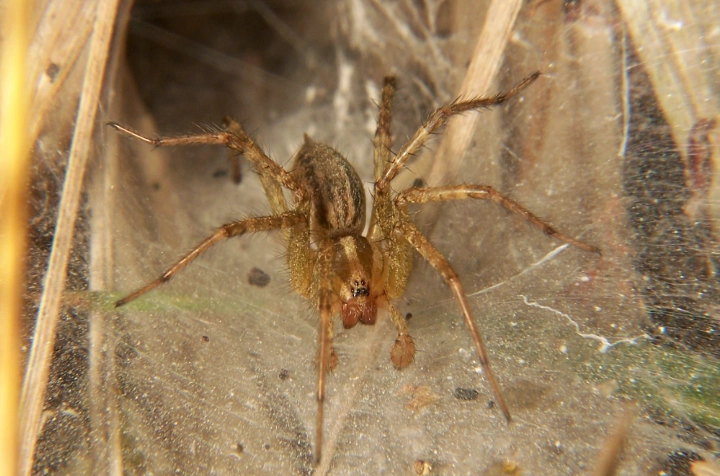
Quick Clarification: When we say "American funnel spider," we're usually talking about spiders from the family Agelenidae, specifically the common grass spiders in the genus Agelenopsis. This is important because the name "funnel-web" is famously used for some of the world's most venomous spiders in Australia. Our American versions are a completely different, and far less dangerous, story. But they're no less interesting.
What Does an American Funnel Spider Look Like?
Okay, so you want to know if the spider you saw fits the bill. Identification can be tricky because a lot of brown spiders look similar. But funnel weavers have some tell-tale signs.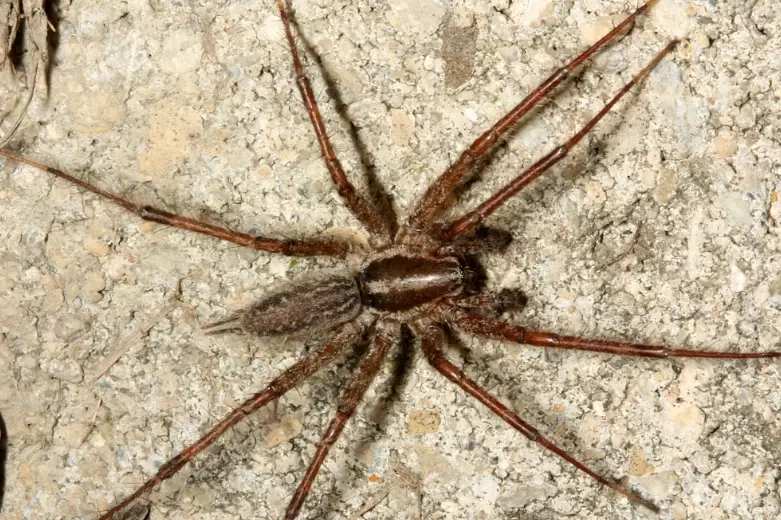
First, size. They're not tiny, but they're not monster-sized either. Their bodies (the abdomen and cephalothorax combined) typically range from about 10 to 20 millimeters for females, with males being a bit smaller. When you add in their long legs, they can appear quite substantial scurrying across the floor.
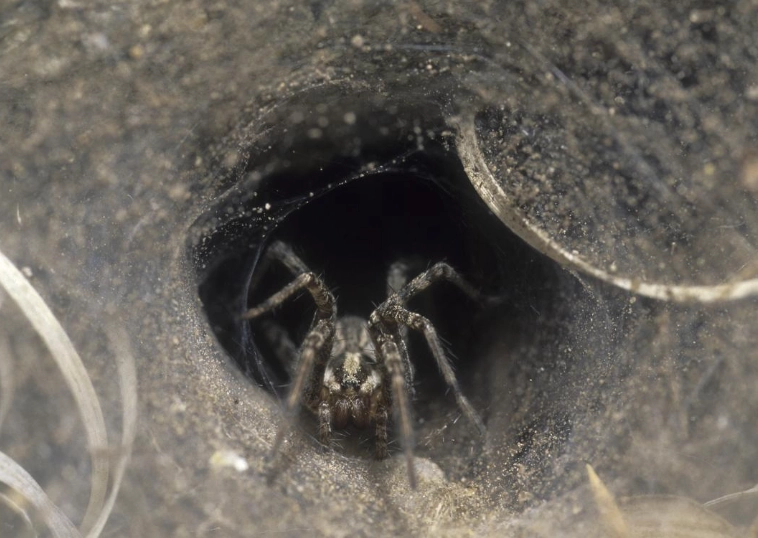
Color is usually a mix of browns, tans, and greys. They often have a pattern on their abdomen—usually a series of chevrons or darker streaks running down the center. But the real giveaway is their web. It's not an orb web like Charlotte's. It's a horizontal, non-sticky sheet of silk with a distinct funnel or retreat at one edge. That funnel is their home base, where they hang out and wait for vibrations on the sheet. The web itself isn't sticky; instead, it's a tangled maze that trips up prey, allowing the spider to sprint out and grab it. And boy, can they sprint. They are incredibly fast runners.
The other key feature? Their spinnerets. Look at the back end of the spider. Most American funnel spiders have spinnerets that are noticeably long and pointy, often sticking out beyond the end of the abdomen. It's like they have two little tails. This is a great way to distinguish them from other common house spiders like wolf spiders (which don't build webs and have shorter spinnerets) or hobo spiders (a different story we'll get to).
A Note on Hobo Spiders: This is where it gets messy. The "hobo spider" (Eratigena agrestis) is also a member of the funnel-weaver family (Agelenidae). It gets its name from its presumed habit of hitchhiking along railways. For years, it was blamed in the Pacific Northwest for necrotic wounds similar to brown recluse bites. However, modern research has largely debunked this. Studies have failed to show its venom causes skin damage in humans. So while it's technically an American funnel spider, the fear surrounding it is outdated. It's still not a pet, but it's not the villain it was made out to be.
Where Do You Find Them? Habitat and Distribution
You can find these guys just about anywhere in the United States and southern Canada. They're generalists. I find them most often in two types of places:
- Outdoors: This is their prime real estate. Tall grass, low shrubs, rock piles, woodpiles, and the corners of fence lines are all perfect spots. Their sheet webs are often dew-covered in the morning, making them suddenly visible. They love places that offer some protection for their funnel and a good runway for their sheet web.
- Indoors: They occasionally wander inside, especially in basements, garages, window wells, and crawl spaces. They're not really "house spiders" in the sense that they've adapted to live with us; they're more like accidental tourists looking for shelter. An indoor web is often a sign of a damp, undisturbed area.
They're solitary except during mating season. A single web is the territory of one spider. If you see multiple funnels close together, they're likely neighbors, not roommates, and they probably don't get along.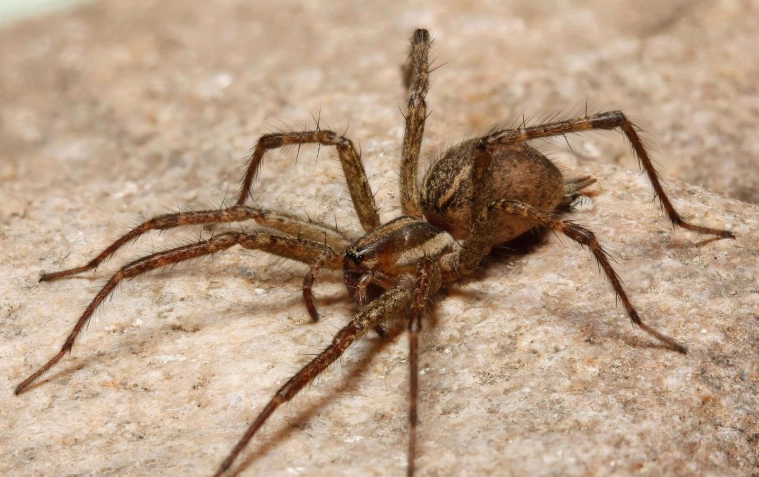
The Life and Times of a Funnel Weaver
Web Engineering and Hunting
Their web is their world. It's a brilliant piece of non-sticky engineering. Think of it as a silken trampoline with a panic room attached. The spider sits deep in the funnel, its legs touching the silk lines. When a bug—a grasshopper, a beetle, a fly—blunders onto the sheet, the vibrations telegraph right to the spider.
Then, the burst of speed. They explode from the funnel, bite the prey to inject venom and digestive enzymes, and then often drag it back into the funnel to eat in peace. If the threat is too big (like a curious human finger poking the web), they'll use the funnel as an escape hatch, often exiting out the back into a crack or dense vegetation. It's a foolproof system for them, really. I've tried to gently guide one into a cup before, and it was like trying to catch smoke. They're that fast.
Mating and Lifecycle
This is a risky time, especially for the males. In late summer or fall, mature males leave their webs to go wandering in search of a female's silken love-nest. He has to approach carefully, signaling his intentions with specific plucks on her web to avoid being mistaken for dinner. If successful, he mates and then usually makes a quick exit. The female later produces an egg sac, which she guards in or near her funnel. The spiderlings hatch, hang around for a bit, and then balloon away on silk strands to start their own lives. Most adults die with the first hard frost, though some may overwinter in protected spots.
Venom and Bites: Should You Be Worried?
This is the million-dollar question, right? Let's be perfectly clear.
American funnel spiders (like the common grass spider) are venomous. All spiders that use venom to subdue prey are technically venomous. But the crucial distinction is between "venomous" and "medically significant." For almost all American funnel weavers, their venom is not medically significant to humans.
Their venom is designed for insects. A bite to a human is a defensive act of last resort. It would likely be comparable to a bee sting in terms of localized pain, maybe with some minor redness and swelling. Serious systemic reactions are extremely rare. The much-feared hobo spider's danger, as mentioned, has been heavily downplayed by science.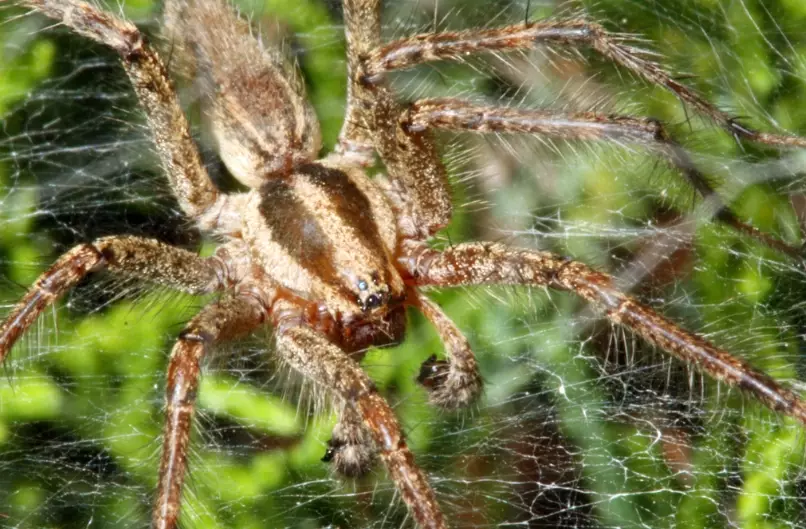
So, the risk is very low. The much bigger risk is misidentification. People often mistake other, more potent spiders for funnel weavers.
| Spider | Key Identifying Feature | Web | Medical Significance |
|---|---|---|---|
| American Funnel Spider (Grass Spider) | Long, prominent spinnerets; striped pattern on abdomen. | Flat sheet with funnel. | Very low. Mild local reaction possible. |
| Wolf Spider | Robust, hairy body; often seen running on ground. Carries egg sac/young. | No web (hunts actively). | Low. Painful bite but not dangerous. |
| Brown Recluse | Dark violin-shaped marking on cephalothorax; 6 eyes (not 8). | Irregular, loose "sheet" web in hidden areas. | High. Can cause necrotic wounds. |
| Hobo Spider | Funnel-weaver family. Lacks distinct color patterns; uniform brown. | Funnel web, often in ground holes or cracks. | Low. Modern science shows minimal risk. |
If you are bitten by any spider and experience severe pain, spreading redness, muscle cramps, nausea, or difficulty breathing, seek medical attention immediately. Bring the spider if you can (safely in a container) for identification. The CDC provides guidelines on spider bites and when to worry.
My Personal Rule: I don't handle them. It's just not worth the stress—for me or the spider. They're skittish and want to run. Forcing a confrontation is how a defensive bite happens. Admire from a distance, or use the cup-and-paper method to relocate them.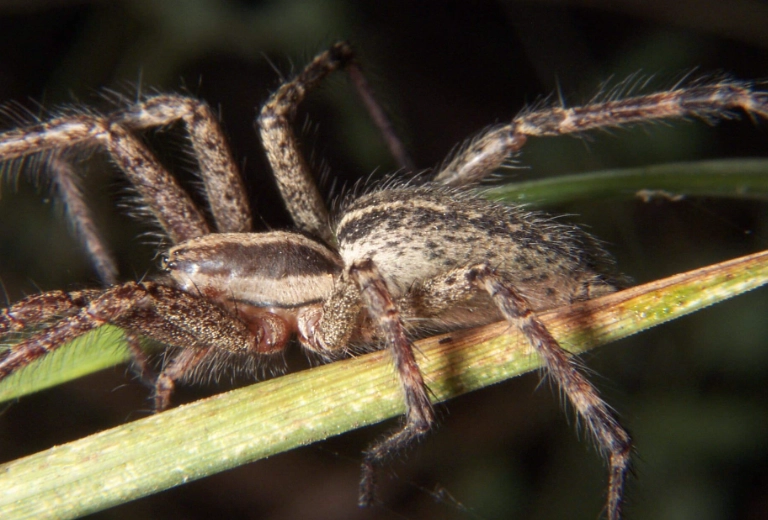
Coexisting and Management
Look, I get it. Even knowing they're harmless, you might not want a funnel web in the corner of your living room. That's fair.
- Outdoors: Leave them be! They are fantastic natural pest control, eating all sorts of insects you don't want in your garden. A few webs in the shrubbery is a sign of a healthy ecosystem.
- Indoors: The best control is prevention. Seal cracks around foundations, windows, and doors. Reduce clutter in basements and garages to eliminate hiding spots. Use a vacuum to remove webs, egg sacs, and the spiders themselves. It's direct and effective.
- Chemical controls are almost always overkill for these spiders. They don't colonize homes like some other species. If you have a persistent problem, it means you have an entry point and a food source (other insects). Address those instead.
Remember, the goal isn't a spider-free existence—that's impossible and ecologically bad. The goal is to keep them in their outdoor domain where they belong.
Answers to Common Questions About the American Funnel Spider
I hear the same questions pop up again and again. Let's tackle a few.
Final Thoughts
After years of seeing them around, my view on the American funnel spider has completely changed. They went from being a creepy-crawly to a fascinating example of natural engineering. That web is a masterpiece of efficient design. Their speed is awe-inspiring. And knowing they're out there in my garden, silently managing the insect population, is actually comforting.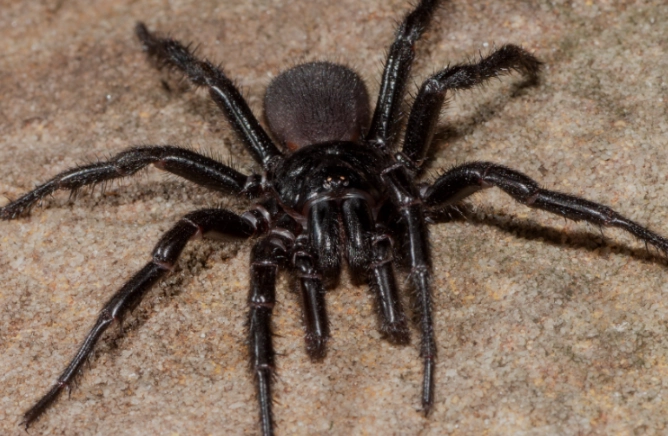
They're not cuddly, and I'm not suggesting you should welcome one onto your pillow. But they deserve a bit of respect and a lot less fear. The next time you see that characteristic flat web with its little silken tunnel, take a moment to look. You're seeing the work of one of North America's most common, successful, and misunderstood little predators. Just try not to startle it.
LEAVE A REPLY
Your email address will not be published. Required fields are marked *