What You’ll Find Here
- What Exactly Are We Talking About? Demystifying "Red Legged Spiders"
- Meet the Usual Suspects: Common Spiders with Red Legs
- The Big Question: Are Red Legged Spiders Poisonous or Dangerous?
- What To Do If You Find a Red Legged Spider in Your House
- Bites: Symptoms, Myths, and What Actually Works
- Living Alongside Our Eight-Legded Neighbors
Let's be honest, seeing a spider with bright red legs scuttling across your floor is enough to make anyone pause. Your mind might immediately jump to the worst—is it dangerous? Should I be worried? I remember the first time I saw one in my garage, I froze for a good ten seconds before grabbing the nearest shoe (not my finest moment, I admit). But here's the thing: "red legged spider" isn't the name of a single species. It's a description that fits several common spiders, and most of them are far less concerning than our imaginations make them out to be.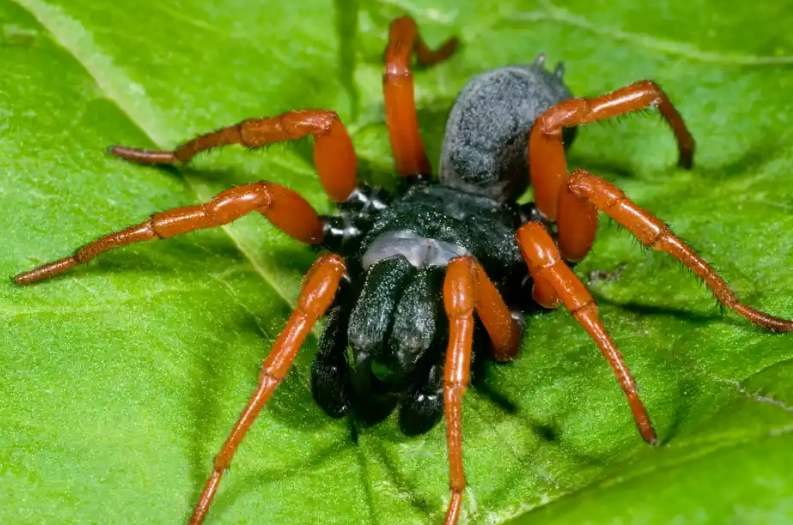
This guide is here to cut through the fear and confusion. We're going to dive deep into the world of spiders with red legs, from the completely harmless to the ones that deserve a bit more respect. We'll cover how to tell them apart, what to do if you find one, and how to manage them around your home without declaring chemical warfare on your entire ecosystem. By the end, you'll be able to look at a red legged spider and know exactly what you're dealing with.
Key Takeaway First: The vast majority of spiders with red legs are harmless orb-weavers or grass spiders. True medically significant spiders like the Brown Recluse or Black Widow rarely have prominently red legs. Panic is almost never the correct first response.
What Exactly Are We Talking About? Demystifying "Red Legged Spiders"
When people search for "red legged spiders," they're usually describing one of two things. Either they've seen a spider where the legs are a solid, noticeable red or orange color, or they've seen a spider where the leg joints (the patella and tibia, if you want to get technical) are a brighter red compared to the rest of the dark leg. This distinction is crucial for identification.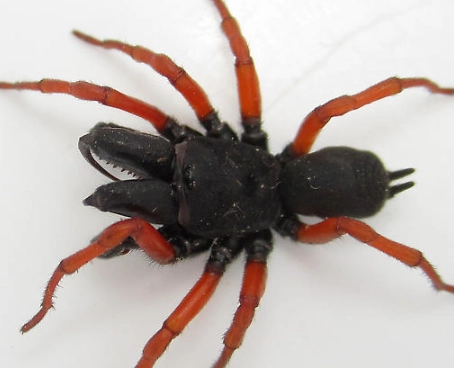
The color red in spiders comes from pigments called ommochromes and pteridines. It's not a sign of danger in itself—it's just a color, like a bird having red feathers. Sometimes, the red is more vibrant in males, as it can play a role in mating displays. Other times, it might just be that species' default look. Jumping spiders, for instance, often have fantastic colors purely for visual communication.
I think a big part of the fear comes from association. We link red with warning signs, poison, and danger. So, a red legged spider automatically feels more threatening than a plain brown one. But in the spider world, that logic doesn't really hold up.
Meet the Usual Suspects: Common Spiders with Red Legs
Okay, let's put names to faces. Here are the spiders you're most likely to encounter that fit the "red legged" description. I've put together a table to make comparing them easier, because honestly, trying to remember text descriptions of six different spiders is a headache.
| Common Name | Scientific Name | Key Identifying Features (Besides Legs) | Habitat | Danger Level |
|---|---|---|---|---|
| Woodlouse Hunter | Dysdera crocata | Prominent, large chelicerae (fangs); reddish-orange head/thorax; pale yellow-brown abdomen. | Under rocks, logs, leaf litter. Often in basements or damp areas. | Low. Can bite if handled, but venom is mild for humans. |
| Red-legged Purseweb Spider | Sphodros rufipes | Shiny black body with distinctly red-orange legs. Males are more commonly seen. | Woodlands, near trees. Creates silken "purse" tubes on tree trunks. | Very Low. Rarely encountered, fangs are large but not aggressive. |
| Orb-weaver (some species) | Family Araneidae | Often large, colorful abdomens with patterns. Builds classic circular webs. | Gardens, between trees, on porches, near lights. | Negligible. Not aggressive, bites are extremely rare and harmless. |
| Jumping Spider (some species) | Family Salticidae | Compact, fuzzy bodies. Large front-facing eyes. Quick, jerky movements. | Windowsills, walls, fences, plants—almost anywhere. | None. Curious but harmless. Venom is not effective on humans. |
| Grass Spider | Genus Agelenopsis | Long, striped legs (often with reddish bands). Builds flat, sheet-like webs with a funnel retreat. | Tall grass, shrubs, ground-level vegetation, corners of sheds. | Very Low. Timid, will retreat to its funnel. Bite is uncommon and minor. |
| Southern House Spider (Male) | Kukulcania hibernalis | Slender, long reddish-brown legs. Dark brown body. Often confused with Brown Recluse. | Crevices, window frames, eaves, barns, sheds. | Low. Can bite if pressed, but effects are typically local and minor. |
Looking at that table, a pattern emerges, right? Most of these guys are basically the couch potatoes of the spider world—they just want to be left alone to eat pests. The Woodlouse Hunter is a fun one. It looks menacing with those huge fangs, but its diet is almost exclusively pill bugs (roly-polies). Those fangs are built to pierce a pill bug's armor, not to wage war on humans. I find them in my garden compost pile every year, and we have an understanding: they don't bother me, and I don't squash them.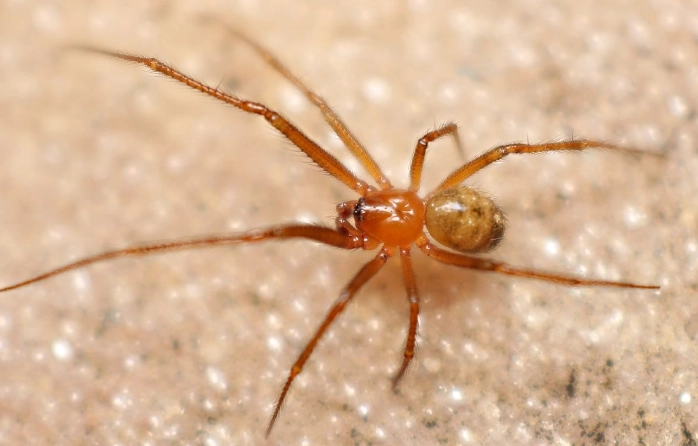
The Woodlouse Hunter: The One That Looks Scarier Than It Is
This spider deserves its own spot because it causes so many panic posts online. Dysdera crocata is an introduced species from Europe that's now common across North America. Its entire vibe is designed to look tough. The reddish-orange front half contrasts with the beige back half, and those massive, gleaming fangs are always on display.
But here's the personal experience: I once had to carefully relocate one from my basement. I used the classic cup-and-card method. It was slow, it didn't jump, and it seemed more confused than angry. Yes, it could bite if you squeezed it. The venom might cause some localized pain, redness, and itching for a day or so—comparable to a bee sting in terms of reaction severity for most people. The University of California's Statewide Integrated Pest Management Program has a great resource on common spiders that lists it as a occasional nuisance, not a medical threat.
They're nocturnal hunters, not web builders. So if you see one, it's just out for a walk, probably looking for its next pill bug meal. They're actually beneficial.
Orb-weavers: The Garden's Red-Legged Artists
Many orb-weaver species can have legs with red, orange, or yellow coloring. The Araneus and Neoscona genera are full of examples. These are the spiders that build those beautiful, intricate circular webs you walk into at dusk. The web is their world, and they have very little interest in leaving it.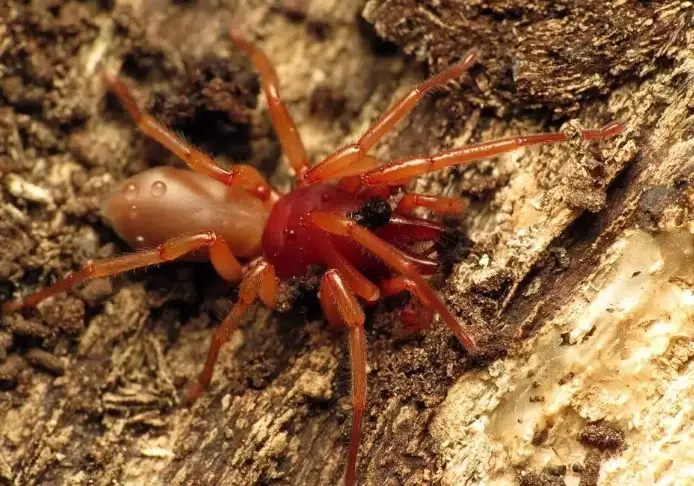
I've spent countless evenings watching them in my garden. Their legs are often brightly colored or banded. They are utterly, completely harmless. Their strategy is to sit and wait. If you disturb their web, they might vibrate it violently to try and scare you off, or they might just drop to the ground on a silk safety line. The idea of one biting a human is almost laughable—you'd have to forcibly trap it against your skin. Even then, their venom isn't a concern for us. They are premier insect controllers.
Important: Never confuse a harmless orb-weaver with a potentially dangerous spider based on leg color alone. Body shape, web type, and behavior are far more important identifiers.
The Big Question: Are Red Legged Spiders Poisonous or Dangerous?
This is the heart of the matter, isn't it? Let's break down the word "poisonous" first. Technically, spiders are venomous (they inject toxin) not poisonous (you eat it and get sick). But everyone searches for "poisonous," so we know what you mean.
The short, direct answer is: Most spiders with noticeably red legs are not considered medically significant to humans. Their venom is evolved to subdue small insects, not to damage human tissue. A bite, which is already a rare event, might result in some localized pain, redness, and swelling—similar to a mosquito bite or a small scratch that gets a bit irritated.
Now, let's talk about the two spiders in North America that are of genuine medical concern: the Black Widow and the Brown Recluse.
- Black Widows (Latrodectus species): These have a famous red hourglass on a shiny black, round abdomen. Their legs are typically black, sometimes with faint lighter bands. They do not have "red legs." The warning color is on the belly.
- Brown Recluses (Loxosceles reclusa): These are uniformly colored light to dark brown. Their legs are a consistent brown, not red. Their key identifier is the dark, violin-shaped marking on the cephalothorax (the head/body region). They are also called "fiddleback spiders."
See the pattern? The truly dangerous spiders don't use bright red legs as a warning sign. The Missouri Department of Conservation has an excellent field guide for the Brown Recluse that clearly shows its uniform coloring. This is a critical point that many other articles gloss over.
So, if the spider you're looking at has vivid red legs, you can almost certainly relax. The risk is extraordinarily low.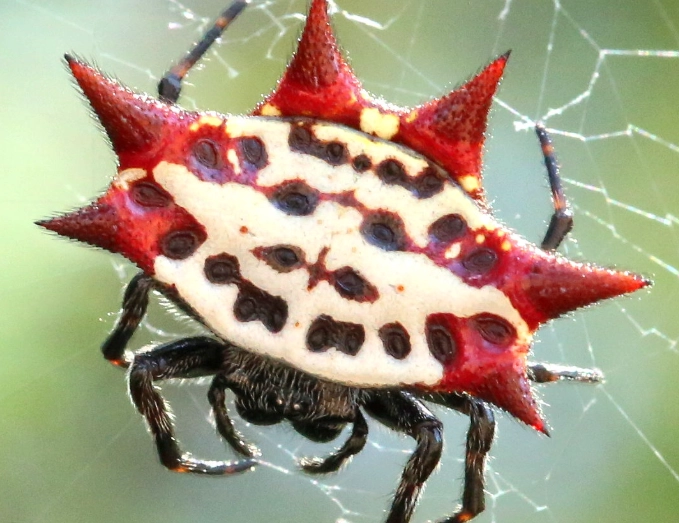
The Exception to the Rule: There are a handful of spider species worldwide, like some funnel-webs in Australia, where red coloration might coincide with potent venom. However, in North America and Europe, this correlation between red legs and dangerous venom simply does not hold true. Always identify the spider, not just its color.
What To Do If You Find a Red Legged Spider in Your House
Your first instinct might be to smash it. I get it. But consider the alternative: these are free pest control agents. They're eating flies, mosquitoes, moths, and other actual nuisances. If you can't bear to have it inside, here's the humane and effective approach.
Step 1: Don't Panic. Take a breath. Remember the identification guide above. It's almost certainly harmless.
Step 2: Get a Clear Container and a Stiff Card. A glass and an old junk mail postcard work perfectly.
Step 3: Gently place the container over the spider. Slowly slide the card underneath to trap it.
Step 4: Carry it outside and release it in a sheltered spot like a bush or against a fence.
For spiders that are in high-traffic areas or if you have a genuine phobia, this method solves the problem without creating a mess or using chemicals. For recurring issues, you need to look at why they're coming inside. It's usually one of two reasons: food or shelter.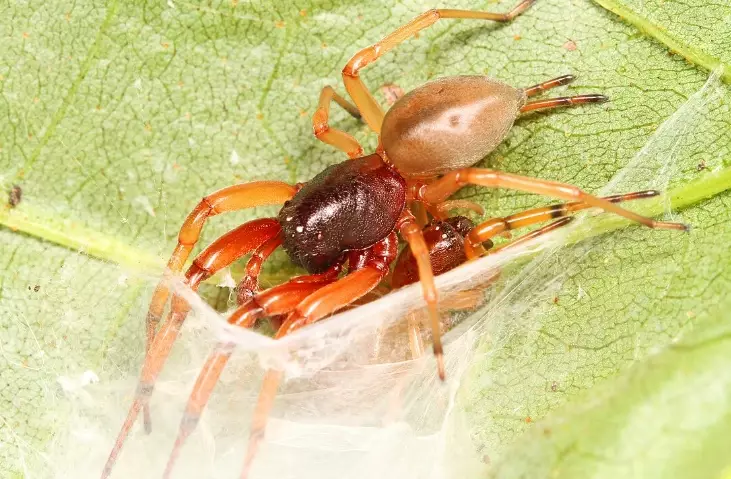
Long-Term Prevention: Making Your Home Less Inviting
Spiders follow their prey. If you have other insects, you'll have spiders. Here's a no-nonsense list of things that actually work:
- Seal entry points: Check around windows, doors, utility pipes, and foundation cracks. Use caulk or weather stripping. This is the single most effective thing you can do.
- Reduce outdoor lighting that attracts insects: Switch porch lights to yellow bug lights, or move lights away from direct entryways.
- Declutter: Reduce piles of boxes, papers, and clothing in storage areas like basements, attics, and garages. Spiders love quiet, undisturbed chaos.
- Regular cleaning: Vacuum and dust regularly, especially in corners, under furniture, and behind appliances. This removes webs, egg sacs, and the insects spiders eat.
- Manage vegetation: Keep shrubs, vines, and tree branches trimmed back from touching your house's exterior.
I'm not a fan of widespread pesticide sprays for spiders. They're often overkill, can harm beneficial insects, and spiders can simply walk back in from untreated areas. Targeted, crack-and-crevice treatments by a professional can help in severe cases, but for most people, the non-chemical methods above are sufficient.
Bites: Symptoms, Myths, and What Actually Works
Let's say the worst happens. You get bitten by a spider, and you think it was one with red legs. What now?
First, confirm it was a spider. Many skin lesions are mistakenly blamed on spiders. The reality is that most "spider bites" diagnosed by doctors are actually infections (like MRSA), bites from other insects, or allergic reactions. A true spider bite often involves feeling the pinch, seeing the spider, and having two tiny puncture marks close together.
Symptoms of a harmless spider bite (like from a Woodlouse Hunter or Orb-weaver):
- Immediate, sharp pinprick sensation.
- Localized pain, redness, and swelling around the bite site.
- Possible itching.
- These symptoms usually peak within a few hours and fade over 1-2 days.
First Aid for a Non-Dangerous Bite:
- Wash the area thoroughly with soap and water.
- Apply a cold pack or ice (wrapped in a cloth) to reduce swelling and pain.
- Take an over-the-counter antihistamine (like Benadryl) for itching or an analgesic (like ibuprofen or acetaminophen) for pain.
- Keep the area clean and avoid scratching to prevent infection.
When to See a Doctor:
- If you are certain you were bitten by a Black Widow or Brown Recluse.
- If symptoms rapidly worsen or spread far beyond the bite site.
- If you develop a fever, chills, nausea, or muscle cramps.
- If the bite area develops an ulcer, turns dark blue/purple, or shows signs of serious infection (increasing redness, warmth, pus).
The Centers for Disease Control and Prevention (CDC) provides clear, authoritative guidance on spider bite management. It's worth a look to know the official recommendations.
Remember, the bite from a typical red legged spider is a minor medical event at absolute worst.
Answers to Your Burning Questions (FAQs)
Fun Fact: Jumping spiders have some of the best vision among invertebrates. They use their excellent eyesight to track and plan their jumps with precision, almost like tiny, eight-legged cats.
Living Alongside Our Eight-Legded Neighbors
After all this, my perspective has shifted. I used to be a reflexive squisher. Now, I'm more of a relocator. Understanding that a red legged spider is far more likely to be a beneficial garden ally or a harmless basement wanderer takes the fear out of the encounter.
They are a natural part of our environment, and they perform an invaluable service. One study from the University of Basel estimated that the global spider population consumes between 400 and 800 million tons of insects every year. That's a staggering amount of pest control provided for free.
The key is knowledge. When you can confidently identify the spider on your wall as a harmless grass spider or a curious jumping spider, the panic evaporates. You regain a sense of control. You can make a rational choice: leave it be, guide it outside, or (if absolutely necessary) deal with it.
So next time you see those red legs, take a closer look. You might just be looking at one of nature's most efficient pest controllers, not a monster.
LEAVE A REPLY
Your email address will not be published. Required fields are marked *