Quick Navigation
- Spotting the Enemy: A Pharaoh Ant Identification Guide
- Why Is a Pharaoh Ant Such a Nightmare? The Biology of a Superpest
- The Real Cost: Damage and Risks of an Infestation
- How to Get Rid of Pharaoh Ants: A Realistic Strategy
- When to Call a Professional Pest Control Operator (PCO)
- Common Questions About Pharaoh Ants (FAQs)
- The Bottom Line on What Is a Pharaoh Ant
I remember the first time I saw them. Tiny, almost translucent ants, barely a sixteenth of an inch long, trailing in a faint, disorganized line across my kitchen counter. I thought, "No big deal, a quick spray will take care of this." Boy, was I wrong. That was my introduction to the world of Pharaoh ants, and it kicked off a months-long battle that taught me more about ant sociology than I ever wanted to know. If you're asking "what is a pharaoh ant?", you're likely already in the trenches with them, or you've heard the horror stories. Let's cut through the confusion and get real about these pests.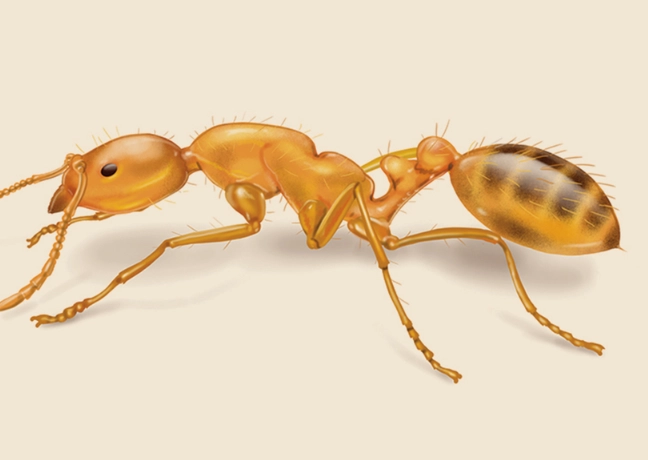
So, what is a pharaoh ant, exactly? It's not your average backyard ant. Scientifically known as Monomorium pharaonis, this ant is a global traveler, thought to have hitched rides from Africa to every warm corner of the world. The name "Pharaoh ant" supposedly comes from the mistaken belief they were one of the plagues of ancient Egypt. While that's probably myth, the biblical-level frustration they cause is very real. They're one of the most difficult household pests to control, period. Forget everything you know about dealing with black garden ants or pavement ants. This is a whole different ball game.
Spotting the Enemy: A Pharaoh Ant Identification Guide
You can't fight what you can't identify. Pharaoh ants are masters of disguise, often confused with other small ants like the thief ant. But look closer.
Their bodies are a pale yellow, almost honey-colored, with a slightly darker abdomen. The key feature? A distinctive two-segmented petiole (that's the little node between the thorax and abdomen) that looks like a tiny pair of bumps. Their antennae are 12-segmented, ending in a three-segmented club. Workers are all the same size, about 1.5 to 2 mm long – think "size of a pinhead." You'll rarely see a winged reproductive ant inside unless a colony is getting ready to split, which is a bad sign.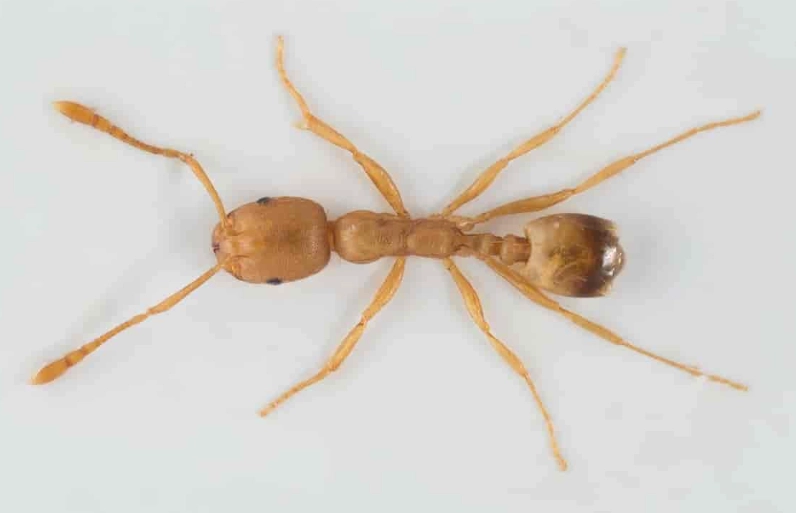
Their trails are different too. They're not the disciplined, single-file highways of some ants. Pharaoh ant trails can seem meandering, with workers often wandering off the path. They prefer protein and fatty foods early in their colony's life cycle (great for feeding larvae), but have a notorious sweet tooth for sugars and syrups, especially in established colonies. I found them in my toaster, attracted to the crumbs, and once even inside a sealed bag of sugar (note to self: plastic bags are not ant-proof).
Pharaoh Ant vs. The Look-Alikes: Don't Get Fooled
A lot of people search for "pharaoh ant vs sugar ant." It's a common mix-up. Here’s a quick breakdown to keep them straight.
| Feature | Pharaoh Ant | Common Sugar Ant (Odorous House Ant) | Thief Ant |
|---|---|---|---|
| Color | Pale yellow to light brown | Dark brown to black | Pale yellow to brownish |
| Size | 1.5 - 2 mm (Very small) | 2.5 - 3.5 mm (Small) | 1.5 - 2.2 mm (Very small) |
| Petiole (Node) | Two-segmented | One-segmented | Two-segmented |
| Antennae Club | 3 segments | N/A | 2 segments |
| Distinct Odor | None when crushed | Strong rotten coconut smell when crushed | None when crushed |
| Primary Diet Preference | Greases, proteins, then sweets | Overwhelmingly sweets | Greases, proteins, insect corpses |
The thief ant is the real doppelganger. The clearest field difference is in the antennae club (3 segments for Pharaoh, 2 for Thief). If you're not up for counting microscopic antenna segments under a magnifying glass – and who is? – your best bet is behavior and location. Thief ants are more likely to be found nesting outdoors and raiding other insect nests. Pharaoh ants are the ultimate indoor colonizers.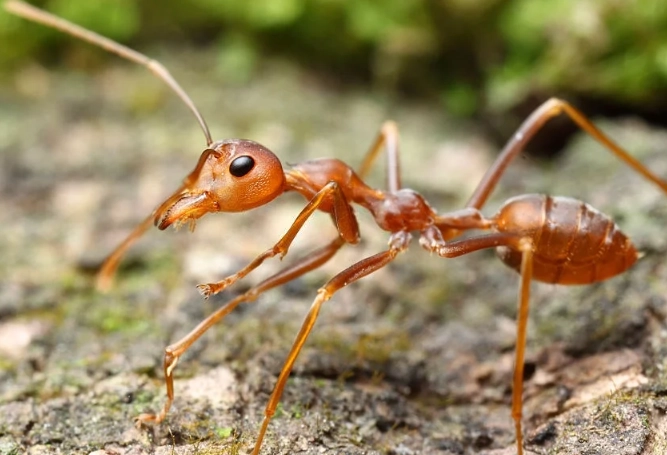
Why Is a Pharaoh Ant Such a Nightmare? The Biology of a Superpest
Understanding "what is a pharaoh ant" means diving into their bizarre and frustrating social life. This is where DIY dreams go to die.
First, they practice something called budding. Most ant species send out winged queens to start new colonies. Not Pharaohs. If a colony feels threatened – like from that can of spray you just used – a few queens, some workers, and a batch of brood (eggs, larvae, pupae) will simply pick up and walk to a new location to start a satellite colony. You spray one area, and you've just created three new problems in walls you can't reach. It's infuriatingly effective.
Second, their nesting sites are absurd. We're talking about the ultimate adaptable pest. They'll nest anywhere that provides safety, moisture, and warmth.
- Inside wall voids and behind baseboards.
- Beneath flooring and in insulation.
- Within appliance motors (fridges, dishwashers). I had a friend whose coffee machine shorted out because of a nest inside.
- In paper products, stacked boxes, even between the pages of books.
- Around pipes and electrical conduits where it's warm.
- In pharmaceutical packaging or sterile supplies in hospitals (this is a major, major issue).
Their small size lets them exploit cracks you wouldn't even notice. A gap the thickness of a credit card is a wide-open highway for them.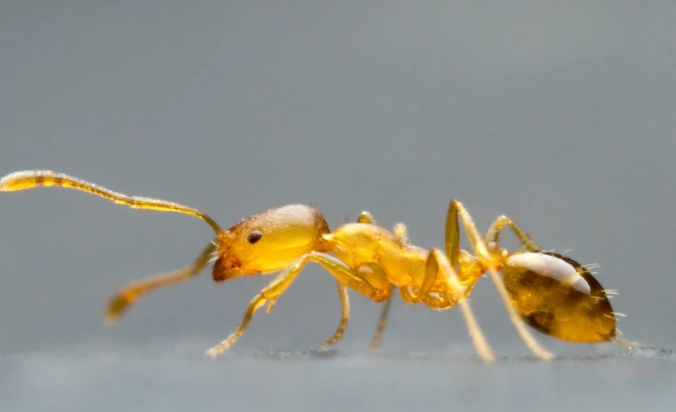
The Real Cost: Damage and Risks of an Infestation
It's not just about the "ick" factor. Knowing what is a pharaoh ant involves understanding the tangible harm they cause.
Contamination: This is the big one. They crawl over garbage, dead insects, and sewage, then march across your food prep surfaces, dishes, and pantry items. They can contaminate food with bacteria like Salmonella and Staphylococcus. The Centers for Disease Control and Prevention (CDC) notes that ants can be mechanical vectors for pathogens, meaning they can physically carry germs from place to place.
Electrical Damage: Their love for warm, tight spaces leads them into electrical boxes, appliances, and even computers. They can cause short circuits and fires by creating bridges between contacts or by their bodies simply getting fried and piling up. It's a real fire hazard that most people don't consider.
Reputational and Financial Damage for Businesses: For restaurants, hotels, food processing plants, or offices, a visible infestation is a death knell for reputation. Health code violations, lost business, and costly closures are real risks.
How to Get Rid of Pharaoh Ants: A Realistic Strategy
Alright, so you've identified them. You know what is a pharaoh ant and why it's bad news. Now, how do you win? I'll be blunt: for any established infestation, professional help is strongly recommended. The strategies below are for very light, early infestations or as part of a pro's plan.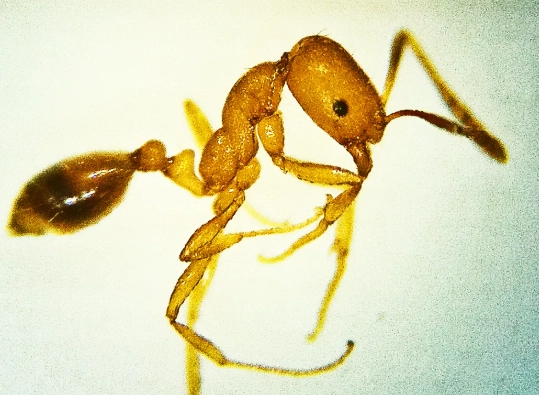
The golden rule: DO NOT USE SPRAY INSECTICIDES OR DUSTS on trails or nests you see. You will trigger budding and scatter the colony. Your goal is not to kill the workers you see instantly, but to get poison back to the heart of the colony.
Step 1: Inspection and Sanitation
You have to find where they're coming from and living. Follow trails, but do it subtly. Look for them at night with a flashlight. Check all the high-moisture, high-warmth areas listed earlier. Clean relentlessly. Wipe up grease splatters, seal all food in hard containers (glass, thick plastic), take out trash daily, and fix leaky faucets. Remove their reasons to be there.
Step 2: Baiting, Baiting, and More Baiting
This is the cornerstone of Pharaoh ant control. You must use slow-acting bait that workers will carry back to the nest and share, eventually killing the queens and brood.
- Use Multiple Bait Formulations: Start with both protein/grease-based baits (like those containing indoxacarb or hydramethylnon) and sugar-based baits (like those with boric acid or fipronil). Place them where you see activity. The University of Minnesota Extension Entomology department provides excellent resources on the biology and management of structure-infesting ants, emphasizing the need for proper bait selection.
- Placement is Key: Put small dabs of bait on pieces of foil or in commercial bait stations along trails, near suspected nests, but away from children/pets. Do not disturb the trails!
- Be Patient: You might see more ants at first. This is good! It means they're taking the bait. It can take weeks to see a significant decline.
Step 3: Exclusion and Habitat Modification
While the bait works, seal them out. Use silicone caulk to seal cracks around pipes, baseboards, and window frames. Repair torn window screens. Install door sweeps. Make your building a fortress.
When to Call a Professional Pest Control Operator (PCO)
Let's be honest. If the ants are in multiple rooms, if you see them consistently for more than a week despite baiting, or if you're in a multi-unit building or business, it's time to call. A good PCO will:
- Conduct a thorough inspection, often using monitoring stations first to map the infestation.
- Use professional-grade baits and insecticides in a strategic, targeted way (sometimes using insect growth regulators to disrupt reproduction).
- Have the expertise to locate major nesting areas and satellite colonies.
- Provide a long-term management plan with follow-up visits. Eradication is a process, not a one-time event.
Ask them about their experience with Pharaoh ants specifically. It matters.
Common Questions About Pharaoh Ants (FAQs)
They don't sting or bite in a meaningful way to humans. Their primary danger is contamination of food and sterile environments, and potential electrical damage. In hospitals, they are considered a serious biohazard.
For a very small, newly discovered infestation, meticulous baiting and sanitation might work. For any established problem, especially in apartments, offices, or homes with persistent sightings, professional treatment is almost always necessary for complete control. DIY efforts often prolong the problem.
They are fantastic hitchhikers. They come in on grocery bags, cardboard boxes, used appliances, furniture, or even potted plants. They can also walk in from an adjacent apartment or unit through utility lines and wall spaces.
From egg to adult takes about 38-45 days depending on temperature. Queens can live for several months to a year, laying hundreds of eggs. This rapid cycle allows colonies to explode in size quickly under ideal conditions (warm, humid, with ample food).
They cannot survive outdoors in temperate winters. However, they have perfectly adapted to living inside heated human structures year-round. This makes them a problem everywhere from Florida to Canada, as long as they're indoors.
The Bottom Line on What Is a Pharaoh Ant
So, what is a pharaoh ant in the end? It's a minute, pale insect that represents one of the most significant and challenging pest infestations a homeowner or business manager can face. They're not just ants; they're a complex, adaptive superorganism that exploits the comforts we build. They contaminate, damage, and frustrate.
Respect the enemy. Correct identification is your first weapon. Understanding their budding behavior tells you why sprays fail. Accepting that baiting is a slow, strategic process is key to patience. And knowing when to call in a professional with the right tools and knowledge is the sign of someone who wants the problem solved, not just temporarily hidden.
My own battle ended with a professional treatment. The baits I put down had stabilized the kitchen front, but they were still popping up in a bathroom. The pro found a satellite nest behind the vanity, accessing it from a pipe chase in the wall. It was a humbling reminder of how deep the problem can go. If you see these tiny, persistent ghosts in your home, act smart, act strategically, and don't let a small ant cause a giant amount of stress.
LEAVE A REPLY
Your email address will not be published. Required fields are marked *