Your Quick Guide
You're in the basement, maybe grabbing a box, and something streaks across the floor. It's fast. It's got too many legs. Your brain freezes for a second—what on earth was that? If you've ever had that moment, you're not alone. That lightning-fast, alien-looking creature is most likely a house centipede. And the first question everyone has is, what does a house centipede look like, really? Let's get up close and personal (but not too close) and break it down, because knowing exactly what you're looking at is the first step to deciding if you should panic or just let it be.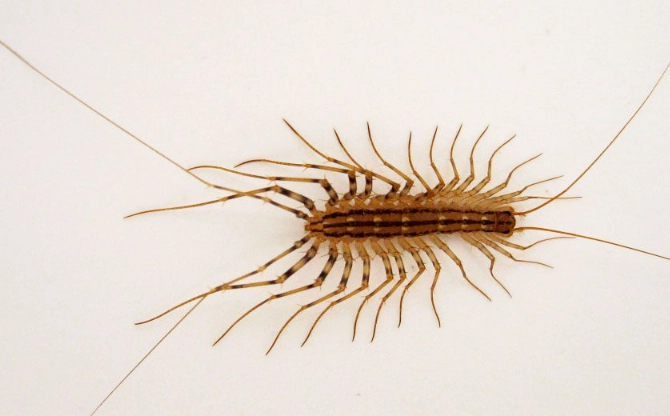
I remember the first time I saw one clearly. It was on the bathroom wall late at night, and I nearly jumped out of my skin. It looked like a tiny, living feather duster with a mind of its own. But after the initial shock wore off, I got curious. What *is* this thing? That curiosity led me down a rabbit hole, and now I can tell you exactly what to look for.
The Anatomy of a House Centipede: A Piece-by-Piece Breakdown
Forget just counting legs for a second. To truly understand what a house centipede looks like, you need to look at its unique body plan. It's not just a worm with legs slapped on; it's a highly specialized predator. The scientific name for the most common house centipede in North America is *Scutigera coleoptrata*, if you want to get technical.
Quick Fact: Despite the name, house centipedes are not insects. They belong to a group of arthropods called myriapods, which also includes millipedes. The key difference? Centipedes are carnivorous hunters, while millipedes are mostly docile vegetarians.
Their body is flattened and elongated, kind of like a carrot that's been stepped on, but segmented. This design is perfect for slipping into tiny cracks and crevices. The color is usually a yellowish-gray or tannish-brown, but they can sometimes have darker stripes or patterns running along their body. The older they get, often the darker they appear.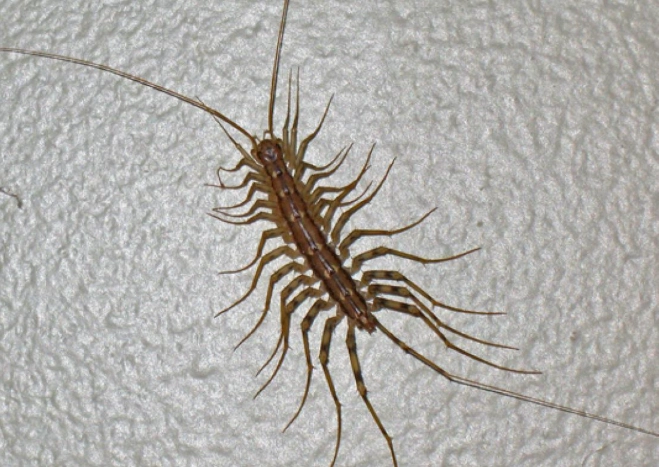
The Leg Situation (Yes, We Have to Talk About It)
This is the feature that defines the house centipede's look and causes the most screams. An adult house centipede typically has 15 pairs of legs. That's 30 legs total. But here's the weird part: they're born with only four pairs. They gain more legs with each molt until they reach the full count.
These aren't just any legs. The legs are incredibly long and thread-like, almost delicate looking, and they get progressively longer towards the rear of the body. The last pair of legs is often so long it can be mistaken for antennae. This leg design isn't for show—it gives them an insane turn of speed and allows them to navigate complex surfaces like walls and ceilings with ease. When you see one running, its legs move in a coordinated, wave-like motion that is both fascinating and unsettling.
Seriously, they're all leg.
Head and Sensory Gear
At the front end, you'll find a pair of long, sensitive antennae. These are constantly moving, probing the environment for vibrations and scents. If you look really closely (maybe in a photo, I'm not suggesting you get your face that close), you might see two small, simple eyes called ocelli. Their vision is poor, so they rely heavily on those antennae and their sense of touch to hunt in the dark.
Now, the business end. Right under the head, house centipedes have a modified pair of legs called forcipules. These aren't for walking; they're venom-injecting fangs. They look like tiny, curved pincers. This is how they subdue their prey. It's a key part of what a house centipede looks like when you're identifying it versus other multi-legged critters.
Size and Scale: How Big Do They Actually Get?
This is where people's perceptions vary wildly. A house centipede's body itself is usually only about 1 to 1.5 inches long (2.5 to 4 cm). Not huge. But when you add in those sprawling legs, the total "diameter" or leg span can easily reach 3 to 4 inches (7 to 10 cm). That's about the size of a drink coaster skittering across your floor. The body is segmented into 15 segments, each bearing one pair of legs.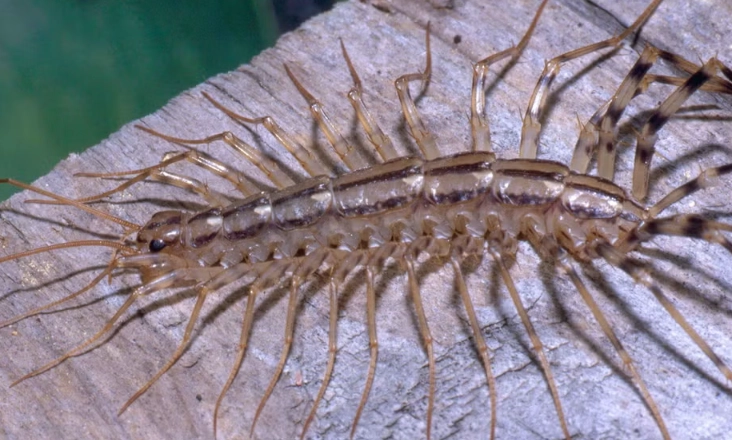
So, when someone says they saw a "6-inch monster," they're probably including the full leg span in their panic estimate. The body alone is rarely that long.
House Centipede Look-Alikes: Don't Get Them Confused
This is crucial. Many bugs get mistaken for house centipedes. Knowing the difference can save you from misidentifying a harmless creature as a threat, or vice versa. Let's clear up the confusion with a direct comparison.
| Creature | Key Visual Differences from House Centipede | Typical Habitat & Behavior |
|---|---|---|
| House Centipede | 15 pairs of very long, thread-like legs. Flattened, yellowish-gray body. Long antennae. Moves with incredible speed. | Damp, indoor areas (basements, bathrooms). Nocturnal hunter of other pests. |
| Millipede | Two pairs of short legs per body segment (looks like tiny fringe). Body is cylindrical, not flattened. Moves slowly in a deliberate wave. | Damp soil, under mulch/logs outdoors. Sometimes wanders indoors. Eats decaying plant matter. |
| Silverfish | Only 6 legs (it's an insect). Teardrop-shaped, silvery-gray body with three tail-like appendages. No long, sprawling legs. | Dark, humid places (attics, basements). Feeds on starches, paper, glue. Scuttles quickly. |
| Earwig | Only 6 legs. Has a prominent pair of pincers (cerci) at the rear. Dark brown, hardened body. | Under pots, in mulch. Occasionally enters homes. Omnivorous, mostly harmless. |
| Juvenile House Centipede | Smaller version of the adult but with fewer pairs of legs (as few as 4 pairs when newly hatched). Can look like a different creature entirely. | Same as adults. Often seen as tiny, pale, fast-moving specks. |
The main takeaway? If it has dozens of extremely long, spindly legs and moves like a blur, you're almost certainly looking at a house centipede. If it has fewer legs or a rounder, slower body, it's something else.
Why Do They Look So... Alien?
It's a fair question. Their appearance is the result of millions of years of evolution for a very specific niche: hunting in tight, dark spaces. The flattened body lets them squeeze under baseboards and behind pipes. The long legs act like stilts, keeping their body off the ground to sense vibrations better and run over uneven terrain (like your cluttered basement floor) without tripping. The antennae are their primary navigation tool in pitch darkness.
In short, every weird part of what a house centipede looks like serves a purpose. It's a perfect design for a stealthy, apartment-dwelling predator. Doesn't make them less creepy to look at, but it does make sense.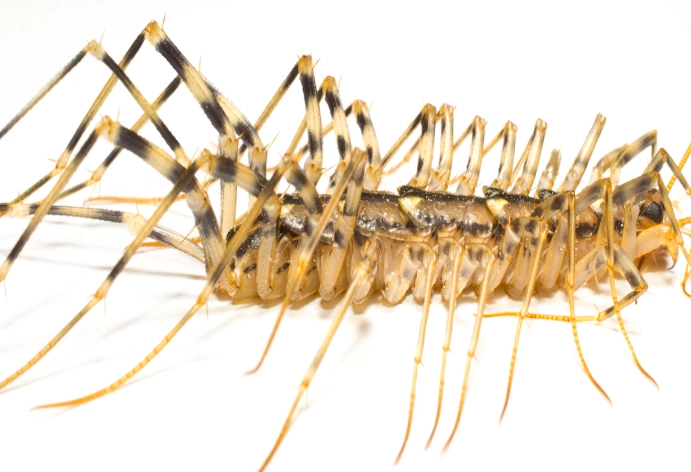
Personal Observation: I've found that their color can really depend on where you live and the individual. Some are almost translucent pale, especially the young ones. Others have distinct dark stripes running down their back. I once saw one with very pronounced dark bands on its legs—it was almost pretty, in a terrifying sort of way.
Behavioral Clues: How They Move and Act
Appearance isn't just static. How a creature behaves is part of its "look." House centipedes are nocturnal. You'll almost always see them at night when you flip on a light. Their reaction is instant flight. They don't charge you; they want to get away from the light and your giant feet as fast as possible.
They have a distinctive stop-start running pattern. They'll zip a few feet, freeze completely (relying on their camouflage), then zip away again. This makes them hard to swat. They are also expert climbers, effortlessly scaling walls, windows, and even ceilings. Seeing one on the ceiling is a common, heart-stopping experience.
Another behavioral clue is where you find them. They need moisture. So sightings are most common in bathrooms (near drains or under sinks), damp basements, laundry rooms, and crawl spaces. If your house is very dry, you're less likely to see them.
Answering Your Burning Questions
This is the number one concern. The short answer is: their danger is wildly overstated. House centipedes possess venom to paralyze their small prey (spiders, cockroaches, silverfish, bed bugs). They are capable of biting a human in self-defense if they are cornered and handled roughly—say, trapped under your clothing.
A bite is reportedly similar to a mild bee sting: a bit of pain, some localized redness and swelling. It's not medically significant for the vast majority of people. There are no documented cases of serious injury or death from a house centipede bite. They are not disease vectors.
For pets, the same logic applies. A curious cat or dog might get nipped on the nose, causing a temporary yelp and some discomfort, but nothing serious. The real risk from house centipedes is the heart attack you might have when you see one, not any physical harm they cause.
For authoritative information on arthropod bites and their effects, you can refer to resources from institutions like the University of Minnesota Department of Entomology, which provides science-based pest information.
They are in your house because it's a perfect hunting ground. If you have house centipedes, you almost certainly have other, smaller pests that they are eating. They are a symptom, not the root problem. In many ways, they are providing you with free, non-toxic pest control.
Should you kill them? That's a personal choice. I've adopted a live-and-let-live policy with the ones in my basement. They're eating the spiders and silverfish I like even less. If I find one in the living area, I usually try to capture it in a cup and release it back downstairs or outside. They are beneficial predators.
If their presence truly bothers you, the best control method is to make your home less inviting. This means reducing humidity (with dehumidifiers, especially in basements), sealing cracks and gaps where they can enter and hide, and addressing the underlying pest population they are feeding on. Sticky traps placed along baseboards in damp areas can also catch them.
Great question! Newly hatched house centipedes are tiny, maybe a quarter-inch long, with only four pairs of legs. They are much lighter in color, often an almost white or very pale gray. They have the same general shape but look more like a small, fast-moving worm with a few legs. As they grow and molt, they gradually add more body segments and leg pairs, darkening in color over time. Spotting a juvenile can be confusing because it doesn't yet match the classic image of what a house centipede looks like.
When Should You Be Concerned?
A single, occasional house centipede sighting, especially in a basement or bathroom, is normal and not a cause for alarm. It's just one predator doing its job.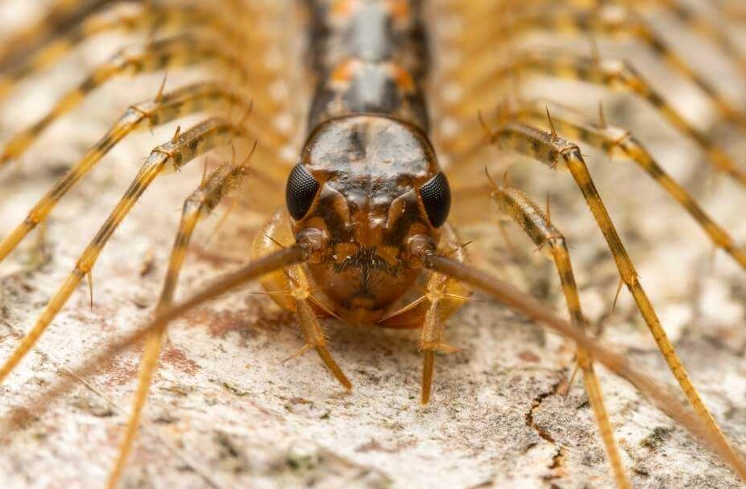
However, if you start seeing multiple house centipedes regularly in your living spaces, it's a strong indicator of two things:
- High Humidity: Your home has areas of persistent dampness that they thrive in.
- A Significant Prey Population: There are enough spiders, silverfish, or other insects to support multiple large predators. The house centipedes are there because the buffet is open.
In this case, your action shouldn't just be focused on the centipedes. You need to investigate for moisture problems (leaky pipes, poor ventilation, foundation cracks) and consider a broader pest inspection to find out what they're feasting on.
For guidance on managing home moisture and pest-conducive conditions, public resources like those from the U.S. Environmental Protection Agency on mold and moisture control offer practical, health-focused advice.
Final Thoughts: From Fear to Understanding
So, what does a house centipede look like? It looks like efficiency. It looks like evolution cooked up a perfect, tiny hunting machine for the shadows of our homes. They are undeniably startling with their legion of legs and lightning speed. But once you move past the initial "yuck" factor and understand their form and function, they become a lot less frightening.
They are not out to get you. They want to avoid you. They are hunting the pests that actually cause damage and spread germs. The next time you see one frozen on the wall, instead of grabbing a shoe, take a second to really look. Notice the delicate length of the legs, the segmented body, the constantly twitching antennae. You're looking at a master of its dark, damp domain. Then, calmly get a cup and a piece of paper, and escort it to a more suitable part of the house—like the basement—where it can get back to work.
Knowledge is the best repellent for fear.
Understanding what a house centipede looks like, inside and out, takes away its power to scare you. You're no longer looking at a mysterious monster; you're looking at a specific animal with a role to play. And honestly, that's a better feeling than any squish of a shoe.
LEAVE A REPLY
Your email address will not be published. Required fields are marked *