Quick Navigation
- Spotting the Striped Bark Scorpion: Your Visual ID Guide
- Home Sweet Home: Where Striped Bark Scorpions Live and Roam
- The Sting: What Really Happens and What You Should Do
- Keeping Them Out: A Practical Control and Prevention Plan
- Straight Answers to Common Questions (FAQ)
- Wrapping It Up: Living with the Neighborhood Scorpions
Let's be honest, most of us don't think about scorpions until we see one skittering across the patio or, worse, feel a sudden sharp pain in the dark. And in a huge chunk of the United States, from Texas to Kansas and over to the Carolinas, the scorpion you're most likely to meet is the striped bark scorpion (Centruroides vittatus).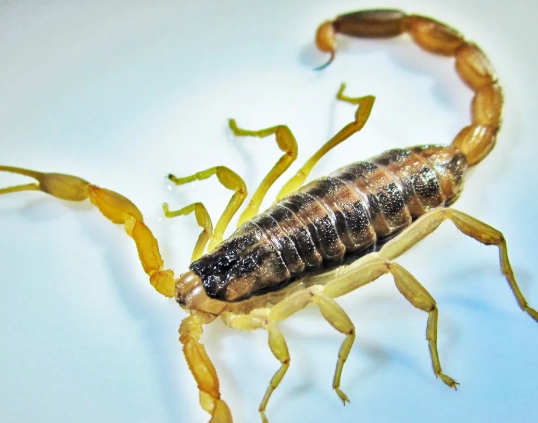
I grew up in an area where these guys were just part of the background noise of summer. You'd flip over a log, and there it was. You'd shake out your shoes in the morning, just in case. It wasn't until I moved away that I realized how many people have zero idea what they're dealing with. The questions I get are endless. Are they deadly? How do I keep them out of my house? What do I do if I get stung?
So, I decided to put this together. Not as a dry, scientific paper, but as a plain-talk guide from someone who's been there. We'll cover how to spot one, where they like to hang out, what a sting really feels like (spoiler: it's not fun), and most importantly, how to peacefully coexist—or encourage them to live somewhere far, far away from your living room.
Spotting the Striped Bark Scorpion: Your Visual ID Guide
You can't deal with something if you don't know what it is, right? Mistaking a harmless creature for a striped bark scorpion just wastes your energy, and mistaking a more dangerous one for it could be a problem.
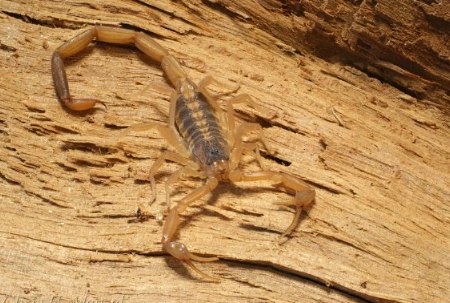
The classic striped bark scorpion is usually a tan or yellowish-brown color. Think of the color of dead grass or light wood. But here's the thing that throws people off—they can sometimes look almost dark brown or have a slight greenish tint. Don't rely on color alone.
The namesake stripes are your best bet. Look for two broad, dark, longitudinal stripes running down the length of the back (the mesosoma, if you want to get technical). These stripes are usually a dark brown or black. Between these two stripes, there's a lighter, often tan, "spinal" stripe. It's a pretty distinctive pattern once you know to look for it.
Size-wise, they're not the monsters of the scorpion world. Adults typically max out at about 2 to 2.5 inches long, from the front of the head to the tip of the tail. The tail (telson) is long and slender, and the pincers (pedipalps) are also relatively slender and narrow—much thinner than, say, a heavy-clawed emperor scorpion. This "slender" look is a key feature.
Now, a word of caution. In the southwestern parts of its range, the striped bark scorpion can be confused with its more venomous cousins in the same genus, like the Arizona bark scorpion. The Arizona species is generally more uniformly light yellow and lacks the strong, broad dorsal stripes. If you're in Arizona or extreme southwestern areas, it's wise to consult a local guide or extension office for positive ID, as the medical advice can differ.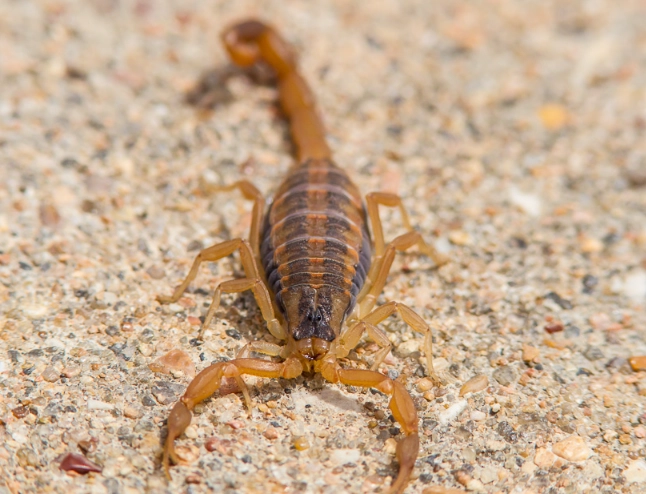
Home Sweet Home: Where Striped Bark Scorpions Live and Roam
These scorpions are masters of adaptation, which is why they're so widespread. They are classic "bark" scorpions, meaning their natural habitat is under the loose bark of dead trees, in rock crevices, and in piles of natural debris.
But let's talk about where they really interact with us: our spaces.
Preferred Outdoor Hangouts
- Rock piles and retaining walls: The number one spot in my experience. Every gap between stones is a potential condo for a scorpion.
- Firewood stacks: If you store wood against your house, you're basically building a scorpion highway straight to your foundation. They love the darkness and shelter between logs.
- Leaf litter and dense ground cover: Thick ivy, piles of leaves, or overgrown shrubbery provides perfect daytime hiding spots.
- Under patio stones, lumber, or any debris: Any flat object lying on damp soil is an invitation.
How and Why They Come Indoors
They don't want to be in your house. They're not seeking out your company. They are looking for two things: prey and shelter. If it's extremely dry outside, they might wander in seeking moisture. If it's very cold or very hot, they might seek more temperate shelter. Usually, they come in because the outside habitat is perfect and leads them right to cracks and gaps in your home's exterior.
Common entry points are shockingly small. Gaps under doors, cracks in foundation mortar, holes where plumbing or utilities enter, torn window screens, and attic vents are all open doors. I once found one in a bathroom sink; it had likely climbed up through the overflow drain or a gap around the pipes.
The bottom line? If you have the habitat outside, and you have tiny openings, you will eventually have a visitor.
The Sting: What Really Happens and What You Should Do
This is the part everyone worries about. I've been stung once, on the ankle while taking out the trash barefoot at night (a classic mistake). It was a sharp, electric pain that made me yelp, followed by a burning sensation that lasted for a good hour or two. The site was swollen, red, and tender for a few days. It was miserable, but it wasn't a medical emergency.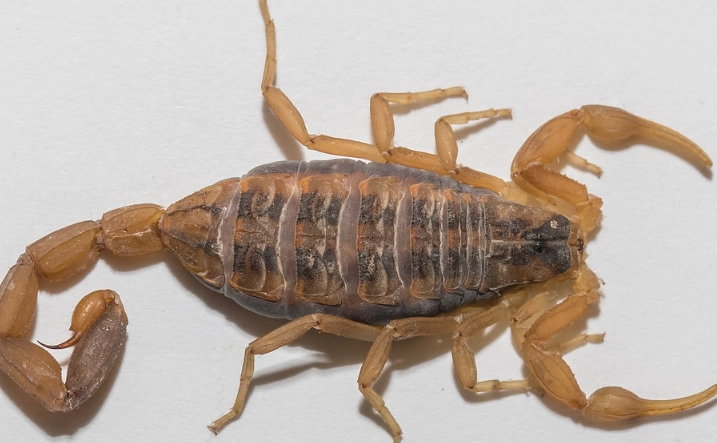
For the vast majority of healthy adults, a sting from a striped bark scorpion is similar to a bee or wasp sting in terms of medical severity. The venom is considered mild. However, "mild" doesn't mean "painless" or "no big deal." The reaction can vary a lot from person to person.
Common Local Symptoms
- Immediate, sharp pain at the sting site.
- Burning, tingling, or numbness around the area.
- Localized swelling and redness (edema and erythema).
- The area may feel warm to the touch.
- Pain and tenderness can persist for several hours to a couple of days.
Recommended First Aid Steps
- Stay calm and move away. Ensure you're not in line for a second sting.
- Wash the area gently with soap and cool water.
- Apply a cool compress or ice pack (wrapped in a cloth) to reduce pain and swelling. 15 minutes on, 15 minutes off.
- Take an over-the-counter pain reliever like acetaminophen or ibuprofen for pain.
- An antihistamine like diphenhydramine (Benadryl) can help with itching and minor swelling.
- Elevate the limb if possible.
What NOT to do: Do not apply a tourniquet. Do not cut the wound or attempt to suck out venom. Do not apply heat initially. These outdated methods can cause more harm.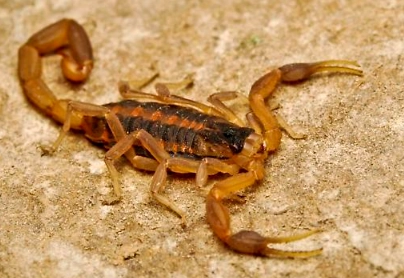
When to Seek Medical Attention Immediately
Call your doctor, go to an urgent care clinic, or call the Poison Help hotline (1-800-222-1222) if you experience symptoms beyond the local sting site, such as:
- Difficulty breathing, wheezing, or tightness in the throat.
- Muscle twitching, restlessness, or unusual head/neck/eye movements.
- Nausea, vomiting, or excessive salivation.
- Slurred speech, blurred vision, or confusion.
- Severe swelling spreading beyond the immediate sting area.
- If the person stung is a very young child, an infant, or has a known severe allergy.
Having this information from a source like the CDC's page on insects and scorpions helps back up the advice. It's not just my opinion; it's standard protocol.
Keeping Them Out: A Practical Control and Prevention Plan
Spraying a can of insecticide might give you a sense of action, but it's a temporary fix at best. Effective control is about making your property less attractive and accessible. It's a marathon, not a sprint.
Exclusion: Seal the Fort
This is the single most effective long-term strategy. Grab a tube of sealant and get inspecting.
- Door sweeps: Install tight-fitting sweeps on all exterior doors. Light should not be visible underneath.
- Weather stripping: Ensure doors and windows seal tightly.
- Caulk and seal: Fill cracks in the foundation, around window frames, and where pipes/conduits enter the house.
- Screen repair: Fix any tears in window, door, and attic vent screens. Use a fine mesh.
- Vent covers: Install fine mesh covers on attic, soffit, and crawl space vents.
Habitat Modification: Make the Outdoors Less Inviting
Remember their favorite hangouts? Your job is to eliminate them within a 2-3 foot zone around your home's perimeter. This creates a "dry zone."
- Move firewood, lumber, and rocks at least 30 feet away from the house. Store firewood off the ground on a rack.
- Trim back tree branches and shrubs so they don't touch the siding or roof, removing a bridge.
- Keep grass mowed and rake up leaf litter near the foundation.
- Reduce mulch depth around the foundation to 2-3 inches. Thick mulch holds moisture and harbors prey.
- Fix leaky faucets and ensure downspouts direct water away to eliminate moisture sources.
Direct Control Methods
When you need to deal with an existing population, here are your options. I've ranked them based on my experience and research into effectiveness and safety.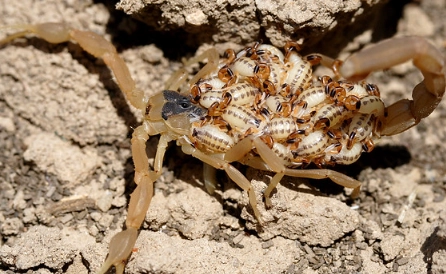
| Method | How It Works | Pros | Cons & My Take |
|---|---|---|---|
| Sticky Glue Traps | Placed along walls, in garages, etc., they physically trap scorpions (and other pests) that walk over them. | Non-toxic, great for monitoring, very effective at catching them. You see the results. | Can catch non-target pets or wildlife. Inhumane if not checked frequently. My go-to for monitoring in the garage or basement. |
| Diatomaceous Earth (DE) | A fine powder made from fossilized algae. It abrades the scorpion's waxy exoskeleton, causing dehydration. | Non-toxic to mammals, works on many crawling insects. Can be applied in cracks and voids. | Loses effectiveness when wet. Can be messy. Works slowly. It's a good barrier treatment in dry areas. |
| Professional Pest Control | A licensed pro applies residual insecticides in targeted areas (cracks, crevices, perimeter). | Most comprehensive solution. They know the exact entry points and appropriate products. | Cost. Requires periodic re-treatment. You must use a reputable company that understands integrated pest management (IPM) and doesn't just spray everywhere. |
| Broadcast Pesticide Sprays | Spraying insecticide over large areas of the yard. | Can reduce overall insect (prey) population. | I'm not a fan. It kills beneficial insects, can run off into waterways, and often doesn't reach the scorpions in their deep hiding spots. It's a blunt instrument. |
Many university agricultural extensions, like those from The University of Arizona or Texas A&M Agrilife, have excellent, detailed publications on scorpion management that align with this IPM approach. They're a fantastic resource for local nuances.
Straight Answers to Common Questions (FAQ)
Wrapping It Up: Living with the Neighborhood Scorpions
Look, the goal isn't to create a sterile, scorpion-free moonscape. That's impossible and bad for the environment. The goal is to make your immediate living space—your house and the area right around it—an unappealing place for a striped bark scorpion to set up shop.
Focus on the basics: seal up the house, clean up the yard, and monitor with traps. It's not glamorous work, but it's effective. Understanding that they're just another part of the local wildlife, going about their business of eating insects, takes some of the panic away.
Respect them, take sensible precautions (like shaking out your shoes), and know what to do in the unlikely event of a sting. With that knowledge, you can spend less time worrying about striped bark scorpions and more time just enjoying your backyard—maybe with a blacklight in hand, just for fun.
LEAVE A REPLY
Your email address will not be published. Required fields are marked *