Quick Navigation
- Breaking Down the Numbers: Body Size vs. Leg Span
- The Heavyweights: Common Large Orb Weaver Species
- The Small Fry: Tiny Orb Weavers You Might Miss
- Orb Weaver Spider Size Comparison Table
- What Makes an Orb Weaver Grow So Big (or Stay So Small)?
- How to Estimate the Size of an Orb Weaver in Your Garden
- Answering Your Burning Questions About Orb Weaver Size
- The Lifecycle of Size: From Egg to Giant
- Living Alongside Orb Weavers: A Size-Appropriate Approach
You're out in the garden, maybe pulling some weeds, and you walk face-first into a sticky, intricate web. After the initial startle, you look up and see the architect sitting patiently in the center. It looks... substantial. The classic question pops into your head: just how big are orb weaver spiders, anyway? Is this one a giant, or are they all like this?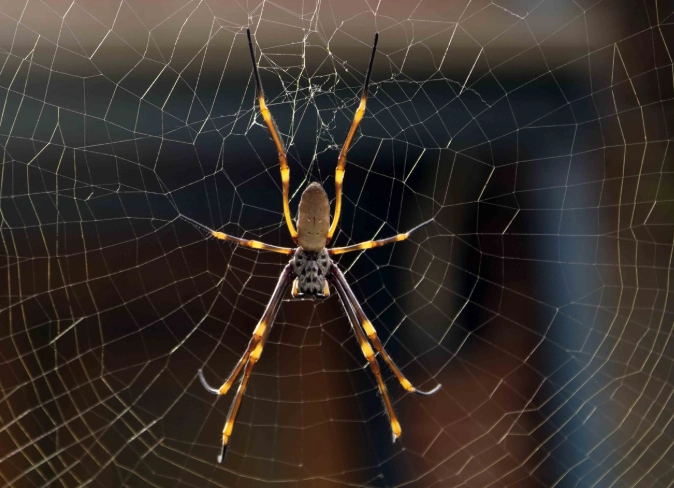
Let's get straight to it. Asking "how big are orb weaver spiders" is like asking how tall people are. There's no single answer. The family Araneidae is huge, containing over 3,000 species. Their size range is incredible. I remember the first time I saw a fully grown Argiope aurantia (the black and yellow garden spider) in my mom's flower bed. I was a kid, and its body alone seemed as big as my thumb. I was convinced I'd found a monster. Turns out, it was just a normal, healthy female doing her thing.
But then, in the same garden, I'd see these tiny, delicate orb webs in the lavender bushes with a spider no bigger than a pencil eraser. Both were orb weavers. That's the first key thing to understand—the diversity is staggering.
The Quick Answer: Orb weaver spider size ranges from a tiny 3-4 mm (about the size of a sesame seed) for small male species, all the way up to a leg-span of over 100 mm (4 inches) for large female tropical species. Your common backyard orb weaver usually has a body length of 1 to 2.5 cm (0.4 to 1 inch).
Breaking Down the Numbers: Body Size vs. Leg Span
When people ask "how big are orb weaver spiders," they're usually picturing the whole spider, legs and all. But in the arachnid world, we often measure two things separately: body length (cephalothorax + abdomen) and total leg span. This matters because some spiders have compact bodies with long, spindly legs, while others are more stout.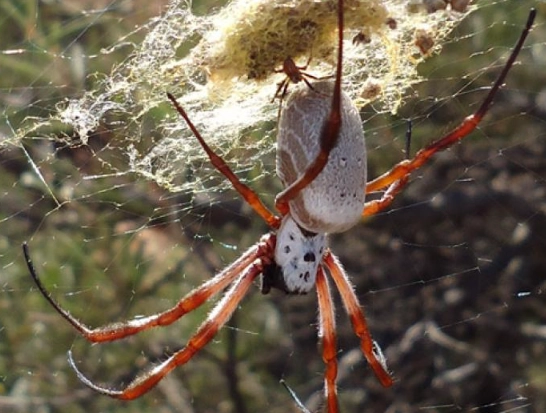
For orb weavers, the abdomen is often the largest part. A female's abdomen, full of eggs, can become impressively rotund. The leg span, however, is what gives you that "whoa" factor when you see one stretched across its web. The first pair of legs is typically the longest, often used for sensing vibrations and manipulating silk.
A Note on Measurement: Most reliable sources, like university entomology departments, measure spiders in millimeters (mm). It's more precise. When you see sizes in inches, it's often an approximation. A 25 mm spider is roughly one inch. Keeping that in mind helps when reading scientific data.
The Heavyweights: Common Large Orb Weaver Species
Let's talk about the spiders that make people gasp. These are the ones that truly define how big orb weaver spiders can get in many people's minds.
The Black and Yellow Garden Spider (Argiope aurantia) is the classic. Females are the stars. Their bodies can reach 25-28 mm (about an inch) long, with a leg span stretching to 70-80 mm (3 inches). Their abdomens are that iconic bright yellow and black pattern. Males? Tiny. Often less than 8 mm. It's one of the most extreme cases of sexual size dimorphism in the spider world.
The Banded Garden Spider (Argiope trifasciata) is another common large one. Slightly smaller than its yellow cousin, but still imposing, with females reaching about 20-25 mm in body length.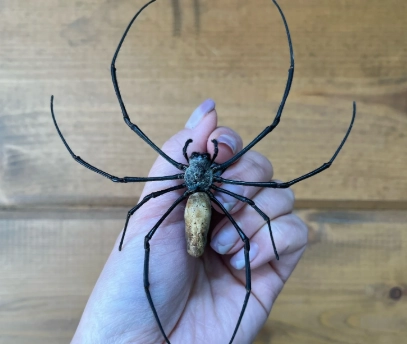
Now, if you want to see real size, look to the tropics. The Golden Silk Orb-Weaver (Nephila species) is famous. Found in warmer regions around the world, including the southern US, the females of some Nephila species can have a body length of 30-50 mm and a leg span well over 100 mm (4+ inches). Their strong, golden webs are legendary. I've seen one in Florida, and even knowing the facts, the scale is startling when you're standing next to it.
Then there's the European Garden Spider (Araneus diadematus), very common across North America and Europe. Females are robust, with a body length of 10-18 mm and a leg span up to 40 mm. They're the chunky, often cross-marked spider you see everywhere in fall.
The Small Fry: Tiny Orb Weavers You Might Miss
For every giant garden spider, there are dozens of small orb weaver species. You probably walk past them every day. They build perfect, miniature webs in tall grass, between small branches, or in the corners of your windows.
Genera like Mangora or Cyclosa contain many small species. The Lined Orbweaver (Mangora gibberosa), for example, has a body length of only 3-5 mm. It's greenish and builds its web in low vegetation. The Trashline Orbweaver (Cyclosa turbinata) is similarly small, around 4-7 mm, famous for decorating its web with debris and old prey carcasses.
Males of almost all orb weaver species are significantly smaller than females. It's not uncommon for a male to be 1/4th or even 1/10th the size of a mature female of the same species. His job is to find her, mate, and not get eaten. A smaller size might make him less threatening and more agile for that dangerous courtship.
It's easy to get fixated on the big, showy spiders. But I have a soft spot for the tiny orb weavers. On a dewy morning, their webs look like fields of beaded jewelry. They're a reminder that complexity and beauty in nature aren't reserved for the large.
Orb Weaver Spider Size Comparison Table
To really visualize how big different orb weaver spiders can get, here's a table comparing some common and notable species. This should put things into perspective. Remember, "Body Length" is just the spider's main body, not including legs.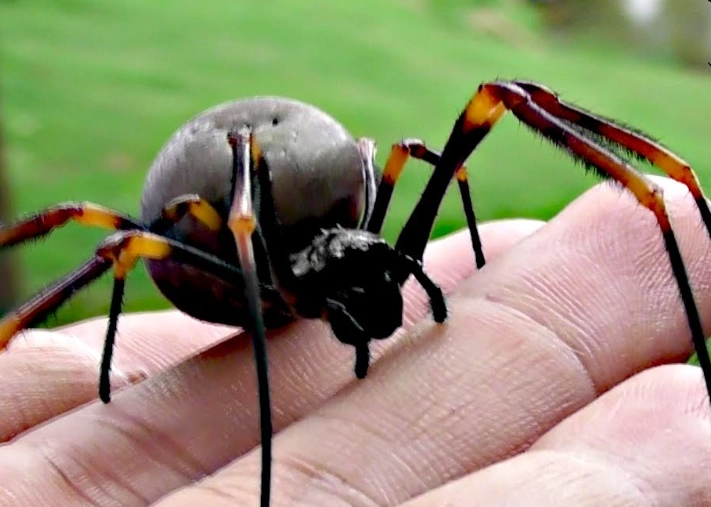
| Common Name | Scientific Name | Female Body Length | Approx. Leg Span | Key Regions |
|---|---|---|---|---|
| Black & Yellow Garden Spider | Argiope aurantia | 19 - 28 mm (0.75 - 1.1 in) | Up to 70-80 mm (3 in) | North America |
| Golden Silk Orb-Weaver | Nephila clavipes | 25 - 40 mm (1 - 1.6 in) | 100 - 120 mm (4+ in) | SE US, Tropics |
| European Garden Spider | Araneus diadematus | 10 - 18 mm (0.4 - 0.7 in) | Up to 40 mm (1.6 in) | North America, Europe |
| Banded Garden Spider | Argiope trifasciata | 15 - 25 mm (0.6 - 1 in) | Up to 60 mm (2.4 in) |
See the range? From under an inch to over four inches across.
What Makes an Orb Weaver Grow So Big (or Stay So Small)?
It's not random. Several key factors determine how big an individual orb weaver spider will get. Understanding these helps explain the variation you see, even within the same species in your own yard.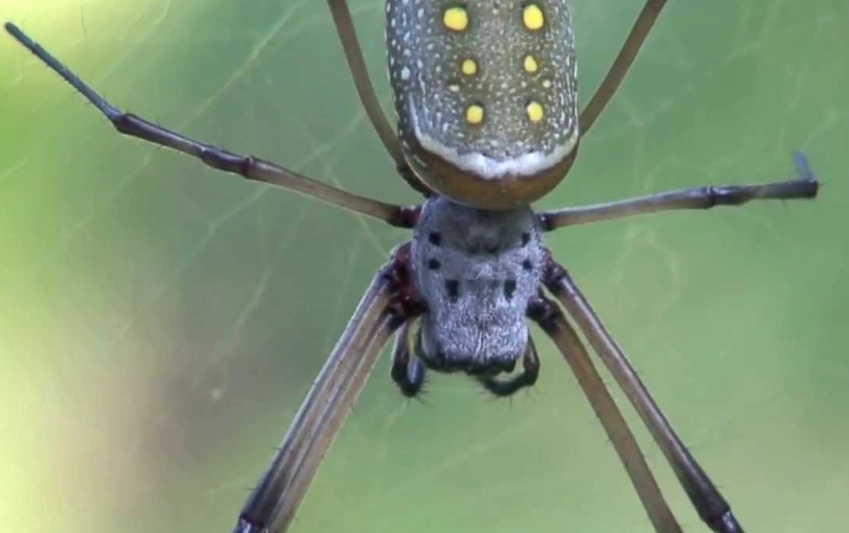
1. Species and Genetics (The Blueprint)
This is the most obvious one. A Cyclosa spider is genetically programmed to be small. A Nephila is programmed to be large. You can't fight genetics. This sets the upper and lower limits.
2. Food, Food, and More Food
Nutrition is huge. A spider with a territory rich in flies, mosquitoes, grasshoppers, and moths will grow larger and faster than a spider of the same species in a lean area. It's a direct correlation. A well-fed spider can molt more successfully into a larger instar (growth stage). I've noticed the orb weavers near my porch light, a bug buffet, are consistently plumper than the ones in the quieter corners of the yard.
3. Gender: The Great Divide
We have to mention it again because it's so critical. In orb weavers, females are almost always larger, often dramatically so. Her body needs to produce hundreds of eggs. That takes resources and space. The male's sole purpose after maturity is to find a mate. A smaller size might be an advantage for that risky journey.
4. Age and Molting
Spiders grow by molting—shedding their exoskeleton. A spiderling will molt several times before reaching adulthood. Each successful molt means a larger spider. How many molts and how much it grows each time influences final size. An older spider is generally a bigger spider, up until it reaches maturity.
5. Environmental Conditions
A longer, warmer growing season allows for more feeding and growth time. This is why orb weavers in Florida or Texas often seem larger than their cousins in Canada. Humidity matters too for successful molting. A dry spell can be tough on them.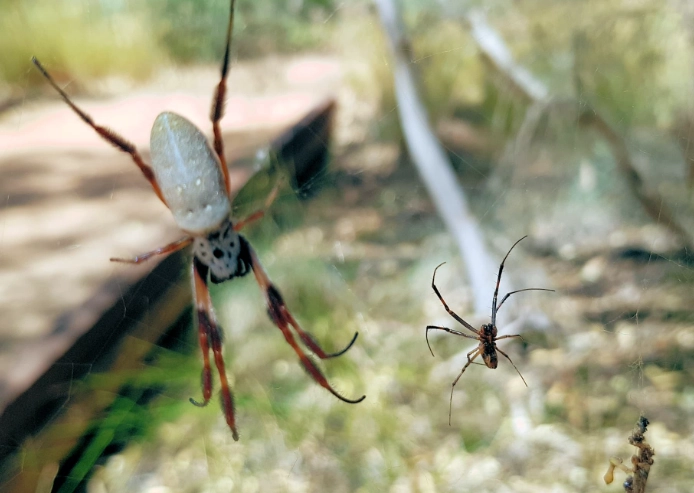
A Common Misconception: People sometimes think a huge orb weaver must be "old." While age is a factor, a large female garden spider in late summer is often only a year old, or even just a few months old! She grew fast because conditions were right. Their lifespan is usually a single season.
How to Estimate the Size of an Orb Weaver in Your Garden
You see one. You don't have a ruler. How can you get a good sense of how big that orb weaver spider is? Use common objects for comparison.
- A U.S. Quarter: About 24 mm in diameter. If the spider's body is close to this, it's a large female.
- A U.S. Penny: About 19 mm. A body this size is a solid, mature orb weaver.
- A standard Pencil Eraser: Roughly 5-7 mm. This is the realm of many small species or males.
- Your Thumbnail: Varies, but often 15-20 mm wide. A good quick guide.
For leg span, look at the overall footprint. Does it cover the palm of your hand? That's a big one (70-100 mm). Is it about the size of a bottle cap? That's small (20-30 mm).
The web can also be a clue. Large spiders generally build large, robust webs. A web spanning two feet across between shrubs is almost certainly the work of a sizable spider. A tiny, dense web in the grass suggests a small architect.
Answering Your Burning Questions About Orb Weaver Size
Are larger orb weaver spiders more dangerous?
This is the number one concern. The short answer is no. The size of an orb weaver has almost no bearing on the danger it poses to humans. Orb weavers are, as a family, extremely reluctant to bite. They'd much rather flee or play dead. Their venom is designed for immobilizing insects, not harming mammals.
Even the massive Golden Silk Orb-Weaver's bite is considered medically insignificant for humans—often compared to a bee sting, if you could even get it to bite you, which is difficult. A resource from the University of Michigan's BioKids project clearly states their harmlessness. The small ones and the large ones are equally safe. Fear should not be based on their dimensions.
Does a bigger spider mean a bigger web?
Generally, yes. There's a correlation. A larger spider can produce more silk and needs a sturdier, larger web to support its weight and catch enough prey to sustain its body. A giant Nephila web can be over a meter wide. But some smaller orb weavers also build proportionally large webs. It's not an absolute rule, but it's a good guideline.
What is the absolute largest orb weaver spider in the world?
This title often goes to the Giant Golden Orb-Weaver (Nephila pilipes). Found in tropical and subtropical Asia and Australia, females can have a body length of 40-50 mm and a staggering leg span of up to 150-200 mm (6-8 inches). That's as big as a dinner plate. The Australian Museum has information on these impressive, yet still non-dangerous, giants. Their webs are incredibly strong, sometimes even capable of snagging small birds (though they don't eat them).
Why do I see the biggest orb weavers in the fall?
Perfect observation! In temperate climates, orb weavers hatch in spring. They spend the summer eating and growing. By late summer and early fall, the females have reached their maximum size. They are also heavy with eggs, making their abdomens look exceptionally large. It's their final, impressive display before they create an egg sac and die with the first hard frost. So, fall is peak size season.
Can I tell a spider's age by its size?
Not reliably. As mentioned, food and conditions play a huge role. A well-fed spider in a great location can reach maturity (and thus its full size) faster than a struggling spider of the same age. A large spider is a successful spider, not necessarily an old spider. Most orb weavers live only one season anyway.
The Lifecycle of Size: From Egg to Giant
To truly grasp how big orb weaver spiders get, it helps to follow their journey. They don't start out large.
Egg Sac: Hundreds of tiny spiderlings hatch, each barely a millimeter long.
Dispersal: They balloon away on silk threads. At this stage, they are almost microscopic specks.
Growing Season: They find a spot, build a small web, and start hunting. Each successful molt increases their size. Growth isn't always steady; a big meal can trigger a molt. You might have seen a spider that looks unusually small for its web—it's probably a juvenile that just moved in and will soon grow to fit it.
Maturity: The final molt brings them to their adult size. For females, this is when they achieve their maximum dimensions. For males, they stop growing and start wandering.
Senescence: After laying eggs, a female's condition may decline, but her size remains.
Living Alongside Orb Weavers: A Size-Appropriate Approach
Now that you're an expert on how big orb weaver spiders can get, what should you do when you find one?
For Large Orb Weavers (e.g., Argiope, Nephila): Appreciate them from a slight distance. Their webs are masterpieces. They are phenomenal natural pest control. If the web is in a walkway, you can gently encourage the spider to move by carefully breaking the supporting threads on one side in the evening. She'll usually rebuild nearby in a better spot overnight. Never use pesticides on them; it's overkill for such a beneficial creature.
For Small Orb Weavers: They're harmless helpers. Let them be in your garden beds, shrubs, and window eaves. They're tackling the tiny gnats and flies.
The core idea is this: their size, whether intimidating or minuscule, is not a threat indicator. It's simply a result of their species, sex, and dinner menu. The largest garden spider is just as benign as the tiniest.
Final Thought: The next time someone asks you, "How big are orb weaver spiders?" you can tell them the full story. They range from near-invisible jewelers of the grass to palm-spanning aerial engineers. That incredible variation is part of what makes them so fascinating. Their size is a feature of their ecology, not a measure of their intent. So take a closer look, use a coin for scale, and maybe even thank them for the free pest control. Once you get past the initial shock, they're really quite marvelous neighbors.
If you're keen on identifying the specific orb weaver in your yard, consider using a community science resource like BugGuide, where experts can help ID from a photo. It's a great way to learn more about the specific size and habits of your local eight-legged residents.
LEAVE A REPLY
Your email address will not be published. Required fields are marked *