Your Quick Guide to Spider Identification
- Why Mixing Them Up is a Big Deal
- Side-by-Side: The Ultimate Visual Breakdown
- The Bite: Symptoms and What to Do (The Important Part)
- Geographic Range: Are You Even in Their Neighborhood?
- Common Questions and Straight Answers
- The Ecological Role: Not All Spiders Are Pests
- Final Thoughts: Knowledge Over Fear
Let's be honest, most of us see a spider and our first instinct isn't to pull out a field guide. It's usually a mix of a jump and a vague sense of "should I be worried?" That feeling gets a whole lot sharper when you live in areas where the brown recluse calls home. I've been there—staring at a leggy shadow in the garage, heart doing a little tap dance, wondering if I'm looking at a harmless hunter or a potential problem. The confusion between a brown recluse and a wolf spider is incredibly common, and honestly, a lot of online info just adds to the noise.
This isn't just about satisfying curiosity. Getting this brown recluse compared to wolf spider identification wrong has real consequences. One is a mostly benign, if startling, roommate. The other carries a venom that, while rarely life-threatening, can cause significant tissue damage. So let's cut through the myths and the fuzzy photos. We're going to break down exactly how to tell them apart, what to do if you find one, and why wolf spiders get such a bad rap they don't deserve.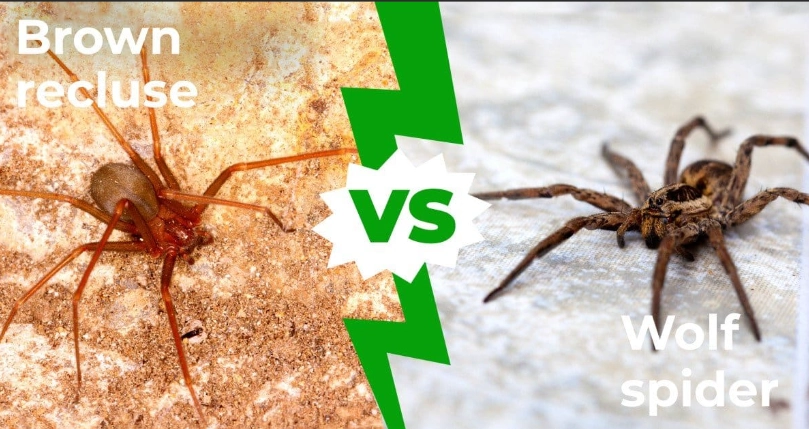
Quick Reality Check: If you suspect you've been bitten by a brown recluse, don't spend time reading articles—seek medical attention, especially if you develop a worsening sore, fever, or chills. This guide is for identification and prevention, not a substitute for professional medical advice.
Why Mixing Them Up is a Big Deal
You might think, "It's just a spider." But the stakes in this particular comparison are unusually high. The core of the issue lies in their venom and their behavior.
The brown recluse (Loxosceles reclusa) possesses a cytotoxic venom. That's a fancy way of saying it can damage cells and tissues around the bite site. For most people, a bite might just be a red, itchy bump. But for some, it can develop into a necrotic lesion—a nasty sore where the skin and underlying tissue break down. Healing can be slow and may leave a scar. The bite itself is often painless at first, which means you might not even know what caused the sore that appears hours later. This delayed reaction is part of what makes it tricky.
Wolf spiders (a whole family called Lycosidae), on the other hand, are equipped with venom designed to subdue their insect prey. It's not medically significant to humans. A bite might hurt, like a bee sting, and cause some local redness and swelling, but it doesn't cause tissue death. They're also much more likely to stand their ground or even chase their prey (insects, not you!), which makes them seem more aggressive when they're really just focused on dinner.
The panic of finding a large, fast, hairy spider often leads to the wrongful accusation of it being a brown recluse. This fear fuels misidentification. I've seen countless photos in community groups where someone proudly announces they "got the recluse," and the picture is clearly a terrified wolf spider. It's a shame, because wolf spiders are fantastic pest controllers.
Side-by-Side: The Ultimate Visual Breakdown
This is where we get into the nitty-gritty. Forget just size or color—those can vary. We need to look at a combination of key features. The table below is your cheat sheet, but we'll dive deeper into each point.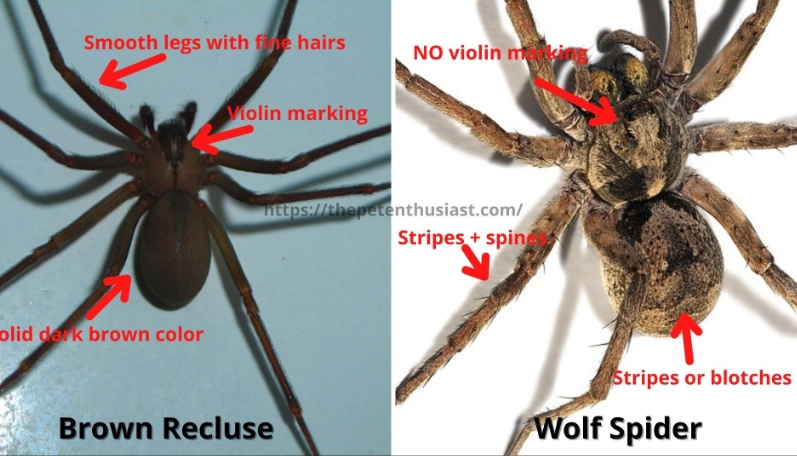
| Feature | Brown Recluse | Wolf Spider |
|---|---|---|
| Primary Marking | Violin or Fiddle Shape: A dark, distinct violin-shaped marking on its cephalothorax (the front body segment), with the "neck" of the violin pointing toward the abdomen. This is the most famous identifier. | No Distinct Violin. Their patterning is usually a mix of stripes, spots, or mottled colors (grays, browns, blacks) that provide camouflage. Think of a natural, earthy camouflage pattern. |
| Eye Arrangement | 6 Eyes in Pairs. This is a clincher. They have three pairs of eyes arranged in a semicircle (one pair in front, two pairs flanking). You'll need a magnifier, but it's a definitive trait. | 8 Eyes in 3 Rows. A large, prominent pair on the bottom row, two medium-sized eyes above those, and two small eyes on top. Their eyes often seem to "glow" or shine in flashlight light at night. |
| Body & Legs | Legs are long, slender, and smooth (no noticeable spines or thick hair). Body color is a uniform tan to dark brown. Abdomen has no noticeable pattern. | Stocky, robust, and very hairy. Their legs are powerful and spiny, built for chasing and grappling. They look muscular and "furry." |
| Size (Body Length) | About 1/4 to 1/2 inch (6-12 mm). With legs spread, about the size of a U.S. quarter. | Varies widely by species, but often 1/2 to over 1 inch (10-30 mm) in body length. Some can look impressively large with legs included. |
| Web | Makes an irregular, off-white, sticky web in undisturbed areas. This is a retreat, not a hunting net. They are not often seen on their webs. | Does not build a web to catch prey. They are active hunters. Females may spin a small silk retreat or drag an egg sac attached to their spinnerets. |
See? It's not just one thing. A brown recluse compared to a wolf spider is like comparing a stealthy, smooth operator to a hairy, athletic linebacker. The violin mark is a great first clue, but you must check other signs because some other harmless spiders can have vaguely fiddle-like marks. The eye pattern and leg hair are the real giveaways.
Getting Up Close: Eyes and Hair
If you can safely get a closer look (a clear photo through a jar works), the eyes settle the debate. A brown recluse's six-eye arrangement is unique among common U.S. spiders. Most spiders, including wolf spiders, have eight. The University of California's Statewide Integrated Pest Management Program has excellent, clear diagrams of spider eye patterns that show this difference perfectly. You can check out their resource on general pest identification—it's a trustworthy, non-commercial source.
Then, feel the vibe—figuratively, of course. Wolf spiders are shaggy. Their bodies and legs are covered in hair that helps them sense vibrations. Brown recluses look almost sleek in comparison. No thick fur coat, just fine, short hairs.
Behavior and Habitat: Where You Find Them Tells a Story
This is a huge part of the brown recluse compared to wolf spider puzzle. Their lifestyles are opposites.
Brown Recluses are secretive and, as the name says, reclusive. They don't want to see you. They seek out dry, undisturbed, enclosed spaces. Think:
- The very back of a closet
- Behind furniture that never moves
- In cardboard boxes stored in an attic or basement
- In seldom-used shoes or gloves
- In the folds of bedding or towels in a spare room
They are nocturnal and usually only bite when pressed against skin—like when you put on a shoe they've crawled into. They aren't aggressive. Their web is a messy, sticky tangle used as a daytime retreat, not for catching food. They wander out at night to hunt.
Wolf Spiders are the roaming hunters. They are active day and night and are often seen on the move. You'll find them:
- On the ground in gardens or under leaf litter
- In basements or garages, chasing crickets
- Occasionally wandering into homes through cracks, especially in fall
- Near exterior doors or in window wells
They are visual hunters with great eyesight. If you see a large, fast spider sprinting across your basement floor, it's almost certainly a wolf spider. A brown recluse would be scurrying for the nearest dark crack. Female wolf spiders are also famous for carrying their egg sacs attached to their spinnerets, and later, the spiderlings ride on her back for a short time—a sight you'll never see with a recluse.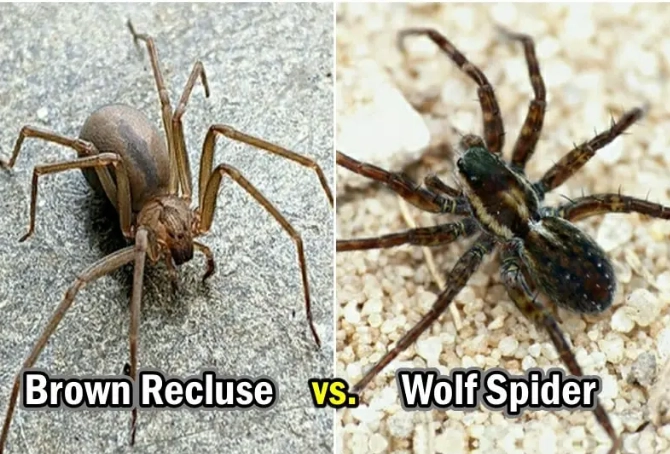
A Personal Note: I once spent twenty minutes trying to get a good photo of a wolf spider in my garden. It was alert, turning to face me, and would dash under a leaf if I got too close. It felt like a stand-off with a tiny, eight-legged tiger. A brown recluse? You'd be lucky to see one at all before it vanishes.
The Bite: Symptoms and What to Do (The Important Part)
This is the section that causes the most anxiety, so let's be clear and calm. Remember, bites from both are relatively rare. They'd rather avoid you.
If You Suspect a Brown Recluse Bite
First, stay calm. Not all bites become severe. But you must monitor it closely.
Initial Symptoms (First few hours): Often minimal. You might feel a mild stinging or nothing at all. A small red bump may appear.
Progression (24-48 hours later): This is the critical window. The site may become painful, itchy, and develop a bullseye appearance—a red ring with a pale or bluish center. In more serious cases, a blister forms, and the center can become an ulcer (necrotic lesion) as the tissue breaks down.
Systemic Reactions (Rare): Fever, chills, nausea, or muscle aches. This requires immediate medical care.
What to DO:
1. Clean the bite with soap and water.
2. Apply a cool compress to reduce swelling and pain.
3. Elevate the area if possible.
4. Take an over-the-counter antihistamine for itching and a pain reliever like acetaminophen.
5. SEEK MEDICAL ATTENTION if you develop a worsening, painful sore, blistering, or any systemic symptoms. If possible, bring the spider (safely contained) for positive identification. The CDC provides guidelines on managing arthropod bites, which emphasize cleaning and monitoring for infection, a key risk with any skin break. You can find their general first-aid advice on their website.
What NOT to Do:
- Do NOT cut or try to suck out the venom. This is an old movie trope and causes more harm.
- Do NOT apply a tourniquet.
- Do NOT use electric shock or folk remedies.
Wolf Spider Bite Reaction
It's straightforward: localized pain, redness, itching, and swelling. It's similar to a bee sting. The discomfort usually fades within a few hours to a couple of days. Clean the area with soap and water, use a cold pack, and take pain meds if needed. Infection is the main concern, just like with any minor puncture wound. I've been nipped by a wolf spider while moving firewood—it was a sharp pinch and left a red spot for a day. No drama.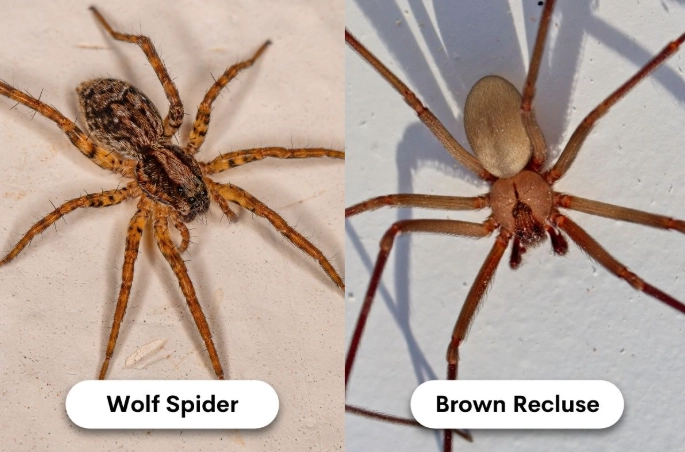
Key Takeaway: The major difference in a bite from a brown recluse compared to a wolf spider is the potential for tissue necrosis and the delayed, worsening reaction with the recluse. Wolf spider bites are acute and resolve quickly.
Geographic Range: Are You Even in Their Neighborhood?
This is a massive point of confusion and one where many online guides fail. You cannot have a brown recluse in your house if you don't live in their native range. They are not everywhere.
Brown Recluse Range: They are native to the south-central United States. The core range includes states like Missouri, Kansas, Oklahoma, Arkansas, Louisiana, Mississippi, Alabama, Georgia, Tennessee, Kentucky, southern Illinois, southern Indiana, and parts of Texas, Ohio, and Nebraska. Isolated populations can be found at the edges. If you live on the East Coast (e.g., New York, Massachusetts), the West Coast (California, Washington), or the far North, it is extremely unlikely you have a native brown recluse population. Specimens are sometimes transported in boxes, but established infestations outside their range are rare. The University of Florida's entomology department has published detailed maps that clearly outline this limited, albeit expanding, range.
Wolf Spider Range: They are found everywhere in the United States and across most of the world. There are over 200 species in North America alone. If you see a spider, chances are higher it's a wolf spider just by the law of averages.
So, before you panic about a fiddleback, check a map. Many "brown recluse bites" reported outside its range are actually infections, bites from other insects, or reactions to something else entirely.
Common Questions and Straight Answers
- Seal cracks and gaps around doors, windows, and foundations.
- Install tight-fitting door sweeps.
- Reduce outdoor lighting that attracts insects (which attract spiders), or use yellow bug lights.
- Keep vegetation and mulch away from the house foundation.
- For brown recluses specifically: Reduce indoor clutter. Store items in plastic, sealed totes instead of cardboard boxes. Shake out shoes, gloves, and towels that have been stored before using them.
The Ecological Role: Not All Spiders Are Pests
It's easy to label all spiders as creepy and unwanted. But in the grand brown recluse compared to wolf spider discussion, their roles in the ecosystem are worth noting.
Wolf spiders are major predators in the food web. They help control populations of insects that can damage crops or become household nuisances. They're a sign of a healthy, balanced garden ecosystem.
Brown recluses also play a role in controlling other small arthropods in their niche. However, due to their medical significance to humans, the goal in homes is peaceful coexistence through exclusion, not encouraging their presence. Understanding their preference for clutter helps us manage our spaces to avoid unwanted encounters.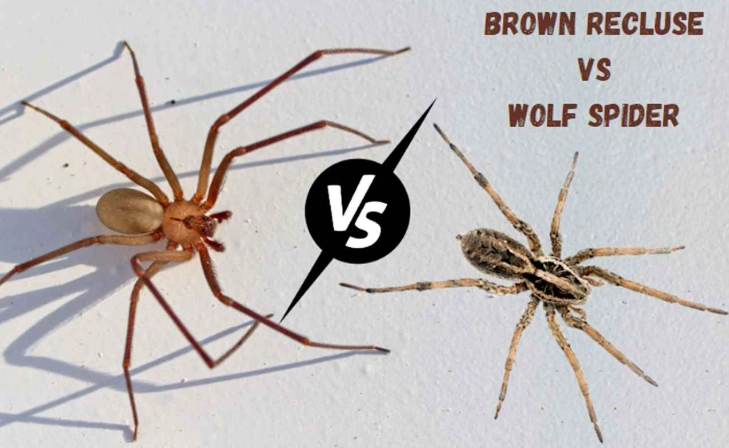
Final Thoughts: Knowledge Over Fear
At the end of the day, the goal here isn't to make you afraid of spiders. It's to replace that vague fear with specific knowledge. Knowing the clear, multi-point differences between a brown recluse and a wolf spider empowers you to assess a situation realistically.
You'll know that the big, hairy speedster in the basement is just a wolf spider on patrol—a free pest control agent. And you'll understand that the real concern is the smaller, smoother, reclusive spider hiding in the undisturbed corners of your storage room, especially if you live in the right part of the country.
Use the checklist: geography first, then look for the violin (but don't stop there), imagine the eyes and the hair. Consider where you found it. That thoughtful, step-by-step identification is far more reliable than a panicked guess. It turns an "Oh no, a spider!" into a "Huh, that's a wolf spider. Cool." And that's a much better way to live.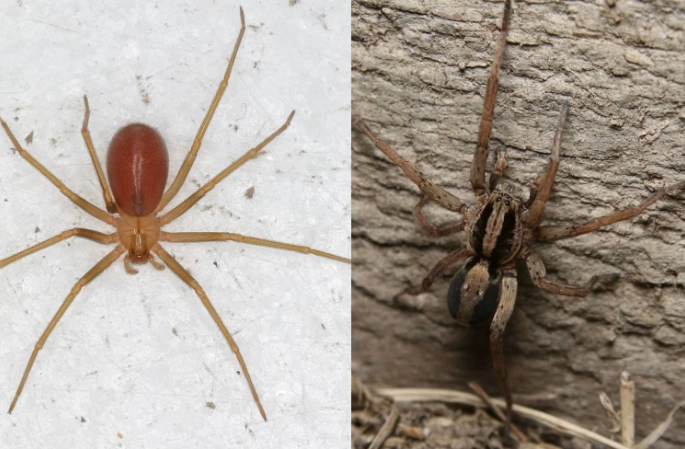
Remember: When in doubt, take a clear photo from above and the side (safely) and consult a reliable source, like a local university extension service website. They have entomologists who can help. Avoid the sensationalist "bug identification" sites that thrive on fear. Accurate information is your best tool for safety and peace of mind.
LEAVE A REPLY
Your email address will not be published. Required fields are marked *