What’s Inside
- What Exactly is a White Crane Fly?
- The Secret, Underground Life: The Crane Fly Larva
- Crane Fly vs. Mosquito: The Ultimate Showdown (Spoiler: The Fly Wins on Harmlessness)
- Are White Crane Flies Dangerous or Pests?
- Why Are They in My House? (And How to Gently Usher Them Out)
- The White Crane Fly Lifecycle: A Brief, Poetic Journey
- Beneficial or Not? Their Role in the Ecosystem
- Your White Crane Fly Questions, Answered (FAQ)
- Final Thoughts: A Plea for Tolerance
You know the scene. It's a quiet evening, you're settled in, and then you see it. This enormous, gangly, mosquito-on-steroids-looking thing bouncing clumsily off your lampshade or window. Its legs seem to go on forever, and its body is often a pale, almost translucent white or grey. Your first instinct might be panic. Is it a giant mosquito? Is it going to bite me? Should I call an exterminator? Let me stop you right there. Take a deep breath. What you're looking at is almost certainly a white crane fly, and I'm here to tell you that almost everything you fear about it is wrong.
I've been there. The first time I saw one in my basement, I nearly jumped out of my skin. I grabbed the nearest magazine, ready for battle against this presumed blood-sucking monstrosity. But a little curiosity (and a failed swat that left it unharmed) led me down a rabbit hole. What I found completely changed my view. This isn't a pest. It's more like a clumsy, harmless visitor that gets a terrible reputation just for looking like something it's not.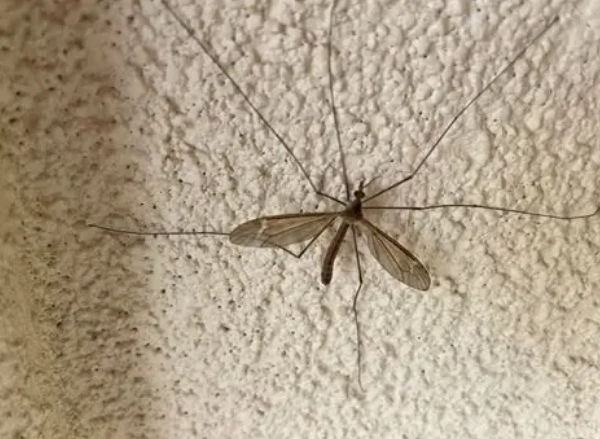
What Exactly is a White Crane Fly?
Let's clear up the name first. "White crane fly" isn't one single scientific species. It's a common name people use for crane flies (family Tipulidae) that have paler, often greyish or whitish bodies. The most common ones you find bumping around your house likely belong to genera like Tipula or Nephrotoma. They're part of the insect order Diptera, the true flies, which means they have two wings. Mosquitoes are also in Diptera, which explains the distant family resemblance, but that's where the similarity ends.
Think of them as the gentle giants of the fly world. While most of the buzz (pun intended) is about their aerial adult form, the real story of the white crane fly happens underground.
The Anatomy of a Misunderstood Insect
What does a white crane fly look like up close? Forget the mosquito comparison. Their body is slender and fragile, typically 1 to 2.5 cm long, not including the legs. The color can range from a yellowish-brown to a distinct pale grey or off-white, which is where the "white" in the common name comes from. The wings are large, transparent, and have a distinctive network of veins. And then there are the legs. Oh, the legs. They are incredibly long, thin, and brittle. They break off easily, which is actually a defense mechanism—a predator ends up with a leg while the fly makes its escape. Not the most elegant strategy, but it works.
A key feature is the V-shaped groove on its thorax (the middle body segment). Look for that if you want to be sure it's a crane fly and not something else. Also, they have a elongated face, not a piercing proboscis. They can't bite you. The mouthparts of the adult white crane fly are basically vestigial; some species might sip a little nectar or dew, but many don't eat at all as adults. Their entire adult life is a short, single-minded mission to find a mate and reproduce.
The Secret, Underground Life: The Crane Fly Larva
If the adult white crane fly is the harmless, ephemeral ghost, the larva is the gritty reality. This is the stage that actually interacts with our world in a meaningful way. The larvae are called "leatherjackets" because of their tough, greyish-brown skin. They look like plump, legless worms or caterpillars, and they live in the soil, in decaying wood, or in moist leaf litter.
Here's where opinions get divided. What do white crane fly larvae eat? It depends entirely on the species. This is a massive family with diverse diets.
- Decomposers: Many species are detritivores. They munch on decaying plant matter, fallen leaves, and rotting wood. They're nature's little recyclers, breaking down organic material and enriching the soil. I think of them as the earthworms of the fly world.
- Root Munchers: Some species, particularly in the genus Tipula, feed on the roots and crowns of grasses and other plants. This is the origin of their bad reputation in agriculture and lawn care. In large numbers, they can damage turfgrass, leaving brown patches. But let's be real—in a typical home garden or lawn, they're rarely numerous enough to cause significant harm unless the conditions are perfect for a population boom (consistently wet soil is a big factor).
- Predators: A few species are even predatory, eating other small soil organisms.
So, is the white crane fly larva a pest? Sometimes, for specific crops or meticulously maintained golf courses. For the average gardener? Probably not. They're just part of the soil's fauna. The University of California's Statewide Integrated Pest Management Program has a great resource that breaks down when crane fly larvae are a concern and when they're not, which helps put their impact in perspective.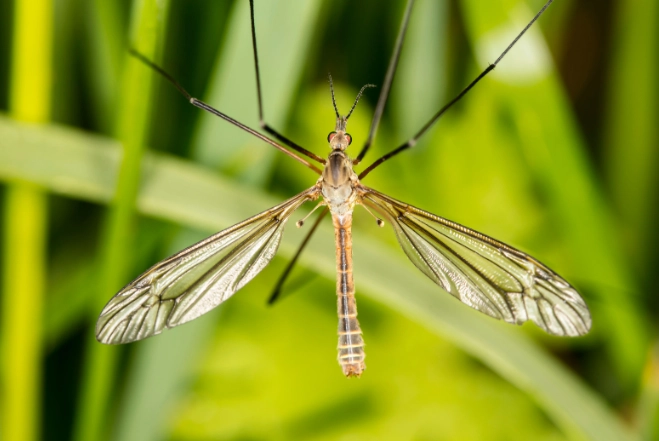
Crane Fly vs. Mosquito: The Ultimate Showdown (Spoiler: The Fly Wins on Harmlessness)
This is the biggest source of confusion. People see long legs and a flying insect and think "MOSQUITO!" Let's settle this once and for all with a clear comparison.
WingsTwo large, clear wings with many veins. Rests with wings open or slightly spread.Two narrow, scaled wings. Rests with wings folded over body.| Feature | White Crane Fly | Mosquito |
|---|---|---|
| Size | Large (1-2.5 cm body), very long, spindly legs. | Small (0.3-1 cm), delicate, shorter legs. |
| Body Posture | Hangs with legs splayed out, often looking awkward. | Holds body parallel to surface, more poised. |
| Mouthparts | No biting parts. May have a short, soft snout for sipping. | Long, piercing proboscis for sucking blood. |
| Flight | Slow, clumsy, bumbling, easily caught. | Quick, agile, evasive, annoying buzz. |
| Sound | Mostly silent. | Distinctive high-pitched whine. |
| Intent | Wants to find a mate, then die. Ignores humans. | Actively seeks humans/animals for a blood meal. |
| Danger | Zero. Cannot sting or bite. | Can bite, itch, and transmit diseases. |
See the difference? It's night and day.
So, how can you be sure it's a crane fly and not a mosquito? The size is the first clue—it looks like a mosquito that hit a growth hormone. The flight pattern is a dead giveaway. Mosquitoes are nimble and irritatingly good at dodging your hand. A white crane fly flies like it's had one too many, drifting lazily and bumping into things. If you can easily cup it in your hands, it's a crane fly.
Are White Crane Flies Dangerous or Pests?
Let's break this down for humans, pets, and plants.
To Humans and Pets
Absolutely not dangerous. I cannot stress this enough. They have no venom, no sting, no biting apparatus. Your dog or cat might bat one around out of curiosity, but eating one might just lead to a weird texture experience for them, not poisoning. The biggest "danger" is the startle factor when one unexpectedly flies near your face. That's a you problem, not a crane fly problem.
To Your Garden and Lawn
This is the nuanced part. The adult white crane fly does no damage to plants. They don't eat them. The larvae, as mentioned, might feed on roots. The key question is: are there enough of them to matter?
Most of the time, they're minor players in the soil ecosystem. If you have a healthy, diverse garden with good predator populations (birds, beetles, parasitic wasps), crane fly numbers are kept in check naturally. Reaching for pesticides for the occasional white crane fly sighting is overkill and harms the beneficial insects you actually want around.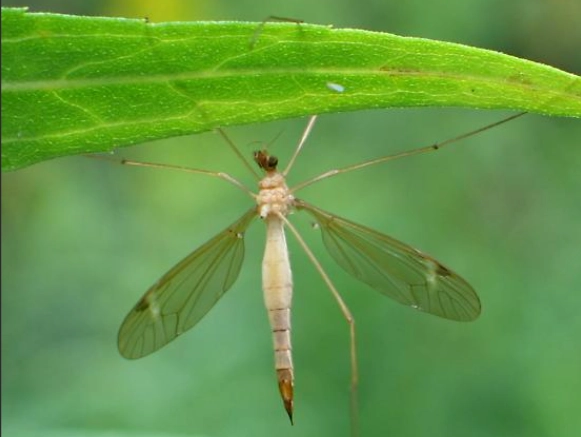
Why Are They in My House? (And How to Gently Usher Them Out)
White crane flies are not house pests. They don't want to be in your home. They don't breed there, eat your food, or lay eggs in your carpets. They are terrible fliers and are often drawn to lights at night. An open door or window on a summer or early autumn evening is an invitation they clumsily accept. They also seek out cool, damp places, which is why you might find them in basements or garages.
So what's the best way to deal with a white crane fly indoors? Violence is unnecessary and, frankly, mean given their total harmlessness.
Here’s my gentle removal protocol:
- Stay calm. It's more afraid of you.
- Use a glass and a piece of paper. Slowly place the glass over it on the wall or window. Slide the paper underneath to trap it.
- Release it outside. Gently shake it out into the garden. Its lifespan is short anyway, but let it finish its life cycle outdoors.
For prevention, it's basic: install or repair window screens, use less intense outdoor lighting (or switch to yellow bug lights), and seal cracks around basement windows and doors. Reducing excessive moisture around your home's foundation can also make the area less attractive to them.
The White Crane Fly Lifecycle: A Brief, Poetic Journey
Understanding their life cycle fosters a bit of empathy. It's a story of transformation with a poignant ending.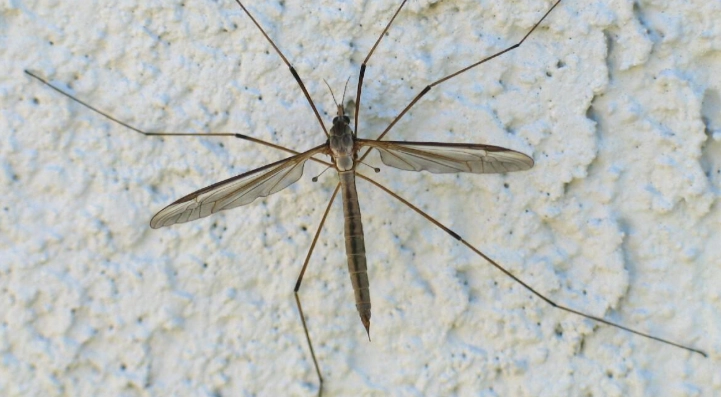
Egg
Laid in damp soil or moist organic matter by the female. She uses her pointed ovipositor to place them just right. A single female can lay hundreds of eggs, but mortality is high.
Larva (Leatherjacket)
This is the longest stage, lasting several months to over a year, depending on species and climate. They live in the soil, eating and growing through several molts. This is the stage that survives the winter.
Pupa
In spring or summer, the mature larva pupates in the soil. The pupa is dark and oblong, and after a week or two, the adult emerges.
Adult
The final act. The adult white crane fly has one purpose: reproduction. They emerge, often in synchronized swarms, to mate. Males have plumose (feathery) antennae to detect female pheromones. After mating, the females lay eggs, and then both adults die, usually within 10-15 days. They don't even have functional mouthparts in some species to waste time eating. It's a pure, brief, reproductive blaze of glory.
Beneficial or Not? Their Role in the Ecosystem
This is the part most articles skip, but it's crucial. Is the white crane fly good for anything? Absolutely.
- Soil Aerators and Decomposers: As larvae tunnel through soil and eat decaying matter, they help aerate it and speed up decomposition, releasing nutrients back for plants.
- Food Source: They are a vital link in the food chain. Adult crane flies are a key food source for birds, bats, spiders, and predatory insects. The larvae are eaten by ground beetles, birds (like starlings), and other soil predators. The Royal Entomological Society's publications often highlight the importance of such Diptera in food webs.
- Indicator Species: The presence of certain crane fly larvae can indicate healthy, moist soil ecosystems. Their absence might signal environmental problems.
Killing them indiscriminately doesn't just remove a harmless insect; it potentially robs other wildlife of food and disrupts natural soil processes.
Your White Crane Fly Questions, Answered (FAQ)
Final Thoughts: A Plea for Tolerance
Look, I get it. Insects in the house can be unsettling. The initial reaction to a large, unfamiliar bug is often fear or disgust. But with the white crane fly, that reaction is based on a case of mistaken identity.
They are not the enemy.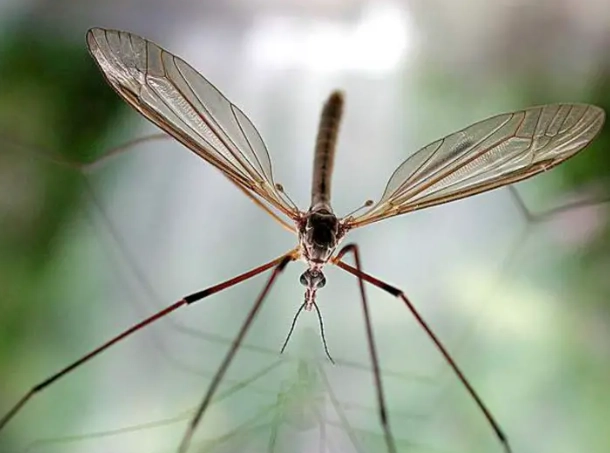
They are harmless, short-lived creatures that play a small but useful role in nature. The next time you see one of these gangly, pale flies bouncing off your window, I hope you'll see it differently. See it as a clumsy soil-dweller on its final, important mission. See it as bird food. See it as a sign that your local ecosystem has some complexity to it.
Instead of reaching for a spray or a swatter, try the cup-and-paper method. Gently put it back outside. It costs you nothing, and you get to feel like a benevolent giant in its tiny, brief life. In a world where we so often try to control and eliminate nature, letting a harmless white crane fly be is a small act of coexistence. And honestly, your lawn will probably be just fine.
LEAVE A REPLY
Your email address will not be published. Required fields are marked *