Quick Guide
- Meet the Family: The Different Types of Funnel Web Spiders
- Spotting One: What Does a Funnel Web Spider Look Like?
- Home Sweet Home: Where and How They Live
- The Venom: What Makes a Funnel Web Spider Bite So Serious?
- The Bite and What To Do: A Step-by-Step Survival Guide
- Living Alongside Them: Practical Safety and Prevention
- Beyond the Bite: Their Role in the Ecosystem and Some Cool Facts
- Your Funnel Web Spider Questions, Answered
- Final Thoughts: Respect, Not Fear
Let's cut straight to the chase. If you've ever wondered "what is a funnel web spider?", you're probably picturing something straight out of a nightmare—and honestly, you're not far off. I remember the first time I saw one in person, during a bushwalk in the Blue Mountains. It was bigger than I expected, sitting at the entrance of its web like a tiny, glossy-black sentinel. The guide pointed it out with a mix of respect and caution. That moment stuck with me, and it's why I've dug deep into everything about these fascinating, yet frankly terrifying, creatures.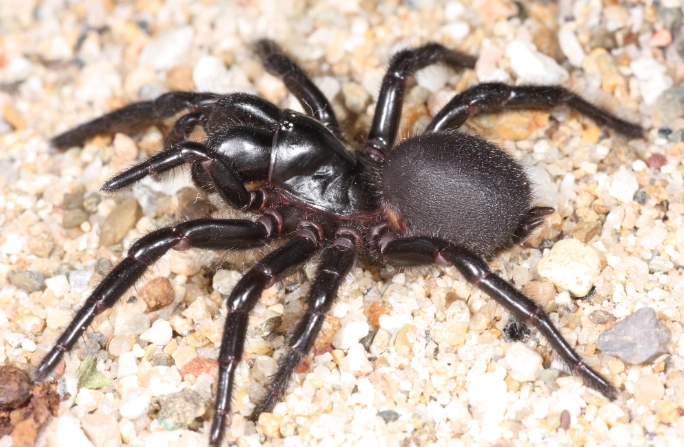
So, what is a funnel web spider, really? It's not just one spider. The term refers to a family of spiders, the Atracidae, which are pretty much exclusive to Australia. When most people ask "what is a funnel web spider?", they're usually thinking of the Sydney funnel-web (Atrax robustus). That's the celebrity of the group, the one with the worst reputation. But there are actually dozens of species. Some are more dangerous than others, but they all share that iconic funnel-shaped web and a certain... intensity.
Meet the Family: The Different Types of Funnel Web Spiders
It's a common mistake to think there's just one. The reality is more complex. The Australian Museum, which holds one of the world's leading collections, lists three main genera: Atrax, Hadronyche, and Illawarra. The Australian Museum's funnel-web resource is an absolute treasure trove of verified information and is updated regularly by actual arachnologists.
I find the variation fascinating. The Northern Tree Funnel-web (Hadronyche formidabilis) lives in rotting logs and tree hollows in northern NSW and Queensland. It's massive—one of the largest funnel-webs by body mass. Then you have the Southern Tree Funnel-web (H. cerberea) down south. The Sydney funnel-web gets all the headlines, but these others are nothing to sneeze at.
Here’s a quick breakdown of the main players to help you understand what is a funnel web spider in its various forms:
| Common Name | Scientific Name | Key Region | Notable Trait |
|---|---|---|---|
| Sydney Funnel-web | Atrax robustus | Sydney basin, NSW | Considered the most dangerous to humans. Venom is particularly potent to primates. |
| Northern Tree Funnel-web | Hadronyche formidabilis | NSW & QLD forests | One of the largest species. Potentially dangerous venom. |
| Southern Tree Funnel-web | Hadronyche cerberea | NSW south coast | Often found in moist gullies. Responsible for some bites. |
| Blue Mountains Funnel-web | Hadronyche versuta | Blue Mountains, NSW | Another species with a nasty bite. Found in cooler upland areas. |
| Toowoomba Funnel-web | Hadronyche infensa | SE Queensland | Aground-dwelling species found in the Toowoomba region. |
See? It's a whole family of formidable spiders. This variety is a big part of the answer to "what is a funnel web spider"—it's a diverse group with a shared blueprint for survival.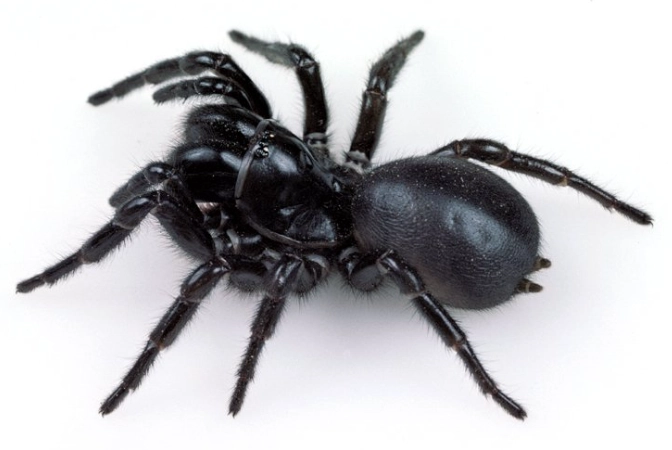
Spotting One: What Does a Funnel Web Spider Look Like?
This is probably the most practical part of knowing what is a funnel web spider. You need to be able to recognize one. I'll describe the Sydney species, as it's the benchmark.
First, size. They're not subtle. Females can have a body length up to 5 cm, with males slightly smaller but often leggier. The body is a solid, glossy black or dark brown. It looks almost like polished ebony or dark chocolate. There's no intricate patterning like you see on a garden orb-weaver. It's just pure, dense color. The carapace (the hard "head" section) is hairless and shiny, and it houses two prominent spinnerets at the rear—they look like two short, finger-like projections.
Now, the fangs. This is a critical ID point. Mygalomorph spiders like funnel-webs have their large fangs pointing straight down, parallel to each other. You can sometimes see them gleaming if the spider rears up. A huntsman spider, which people often confuse with a funnel-web, has its fangs scissor-like and sideways. Big difference.
The legs are stout and powerful, covered in fine hairs. When threatened, they adopt a classic defensive pose: rear up on their back legs, raise their front legs and head high, and expose those massive, dripping fangs. It's a posture that says "back off" in no uncertain terms. They can be surprisingly fast in this stance too.
Telling Males and Females Apart
This matters more than you might think. In the world of funnel-web spiders, the male is the bigger problem for humans. Males tend to have a smaller body but longer legs relative to females. They also have a modified second pair of legs (that mating comb I mentioned) and a spur on their second pair of legs. But the crucial difference? Behavior and venom.
Males are the wanderers. They leave their burrows, especially after summer rains, to seek females. This is when they most commonly stumble into houses, garages, and swimming pools. Female funnel-web spiders are more sedentary, staying in or near their burrows. They can live for many years—over a decade in some cases. Males live only a few months after maturing.
And here's the kicker: male Sydney funnel-web venom is significantly more toxic to humans and other primates. It contains a peptide called δ-atracotoxin, which specifically targets our nervous systems. Evolution is weird sometimes.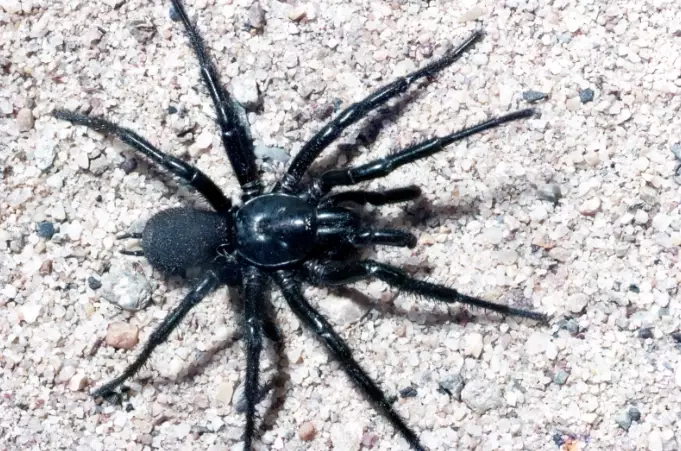
Home Sweet Home: Where and How They Live
Understanding what is a funnel web spider includes knowing their real estate preferences. They are creatures of moisture. You won't find them in the dry, arid outback. They thrive in the cool, damp forests, gullies, and sheltered urban gardens of eastern Australia, from Tasmania up to southeast Queensland.
Their signature is, of course, the funnel web. It's a sheet of silk leading into a retreat, which is often a burrow in the ground (for ground-dwelling species) or a crevice in a tree (for tree-dwelling species). The web isn't sticky like an orb web. Instead, it's a tangled, non-sticky silk tripwire system. The spider sits at the entrance to its funnel, legs touching the silk lines. When an insect—a beetle, a cockroach, another spider—walks across the web, the vibrations telegraph straight to the spider. It then dashes out, subdues the prey with its venom, and drags it back into the funnel to eat.
They're surprisingly good engineers. The burrow can be up to 30 cm deep, lined with silk, and often has a side chamber. The entrance is frequently camouflaged with leaves and twigs, or disguised under a rock or log. In your backyard, they love moist, sheltered spots: under dense shrubs, in rockeries, in compost heaps, or under the bricks of a house.
The Venom: What Makes a Funnel Web Spider Bite So Serious?
Alright, let's address the elephant in the room. This is the core of the fear, and the main reason people want to know what is a funnel web spider. Their reputation is built on their venom. But it's not simple fear-mongering; the science is solid.
The venom of the Sydney funnel-web spider is a complex cocktail of over 40 different toxins. The most significant for humans are the atracotoxins. These neurotoxins work by keeping the sodium channels in our nerve cells stuck in the "open" position. This causes neurons to fire continuously, leading to a massive overload of the nervous system.
The effects of a bite from a male Sydney funnel-web can be horrific. It's not like a bee sting that just hurts. We're talking about a systemic medical emergency. Symptoms can include:
- Local: Intense pain at the bite site, swelling, muscle twitching around the area.
- Systemic (the dangerous part): Profuse sweating, salivation, and lacrimation (tearing). Goosebumps. Nausea, vomiting, and abdominal pain. A tingling sensation around the mouth and tongue. Confusion and agitation.
- Severe: Rapid pulse, high blood pressure (followed by a dangerous drop), pulmonary edema (fluid in the lungs), and unconsciousness. Death can occur from cardiovascular collapse or respiratory failure.
The scary part is the speed. Symptoms can progress within minutes. There's no "wait and see" with a confirmed funnel-web bite.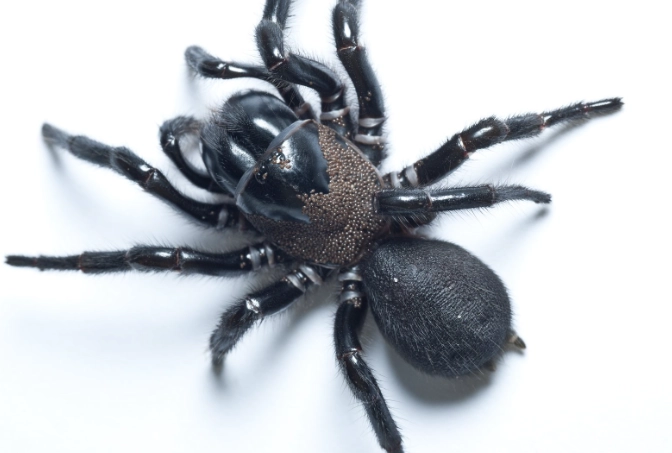
Why Are We So Vulnerable? A Quirk of Evolution
Here's a fascinating and slightly unnerving piece of the puzzle. Research, like that cited by the Australian Government's healthdirect service, suggests the venom's potency to humans might be a tragic accident. The toxins may have evolved to target insects and perhaps small vertebrates that prey on spiders. Primates, like us, just happen to have nervous systems that are uniquely sensitive to these particular toxins. It's not that the spider is "out to get us"; we just got biologically unlucky.
It's worth stressing: not all funnel-web species have venom this lethal to humans. Many bites from other species cause severe illness but are less likely to be fatal. However, you should never gamble on which species bit you.
The Bite and What To Do: A Step-by-Step Survival Guide
This is the most important information in this entire article. If you suspect a funnel-web spider bite, your actions are critical. Forget old wives' tales. Do not cut the wound, suck out the venom, or apply a tourniquet. That's movie nonsense and can make things worse.
Here is the current, medically endorsed first aid procedure, which aligns with recommendations from organisations like the Australasian Society of Clinical Immunology and Allergy (ASCIA) and the NSW Poisons Information Centre.
| Step | Action | Why It's Important |
|---|---|---|
| 1. Stay Calm | Keep the patient still and reassured. Movement increases circulation of venom. | Limits the spread of venom through the lymphatic system. |
| 2. Pressure Immobilisation | Apply a firm pressure bandage over the bite site. Then, bandage the entire limb starting from the fingers/toes upwards. Make it firm, but not so tight it cuts off circulation. | This technique, developed in Australia, uses lymphatic compression to drastically slow venom movement. It's proven and life-saving. |
| 3. Immobilise the Limb | Use a splint (or anything rigid) to keep the limb completely still. | Prevents muscle movement that pumps lymph. |
| 4. CALL FOR HELP | Dial 000 (in Australia) for an ambulance immediately. State clearly you suspect a funnel-web spider bite. | Antivenom is the only definitive treatment and must be administered in hospital. Time is critical. |
| 5. If Possible, Catch the Spider | Safely capture the spider (in a jar) for positive identification. Do not risk another bite. | Allows doctors to confirm the culprit and choose the right treatment path. |
The good news? Since the introduction of the funnel-web spider antivenom in 1981, there has not been a single confirmed death from a bite. Not one. That's an incredible public health success story. The antivenom, derived from rabbit antibodies, is highly effective. This is why getting to a hospital is the absolute priority.
Living Alongside Them: Practical Safety and Prevention
Knowing what is a funnel web spider is pointless if you don't know how to avoid them. You don't need to live in fear, just in awareness, especially if you're in their territory.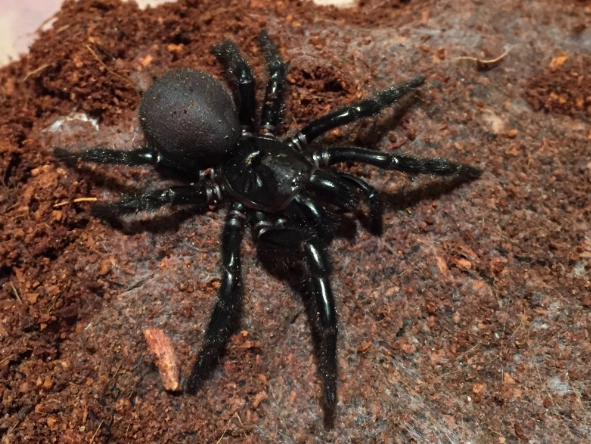
Around the House:
- Wear gloves when gardening, moving logs, rocks, or compost. I can't emphasize this enough. Just a simple pair of sturdy gloves is your best defense.
- Keep your yard tidy. Reduce thick ground cover, piles of bricks, and timber close to the house.
- Check shoes, gloves, and towels left outside before putting them on. Shake them out.
- Install fine mesh screens on windows and doors.
- Keep beds away from walls and avoid leaving clothes or towels on the floor.
Swimming Pools: A major hazard. Spiders fall in, can't climb the smooth sides, and survive for hours. They can remain alive underwater in a bubble of air for a frighteningly long time. Use a pool cover, or check the skimmer box carefully before reaching in. Teach kids not to retrieve toys without an adult checking first.
What if you find one in your house? Don't panic and don't try to whack it with a thong from the front—they can move fast and jump. The safest method is to use a large jar or container, slide it over the spider, and slip a stiff piece of cardboard underneath to trap it. Then, you can safely relocate it (if you're brave) or contact a local wildlife or pest service. Many areas have spider relocation volunteers!
Beyond the Bite: Their Role in the Ecosystem and Some Cool Facts
It's easy to demonize them, but understanding what is a funnel web spider includes seeing their ecological value. They are apex invertebrate predators in their habitat. By controlling populations of insects, other spiders, and even small invertebrates, they play a crucial role in the balance of the forest floor ecosystem.
Their venom is also a goldmine for biomedical research. Scientists are studying components of funnel-web venom for potential use in painkillers, insecticides, and even treatments for conditions like stroke. The very thing that makes them dangerous might one day save lives.
Here are a few things that surprised me while researching:
- They're ancient. Mygalomorph spiders are an old lineage. Funnel-webs are living fossils, largely unchanged for millions of years. A perfect design, I guess.
- The antivenom program. The antivenom is produced by immunizing rabbits with non-lethal doses of venom milked from spiders. Yes, there are professional spider "milkers" who carefully extract venom for this purpose. It's a risky job, but vital.
- They can't climb smooth surfaces. This is why they get trapped in sinks and baths. The porcelain is too smooth for their claws to grip.
Your Funnel Web Spider Questions, Answered
Your Funnel Web Spider Questions, Answered
Are funnel-web spiders found outside of Australia?
Generally, no. The Atracidae family is endemic to Australia. There are other spiders around the world that build funnel-shaped webs (like Agelenidae, the grass spiders), but they are not closely related and are not considered medically significant. A true funnel-web spider is an Australian phenomenon.
How likely am I to be bitten?
Statistically, very unlikely. There are only about 30-40 bites reported each year, and many of those are from males wandering into homes. Most bites occur when the spider is accidentally pressed against skin (in a shoe, glove, or bed). Vigilance in high-risk areas drastically reduces the already small risk.
My child was bitten by a spider in the garden. Could it be a funnel-web?
If you are in eastern Australia and the spider was large, dark, shiny, and had the described features, you must treat it as a medical emergency and follow the pressure immobilisation steps while calling 000. Do not wait for symptoms. If you are not in their range, it's far more likely to be a less dangerous spider, but if in any doubt, seek medical attention immediately. A photo of the spider (if safely taken) is incredibly helpful for doctors.
Can pets die from a funnel-web bite?
Dogs and cats can be affected, but their reaction is different. The venom doesn't seem to be as lethal to them as it is to primates. However, bites can still make pets very sick. Symptoms in pets include vomiting, agitation, muscle tremors, and paralysis. If you suspect your pet has been bitten, take it to a vet immediately.
What's the difference between a funnel-web and a mouse spider?
Great question, and a common confusion. Mouse spiders (Missulena) look similar—stocky, dark, and burrowing. Key differences: mouse spiders often have a more velvety appearance, and males can have a bright red head and jaws. Their fangs also point down. Crucially, while mouse spider venom is similar and potentially dangerous, bites are rare and severe envenomation is much less common. However, the official medical advice is to treat a serious mouse spider bite with the same first aid (pressure immobilisation) as a funnel-web bite, as a precaution. When in doubt, assume it's a funnel-web.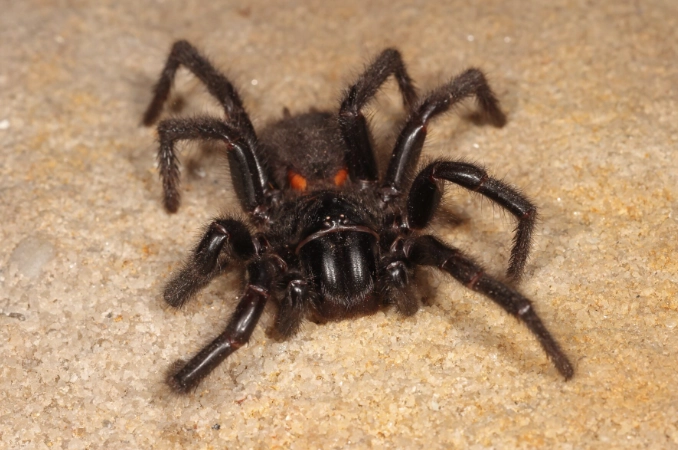
Final Thoughts: Respect, Not Fear
So, what is a funnel web spider? It's a magnificent, powerful, and potentially dangerous part of Australia's unique wildlife. Its reputation is well-earned, but it shouldn't just be a symbol of blind terror. Understanding them—their habits, their identification, and the correct response to a bite—disempowers the fear and replaces it with practical knowledge.
They are not monsters lurking behind every bush. They are animals going about their lives, playing their role in the environment. Our job is to be smart co-inhabitants. Wear the gloves. Shake out the shoes. Check the pool skimmer. Know the first aid.
That knowledge is the real antidote to fear.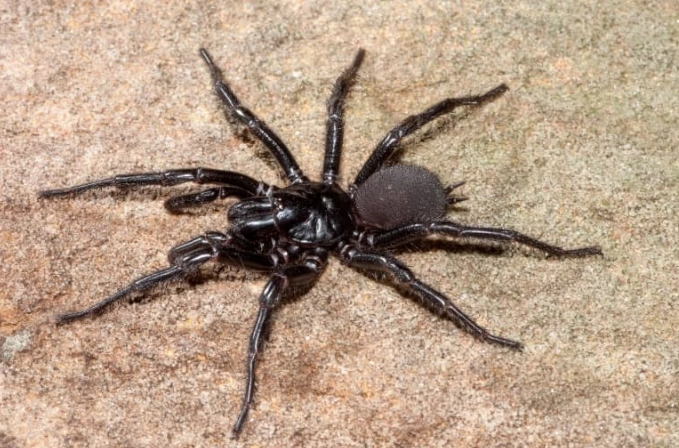
If you take one thing from this deep dive, let it be this: the funnel-web spider is a creature to be respected and understood, not just feared. And thanks to brilliant Australian science, its threat is now one we can manage effectively. Stay aware, stay prepared, and you can appreciate the incredible nature of this infamous arachnid from a safe distance.
LEAVE A REPLY
Your email address will not be published. Required fields are marked *