In This Guide
- What Makes a Paper Wasp a Paper Wasp?
- The Usual Suspects: Common Paper Wasp Species You'll Meet
- Side-by-Side: A Quick Comparison Table
- Beyond the Big Names: Other Notable Species of Paper Wasps
- Paper Wasp Behavior: What Are They Really Doing?
- To Remove or Not to Remove? A Practical Decision Guide
- Living With Paper Wasps: Prevention and Coexistence
- Answers to Your Burning Questions (FAQs)
- Wrapping It Up: Knowledge Over Fear
I remember the first time I really looked at a paper wasp nest under my eaves. It wasn't just a scary blob; it was this intricate, grayish structure that looked weirdly artistic. And the wasps themselves? They weren't all the same. Some were longer, some had different markings. That got me curious. What are the different species of paper wasps out there? Turns out, there's a whole world of them, and knowing which one you're dealing with changes everything—from how worried you should be to what you should (or shouldn't) do about it.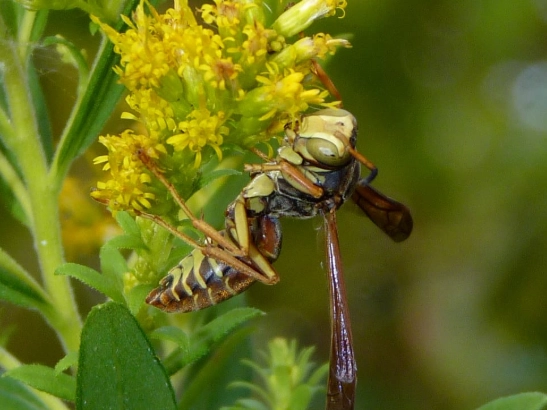
Most people just see "wasp" and panic. I get it. But lumping all paper wasps together is like calling every four-legged pet a "dog." It misses the nuances. Some species are real homebodies, others are more adventurous. Some have a nastier sting, others are almost laid-back. This guide is here to cut through the fear and give you the straight facts on the most common species of paper wasps you'll encounter in North America and beyond. We'll talk about how to tell them apart, what they're really like, and how to coexist safely. Because sometimes, the best solution isn't a can of spray.
What Makes a Paper Wasp a Paper Wasp?
Before we dive into the specific players, let's set the stage. All paper wasps belong to the family Vespidae, and most of the ones we chat about are in the genus Polistes. Their claim to fame is, you guessed it, paper. They scrape fibers from dead wood and plant stems, mix it with saliva, and construct those iconic, open-comb nests that look like upside-down umbrellas. No outer envelope like a hornet's nest—you can see the hexagons right there.
They're also social, but their colonies are usually much smaller than yellowjacket or hornet empires. We're talking a few dozen to maybe a couple hundred individuals, often started by a single queen in the spring. They're predators, feeding caterpillars and other insects to their young, which makes them part of your garden's pest control squad. Adults sip on nectar, so you'll see them on flowers. That's the basic profile. Now, let's meet the individuals.
The Usual Suspects: Common Paper Wasp Species You'll Meet
Here’s where it gets interesting. While there are hundreds of species globally, a handful are the frequent visitors to our human spaces. Identification often comes down to color, pattern, and sometimes size.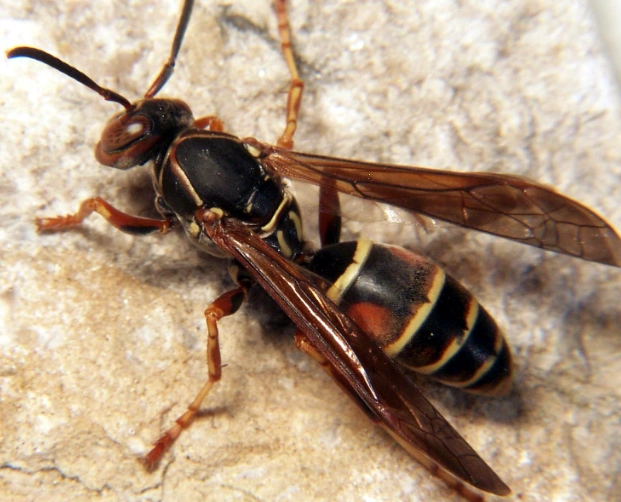
The European Paper Wasp (Polistes dominula)
This is the cosmopolitan of the paper wasp world. Originally from Europe (hence the name), it's now incredibly common across North America. I see these guys more than any other. They're sleek, with a very thin waist (more so than others), and are mostly black with bold yellow markings. Think of a yellowjacket pattern, but much longer and more slender. Their antennae are orange-tipped, which is a great little detail to look for.
What's their personality like? Frankly, they're adaptable to a fault. They'll build nests in all the classic spots—under decks, inside grills, in mailboxes, under lawn chairs. I once found a small nest inside a folded patio umbrella. They're not the most aggressive, but they will defend their nest if you get too close. Their spread is a textbook example of an invasive species thriving, and you can read about its ecological impact in detail from resources like the USDA's research publications.
The Northern Paper Wasp (Polistes fuscatus)
This is a native North American species. Their coloration is more variable—ranging from dark brown to reddish with yellow or white markings. The patterns can be quite mottled or striped. They tend to be a bit hairier than the European paper wasp, especially on the thorax. Their nests are also made of paper, but the material often looks more grayish-brown.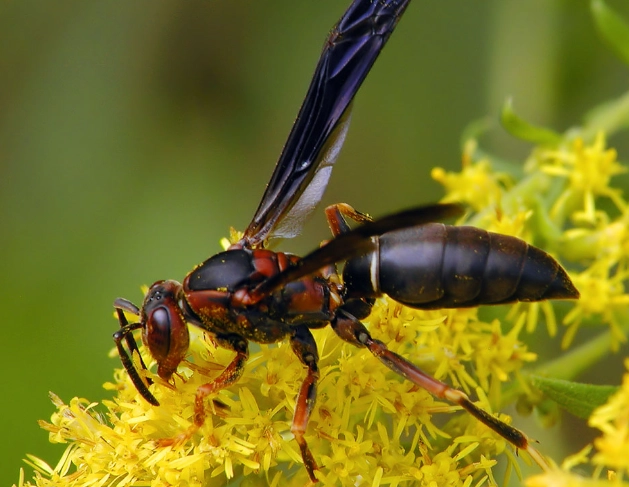
In my experience, P. fuscatus can be a bit more tolerant. They seem to pick slightly more secluded spots, though they'll still use porches and sheds. Research has shown some fascinating social behaviors in this species, with more complex hierarchies sometimes involving multiple founding queens. If you're interested in the complex social lives of insects, studies from institutions like the Entomological Society of America often highlight this species.
The Guinea Paper Wasp (Polistes exclamans)
Common in the southern and central U.S., this one has a brighter, more consistent look. They're known for their distinctive yellow patterning on a mostly brown body, often with a solid yellow band on the first abdominal segment. The tip of the abdomen is frequently a contrasting color. They build their nests in similar locations but seem particularly fond of man-made structures.
Here's a behavioral quirk: they are known to be somewhat more defensive than the Northern paper wasp. Not unprovoked attackers, but maybe quicker to posture if you're near the nest. It's a good reminder that among the various species of paper wasps, temperament isn't uniform.
The Red Paper Wasp (Polistes carolina)
As the name suggests, these wasps are a beautiful, rich reddish-brown color, sometimes almost mahogany, with darker wings. They are predominantly found in the eastern United States. They lack the bright yellow bands of the other species, which makes them quite distinctive once you know what you're looking at.
Their nests are often built in sheltered but not necessarily hidden places. I find their coloration makes them slightly harder to spot at a glance against wood or brick. They have a reputation for a sting that's a bit more potent, but again, they're not looking for trouble. They just want to raise their caterpillar-munching babies in peace.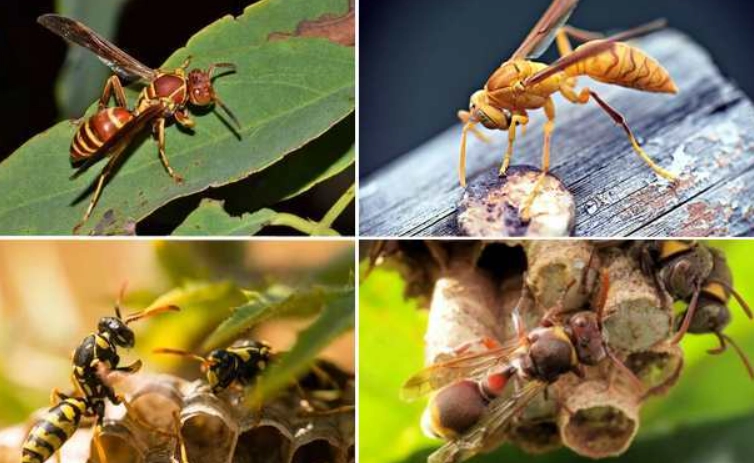
Side-by-Side: A Quick Comparison Table
When you're trying to ID something in your yard, a table is worth a thousand words. Here’s a cheat sheet for the major species of paper wasps we've covered.
| Common Name | Scientific Name | Primary Colors & Markings | Key Identification Clues | Typical Nesting Sites | General Temperament |
|---|---|---|---|---|---|
| European Paper Wasp | Polistes dominula | Black with bold yellow stripes; very slender. | Orange-tipped antennae. Looks like a slender yellowjacket. | Extremely varied: eaves, grills, shrubs, small cavities. | Adaptable, moderately defensive. |
| Northern Paper Wasp | Polistes fuscatus | Variable: brown, red, with yellow/white mottling. | Hairier thorax. Color patterns are often irregular. | Protected eaves, sheds, sometimes natural vegetation. | Generally less aggressive, more tolerant. |
| Guinea Paper Wasp | Polistes exclamans | Brown with bright, consistent yellow bands. | Often a solid yellow band on the first abdominal segment. | Man-made structures, especially in sheltered corners. | Can be more quickly defensive of the nest. |
| Red Paper Wasp | Polistes carolina | Uniform reddish-brown to dark brown. | Lacks yellow stripes. Dark, smoky wings. | Sheltered spots under decks, porches, in attics. | Not overly aggressive but sting is considered potent. |
This table should help you narrow it down. Remember, local variations exist, and sometimes hybrids or less common species pop up. If you're a real bug nerd, consider submitting a photo to a community science platform like iNaturalist for expert confirmation.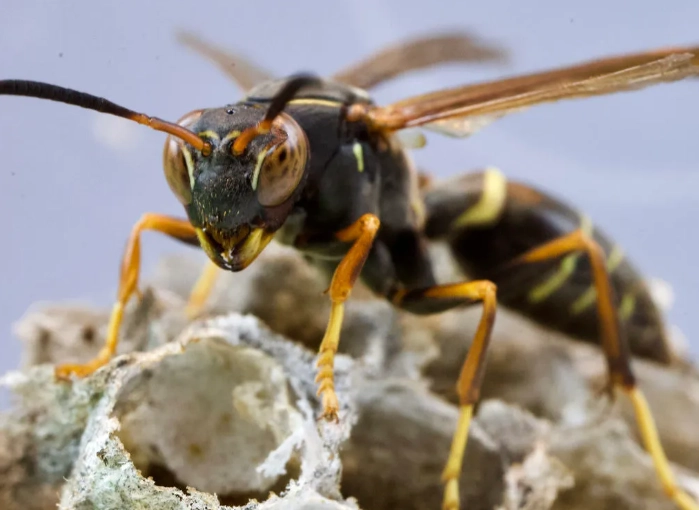
Beyond the Big Names: Other Notable Species of Paper Wasps
The Polistes genus is huge. In the southwestern US, you might encounter the Polistes apachus (the Southwestern or Texas paper wasp), which is large and reddish-yellow. In Florida and the Gulf states, Polistes bellicosus is another common reddish species. And let's not forget the sometimes-confused mason wasps or potter wasps, which are solitary and look similar but build completely different mud nests.
The point is, biodiversity is vast. The more you look, the more you realize that "paper wasp" is a broad category encompassing many fascinating insects. Relying solely on common names can be confusing—that's why I always try to include the scientific name. It's the only way to be sure we're all talking about the same critter.
Paper Wasp Behavior: What Are They Really Doing?
Understanding their life cycle takes the mystery (and some of the fear) away. It's not random aggression; it's all about colony survival.
The Annual Cycle: From Solitary Queen to Summer Hub
Early spring is queen time. A single, mated queen who hibernated through winter emerges, finds a site, and starts building that first little comb, laying eggs in each cell. She does everything—builds, forages, feeds larvae. It's a one-woman show. By early summer, her first daughters (sterile workers) emerge and take over all the work. The colony grows. The queen now mostly just lays eggs.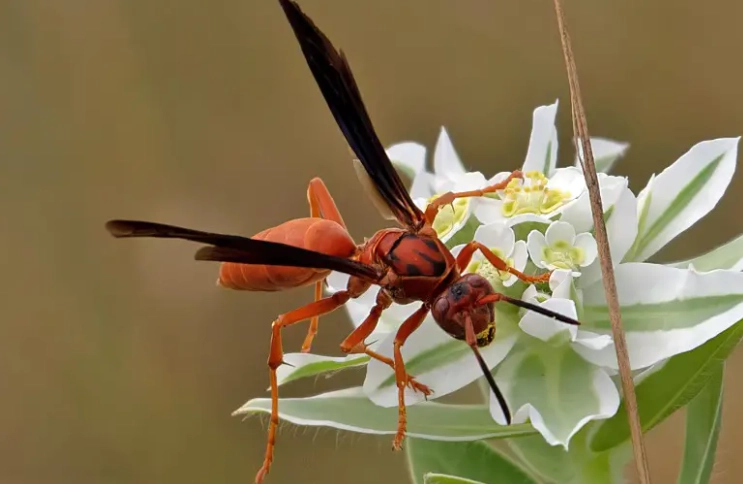
By late summer, the colony peaks. This is when you're most likely to notice them, as numbers are highest. New queens and males are produced. They mate, the males die, and the new queens find somewhere to hunker down for winter. With the first hard frost, the old colony dies—queen, workers, everything. Only the new, mated queens survive, hidden in woodpiles, under bark, or in attic insulation, waiting to start the cycle again next spring.
Are They Aggressive? The Truth About Stings
This is the million-dollar question. Here's the honest truth: paper wasps are not inherently aggressive like some yellowjackets can be. They don't crash your picnic for your soda. They are, however, defensive of their nest. That's the key distinction.
Their threat zone is usually about a 5-10 foot radius around the nest. If you're just walking through the yard, they'll ignore you. If you start poking the nest or running a lawnmower directly under it, you're asking for trouble. Their sting is a straight-up defense mechanism. I've been stung exactly once, years ago, when I accidentally brushed against a hidden nest in a shrub. It was my fault, not a wasp vendetta. It hurt, sure, but it was over in a day. For most people, it's a sharp, burning pain, some swelling, and then it fades.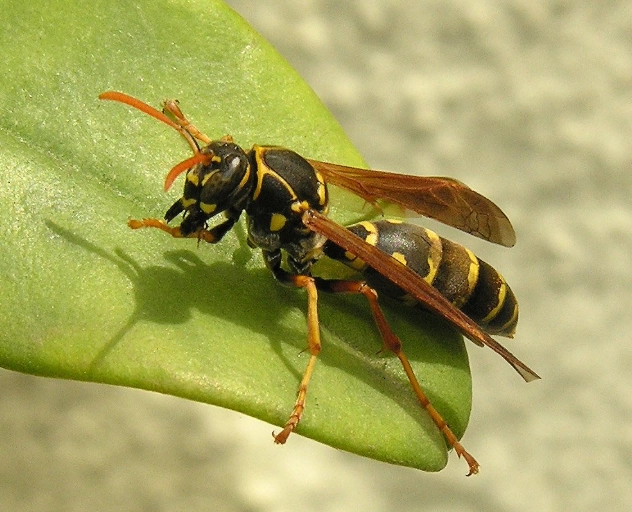
To Remove or Not to Remove? A Practical Decision Guide
This is where all that identification and behavior knowledge pays off. The knee-jerk reaction is always "kill it with fire." But sometimes, that's overkill (literally). Let's break down the decision logically.
Consider leaving the nest IF:
- It's in a low-traffic area (back corner of the garden shed, high in a tree).
- It's small and early in the season (late spring/early summer).
- The species is known to be less defensive (like some Northern paper wasp nests).
- You can simply avoid the area for the summer. Remember, they die off in fall.
- You value their role as natural pest controllers in your garden.
Removal is probably wise IF:
- The nest is directly over a doorway, on a playground set, or near a high-traffic path.
- Someone in the household is allergic.
- The nest is being built inside a structure like a vent, attic vent, or grill.
- It's a large, late-season nest with high wasp traffic.
- It's causing significant anxiety, even if the risk is low. Peace of mind matters.
Safe Removal Methods: DIY vs. Pro
If you decide removal is needed, you have options.
For tiny, brand-new nests (just a few cells, queen only): At dusk or dawn when the wasps are inactive, you can often simply knock it down with a long stick or spray it with a jet of water from a hose. The queen will likely relocate. This is low-risk if the colony isn't established.
For established nests: This is where caution is paramount. Commercially available wasp spray with a long-range jet (15-20 feet) is the standard DIY method. Always do this at night when all wasps are on the nest and sluggish. Wear protective clothing, have an escape route, and don't use a flashlight beam directly on the nest (it can agitate them). Spray thoroughly, wait a day, then knock the nest down.
Calling a professional: This is the best choice for large nests, hard-to-reach locations (inside a wall), or if you're unsure/uncomfortable. Pest control pros have the equipment and experience to do it safely and can often guarantee the removal. It costs money, but it transfers the risk. For information on integrated pest management and safe practices, the Environmental Protection Agency (EPA) provides guidelines that many professionals follow.
Living With Paper Wasps: Prevention and Coexistence
If you'd rather not have to make the removal decision every summer, prevention is key. It's mostly about making your property less appealing for that founding queen in the spring.
- Early Spring Scouting: March through May, regularly check potential nesting sites—under eaves, porch ceilings, inside sheds, under deck railings. A queen's starter nest is tiny and easy to remove.
- Seal Entry Points: Repair torn screens, seal gaps around attic vents with fine mesh hardware cloth, and close up holes in soffits.
- Manage Attractants: Keep trash cans tightly sealed. While paper wasps aren't major scavengers like yellowjackets, they might investigate.
- Consider Fake Nests: The theory is that wasps are territorial and won't build near an existing nest. Hanging a commercial "decoy" paper wasp nest (or even a brown paper bag) early in the season might deter some queens. Results are mixed, but it's a harmless trick to try.
Coexistence, when possible, means respecting their space. They are voracious consumers of caterpillars, including many that damage garden plants like cabbage loopers and hornworms. A nest at the back of your vegetable garden can be a powerful organic pest control agent. You just have to know it's there and work around it.
Answers to Your Burning Questions (FAQs)
Wrapping It Up: Knowledge Over Fear
Look, wasps will never be as cuddly as butterflies. But after years of observing them, I've moved from fear to a kind of wary respect. The key takeaway is that "paper wasp" isn't a single monster. It's a whole group of insects, each species with its own look and habits. By taking the time to figure out which species of paper wasps have moved into your neighborhood, you empower yourself to make smart decisions.
You can choose to safely remove a threat. Or, you might decide that the nest tucked under the far eave of the garage isn't a threat at all, but a free pest control service. That decision comes from understanding, not just a reflex. It comes from knowing their life cycle, their role, and their real-world behavior.
So next time you see that familiar, papery comb, don't just see a problem. Take a moment (from a safe distance!) and look closer. You might be surprised by what you learn about the intricate world of these often-misunderstood neighbors.
LEAVE A REPLY
Your email address will not be published. Required fields are marked *