Quick Navigation
- Spotting the Difference: Red Squirrel vs. Gray Squirrel in Ohio
- Where to Find Red Squirrels in Ohio: A Habitat Deep Dive
- The Conservation Picture: Are Red Squirrels Endangered in Ohio?
- How to Be a Red Squirrel Ally in Ohio
- Your Ohio Red Squirrel Watching Guide
- Frequently Asked Questions About Red Squirrels in Ohio
Let's talk about red squirrels in Ohio. Honestly, if you've spent any time in the woods up north, you've probably heard them before you saw them. That sharp, chattering call that sounds like they're scolding the entire forest? That's your giveaway. The American red squirrel, or Tamiasciurus hudsonicus if you want to get scientific, is one of those native creatures that feels both common and mysterious at the same time. They're around, but spotting them feels like a little win.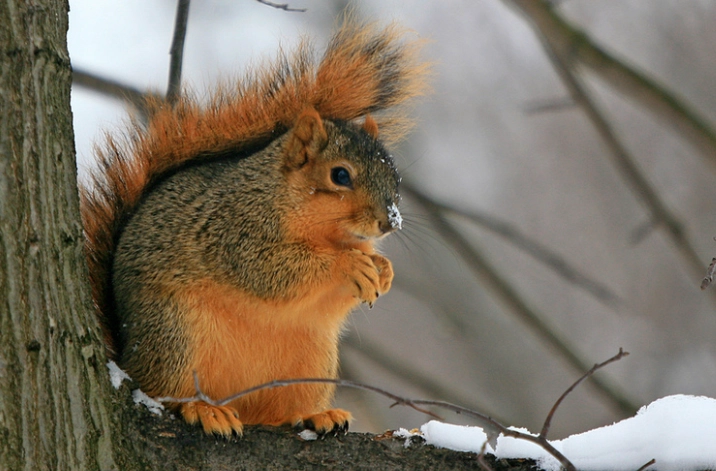
I remember the first time I positively identified one. It wasn't in some remote wilderness, but in a mature beech-maple stand in Geauga County. Smaller than the eastern gray squirrels hogging the bird feeder in my backyard, with a coat that was more reddish-brown than fiery red, and that unmistakable white eye-ring. It moved with this frantic, twitchy energy, caching a mushroom in the crook of a tree. That's the thing about the Ohio red squirrel – it's not just a generic squirrel. It's a specialist, a character, and its story in our state is more complicated than most people realize.
Here's the core of it: Red squirrels are native to Ohio, but their stronghold is the unglaciated, forested hill country of the eastern and southeastern parts of the state. They're hanging on, but their range and numbers aren't what they used to be. This guide is for anyone who's curious, from the casual hiker wondering "what was that little squirrel?" to the concerned naturalist wanting to know how they're really doing.
Spotting the Difference: Red Squirrel vs. Gray Squirrel in Ohio
This is where most people get tripped up. You see a squirrel, it's kinda brownish, is it a red? Not necessarily. The eastern gray squirrel (Sciurus carolinensis) can have reddish or brownish phases, especially in summer. It's a classic case of mistaken identity that happens all the time in Ohio woods.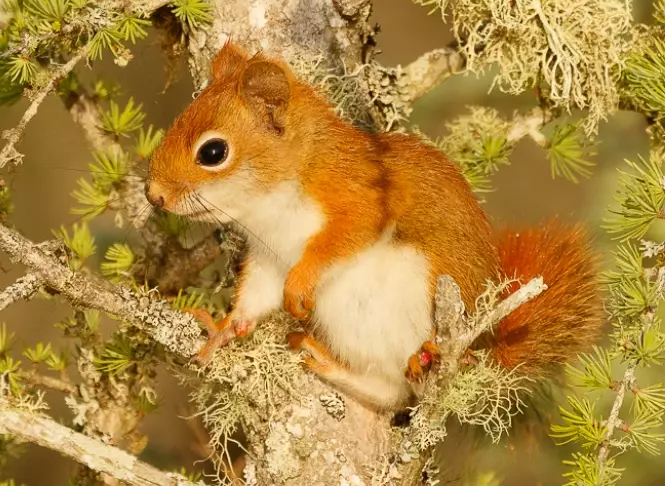
So, how do you tell an Ohio red squirrel from a gray? It's not just color. You have to look at the whole package.
| Feature | American Red Squirrel | Eastern Gray Squirrel |
|---|---|---|
| Size | Smaller and slighter. Body 11-14 inches (including tail). Weighs 7-9 oz. Feels "compact." | Larger and bulkier. Body 16-20 inches. Weighs 14-24 oz. The classic "backyard squirrel" size. |
| Color | Rusty reddish-brown to grayish-red on top, with a stark white belly. Has a distinct white eye-ring year-round. Tail is reddish with frosted tips. | More variable: gray, black, or brown phases. Belly is whitish or grayish. No prominent eye-ring. Tail is bushier, color matches body. |
| Voice & Behavior | LOUD and territorial. Makes rapid, chattering, scolding calls. Very active, twitchy movements. Caches food in many small spots (scatter-hoarding). | Quieter, with barks and squeaks. More deliberate movement. Often buries nuts singly (larder-hoarding). |
| Preferred Habitat in Ohio | Coniferous and mixed forests. Heavily reliant on pine, spruce, hemlock, and mature stands of oak-hickory with mast crops. | Extremely adaptable. Deciduous forests, urban parks, suburban yards, you name it. |
The white eye-ring is the dead giveaway. Once you see it, you can't unsee it. Gray squirrels just don't have that. Also, listen. If you're in an Ohio forest and you hear what sounds like a tiny, angry alarm system going off in the trees, you've likely found a red squirrel defending its turf.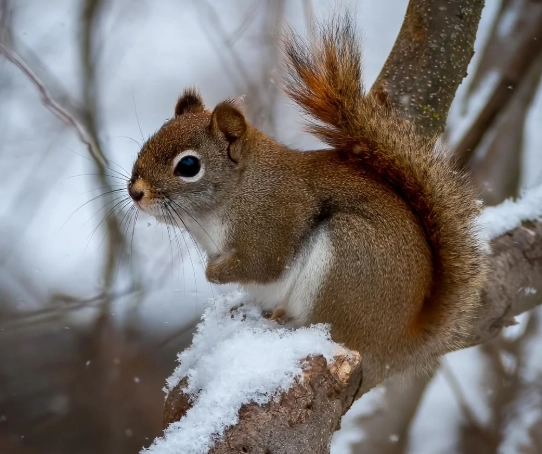
A quick note on names: People sometimes call them "pine squirrels" or "chickarees," especially up north. In Ohio, "red squirrel" is the common term, but hearing "chickaree" usually means you're talking to an old-timer or a serious birder/naturalist.
Where to Find Red Squirrels in Ohio: A Habitat Deep Dive
This is the million-dollar question for anyone looking for a red squirrel in Ohio. You can't just go to any patch of woods. They have specific, and frankly, shrinking, requirements.
Historically, red squirrels were found throughout Ohio's extensive forests. Today, their distribution is patchy and largely tied to areas that weren't flattened by glaciers – the Appalachian Plateau region. Think counties like Ashtabula, Geauga, Portage, Stark, Wayne, Holmes, Tuscarawas, Harrison, Jefferson, and south into the hill country of Athens, Hocking, and Vinton counties. The Ohio Department of Natural Resources (ODNR) Division of Wildlife has historical survey data that shows this concentration clearly.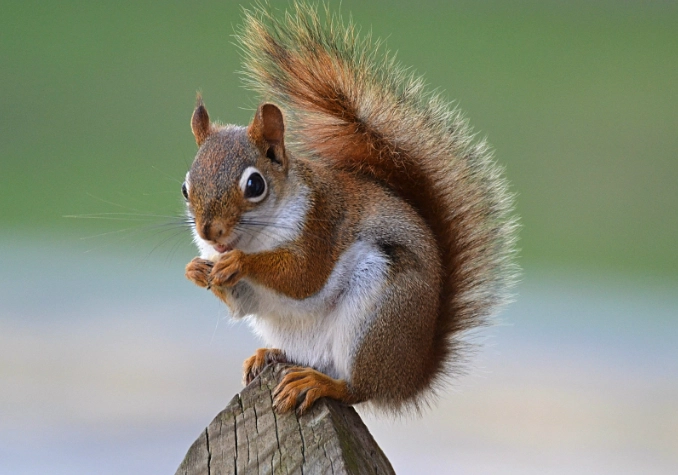
Their Ideal Ohio Real Estate
Red squirrels are conifer specialists. Their digestive systems and caching behaviors are fine-tuned for the seeds of coniferous trees. So, in Ohio, you're looking for:
- Conifer Plantations & Stands: White pine and Norway spruce plantings, especially older ones, are red squirrel magnets. State parks and forests with such plantings are prime spots.
- Mixed Oak-Hickory Forests with Conifers: Mature forests where hemlocks or pines mix with hardwoods. The conifers provide year-round shelter and a food base (seeds), while the oaks and hickories provide the autumn bonanza of nuts.
- Riparian Zones with Hemlocks: Cool, shaded hemlock gorges along streams in eastern Ohio are classic, high-quality habitat.
They're not fans of open farmland, young deciduous woods, or pure hardwood forests without any evergreens. That lack of adaptability is a big part of their challenge.
I've had the best luck in Ohio's state forests. Places like Zaleski State Forest, Shawnee State Forest (in the right pockets), and Mohican State Forest have the mature, mixed stands they love. Even in these areas, they're not everywhere. You have to find the right tree composition.
The Conservation Picture: Are Red Squirrels Endangered in Ohio?
This is where things get serious. You search "red squirrel Ohio" and a big underlying question is always about their status. So, let's clear it up.
No, the American red squirrel is not federally endangered or threatened. Globally, the species is listed as "Least Concern" by the IUCN Red List. But that's the big picture. On a state-by-state basis, especially at the southern edge of its range like in Ohio, the story is different.
In Ohio, the red squirrel is considered a Species of Special Concern. It's not on the state's endangered species list, but it is a species that wildlife biologists are keeping a close eye on. The ODNR officially lists it as "apparently secure" but notes its range is limited. From my conversations with local naturalists, "vulnerable" might be a more accurate everyday term.
The biggest threat? It's not one thing, it's a combination. Habitat loss and fragmentation are the heavy hitters. Converting mature forests to other uses breaks up their world. But there's also competition. This is the elephant in the room (or the gray squirrel in the forest).
The Gray Squirrel Factor
This is a touchy subject. Eastern gray squirrels are bigger, more aggressive, and wildly adaptable. They thrive in human-altered landscapes. In areas where their ranges overlap, grays can outcompete reds for food resources, particularly hard mast like acorns and hickory nuts. Some studies suggest grays may also carry diseases (like squirrel parapoxvirus) that don't harm them much but can be devastating to red squirrel populations. The evidence for disease impact in Ohio isn't crystal clear, but the competitive pressure certainly is.
It's not a simple "gray squirrel bad, red squirrel good" story. Both are native. But the gray's success story is, in part, a factor in the red's decline in marginal habitats. In the best conifer-dominated habitats, reds can still hold their own. But those habitats are shrinking.
How to Be a Red Squirrel Ally in Ohio
If you care about seeing these fiery little characters stick around in Ohio, there are concrete things you can do. It's not just about feeling bad; it's about taking action.
- Support Habitat Conservation: This is the big one. Support land trusts, parks, and state forests that protect and manage mature mixed and coniferous forests. Organizations like the Nature Conservancy in Ohio work on landscape-level conservation that benefits species like the red squirrel.
- Mindful Property Management: If you own woodland in eastern Ohio, consider forestry practices that retain conifers and promote a diversity of age classes in trees. Leaving standing dead trees (snags) provides crucial nesting and food storage sites.
- Be a Responsible Observer: If you're lucky enough to find them, observe from a distance. Don't try to feed them. Feeding wildlife usually does more harm than good, altering natural behaviors and potentially concentrating animals in ways that spread disease.
- Report Your Sightings: Citizen science is huge. Reporting your verified red squirrel observations to platforms like iNaturalist helps scientists and agencies like the ODNR track distribution and population trends. Your single sighting adds a data point.
Planting native conifers like eastern white pine or eastern hemlock on suitable property is a long-term investment in habitat. It won't pay off for a decade or more, but it's a tangible contribution.
Your Ohio Red Squirrel Watching Guide
Alright, let's get practical. You want to see one. Here's how to maximize your chances, based on my own hits and misses.
Best Times & Places
When: They are active year-round, even on cold winter days. The best viewing is often in late summer and fall (August-October) when they are frenetically gathering and caching food. They're less vocal in deep winter but still active on sunny days. Early morning is usually more productive than midday.
Where (Some Specific Suggestions):
- State Forests in the Unglaciated Plateau: Your best bet. Focus on areas with visible pine, spruce, or hemlock stands. Don't just stick to the trailhead; walk into the older forest sections.
- Hemlock Gorges: Places like the gorges in Hocking Hills State Park (though they can be crowded) or quieter sections of the Ohio River hills. The cool, damp environment is ideal.
- Large, Mature Cemetery Groves or Arboretums: In some parts of northeastern Ohio, older cemeteries with planted evergreens can support a population. It's worth a quiet, respectful look.
Search Strategy
Walk slowly. Stop frequently. Sit on a log for 10-15 minutes. Your ears are your best tool. Listen for that distinctive chatter or the sound of scales dropping from pine cones (it sounds like light rain). Look for their middens – piles of discarded cone scales and cores at the base of a favorite feeding tree or on a large, mossy stump. A midden is a sure sign you're in a red squirrel's dining room.
Frequently Asked Questions About Red Squirrels in Ohio
Are red squirrels in Ohio aggressive?
Not towards humans, no. They are fiercely territorial towards other squirrels (especially other reds) and will scold intruders, which includes you if you wander into their core area. That loud chattering is a warning, not a prelude to an attack. They're all bluster. Just give them space and they'll go about their business.
What do they eat in Ohio?
Their diet shifts with the seasons. In spring and summer, it's tree buds, fungi (they love mushrooms and are important spore dispersers), insects, and even bird eggs or nestlings (they are opportunistic). In fall and winter, it's all about seeds from pine, spruce, and hemlock cones, which they cache in huge quantities, and hard mast like acorns and hickory nuts. They have a special larder called a "midden" where they centrally store cone bracts.
Can I attract them to my yard in Ohio?
If you live in or adjacent to their preferred forest habitat in eastern Ohio, maybe. But it's tricky and not generally recommended. Planting native conifers is the best long-term "attraction." Putting out birdseed or corn will overwhelmingly attract gray squirrels, which could further pressure local reds. It's better to improve the habitat on a landscape level than to try and bait them to a feeder.
How can I tell if the squirrels in my woods are reds or grays?
Go back to the table above. Size and eye-ring are the quickest visual clues. But again, listen. Gray squirrels bark. Red squirrels deliver an angry, rapid-fire lecture. If you're not sure, try to get a photo focusing on the face and upload it to iNaturalist. The community will help ID it.
Is their population increasing or decreasing in Ohio?
The general consensus among wildlife professionals is that it's stable in core, high-quality habitats but declining in peripheral and fragmented areas. Overall, the trend is likely a slow decline due to the persistent pressures of habitat loss and competition. There isn't robust, annual statewide survey data, which is why citizen reports are so valuable.
The bottom line: The red squirrel in Ohio is a resilient but vulnerable specialist. It's a symbol of our older, wilder forests. Seeing one isn't just a cool wildlife sighting; it's a sign of a healthy, functioning ecosystem. By understanding where they live, the pressures they face, and how we can help, we become part of the solution to ensuring their chattering call remains a part of Ohio's natural soundtrack for generations to come.
So next time you're hiking in the hills of eastern Ohio, slow down. Listen for that tell-tale chatter. Look for the flash of red-brown and that bright white eye-ring. You're not just seeing a squirrel. You're seeing a piece of Ohio's natural heritage, a tough little survivor holding on in its chosen niche. And that's worth paying attention to.
LEAVE A REPLY
Your email address will not be published. Required fields are marked *