In This Guide
So you've seen a snake with black and yellow markings slithering through your Missouri backyard or across a trail in one of our state parks, and now you're here. Was it dangerous? Should you be worried? I get it. That flash of contrasting color in the grass is enough to make anyone pause. Let's clear the air right now: most of the black and yellow snakes in Missouri are completely harmless, even beneficial. But there's one infamous exception that every Missourian should know. This guide is going to walk you through exactly what you need to know, from telling them apart to what to do if you meet one.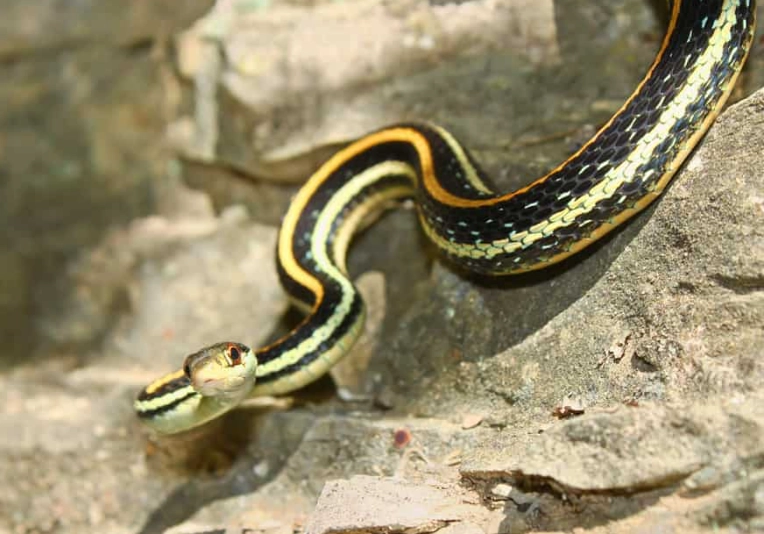
I've spent a fair amount of time hiking the Ozarks and poking around the woodlands near the Missouri River, and I've had my share of surprise encounters. The key is knowledge. Panic is almost never helpful. By the end of this, you'll be able to look at those black and yellow bands or stripes with a lot more confidence. We'll cover the three most common snakes you'll see with these colors, dive into that one venomous look-alike situation, and answer all the practical questions buzzing in your head.
Quick Takeaway: If you see a black snake with yellow stripes running head to tail, you're almost certainly looking at a harmless Common Gartersnake. If you see a snake with bright, alternating bands of black and yellow (or white) that completely encircle its body, stop and look closer—it could be a venomous Coral Snake, though they are exceedingly rare in Missouri. The more common banded look-alike is the harmless Eastern Kingsnake.
Meet the Usual Suspects: Missouri's Black and Yellow Snakes
Missouri's diverse habitats, from prairies to forests to river bluffs, are home to a good variety of snakes. When we filter for the black and yellow color scheme, a few standout species take the spotlight. Their patterns—bands, stripes, or speckles—are your first clue to their identity. I find that once you learn the basic "jizz" (general impression, size, and shape) of each, telling them apart becomes second nature.
Here’s a breakdown of the main players. This table should be your go-to reference for a quick side-by-side comparison.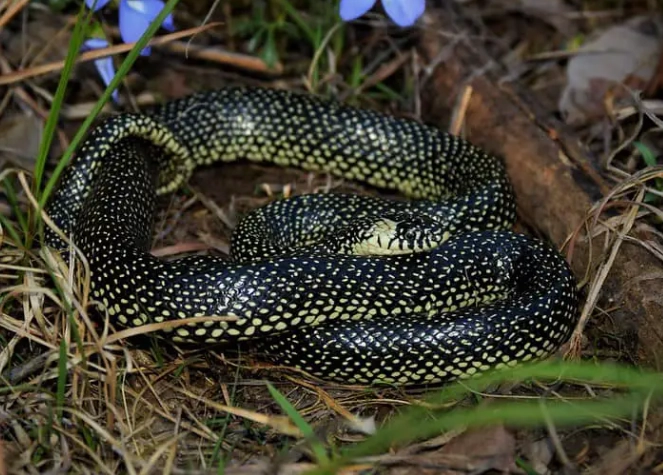
| Snake Species | Primary Pattern | Key Identifying Features | Venomous? | Typical Habitat in MO |
|---|---|---|---|---|
| Eastern Kingsnake | Chain-like bands | Glossy black with thin, link-like yellow/white bands. Smooth scales. Chunky body. | NO | Woodlands, fields, near streams. Statewide but uncommon. |
| Plains Gartersnake | Stripes | Black/brown background with a bright yellow dorsal stripe and yellow side stripes. Often checkered between stripes. | NO | Prairies, meadows, grassy fields. Northern and western MO. |
| Eastern Yellow-bellied Racer | Solid or two-toned | Adults are solid olive-gray to blue-gray. Juveniles are light gray with dark brown blotches, often with a yellowish tint or belly. | NO | Open fields, prairies, woodland edges. Statewide. |
See? Already things look less mysterious. But a table only gives you the basics. Let's get to know each of these black and yellow snakes in Missouri on a more personal level.
The Eastern Kingsnake: The Chainmail Guardian
This one is a real beauty. The Eastern Kingsnake (*Lampropeltis getula*) has a sleek, glossy appearance that looks almost polished. Its pattern is unmistakable: a deep, jet-black background overlaid with a series of thin, chain-link bands of yellow or creamy white. It’s not just for show—this pattern can break up their outline in dappled forest light.
I once came across one sunning itself on a limestone rock in the Mark Twain National Forest. It was surprisingly calm, just watching me with a curious flick of its tongue before slowly retreating under the ledge. They have a reputation for being immune to the venom of pit vipers and are known to eat other snakes, including copperheads and rattlesnakes. Think of them as natural pest control for more dangerous snakes. They’re not super common, so if you see one, consider it a lucky sighting of a valuable resident. They like woodland edges, overgrown fields, and areas near water. If you're searching for black and yellow snakes in Missouri, this is the one that most closely fits the classic "banded" pattern people imagine.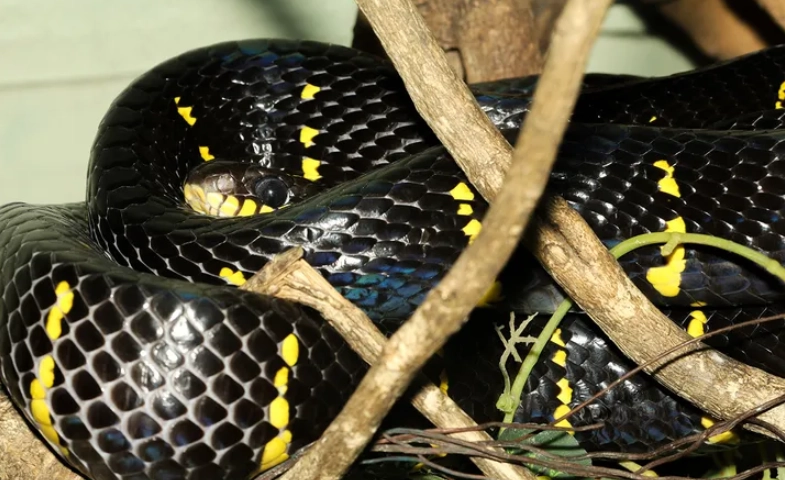
The Plains Gartersnake: The Striped Grass Dweller
Now, this is probably the most frequently encountered black and yellow snake for many folks in the northern half of the state. The Plains Gartersnake (*Thamnophis radix*) is all about stripes. Forget bands that go around. This snake has three distinct longitudinal stripes running from its head all the way down its body: a bright, butter-yellow stripe right down the middle of its back, and a paler yellow stripe on each side. The background color between these stripes is usually a dark olive-brown or blackish, often with a subtle checkered pattern.
They love grassy areas—prairies, meadows, the edges of farms, and even damp ditches. I’ve almost stepped on a few while walking through tall grass. They’re fast and will usually zip away into cover. They’re harmless, but they might release a musky odor if handled (a defensive tactic shared by many gartersnakes). Not pleasant, but not dangerous. If you see a sleek, striped snake fleeing through your lawn, it’s likely this helpful rodent-eater.
The Eastern Yellow-bellied Racer: The Speedster in Disguise
This one is a bit of a trickster in our list of black and yellow snakes in Missouri. The adult Eastern Yellow-bellied Racer (*Coluber constrictor*) is not black and yellow at all—it’s a uniform slate gray, olive, or even bluish. So why is it here? Because the juveniles are a different story. Baby racers are light gray or tan with a series of dark brown or reddish blotches down their backs. These blotches can sometimes have a yellowish hue around them, and their bellies are often a distinct pale yellow or cream.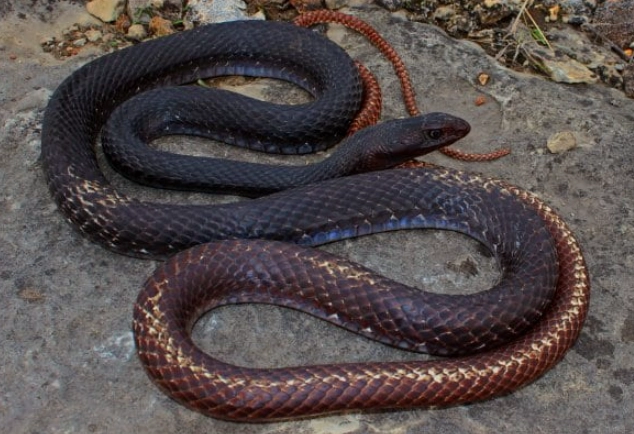
So, a young racer might give you that "spotted with yellow tones" impression. They lose this pattern completely as they mature within 1-2 years. Racers live up to their name; they are incredibly fast and alert. They hunt by sight and are often seen during the day in open areas, darting after insects, frogs, and small rodents. If you try to corner one, it can become feisty and strike repeatedly (though it’s non-venomous). It’s best to just let this nervous speedster go on its way.
The Elephant in the Room: Coral Snakes vs. Kingsnakes in Missouri
This is the question that causes the most anxiety. "Aren't black and yellow banded snakes venomous?" You're thinking of the Coral Snake. And you're right to be cautious, but context is everything for Missouri.
The Eastern Coral Snake (*Micrurus fulvius*) has a potentially deadly neurotoxic venom. Its famous pattern is wide red bands and yellow bands separated by thin black bands. It famously rhymes: "Red touches yellow, kill a fellow. Red touches black, friend of Jack." This rhyme helps distinguish it from non-venomous mimics like the Scarlet Kingsnake.
Here’s the crucial Missouri-specific fact: The Eastern Coral Snake is considered extirpated (locally extinct) from Missouri. The last confirmed specimen was found in the early 20th century. The Missouri Department of Conservation (MDC) does not list it as a current resident species. You can verify this on their official Coral Snake field guide page.
Important Reality Check: While the rhyme is well-known, it's not foolproof (variations exist in other regions) and, more importantly, it's largely irrelevant for Missouri residents today. The banded, black and yellow snake you are almost certainly seeing is the harmless Eastern Kingsnake. The fear of coral snakes in Missouri is, for all practical purposes, a historical concern rather than a current one. Spending mental energy on the coral snake rhyme here is less useful than simply learning to recognize our common kingsnake.
So, if you see a glossy black snake with crisp, chain-link yellow bands in Missouri, you can admire it without fear. It's a kingsnake, a beneficial predator. The mental shift from "panic" to "appreciation" is powerful.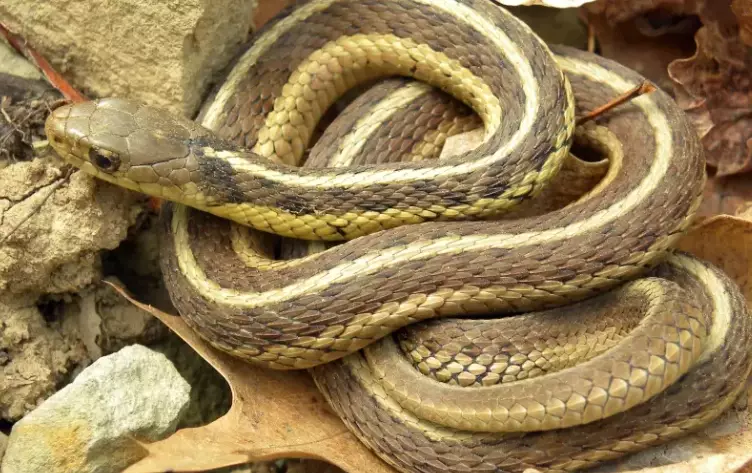
Snake Safety and Coexistence in Missouri
Knowing what you're looking at is 90% of the battle. The remaining 10% is about respectful behavior. Missouri is home to several venomous snakes—specifically, five species of pit vipers: Copperheads, Cottonmouths, and three species of Rattlesnakes. None of these are primarily black and yellow, but it's always wise to exercise caution with any unidentified snake.
The Golden Rules of Missouri Snake Encounters:
- Look, Don't Touch. Observe from a safe distance (at least 6 feet). Use binoculars or your phone's zoom for a closer look. Most snake bites occur when people try to handle, kill, or move them.
- Leave it Be. Snakes are protected wildlife in Missouri and play vital ecological roles. They control rodent and insect populations. If a snake is in your yard and you want it gone, gently spray it with a hose from a distance; it will usually move along.
- Watch Your Step. When hiking, stay on trails, watch where you place your hands and feet (especially near logs or rocks), and wear sturdy boots.
- Teach Kids. Instruct children to tell an adult if they see a snake and to back away slowly. Avoid the simplistic "all snakes are bad" message.
What if you're bitten? First, stay calm. Panic increases heart rate and spreads venom faster. If you are bitten by an unidentified snake, especially if you suspect it may be venomous (e.g., you saw triangular head, vertical pupils, heat-sensing pits, or heard a rattle), treat it as a medical emergency.
- Call 911 or get to the nearest hospital immediately.
- Try to remember the snake's color, shape, and size. A photo from a safe distance is ideal, but do not risk a second bite.
- Do NOT apply a tourniquet, cut the wound, suck out the venom, or apply ice. These outdated methods often cause more harm.
- Remove tight clothing or jewelry near the bite area, as swelling will occur.
- Keep the bite area at or slightly below heart level if possible.
For bites from any of the non-venomous black and yellow snakes in Missouri, simply clean the wound with soap and water to prevent infection, as you would with any minor puncture. A tetanus shot update might be recommended by a doctor.
Your Questions Answered: Black and Yellow Snakes in Missouri FAQ
Almost certainly not. Missouri's rattlesnakes (Timber, Pygmy, Massasauga) have distinct patterns of dark blotches or diamonds on a lighter background, not clean longitudinal stripes. A single yellow stripe down the back is the hallmark of a gartersnake, which is harmless. Baby rattlesnakes have the same blotchy pattern as adults and a tiny, button-like rattle.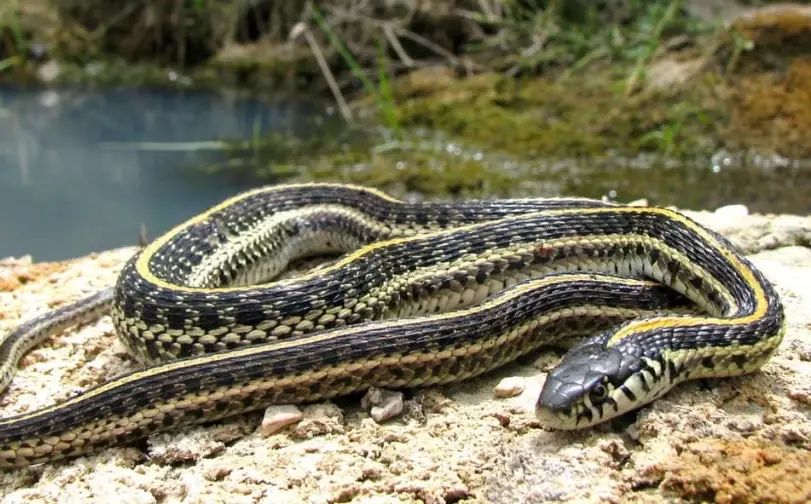
Absolutely! They are excellent pest control. Gartersnakes eat slugs, earthworms, and insects. Kingsnakes eat rodents (mice, voles) and other snakes, including venomous ones. Racers eat insects, rodents, and frogs. Having one around is a sign of a healthy ecosystem and can save your plants from being chewed up by pests.
You can't 100% proof against wildlife, but you can make your yard less attractive. The main goal is to eliminate food and shelter. Keep grass mowed, remove brush piles and rock piles close to the house, seal gaps under sheds and porches, store firewood off the ground and away from the house, and manage rodent populations. Think of it more as making your home less inviting to all kinds of critters, not just snakes.
Any natural area with suitable habitat. For Plains Gartersnakes, try native prairie preserves in northern or western MO. For Eastern Kingsnakes, explore the wooded hills and river corridors of the Ozarks. Racers can be found in open fields statewide. Remember to observe respectfully from a distance. A great resource for exploring distribution is the HerpNet database, which aggregates scientific collection records.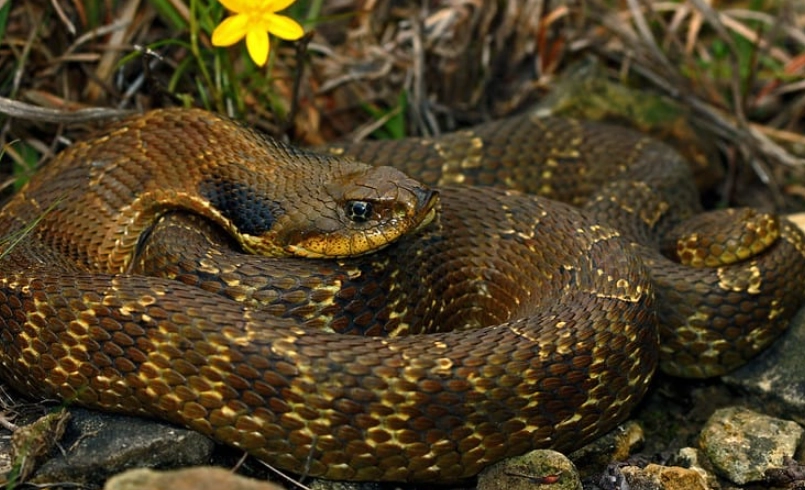
It varies. Gartersnakes and racers are often active during the day (diurnal), especially in spring and fall. They may become more crepuscular (active at dawn/dusk) during the heat of summer. Kingsnakes can be active day or night. You're most likely to see any snake basking in the sun on a cool morning to warm up.
Beyond Identification: Appreciating Missouri's Serpentine Residents
Once the fear subsides, there's a whole world of fascinating behavior to appreciate. Did you know gartersnakes give live birth instead of laying eggs? Or that a racer can zoom across the ground faster than you can walk? That kingsnake's immunity to venom is a marvel of evolution.
These black and yellow snakes in Missouri are not just random creatures; they are intricately woven into the fabric of our state's ecosystems. They control populations that could otherwise boom out of control. They are prey for birds of prey, mammals, and other snakes. Their presence indicates a balanced, healthy environment.
My perspective changed when I stopped seeing them as "things to avoid" and started seeing them as "neighbors with a role." It's a shift from apprehension to curiosity. The next time you see that flash of black and yellow in Missouri, take a breath. Use what you've learned here. Is it striped? It's a helpful garter. Is it banded? It's the mighty, harmless kingsnake. Is it a speedy, blotched juvenile? It's a future blue-gray racer.
If you're eager to learn more, I highly recommend spending time on the Missouri Department of Conservation's Snake Field Guide. It's an authoritative, reliable, and free resource with detailed photos and range maps for every species in the state. It should be your first stop for confirming an ID.
Remember, coexistence is the goal. We share this beautiful state with them. With a little understanding, we can ensure both people and snakes thrive in Missouri's diverse landscapes. So keep your eyes open on that next hike—you never know what incredible black and yellow snakes in Missouri you might spot just off the trail, going about its essential business.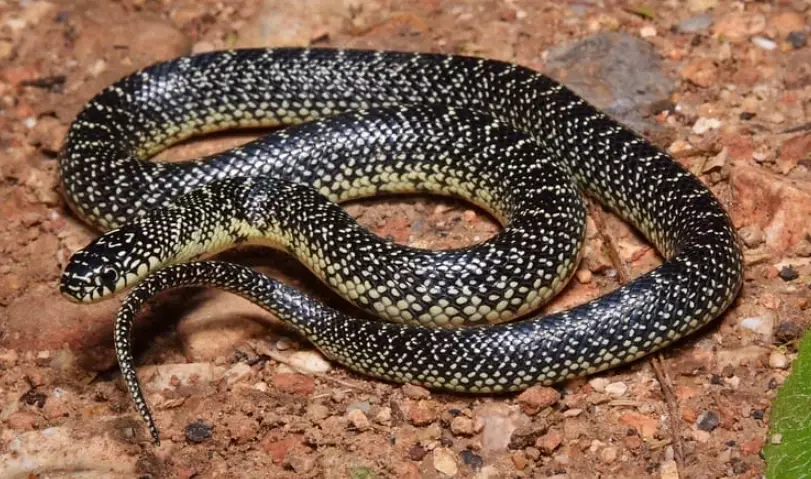
LEAVE A REPLY
Your email address will not be published. Required fields are marked *