Quick Navigation
- What Makes an Orb Weaver an Orb Weaver?
- The Stars of the Show: Common Orb Weaver Spiders in New Mexico
- Orb Weaver Spider New Mexico: A Simple Identification Table
- The Million-Dollar Question: Are Orb Weavers in New Mexico Dangerous?
- Why You Should Actually Welcome Orb Weavers
- Living Alongside Orb Weavers: Practical Tips
- Answering Your Orb Weaver Spider New Mexico Questions (FAQs)
- A Part of the Landscape
You're out in your garden, maybe in Albuquerque or Santa Fe, early in the morning when the dew is still heavy. And there it is—a perfect, intricate wheel-shaped web, glistening like fine lace between the chamisa bush and your fence. Right in the center, often looking a bit like a piece of fallen jewelry, sits its architect: an orb weaver spider. If you've lived in New Mexico for more than one summer, you've almost certainly seen them. They're a classic part of the high desert and riparian landscapes here.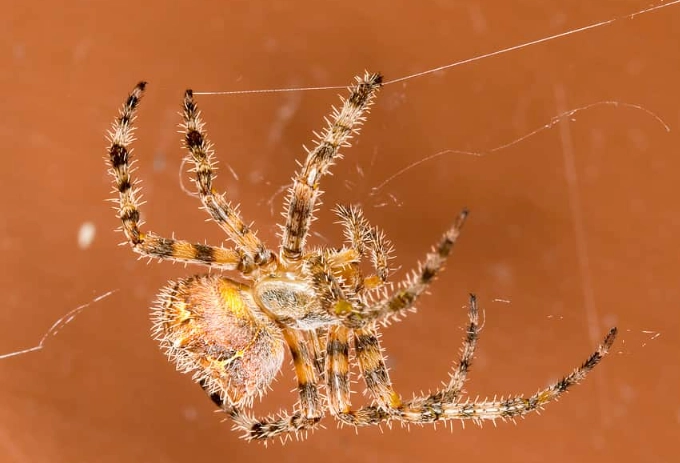
But what exactly are they? Should you be worried? And why do they build those crazy-precise webs anyway? I used to just call them "garden spiders" until I got curious and started poking around. Turns out, the world of the orb weaver spider in New Mexico is way more interesting and less scary than most people think. Let's clear away the webs of misconception and get a good look at these fascinating neighbors.
What Makes an Orb Weaver an Orb Weaver?
It all comes down to the web. While other spiders make messy cobwebs, funnel webs, or sheet webs, orb weavers are the master engineers of the spider world. Their webs are two-dimensional, circular masterpieces with radiating spokes (like a bicycle wheel) and a spiral of sticky silk to catch prey. It's an incredibly efficient insect trap. They usually rebuild this complex structure every single night, which is a mind-boggling feat of instinctual engineering. I once watched one rebuild at dusk—it took her about 30 minutes of non-stop, precise work. Amazing.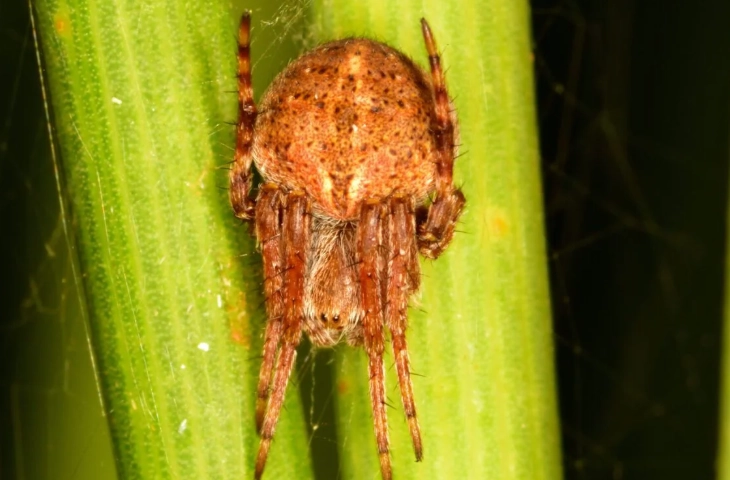
Beyond the web, they have some common physical traits. Most have relatively large, rounded abdomens that can be brightly colored or patterned. Their legs are often spiny. And unlike, say, a wolf spider that runs around hunting, an orb weaver's strategy is "build it and they will come." They spend a lot of time sitting head-down in the center of their web (the hub) or off to the side on a signal line, waiting for a vibration that means dinner has arrived.
The Stars of the Show: Common Orb Weaver Spiders in New Mexico
New Mexico's diverse habitats, from low deserts to pine forests, host a variety of orb weaver species. Here are the ones you're most likely to encounter in your yard, on a hike, or even on your porch light.
The Black and Yellow Garden Spider (Argiope aurantia)
This is the poster child for orb weavers. It's hard to miss. The females are large (body up to 1 inch long), with a striking black and bright yellow pattern on a plump abdomen. Their legs have bands of orange and black. They often incorporate a dense, zig-zag band of white silk (called a stabilimentum) vertically through the center of their web. The purpose of this is debated—it might strengthen the web, warn birds from flying through, or attract insects. You'll find them in sunny, open areas with tall plants or structures to anchor their big webs, which can be over two feet across. The males are tiny, brown, and inconspicuous. Seeing a big, beautiful Argiope is a sure sign of late summer in New Mexico.
The Banded Garden Spider (Argiope trifasciata)
A close cousin to the black and yellow, this orb weaver is also common in New Mexico. Its abdomen has elegant, horizontal bands of white, yellow, and silver on a background that can range from pale yellow to almost black. It builds a similar large orb web and often adds a stabilimentum. I see these just as often as the black and yellow variety around my place near the Rio Grande.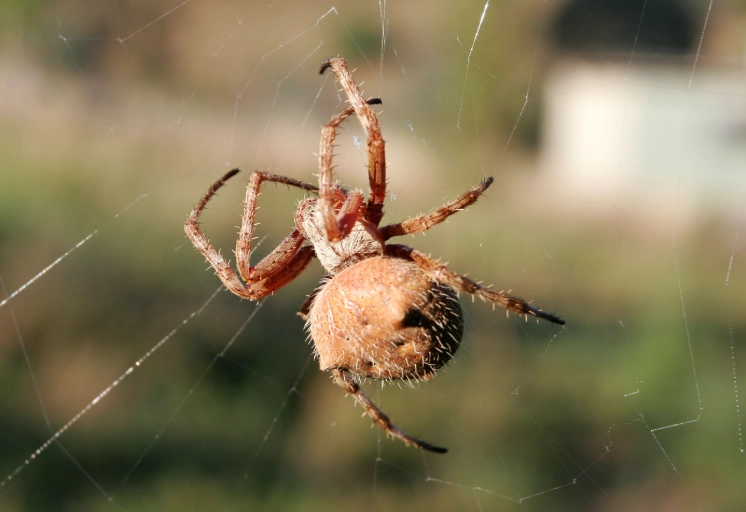
The Hentz Orbweaver (Neoscona crucifera)
This is a workhorse orb weaver spider in New Mexico. They're smaller and less flashy than the Argiopes, usually brown or gray with a distinctive, cross-like pattern on the top of the abdomen. What's cool about them is they are often nocturnal. They build their web at dusk, take it down at dawn, and hide during the day. So you might walk through a fresh web in the early morning and never see the builder. They love to build on structures—between porch rails, on security lights, or in shrubs near buildings.
The Western Spotted Orbweaver (Neoscona oaxacensis)
Another common nocturnal orb weaver in the region. Similar in habits to the Hentz orbweaver, they have a mottled brown and tan abdomen. These are the spiders you find with huge, perfect webs stretched across garden paths or between trees after a summer night. They're incredibly common but often overlooked because they're hidden by day.
Orb Weaver Spider New Mexico: A Simple Identification Table
To help you tell who's who in your garden, here's a quick comparison of the most common orb weaver spiders in New Mexico. This isn't an exhaustive list—there are dozens of species—but it covers the big players you're likely to meet.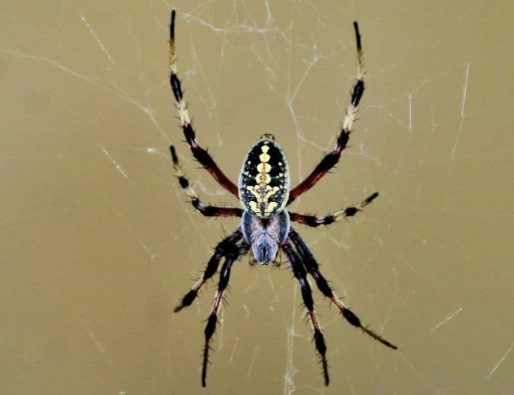
| Common Name | Scientific Name | Key Identifying Features | Web & Habits | When/Where to See in NM |
|---|---|---|---|---|
| Black & Yellow Garden Spider | Argiope aurantia | Large female with bold black & yellow abdomen. Banded legs. | Large orb, often with zig-zag stabilimentum. Diurnal. | Late summer, sunny gardens, fields, roadside vegetation. |
| Banded Garden Spider | Argiope trifasciata | Abdomen with horizontal white/yellow bands. | Large orb, often with stabilimentum. Diurnal. | Similar habitats to A. aurantia, very common statewide. |
| Hentz Orbweaver | Neoscona crucifera | Brown/gray with cross-like pattern on abdomen. | Orb web, often on structures. Nocturnal (web at night). | Common on houses, porches, lights. Summer to fall. |
| Western Spotted Orbweaver | Neoscona oaxacensis | Mottled brown/tan abdomen. | Large orb web. Nocturnal. | Gardens, between trees, across trails. Widespread. |
| Marbled Orbweaver | Araneus marmoreus | Orange or yellow abdomen with a marbled, dark pattern. | Orb web in low vegetation. | Less common, found in wooded or riparian areas. |
Looking at that table, you can see the Argiopes are the daytime divas, while the Neoscona species are the night-shift crew. Both are vital parts of the ecosystem.
The Million-Dollar Question: Are Orb Weavers in New Mexico Dangerous?
This is the first thing most people want to know. Let's be perfectly clear.
No. Orb weaver spiders are not dangerous to humans or pets.
I know, they can look intimidating, especially the big, colorful Argiopes. But here's the breakdown. First, they are incredibly reluctant to bite. Their entire survival strategy is based on staying still and letting their web do the work. If you accidentally disturb one, its first instinct is to drop off the web and play dead or run away. You practically have to squeeze one to get it to bite in self-defense.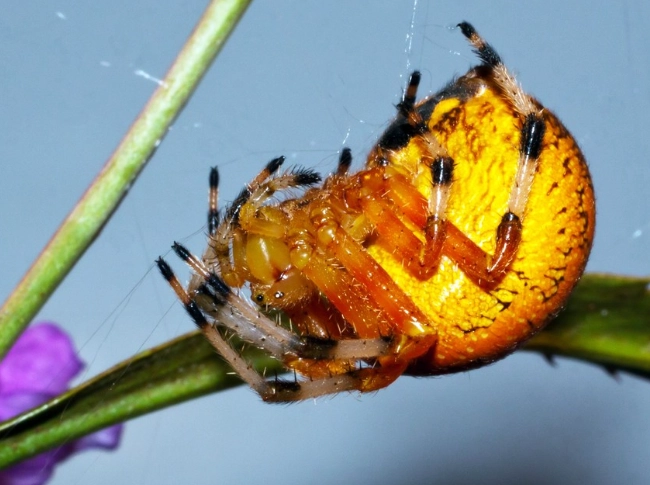
Second, if a bite did occur, their venom is designed for small insects like flies and moths. For humans, the effect is typically no worse than a mild bee sting—a bit of localized pain, maybe a small red bump, and some itching. There is no record of orb weaver venom causing serious medical issues in healthy humans. The World Health Organization doesn't even list orb weavers among spiders of medical importance. For a more localized and detailed perspective, the extension entomologists at New Mexico State University consistently note that these spiders are harmless and beneficial.
So, you can relax. That impressive orb weaver spider in your New Mexico garden is a pacifist.
Why You Should Actually Welcome Orb Weavers
Instead of fearing them, consider them your tiny, eight-legged pest control service. Here’s what they do for you, for free:
- Mosquito Assassins: A single orb weaver can catch dozens of mosquitoes, gnats, and other biting flies in a night.
- Moth Control: They are fantastic at catching night-flying moths, many of which have caterpillars that chew on garden plants.
- Fly Patrol: House flies, blow flies, you name it—if it flies into the web, it's lunch.
- Natural Balance: They are a key part of the food web, providing food for birds, lizards, and wasps.
Honestly, if you have a healthy population of orb weavers around your home, it's a sign of a healthy local ecosystem. They're a better indicator than most lawn ornaments.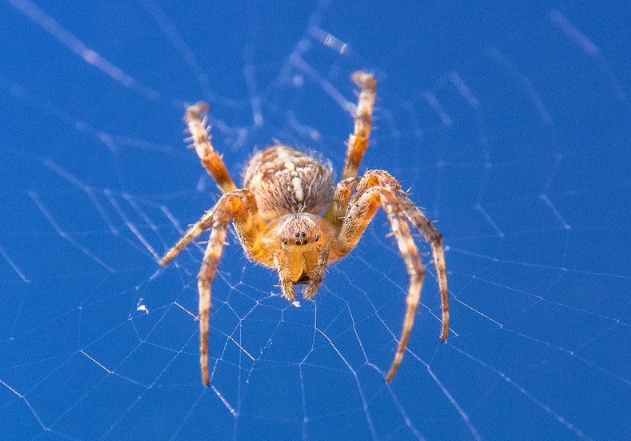
Living Alongside Orb Weavers: Practical Tips
Okay, so you appreciate them, but maybe you don't want a giant web right across your front door. That's fair. Here’s how to coexist peacefully.
If the web is in an inconvenient spot: The simplest solution is to gently knock the web down with a broom or stick in the evening. The spider will almost always retreat, unharmed. Remember, many orb weavers rebuild nightly, so she might just rebuild in the same spot. If she does, you can try relocating her. Carefully guide her onto a stick or into a cup and move her to a nearby shrub or fence corner where her web won't be disturbed. She'll get the hint.
To discourage webs on porches or high-traffic areas: Keep exterior lights off when not needed, or switch to yellow "bug" lights which are less attractive to the flying insects that spiders eat. No food, no spiders. Also, regularly sweeping away old webs and egg sacs from corners in the fall can reduce the number of spiderlings that hatch nearby in the spring.
What about pesticides? I'd strongly advise against it. Spraying broad-spectrum insecticides to kill spiders is overkill, harms countless beneficial insects (like bees and ladybugs), and is completely unnecessary for such harmless creatures. Physical removal is safe, effective, and ecologically sound.
Answering Your Orb Weaver Spider New Mexico Questions (FAQs)
I've gotten a lot of questions from friends and neighbors over the years. Here are the most common ones, straight from the curious minds of New Mexico.
Why did my orb weaver disappear overnight?
This is super common and has a few explanations. If it's a nocturnal species (like a Neoscona), it took its web down at dawn and is hiding in a curled leaf or crevice nearby. If it's late fall, the adult spider may have died after laying her egg sac. Or, a predator like a bird or wasp may have taken it. They don't live long lives, so disappearance is part of their natural cycle.
What are those brown, papery sacs I see in my shrubs in winter?
Those are almost certainly orb weaver egg sacs! The female spins a tough, silken case, fills it with hundreds of eggs, and attaches it to a protected spot. She guards it until she dies. The eggs overwinter inside that weatherproof sac, and the tiny spiderlings emerge in the spring. Please leave them be—they're the next generation of pest control.
Do orb weavers bite people?
As discussed, it's extraordinarily rare. It would require direct, sustained pressure, like if one got trapped between your skin and clothing. Even then, the bite is medically insignificant. They are not aggressive. Think of them as the librarians of the spider world—they just want to be left alone to do their work.
How can I tell if it's an orb weaver or a more dangerous spider?
In New Mexico, the spiders with medically significant venom (like the black widow and the desert recluse) look nothing like an orb weaver. Black widows are shiny black with a red hourglass, make messy cobwebs in dark, undisturbed places, and have a compact, round abdomen. Recluses are small, tan, with a dark violin shape and are rarely seen out in the open. Orb weavers have the classic circular web in open areas, often have colorful/patterned abdomens, and are out in the open. The web is the biggest giveaway. For excellent visual identification guides, I always cross-reference with the citizen science site BugGuide, which is moderated by entomologists.
What should I do if I actually get bitten?
First, stay calm. It's incredibly unlikely to be from an orb weaver. Wash the area with soap and water, apply an ice pack to reduce swelling, and monitor it. If you experience symptoms beyond minor local irritation (which would be highly unusual for an orb weaver bite), consult a doctor. The key is to be able to describe the spider, which is another great reason not to squash them on sight!
A Part of the Landscape
After years of observing them, I've come to see orb weavers not as creepy-crawlies, but as a dynamic part of New Mexico's wildlife tapestry. Their arrival in mid-summer is as predictable as the monsoon rains. Their webs, strung with dew at sunrise, are among the most delicate and beautiful natural structures you'll find. They ask for nothing, and in return, they work tirelessly to keep the insect population in check.
The next time you see that intricate web and its patient architect, take a moment to look closer. You're seeing millions of years of evolution, a perfect blend of art and function. You don't have to love spiders, but understanding the role of the common orb weaver spider in New Mexico might just turn a moment of apprehension into one of appreciation. At the very least, you can confidently tell your family, "Don't worry, it's just an orb weaver. It's on our side." And then maybe gently move it off the patio furniture.
LEAVE A REPLY
Your email address will not be published. Required fields are marked *