Let's be honest. Most of us don't have spiders on our list of favorite backyard visitors. We see a web, we see the architect, and our first instinct might be to grab a broom. I get it. I used to be the same way. But then I started paying closer attention to the intricate, dew-covered webs in the corners of my porch and the shrubs along my fence line here in New Mexico. One spider, in particular, kept showing up—a plump, strikingly patterned arachnid that seemed utterly dedicated to its craft. After some digging (and a bit of shame for my previous broom-wielding ways), I learned I was hosting the native New Mexico orb weaver. And friends, I've completely changed my tune.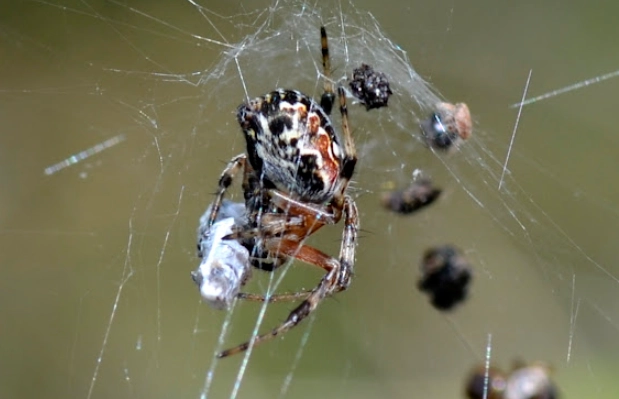
Quick Navigation
- Wait, Which Spider Are We Actually Talking About?
- A Detailed Portrait: Identifying Your Local Orb Weaver
- Life Cycle and Behavior: A Year in the Life
- Habitat and Range: Where to Find Them (Or Where They'll Find You)
- The Unsung Hero: Why This Spider is a Gardener's Best Friend
- Coexisting Peacefully: What to Do If You Find One
- Clearing Up the Confusion: Common Questions Answered
- Final Thoughts: A Plea for Tolerance
Wait, Which Spider Are We Actually Talking About?
Here's the first hiccup in the search for information. Common names can be messy. When people search for "New Mexico orb weaver," they're often referring to one of the most common and visible orb-weaving spiders in the region. Based on prevalence and description, the spider that usually gets this local moniker is Araneus pegnia. Sometimes it's also loosely applied to other similar orb weavers in the Araneus or Neoscona genera found here.
For the sake of clarity and because it matches what most folks are seeing in their yards, we'll focus on the characteristics of Araneus pegnia and its close relatives as the archetypal New Mexico orb weaver. The cool thing is, even if the exact species varies, their biology and role are almost identical.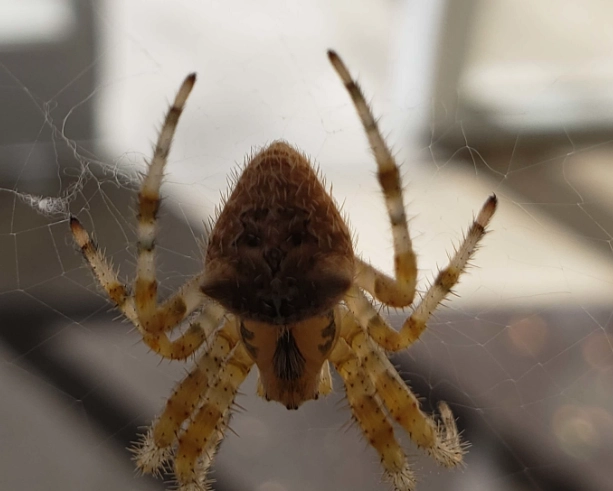
A Detailed Portrait: Identifying Your Local Orb Weaver
Forget the tiny, scurrying house spiders. Orb weavers are the landscape artists of the spider world. The New Mexico orb weaver is a classic example.
Size and Stature: They've Got Presence
Females are the ones you notice. They're robust, with a body (cephalothorax and abdomen combined) that can reach up to an inch in length. Their legs are long, often making them appear even larger. Males, as is typical with many spiders, are considerably smaller and less conspicuous—often hanging around the edges of the female's web. The size alone can be startling, but it's a sign of a successful hunter.
Color and Patterns: Nature's Abstract Art
This is where they get interesting. Their abdomens are a canvas. You'll often see a base color ranging from dusty gray and tan to a rich, almost orange-brown. Overlaid on this are patterns of white, yellow, or pale greenish spots and lines that can look like chevrons, leaf patterns, or a series of dashes. The underside is often dark. The legs are typically banded with darker and lighter segments. No two are exactly alike, which makes finding them a bit of a treasure hunt.
The Masterpiece: The Orb Web
You can't talk about an orb weaver without talking about its web. This is their defining feature and a marvel of natural engineering. It's the classic spider web of storybooks: a perfect, spiraling circle of sticky silk anchored by radiating non-sticky spokes and a frame attached to plants, eaves, or fences.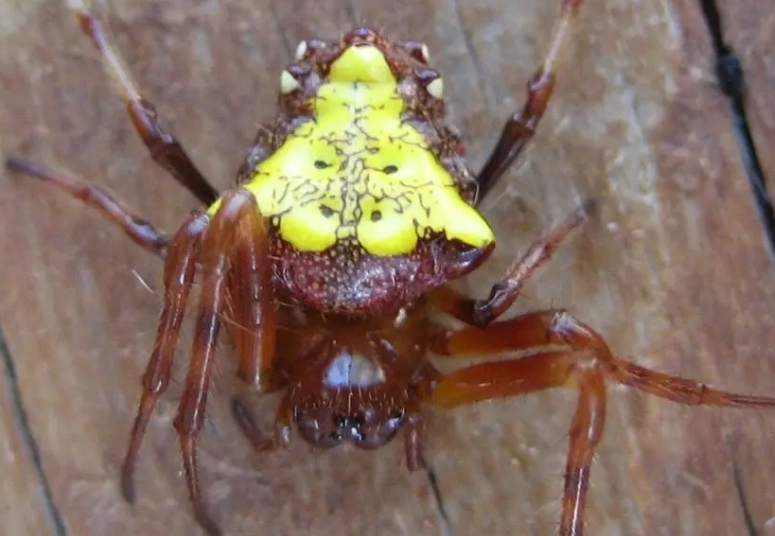
Many, though not all, New Mexico orb weaver species add a unique flourish called a stabilimentum. That's the thick, zig-zagging band of white silk you often see woven vertically through the center. Why do they make it? Debate rages. It might be for structural stability, to attract insects by reflecting UV light, or to make the web more visible to birds so they don't fly through and destroy it. I lean toward the bird-alert theory, having seen fewer wrecked webs since these spiders set up shop.
Here’s a breakdown of the web’s key components and their purpose:
| Web Component | Material & Property | Primary Function |
|---|---|---|
| Frame & Radii (Spokes) | Strong, non-sticky "dragline" silk | Provides the web's structural framework and allows the spider to walk to the center without getting stuck. |
| Capture Spiral | Elastic, sticky "capture" silk | Traps flying insects. The elasticity prevents it from snapping on impact. |
| Stabilimentum (Zig-Zag) | Dense, matte white silk | Hypothesized functions: visibility to birds, attracting prey, structural support, or sun protection. |
| Hub (Center) | Non-sticky silk | The spider's command center, where it rests head-down, sensing vibrations through its legs. |
A brutal but honest fact? They're not great at interior design. A web in a high-traffic doorway or right at face-level on a garden path is a common, annoying complaint. They seem to pick locations based on insect flight paths, not human convenience. I've had to gently relocate a few using a long stick to guide them into a jar before moving the web frame. It's a hassle, but worth it to keep them around.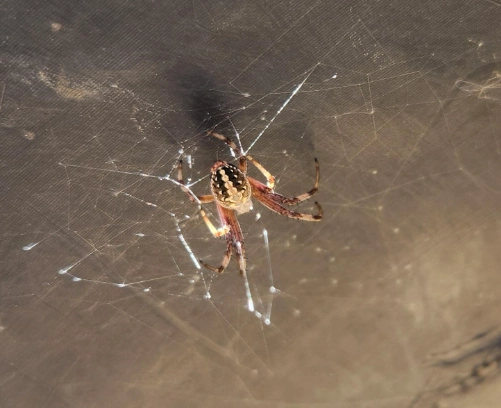
Life Cycle and Behavior: A Year in the Life
Understanding their life cycle explains why they seem to appear out of nowhere in late summer and vanish with the first hard freeze.
The Annual Cycle
Late Spring/Early Summer: Tiny spiderlings from last year's egg sacs emerge and disperse, often by "ballooning"—letting out a strand of silk to be caught by the wind. You won't see them yet.
Mid-Summer: Juveniles establish small, often hidden webs, growing through several molts. They're still not very visible.
Late Summer/Fall: This is their big moment. Females reach full size and build their large, conspicuous webs in prime locations. Mating occurs. The males, after their perilous romantic endeavors, often die.
Fall: The gravid female produces one or more large, brown, papery egg sacs, often hiding them in a protected crevice or leaf litter. She guards them fiercely but typically dies with the first frost.
Winter/Spring: The next generation overwinters safely inside the insulated egg sac, waiting for warmer days to hatch and begin the cycle anew.
They are nocturnal hunters. During the day, they may rest at the hub or hide in a nearby retreat (a curled leaf or crevice) connected to the web by a signal line. At dusk, they become active, often rebuilding damaged sections of the web. The web is a sensory extension of their body. When a moth, mosquito, or beetle hits the sticky spiral, the vibration telegraphs its location, and the spider rushes out to deliver a paralyzing bite and wrap it in silk for later consumption.
It's true. A New Mexico orb weaver will often consume the old, damaged capture spiral in the morning, recycling the precious proteins to spin a fresh web at night. Nothing goes to waste.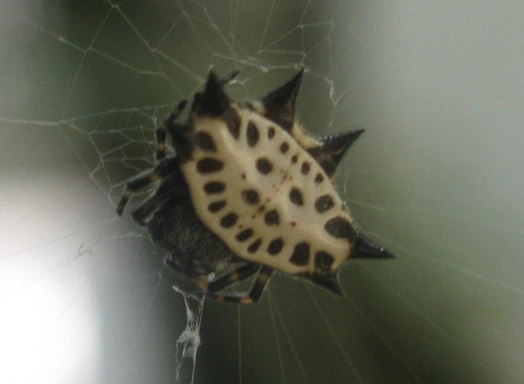
Habitat and Range: Where to Find Them (Or Where They'll Find You)
This spider is right at home in the varied ecosystems of the Southwest. It's not a desert specialist in the purest sense—it needs structures for its web and moisture for its prey.
Prime Real Estate Includes:
- Riparian Zones: Near rivers, streams, and irrigation ditches (like the Rio Grande corridor) where insect life is abundant.
- Gardens and Landscaped Yards: Your flower beds, shrubs, and porch lights are all-you-can-eat buffets for them.
- Woodland Edges and Fences: Anywhere that provides anchor points and flying insects.
- Agricultural Perimeters: Fields and orchards.
They are synanthropic, meaning they thrive in human-altered environments. If you have bugs and something to tie a web to, you're a potential landlord. The New Mexico orb weaver is a testament to native wildlife adapting to our presence.
The Unsung Hero: Why This Spider is a Gardener's Best Friend
This is the most important section. The instinct to kill spiders is often rooted in fear, but for this species, that fear is misplaced and counterproductive.
Let's list the pests a single orb weaver can remove from your yard in a season: moths (including cabbage loopers and corn earworms), mosquitoes, flies, beetles, leafhoppers, and grasshoppers. They are voracious, natural pest controllers. By allowing them to live, you're directly reducing your need for chemical insecticides. They're working for you, every single night.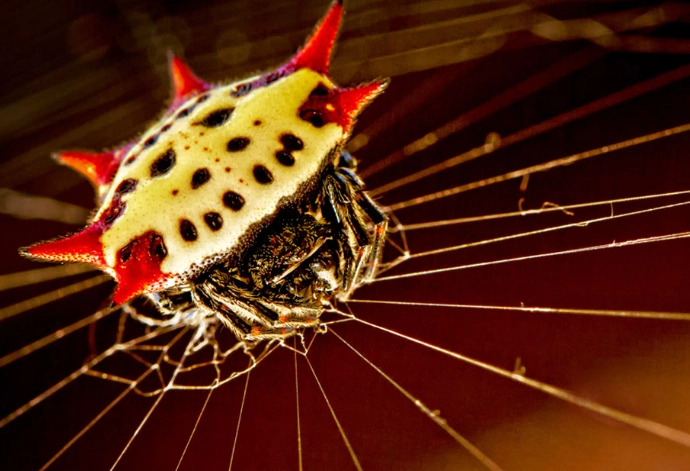
Let's Address the Fear: Venom and Bites
This is the big question. Are they dangerous to humans or pets? The short, definitive answer is no.
Like almost all spiders, they possess venom to subdue their insect prey. However, the venom of orb weavers in the Araneidae family is not medically significant to humans. Their fangs are physically capable of piercing human skin, but a bite is an extreme rarity—it would only happen if they were forcibly pressed against your skin.
The result? At worst, it might be comparable to a mild bee sting—a bit of localized redness, itching, or swelling that fades quickly. I have never been bitten, nor have I found a credible report of a severe reaction from this group of spiders in New Mexico. Their primary defense is to drop from the web or play dead, not to bite. The risk is vanishingly small.
Their ecological value is immense. They are a crucial food source for birds, lizards, and wasps, integrating perfectly into the local food web. Removing them creates a small but tangible gap in that web.
Coexisting Peacefully: What to Do If You Find One
So you have a magnificent New Mexico orb weaver in a problematic spot. Here’s your action plan, from most to least recommended.
- Let It Be (The Best Option): If the web is out of the way, just admire it. Watch it at dusk. It's a free nature show.
- Gentle Relocation: If it's in a doorway or path, wait until dusk when the spider is active. Use a long stick or broom to gently break the web's anchor points on one side, encouraging the spider to move. You can also guide it into a large jar and move it to a nearby shrub. This is what I do.
- Web Removal, Spider Spared: Simply sweep away the web in the evening. The spider will almost always retreat to safety and simply build a new one in a slightly different location nearby the next night. It's an inconvenience for them, not a death sentence.
What NOT to do: Don't spray it with pesticide. That nukes a beneficial animal and introduces toxins into your immediate environment for no good reason. It's overkill in the worst way.
Clearing Up the Confusion: Common Questions Answered
I get a lot of questions from neighbors. Here are the big ones.
Often, yes. Those common names refer to the prominent stabilimentum. The famous Black-and-Yellow Argiope is also called a writing spider, but it's much more contrastingly colored. The local New Mexico orb weaver fits the description too.
Don't use broad-spectrum insecticides. Plant native flowering plants to attract night-flying insects (moths love evening-bloomers like moonflower or night-scented stock). Provide structures like tall plants, trellises, or fencing for web anchors. Leave an outdoor light on at night to draw in their prey (though not directly over seating areas!).
Not at all. That's like comparing a deer to a wolf. Brown Recluses and Black Widows are in completely different spider families (smooth, small, build messy cobwebs or retreats, not ornate orbs). The New Mexico orb weaver is visually distinct and behaviorally non-aggressive. For accurate identification of New Mexico's spiders, including the medically significant ones, a great resource is the New Mexico State University's Cooperative Extension Service. They provide science-based, local information.
As described, the adults die. Only the protected egg sacs survive, sheltering the next generation. You can sometimes find these tan, teardrop-shaped sacs in sheltered spots.
Possibly a different species within the same family. New Mexico has several orb weaver species. Color can vary. The key is the large, rounded abdomen and the classic orb web. For citizen science and help with ID, platforms like iNaturalist are fantastic. You can upload a photo and get input from experts and enthusiasts.
Final Thoughts: A Plea for Tolerance
Learning about the New Mexico orb weaver transformed my view of my own backyard. That intricate web is no longer a nuisance; it's a sign of a healthy, balanced ecosystem right outside my door. This native spider is a master predator of pests, a fascinating example of adaptation, and utterly harmless to us.
Sure, they can be inconvenient. That web across the gate is a pain. But a quick, gentle relocation solves the problem without resorting to chemicals or killing a creature that is actively helping you.
My advice? Next time you see that distinctive, zig-zagged orb web with its plump, patterned engineer, take a moment. Watch it. See it for what it is—a hardworking, beneficial, and truly New Mexican resident. We're lucky to have them. For more in-depth, taxonomic information on orb-weaving spiders, the American Arachnological Society maintains excellent scientific resources.
Let's give the New Mexico orb weaver the respect it deserves. Put the broom down. Your garden will thank you.
LEAVE A REPLY
Your email address will not be published. Required fields are marked *