Quick Guide
Let's talk about spiders. In Kansas. I know, for some folks, just reading that sentence might send a shiver down the spine. But hear me out. If you live in the Sunflower State, you've shared your space with these critters whether you knew it or not. They're in the corners of your garage, maybe in that old woodpile out back, and sometimes, unfortunately, in the basement. The thing is, most of them are harmless. Actually, they're incredibly beneficial, gobbling up mosquitoes, flies, and other pests we really don't want around. But which ones should you actually worry about? How can you tell them apart? That's where a lot of the anxiety comes from—the unknown.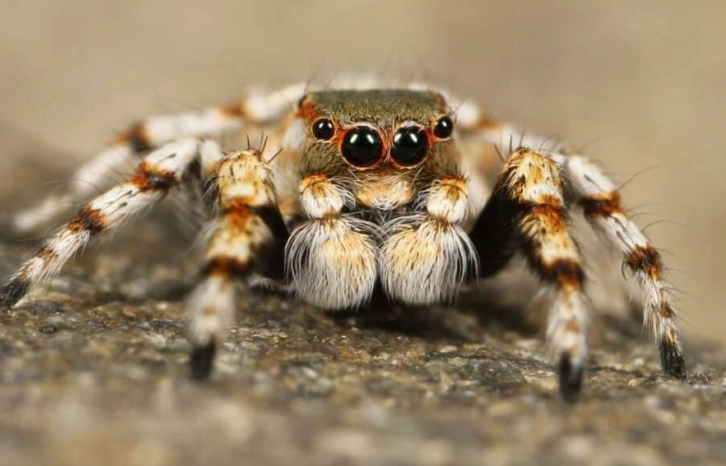
My own run-in with a particularly bold cellar spider in my Wichita apartment last week got me thinking. I'm not an arachnophobe, but even I did a double-take. It made me realize how little most of us know about the specific spiders in Kansas. We lump them all together as "scary," when in reality, it's like being afraid of all dogs because of one pitbull. Not fair, and not useful. So, I dug into the research, talked to some local extension agents (shout out to the great folks at Kansas State University's Research and Extension service), and put together this guide. Think of it as your neighborly handbook to the arachnid world right outside your door.
Quick Reality Check: Of the hundreds of spider species documented in Kansas, only a handful pose any real medical threat to humans. The vast majority are shy, non-aggressive, and want nothing to do with you. Your fear is their fear.
Meet the Cast: Common Spiders You'll Find in Kansas
Kansas's geography, from the tallgrass prairies to the wooded river valleys, creates diverse habitats. This means spider diversity is pretty high. You won't see tarantulas wandering around (those are more a southwestern thing), but you will see a fascinating mix. Let's break down the usual suspects you're likely to encounter, from the utterly harmless to the ones that warrant caution.
I find it helpful to categorize them. Some are web-builders, artists of silk who wait patiently. Others are hunters, roaming the ground or foliage. Here’s a rundown of the top spiders in Kansas you should be able to recognize.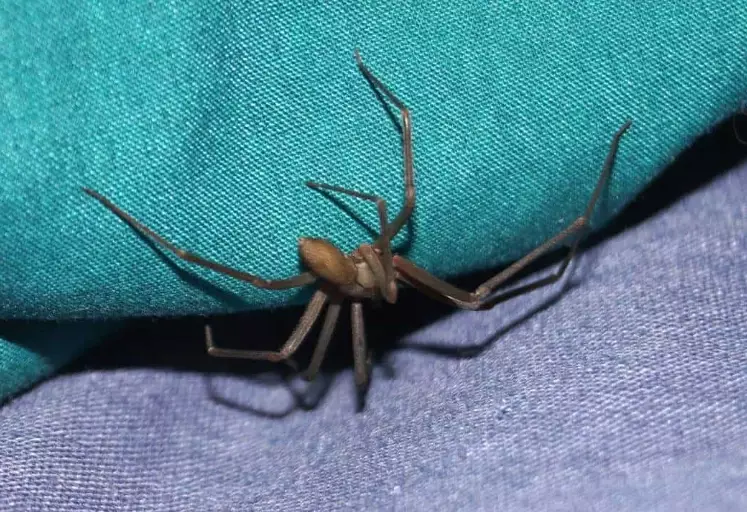
| Spider Name | What It Looks Like | Where It Lives | Danger Level & Notes |
|---|---|---|---|
| Orb Weaver Spiders (Various species like the Black and Yellow Garden Spider) | Often large, colorful, with striking patterns. Famous for beautiful, circular webs. | Gardens, between plants, on porches, in tall grass. Anywhere with open space for a web. | Harmless. The quintessential garden spider. They are fantastic for pest control and are completely uninterested in people. |
| Cellar Spiders ("Daddy Long-Legs") | Extremely long, thin legs. Small, oblong body. Often seen dangling upside-down in messy, irregular webs. | As the name says: cellars, basements, garages, dark corners, sheds. | Harmless. A common spider in Kansas homes. They are fragile and pose no threat. Myth about potent venom is false. |
| Wolf Spiders | Large, hairy, and robust. Often brown or gray with camouflaging patterns. They have prominent eyes that reflect light at night. | Ground dwellers. Lawns, under stones, leaf litter, sometimes wander into garages or basements. | Low risk. They are hunters, not web-builders, and can move fast, which startles people. Their bite is rare and typically no worse than a bee sting unless you're allergic. |
| Jumping Spiders | Small, compact, and often fuzzy or iridescent. They have a distinctive, curious way of turning their head to look at you. | On sunny walls, windowsills, fences, and plants. They love sunbathing. | Harmless & Beneficial. Incredibly cute (as far as spiders go) and intelligent. They are visual hunters and will watch you curiously. Cannot hurt you. |
| Brown Recluse Spider | Medium-sized, uniform tan to dark brown. The key identifier: a dark, violin-shaped marking on the cephalothorax (the body segment where legs attach), with the neck of the violin pointing toward the abdomen. | SECLUDED, INDOOR areas. Closets, attics, boxes, under furniture, behind pictures. They shun light and activity. | Medically Significant. This is the primary spider of concern in Kansas. Their venom can cause necrotic lesions. However, bites are rare and usually occur when the spider is pressed against skin. |
See? Most of them are just part of the ecosystem. The jumping spiders are almost endearing once you get past the eight legs. But that last one, the brown recluse, is the reason we need guides like this. It's the elephant in the room—or rather, the spider in the attic.
The Focal Point: Understanding the Brown Recluse in Kansas
No discussion about spiders in Kansas is complete without a deep, honest look at the brown recluse (Loxosceles reclusa). It's the one that generates the most fear, calls to pest control, and misidentifications. Let's demystify it.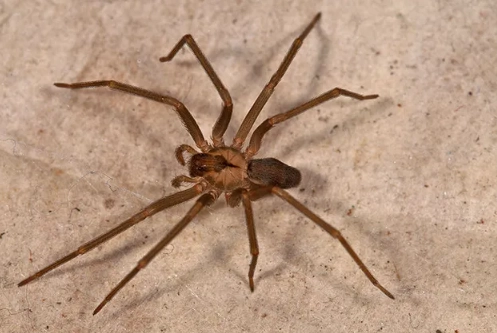
First, a crucial point: They are not aggressive. The name "recluse" is perfectly chosen. They hide. They run. They want to be left alone. Bites almost always happen by accident—when a spider is trapped in clothing, bedding, or a towel. I once put on a gardening glove that had been in the shed all winter and felt a panic before shaking it out. It's those moments of unintended contact we need to prevent.
Identification: Don't Panic, Verify
More spiders are misidentified as brown recluses than any other. People see a brown spider and panic. The violin mark is the key, but you need good lighting and sometimes a magnifying glass. Look for these traits combined:
- The Violin: A dark, distinctive fiddle-shaped marking on the front half of the body.
- Eyes: They have six eyes arranged in three pairs (dyads), unlike most spiders which have eight. This is a dead giveaway but hard to see without magnification.
- Color & Hair: Uniform color (no stripes or bands on the legs), and fine hairs covering the body, not the thick spines you see on wolf spiders.
- Web: It's not a pretty orb. It's an irregular, off-white, sheet-like web often in a secluded corner, which they use as a retreat, not for catching prey.
If You Suspect a Bite: Don't wait to see if it gets worse. Capture the spider safely (in a jar) if possible for positive identification. Clean the bite area with soap and water, apply a cold compress, and seek immediate medical attention. The CDC and local Kansas doctors emphasize that early treatment is important. Do not try home remedies like electric shock or applying ointments that seal in the venom—these are myths and can make things worse.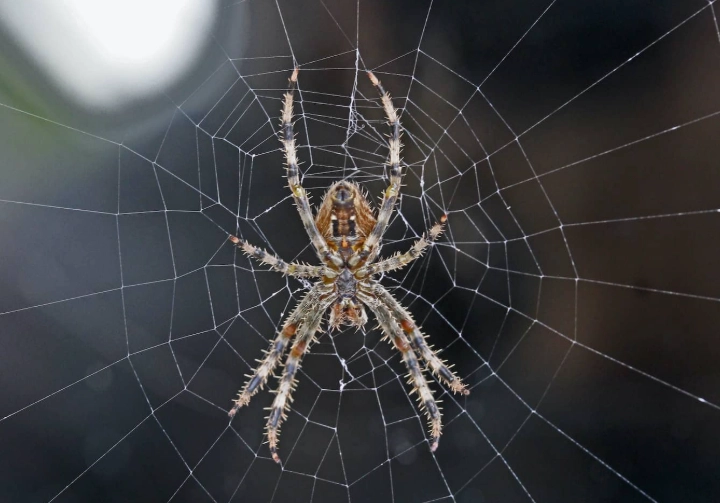
Their Range and Habitat in the State
Brown recluses are established throughout Kansas. They are not just a "southeastern Kansas" problem, though populations might be denser in certain areas. They thrive in undisturbed, cluttered, dry environments. An old, cluttered basement in a Lawrence home is prime real estate. A clean, frequently used storage room is less appealing to them.
I spoke to an entomologist who said the biggest predictor of a brown recluse issue isn't your town, but the state of your storage areas. It's less about geography and more about housekeeping, which is something we can actually control.
Living Safely with Spiders in Kansas: Practical Control & Prevention
Okay, so you want to coexist peacefully but also minimize encounters, especially with the reclusive types. Eradication is impossible and ecologically foolish—remember the mosquito-eating benefits. The goal is management and prevention. Here's a layered approach that works.
Step 1: Make Your Home Less Inviting (Exclusion)
This is pest control 101. Spiders go where their food (other insects) is, and where they can find shelter.
- Seal it up: Check foundations, window screens, door sweeps, and utility entry points. Use caulk or weather stripping. A tiny gap is a welcome mat.
- Declutter, declutter, declutter: This is the single most effective step for recluse prevention. Reduce cardboard boxes (they love the grooves), especially in basements and attics. Use plastic, sealable bins instead. Keep storage areas tidy and off the floor.
- Reduce outdoor harborage: Keep firewood, lumber, and debris piles away from the house's foundation. Trim back vegetation and vines that touch the siding.
Step 2: Smart Cleaning Habits
It's not about being spotless, but being strategic.
- Vacuum regularly, especially in corners, under furniture, and along baseboards. This removes spiders, egg sacs, and the insects they eat. Empty the vacuum canister or bag outside immediately.
- Dust and knock down webs in garages, sheds, and porches. A simple broom works.
- Shake out clothing, shoes, gloves, and bedding that have been stored or left on the floor, especially in lower-level bedrooms.
Step 3: When to Consider Professional Help
If you're finding multiple brown recluses indoors, especially in living areas, it's time to call a licensed pest management professional. They can perform a thorough inspection and use targeted, interior crack-and-crevice treatments. Avoid companies that promise to "spray your whole yard" to eliminate spiders—it's often overkill, harmful to other wildlife, and ineffective against the indoor recluse problem. The University of Kansas and other state resources often have lists of recommended IPM (Integrated Pest Management) practitioners.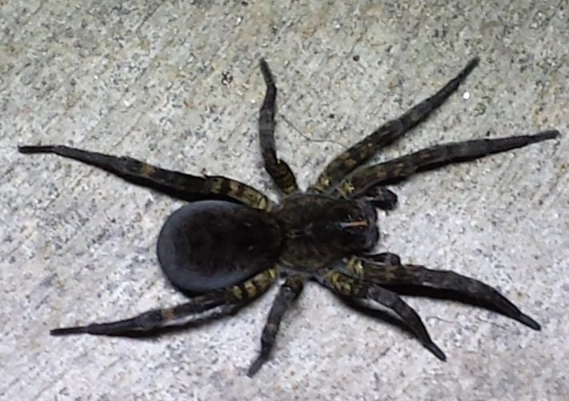
Your Questions Answered: Kansas Spider FAQ
No spider native to Kansas is considered "deadly" to a healthy adult in terms of causing death from a bite. The brown recluse and, very rarely, the black widow (whose range in Kansas is limited and sightings are uncommon) have venom that can cause serious medical symptoms requiring hospitalization, but fatalities are extremely rare thanks to modern medicine.
This is the big one. Wolf spiders are larger, hairier, have patterned bodies and banded legs, and are often seen actively running. Brown recluses are smoother, have that solid violin mark, uniform legs, and are almost never seen out in the open. A wolf spider is a linebacker; a recluse is a librarian hiding in the stacks.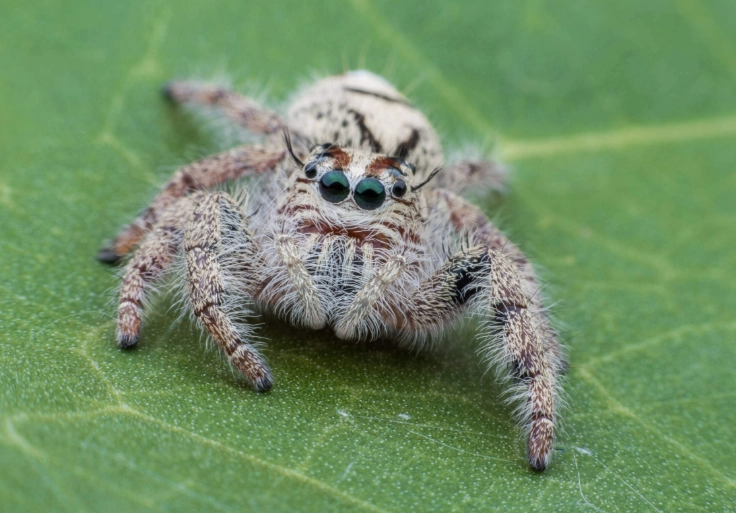
Pause. Identify it if you can safely. If it's a harmless orb weaver or jumping spider, consider gently capturing it with a cup and paper and releasing it outside—they're great pest controllers. If you suspect it's a brown recluse and you're uncomfortable, you can vacuum it up (and empty the vacuum outside) or carefully dispatch it. The goal isn't to kill every spider, but to manage risk.
Absolutely vital. They are critical natural pest controllers. A study from the USDA has highlighted their role in agricultural and garden ecosystems. By reducing flies, mosquitoes, crop pests, and even other spiders, they provide a free, non-toxic service. When you talk about the balance of nature, spiders are a key weight on the scale.
For fantastic, local resources, check out the Kansas State University Department of Entomology publications. Also, the U.S. Fish & Wildlife Service pages on prairie ecosystems often discuss invertebrate life, including spiders. For photo-based identification, local nature groups on social media or apps like iNaturalist can be helpful, but always cross-reference with official sources.
Look, at the end of the day, spiders in Kansas are just another part of living in this beautiful, diverse state. From the sprawling prairies to our own backyards, they're part of the web of life—literally. A little knowledge goes a long way in turning fear into respect, or at least into practical understanding. You don't have to love them. But you can learn to live with them smartly and safely, knowing which ones are friends, which are mere acquaintances, and which one requires a bit of extra caution and tidy storage.
Stay curious, and maybe give that next jumping spider a nod instead of a swat.
LEAVE A REPLY
Your email address will not be published. Required fields are marked *