Quick Navigation
- The Rodent Dental Blueprint: What They Have in Common
- Mouse Teeth vs Rat Teeth: The Head-to-Head Comparison
- Beyond the Incisors: The Full Dental Formula
- Why This Knowledge is Power: Practical Applications
- Common Questions About Mouse Teeth and Rat Teeth
- Putting It All Together: Your Identification Checklist
So you've found some gnaw marks. Maybe it's on a baseboard, a cable, or the corner of a cereal box. Your first thought is "rodent." But is it a mouse or a rat? Most people jump to size, and that's not wrong, but what if you only have the evidence they left behind? That's where understanding the nitty-gritty of mouse teeth vs rat teeth becomes more than a biology trivia question—it becomes a practical skill for homeowners, renters, and even pet owners. I remember the first time I saw the difference under a magnifying glass; it was one of those "aha" moments that made all the gross cleanup feel slightly more interesting.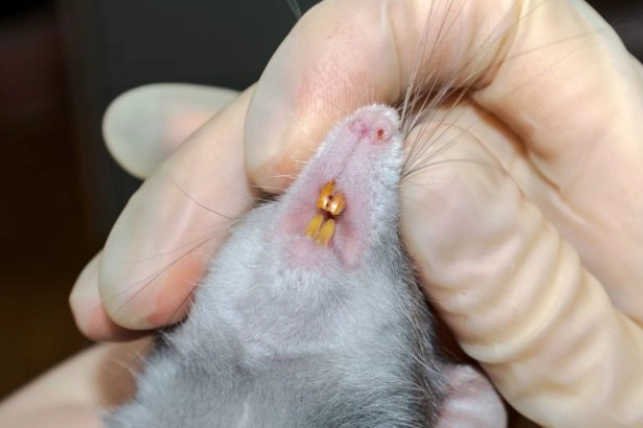
The truth is, their dental tools are masterpieces of evolutionary engineering, perfectly adapted for survival. But they're not identical. Far from it. While both are rodents with the infamous ever-growing incisors, the devil (and the identification) is in the details. Getting this right can change your approach to dealing with them. Misidentify, and you might use the wrong trap, misjudge the scale of an infestation, or even fail to protect your property effectively.
Why Bother? Correctly identifying whether you're dealing with mouse teeth or rat teeth evidence helps you understand the animal's size, potential entry points, gnawing strength, and even population size. It's the first, most crucial step in effective management.
The Rodent Dental Blueprint: What They Have in Common
Before we dive into the differences, let's set the stage. Both mice and rats belong to the order Rodentia, a name derived from the Latin "rodere," meaning "to gnaw." This isn't a cute hobby; it's a biological imperative. Their dental setup is defined by one key feature: a single pair of upper and lower incisors that never stop growing. I mean, they grow continuously, like fingernails, but much harder and sharper.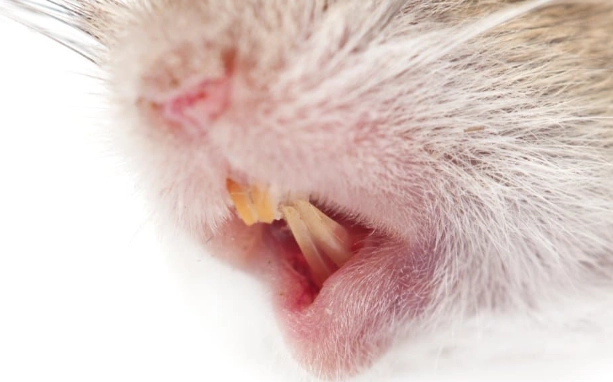
This constant growth is a double-edged sword. It allows them to chew through incredibly tough materials, but it also means they must gnaw daily to wear these teeth down. If they don't, the teeth can grow in a circle, piercing their own skull—a horrific but real consequence. So, that chewing you hear at night isn't just them looking for food; it's essential dental maintenance. Their survival literally depends on it.
Behind these prominent front teeth, there's a gap called the diastema. Then, further back, you find their molars for grinding food. The incisors do the cutting and gnawing; the molars do the chewing. It's a brilliant, efficient system.
Incisor Anatomy 101: The Cutting Edge
Let's zoom in on those famous front teeth. A rodent's incisor is a marvel. The front surface is covered in super-hard enamel, primarily orange-yellow due to pigments like iron. The back side, however, is made of softer dentin. This difference in hardness is the secret to their self-sharpening mechanism.
Every time a rodent gnaws, the softer dentin wears away faster than the hard enamel. This creates a chisel-like, beveled edge that is perpetually sharp. It's a self-renewing tool. Think of it like a pencil where the wood (dentin) erases faster than the graphite (enamel), leaving a perfect point. This is universal to mice and rats. The variation comes in scale, proportion, and the specific marks they leave behind.
Honestly, it's a bit terrifying how effective it is. I've seen mice teeth leave clean cuts on plastic that look like they were made with a sharp knife.
Mouse Teeth vs Rat Teeth: The Head-to-Head Comparison
Okay, here's the core of it. When you place mouse teeth and rat teeth side by side, or more practically, compare the damage they cause, several key distinctions emerge. It's not just "small" vs "big." The proportions and effects tell a more detailed story.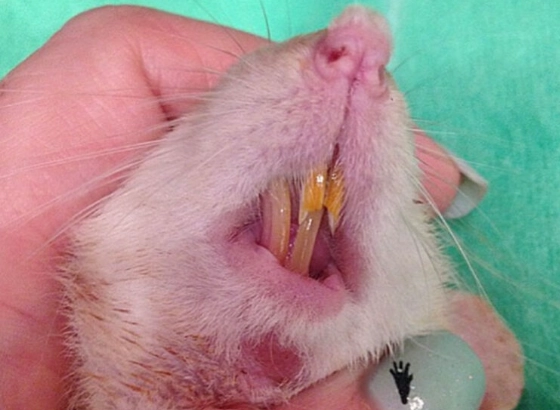
First, the obvious: scale. A typical house mouse (Mus musculus) has a head and body length of about 3-4 inches. A common brown rat (Rattus norvegicus) can be 9-11 inches. Their teeth scale accordingly. Rat incisors are massively more robust, wider, and spaced further apart. A mouse's incisors are fine, needle-like tools. A rat's are industrial-grade chisels.
A Common Mistake: Don't assume a small gnaw mark is automatically from a mouse. A young, juvenile rat can make marks surprisingly similar to a mature mouse's. You often need to look at a combination of clues, not just one.
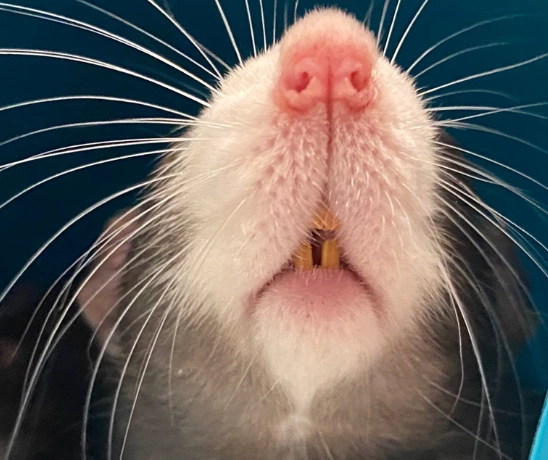
Then there's the color. This is a surprisingly reliable visual clue if you can get a good look (like in a trap-caught specimen or a clear photo). Mouse incisors tend to have a paler, more lemon-yellow hue. Rat incisors are a deeper, more vivid orange or almost ochre color. The higher iron content in rat enamel intensifies the color. It's not a perfect rule, as diet and age can influence it slightly, but it's a strong indicator.
But what about the marks they leave? This is where it gets practical for most of us who aren't examining dead rodents.
The Gnaw Mark Test: Reading the Damage
You're looking at chewed wood, plastic, or wiring. What do you see?
- Mouse Gnaw Marks: Fine, narrow, and often look like a series of parallel scratches or tiny, precise grooves. The grooves are close together because their incisors are close together. The cuts are cleaner on softer materials. On wood, you might see lots of tiny, fine wood shavings.
- Rat Gnaw Marks: Much broader, deeper, and more ragged. You can often see the individual, wider grooves from each incisor, spaced further apart. The damage looks more forceful, more destructive. They can leave distinct, large wood chips. On softer metals like aluminum or lead, their stronger jaws can make significant, distorted gouges.
I once had a rat get into a shed and gnaw on the corner of a treated 4x4 post. The marks were over an eighth of an inch wide each—you could fit a pencil tip in the groove. A mouse's work on the same post would have looked like someone took fine-grit sandpaper to it.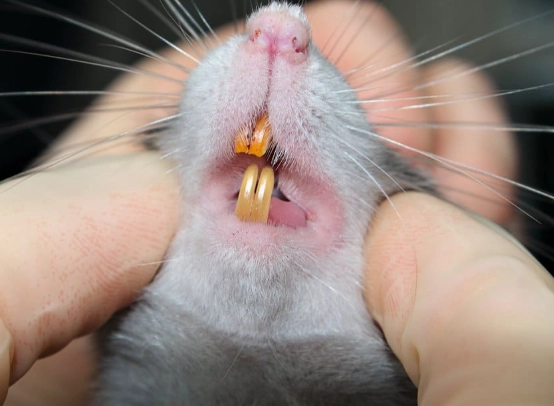
| Feature | Mouse Teeth | Rat Teeth |
|---|---|---|
| Incisor Size | Fine, needle-like (~1-1.5 mm wide) | Large, chisel-like (~2-3+ mm wide) |
| Typical Color | Pale lemon yellow | Deep orange or ochre |
| Gnaw Mark Width | Very narrow grooves ( | Wide, coarse grooves (> 2 mm) |
| Gnawing Sound | Light scratching, nibbling | Loud, persistent grinding/gnawing |
| Common Damage | Packaging, soft wires, thin wood | Structural wood, thick plastic, soft metals |
| Growth Rate* | ~2-3 mm per week (all teeth) | ~4-5 mm per week (all teeth) |
*Growth rate data is generalized from studies like those referenced by the National Institutes of Health (NIH) on rodent biology. Rats, being larger, generally have faster-growing teeth to match their more intense gnawing habits.
The table makes it clear: rat dental work is on a whole other level of destructive potential.
Beyond the Incisors: The Full Dental Formula
While the incisors get all the attention, the complete dental formula is another solid clue for identification, especially for professionals. The "dental formula" is a shorthand describing the number of each type of tooth on one side of the mouth.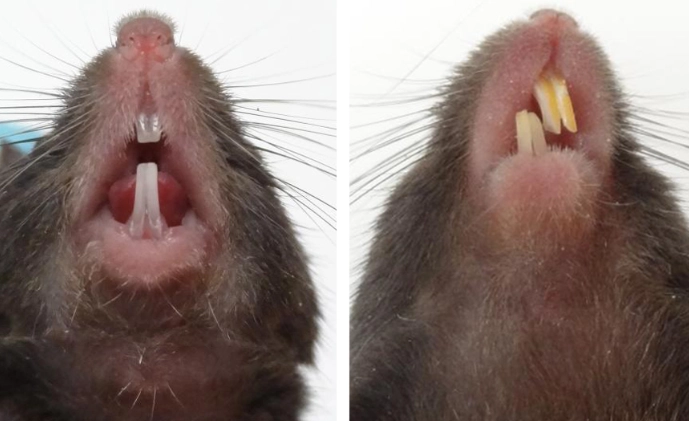
For both common pest species—the House Mouse and the Norway/Brown Rat—the formula is actually the same: 1/1 Incisors, 0/0 Canines, 0/0 Premolars, 3/3 Molars. This reads as: one upper incisor, one lower incisor; no canines; no premolars; three upper molars, three lower molars—per side.
So, if the formula is identical, how does it help? It doesn't, for these two. But it becomes crucial when distinguishing a native wood mouse from a house mouse, or a roof rat from a Norway rat. For example, some native species have slightly different molar patterns. For the average person dealing with a standard house pest, knowing they have 16 total teeth (4 incisors + 12 molars) is enough. The real-world application of the full formula is more for ecological surveys or very precise exclusion work where multiple species are possible. The USDA Animal and Plant Health Inspection Service uses such detailed morphology for tracking species distributions.
Pro Tip: If you're an avid gardener and find rodent skulls, counting the molars and noting their cusp patterns (the bumps on the chewing surface) is the gold standard for species ID. It's far more reliable than size alone, as skulls can be from juveniles.
Why This Knowledge is Power: Practical Applications
Understanding the difference between mouse and rat teeth isn't just academic. It translates directly into smarter actions.
1. Pest Control Strategy
Mice can squeeze through holes as small as a dime. Their fine teeth can enlarge tiny cracks. Rats need a hole the size of a quarter. If you see large, ragged gnaw marks around an entry point the size of a golf ball, you're almost certainly dealing with a rat. You'd then focus on heavier-duty sealing materials like hardware cloth, thick steel wool mixed with caulk, or metal kick plates. For mouse-sized holes, copper mesh or expanding foam might suffice for smaller gaps. Knowing the enemy's tool helps you choose the right armor.
2. Assessing Risk and Urgency
Rat teeth, with their greater strength, pose a higher immediate risk to property and safety. They are far more likely to gnaw through electrical wiring, PVC plumbing, and even soft concrete or cinder block over time. This represents a greater fire and water damage risk. Mouse damage tends to be more localized and on softer materials, though they are prolific breeders. The mouse teeth vs rat teeth evidence helps you triage the problem. Wires chewed with wide grooves? That's a high-priority, potentially dangerous rat issue. Fine nibbles on a cardboard box in the attic? Likely a mouse, still urgent but with different risks (contamination, allergens).
I learned this the hard way. A few years back, I ignored some "small" gnawing in a vacation cabin, thinking it was just a mouse. Came back to find a rat had nearly chewed through a main plastic water line. The width and depth of the tooth marks were the giveaway I should have noticed earlier.
3. For Pet Owners (Fancy Rats & Mice)
If you keep these animals as pets, dental health is paramount. The principles are the same. You need to provide safe, hard items for them to gnaw on to wear down those ever-growing incisors. Lava blocks, hard wood chews, and certain dog biscuits (unsalted) work. A pet rat with overgrown teeth is a veterinary emergency, just like a wild one. The difference is you can actually see their teeth clearly. A healthy pet rat's incisors should be that classic orange, aligned, and not overgrown. A mouse's will be paler and straighter. Monitoring this is part of responsible ownership.
Common Questions About Mouse Teeth and Rat Teeth
Do mouse teeth ever stop growing?
No. Never. That's the defining feature of all rodent incisors. The growth continues throughout their entire life. The wear from gnawing balances it out. If a tooth breaks, the opposing tooth, with nothing to grind against, can overgrow catastrophically.
Which is stronger, mouse teeth or rat teeth?
In terms of absolute force and the hardness of the enamel, rat teeth are stronger. Their jaws are more powerful, and their larger teeth can withstand greater pressure. This allows them to tackle harder materials. Mouse teeth are incredibly sharp and efficient for their size, but they lack the brute force of a rat's dentition. It's like comparing a surgical scalpel (mouse) to a hatchet (rat). Both are sharp, but one is built for power.
Can you tell the age of a mouse or rat by its teeth?
Not really by length, since they're constantly wearing down. However, the wear patterns on the molars can give rough age estimates to biologists. In very young rodents, the incisors are initially white and only gain their yellow/orange pigment as they mature and incorporate minerals from their diet. So, stark white incisors usually indicate a very juvenile animal. For the rest of us, it's not a practical aging method.
What about roof rats vs. Norway rats? Do their teeth differ?
The core anatomy is the same—they're both rats. However, roof rats (Rattus rattus) are typically slightly smaller and more agile than Norway rats. Their heads are narrower. This might result in slightly narrower incisors and finer gnaw marks compared to a burly Norway rat, but the difference would be subtle and easily confused with individual variation. For positive ID between rat species, body proportions, tail length (longer than body for roof rats), and habitat are better indicators than teeth alone. The University of Michigan Museum of Zoology's animal diversity web is a fantastic resource for these morphological comparisons.
Putting It All Together: Your Identification Checklist
Next time you find evidence, run through this mental list:
- Look at the Gnaw Marks: Fine, close-together scratches? Think Mouse. Wide, coarse, forceful gouges? Think Rat.
- Consider the Location & Material: Damage high up, on wires or in attics? Could be either, but roof rats prefer highs. Heavy damage to structural wood or thick plastic at ground level? Leaning Rat.
- Look for Other Clues: Droppings are the biggest giveaway. Mouse droppings are tiny (like grains of rice). Rat droppings are much larger (like raisins or bigger).
- If You See the Animal/Teeth: Pale yellow, fine teeth in a small head? Mouse. Vivid orange, stout teeth in a large, blunt head? Rat.
Mastering the mouse teeth vs rat teeth comparison is about building a composite picture. The teeth are a critical piece of that puzzle, often the most persistent piece of evidence left behind.
It turns a moment of frustration into a moment of understanding. And in dealing with wildlife, even the pesky kind, understanding is always the first step toward a solution. You stop just seeing "chewed stuff" and start reading a story—a story of size, habit, and necessity written in grooves on wood and plastic. That, at least, makes the whole affair a little less annoying and a little more like detective work.
LEAVE A REPLY
Your email address will not be published. Required fields are marked *