Quick Navigation
You're tidying up the garage, moving a pot in the garden, or maybe just reaching for a towel in the basement, and there it is. A spider with a reddish body, frozen for a second before it scuttles away. Your brain immediately goes into overdrive. Is it dangerous? Should I panic? Is it a sign of an infestation? I've been there myself, more times than I can count. Let's be honest, most of us aren't spider experts, and that flash of red can set off all kinds of alarms.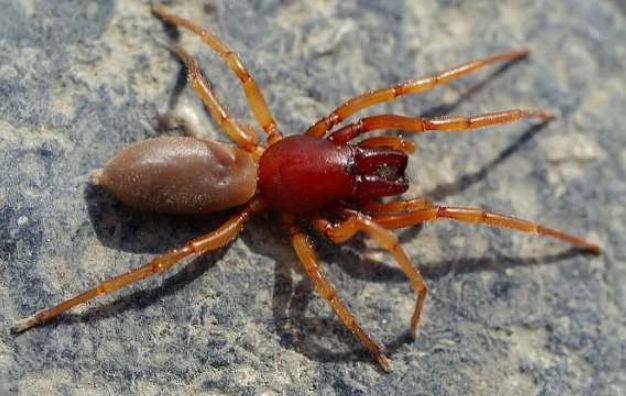
Well, take a breath. The world of spiders with reddish bodies is vast and surprisingly varied. That flash of color could be anything from a completely harmless little guy just trying to catch flies to one of the few spiders in North America whose bite you genuinely need to watch out for. The trick is knowing which is which. And that's exactly what this guide is for. We're going to move past the generic fear and get into the specifics. I'll walk you through the most common reddish spiders you're likely to meet, how to tell them apart, what they're doing in your space, and most importantly, what (if anything) you need to do about it. No jargon, just plain talk.
Meet the Usual Suspects: Common Spiders with Reddish Bodies
Not all red spiders are created equal. The shade, pattern, and body shape are like their ID cards. Here’s a rundown of the characters you're most likely to encounter. I've found that seeing them side-by-side makes it much easier to wrap your head around.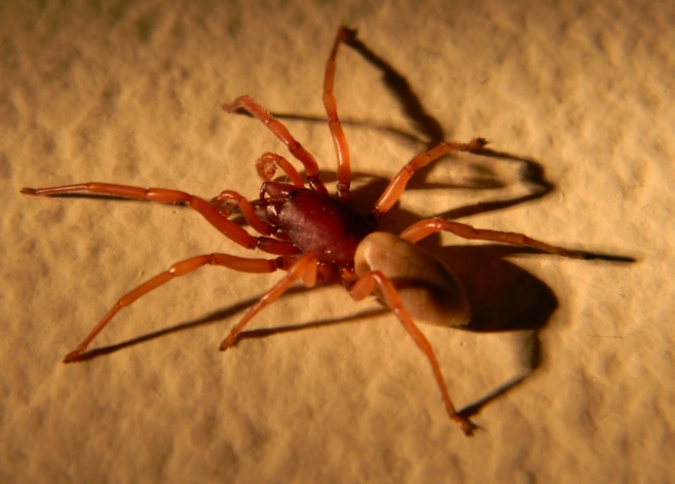
The Heavy Hitters (The Ones You Should Recognize)
These two are the most famous—or infamous—spiders with red markings in North America. They get all the press, and for one of them, it's for a good reason.
The Black Widow (Latrodectus species): This is the spider that gives all other red-marked spiders a bad name. The adult female is the one to know: shiny, jet-black, and plump, with that iconic, hourglass-shaped mark on the underside of her abdomen. And yes, that mark is almost always a vivid, warning-sign red. Sometimes it's two separate triangles, sometimes it looks more like a single blob. Males and juveniles are different—often brownish with red and white markings on top—and aren't considered medically significant. You'll find these ladies in undisturbed, sheltered spots: woodpiles, under patio furniture, in crawl spaces, garage corners, and sometimes in outdoor sheds. Their venom is a neurotoxin. A bite can be serious, causing muscle pain, cramps, nausea, and difficulty breathing. It's rarely fatal to healthy adults with modern medical care, but it's absolutely a "go to the doctor" situation. The CDC notes that black widow venom is potent and bites require prompt medical attention.
The Brown Recluse (Loxosceles reclusa): Okay, this one is a bit of a trick entry. Its body isn't red. It's usually a uniform tan to dark brown. But I have to include it because when people see "fiddleback" or "violin" markings, they often misremember it as having red. The key identifier is that dark, violin-shaped marking on its cephalothorax (the front body segment), with the neck of the violin pointing towards the abdomen. It has six eyes arranged in pairs (most spiders have eight) and is famously reclusive. Its venom can cause necrotic (tissue-damaging) wounds in some people. The brown recluse's range is primarily the south-central United States. If you're not in that region, you almost certainly did *not* find a brown recluse, despite what the internet might tell you. The University of California's Statewide Integrated Pest Management Program has excellent maps and details on its limited range.
The Frequent Flyers (Common Reddish House & Garden Spiders)
This is where we get to the spiders you'll see all the time. They're the workhorses of the spider world, and most are utterly harmless to humans.
| Spider Name | What It Looks Like (The Reddish Parts) | Where You'll Find It | Danger Level & Notes |
|---|---|---|---|
| Red House Spider (Nesticodes rufipes) | Globular reddish-orange to deep burgundy abdomen. Legs are a darker reddish-brown. The whole spider often has a velvety, uniform red appearance. | Indoors! Corners of rooms, ceilings, behind furniture. Builds messy, tangled cobwebs in quiet spots. | Very Low. Non-aggressive. Bites are extremely rare and cause minor, localized irritation at most. A classic "spider with reddish body" in homes. |
| Woodlouse Hunter (Dysdera crocata) | Prominent, shiny reddish-orange or burgundy cephalothorax (front section) and legs. The abdomen is a dirty beige or gray. | Under rocks, logs, pots, in leaf litter. Occasionally wanders into basements or ground floors hunting its favorite prey: pill bugs/woodlice. | Low. Has large fangs that can deliver a painful pinch if mishandled, but venom is mild. Not medically significant. More scary-looking than dangerous. |
| Red-legged Purseweb Spider (Sphodros rufipes) | Shiny black body with distinctly bright reddish-orange legs. Males are more commonly seen wandering. | Eastern US. Lives in silken tubes at the base of trees. You usually only see them during mating season. | Low. Rarely encountered. Fangs are large, but they are not aggressive towards humans and bites are almost unheard of. |
| Cross Orb-weaver (Araneus diadematus) & Others | Many orb-weavers can have reddish hues! The Cross Orb-weaver is often orange-brown. Some, like the Marbled Orb-weaver (Araneus marmoreus), can be brilliant orange. | Gardens, between plants, on porches, around outdoor lights. Famous for their beautiful, circular webs. | Harmless. These are the quintessential garden spiders. They are beneficial predators and will flee from humans. Bites are a last-resort defense and feel like a mild bee sting at worst. |
See? Most of them are nothing to lose sleep over. That red house spider, in particular, is probably the number one culprit when someone searches for "spider with reddish body" online. It's everywhere indoors, and its consistent color makes it memorable.
So, How Do I Actually Figure Out Which One This Is?
Okay, you've got a spider in a jar (or you're looking at a halfway-decent photo). Let's run through a simple decision tree. This isn't a scientific key, but it's a practical one I use myself.
Step 1: The Location Test. Where did you find it?
- Inside your living room/bedroom/kitchen, in a corner web? Strong odds it's the Red House Spider.
- In the garage, shed, woodpile, or under an outdoor chair? Pause. Look for a shiny black body and check for an hourglass. Could be a Black Widow.
- In the garden on a big, circular web at night? Likely an Orb-weaver of some kind.
- Under a flower pot or rock in damp soil? Maybe the Woodlouse Hunter with its red front end.
Step 2: The Color & Pattern Check.
- Shiny black with a red hourglass on the belly? That's your Black Widow. No further questions.
- Uniformly velvety red-orange all over, indoors? Almost certainly the Red House Spider.
- Reddish front (head/chest area) but pale back end? Think Woodlouse Hunter.
- Black with bright red legs? Could be the Red-legged Purseweb or another less common species.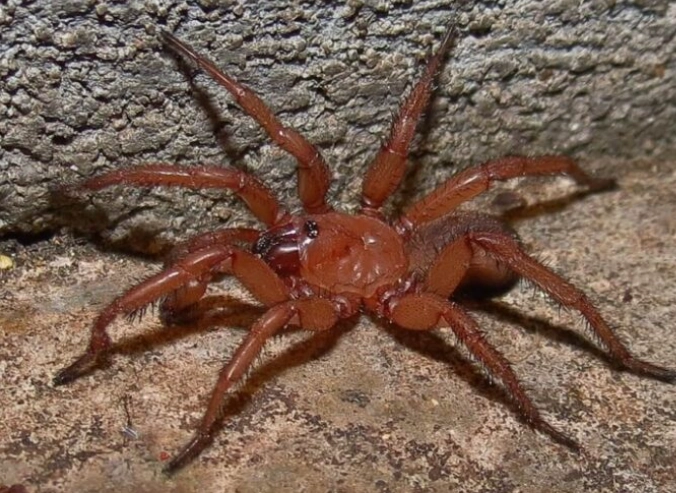
Step 3: The Web & Behavior Clue.
Spiders are architects. Their webs are blueprints.
- Messy, tangled, three-dimensional cobwebs in corners = Cobweb Spiders (family includes Red House Spider and Black Widow).
- Beautiful, symmetrical, circular orb webs = Orb-weavers (harmless).
- Funnel-shaped web in grass or a crack = Funnel Weavers (like the common grass spider, usually not red).
- No web, just a spider sprinting across the floor? It's a hunter. Note its colors.
I remember once being convinced I had a widow in my basement because I saw a red mark. Turns out it was a male Steatoda (a false widow) with some reddish patterning. Looked scary from a distance, but up close, all wrong. The hourglass was missing, and the body was wrong. It's easy to jump to conclusions.
The Big Question: Are They Poisonous and Dangerous?
Let's cut through the noise. "Poisonous" means something is toxic if you eat it. "Venomous" means it injects toxin. Spiders are venomous. But here's the real deal: very, very few have venom that is medically significant to humans.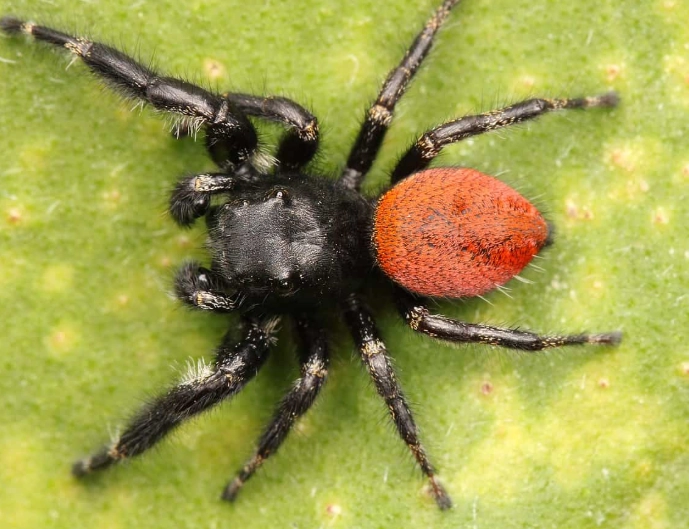
For spiders with a reddish body, the risk spectrum is huge:
Medically Significant (Get Medical Help if Bitten):
- Black Widows: The standout in this category. Their bite requires professional medical evaluation. Antivenom exists. Don't try to tough it out.
- Note on Brown Recluses: Again, not red, but worth repeating. Bites can cause serious wounds in a minority of cases.
Potentially Painful, But Not Medically Dangerous:
- Woodlouse Hunter, Larger Orb-weavers: Their bites are defensive acts of desperation. They have the equipment to pierce human skin and it can hurt, akin to a wasp sting. The venom itself isn't a systemic threat to you. It's a local reaction—some pain, swelling, redness that fades in hours to a couple of days.
Effectively Harmless to Humans:
- Red House Spider, most other small cobweb spiders, tiny jumping spiders with red marks: Their fangs are often too small or weak to pierce human skin reliably. Even if they could, the venom is designed for tiny insects. At absolute worst, you might get a tiny, itchy bump. I've handled red house spiders (gently) to relocate them and never had an issue. They ball up and play dead.
What Should I Do If I Find One? A Practical Action Plan
Your reaction should fit the spider. Not every spider with a reddish body needs to be nuked with insecticide. Here's a tiered approach.
For Black Widows (and suspected widows in their range):
This is the one case where I advocate for elimination if it's in a high-traffic area. If it's in the back corner of a shed you rarely use, you could leave it—it's eating pests. But if it's on your kid's playground equipment or in the garage where you reach for tools, it's best to remove it.
1. Don't panic and don't smash it bare-handed. That's how accidental bites happen.
2. Use a long tool (like a broom) to carefully sweep both spider and web into a dustpan or container.
3. Dispose of it far from the house, or submerge it in soapy water. Insecticide spray labeled for spiders is also effective if direct contact is made.
4. Wear gloves when cleaning out the area afterward to remove any leftover web strands that might contain egg sacs.
For Red House Spiders, Orb-weavers, and Other Harmless Reds:
Please consider the catch-and-release method. These spiders are on your side.
1. Take a clear cup and a stiff piece of paper or card.
2. Slowly place the cup over the spider.
3. Slide the card carefully under the cup's rim, trapping the spider inside.
4. Carry it outside and release it in a sheltered spot (under a bush, near a fence).
It's that simple. I've done this dozens of times. The spider gets to live and eat mosquitoes, and you get a spider-free room. Everyone wins.
For Prevention (Making Your Space Less Appealing):
Spiders go where their food is. Reduce other insects, and you'll reduce spiders.
- Seal cracks and gaps around windows, doors, and foundations.
- Keep outdoor lights off or use yellow bug lights that attract fewer insects.
- Reduce clutter, especially in storage areas like garages, basements, and attics.
- Regularly vacuum and dust corners, ceilings, and behind furniture to remove webs and egg sacs.
- Keep vegetation trimmed back from the immediate exterior of your house.
Your Questions, Answered (The Stuff You're Actually Searching For)
If you suspect a black widow bite (you saw the spider, and you feel systemic symptoms like severe muscle cramps, abdominal pain, sweating): seek medical attention immediately.
For any other bite: Wash the area with soap and water. Apply a cold pack to reduce swelling. Take an antihistamine for itching and an over-the-counter pain reliever if needed. Monitor it. If the lesion expands dramatically, becomes an open sore, or you develop signs of infection (increased redness, pus, fever), see a doctor. The American Academy of Dermatology provides clear guidance on this.
Look, at the end of the day, spiders are just part of the background ecosystem of our homes and gardens. That initial jolt of fear when you see a spider with a reddish body is normal. But now, hopefully, it can be followed by a moment of curiosity instead of panic. You have the tools to make a good guess about what it is. You know that the vast majority of them are just quirky little roommates who pay their rent in pest control. And you know exactly what to do on the off chance you meet the one that requires more caution.
Knowledge really is the best pesticide.
So next time you see that flash of red scurrying away, take a second. Look a little closer. You might just be looking at a dedicated pest controller, not a monster. And if it is the infamous widow, you'll know how to handle it safely and smartly. Stay curious.
LEAVE A REPLY
Your email address will not be published. Required fields are marked *