Let's talk about the red squirrel in Indiana. It's a topic that pops up a lot if you're into hiking, wildlife photography, or just curious about the critters in your backyard. You might have heard conflicting things. Some folks swear they've seen them everywhere, others think they're a myth in the Hoosier State. I've spent a good chunk of time looking into this, sorting through DNR reports, talking to local naturalists, and yes, spending some quiet hours in the woods myself. The story of the Indiana red squirrel is more interesting than you might think—it’s a tale of habitat, identity, and a little bit of confusion.
Your Reading Map: Explore the Topics
First off, we need to clear the air on a major point of confusion. When most people in Indiana say "red squirrel," what animal are they actually picturing? This is where things get messy.
Quick Clarification: The animal most Hoosiers commonly call a "red squirrel" is actually the fox squirrel (Sciurus niger). Fox squirrels are large, common, and can have a beautiful rusty-red or orange-bellied coat. The true American red squirrel (Tamiasciurus hudsonicus), also called the pine squirrel or chickaree, is a different species entirely—smaller, feistier, and with a much more specific taste in real estate.
So, are there true American red squirrels in Indiana? The short, definitive answer is yes, but their presence is limited and regional. They are not widespread across the state like the gray or fox squirrel. Finding a red squirrel in Indiana becomes a specific quest, not a casual backyard sighting. Their range is tightly linked to one crucial factor: coniferous forests.
The Where: Mapping the Red Squirrel's Indiana Territory
You won't find a red squirrel in every county. Their distribution is patchy, clinging to areas that remind them of their preferred northern haunts. Think less about sprawling oak-hickory forests (that's fox squirrel territory) and more about stands of pine, hemlock, and spruce.
The stronghold for the red squirrel population in Indiana is the northern part of the state. This makes biogeographic sense. Northern Indiana sits at the southern edge of the red squirrel's vast range, which stretches up through the Great Lakes and into Canada. The climate and tree composition here are just enough to their liking.
Reliable Spots to Look
If you're serious about spotting one, these are the areas with the most consistent reports and suitable habitat:
- The Dunes Country: Places like Indiana Dunes National Park and surrounding areas. The mix of pine plantations and natural conifers provides a good home.
- North-Central State Parks & Forests: Think Pokagon State Park, Pigeon River Fish and Wildlife Area, and parts of the surrounding region. The conifer plantings and cooler microclimates here are key.
- Northeast Corner: Areas like the Waterloo Wildlife Area and forests near the Michigan border. Again, proximity to their core range helps.
Possible but Less Certain
You might get lucky in larger, mature conifer stands in other parts of the state, but it becomes much more of a rarity. Central and southern Indiana sightings are unusual and often linked to isolated patches of pine or hemlock, sometimes in parks or nature preserves that have planted them.
| Region of Indiana | Likelihood of Red Squirrels | Key Habitat Features | Best Time to Look |
|---|---|---|---|
| Northern (Dunes, NE Corner) | High - Core range | Pine plantations, mixed conifer-hardwood, hemlock stands | Early morning, Year-round (active in winter) |
| North-Central | Moderate to High | State parks with conifers, wildlife areas | Fall (caching food), Spring |
| Central | Low - Isolated | Scattered pine groves, arboretums | Potentially any season, but sightings rare |
| Southern | Very Low - Vagrants only | Unlikely, except for unusual habitat pockets | Not a reliable area for search |
I remember spending a chilly morning in Pokagon State Park, listening. That's the first tip—often you hear them before you see them. A sharp, chattering "chick-a-dee-dee-dee" or a rapid trill that sounds almost birdlike. It's a distinctive sound, once you know it. Then I saw it, a small, sleek blur racing along a pine branch, maybe a third the size of the fat fox squirrel I'd seen at the park entrance. It stopped, eyed me with what I can only describe as pure indignation, and let out a series of scolding chirps. That's the red squirrel experience in Indiana: a brief, spirited encounter if you're in the right place.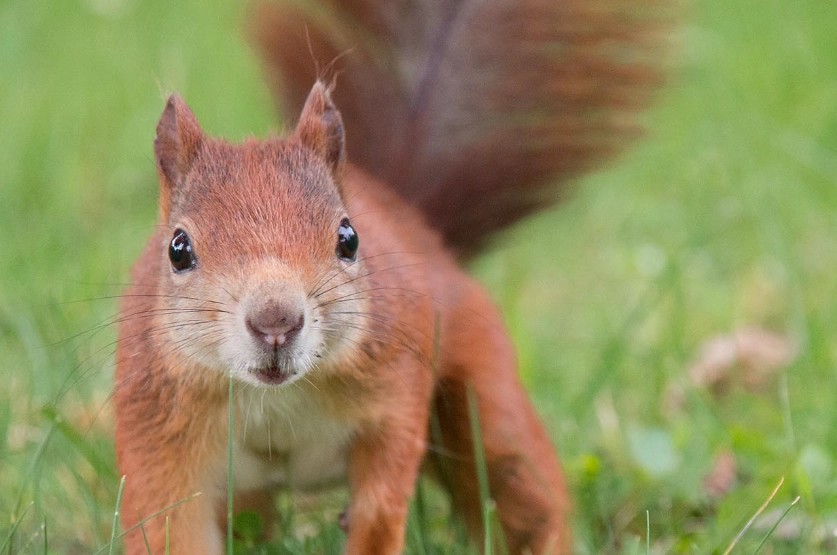
Not Your Average Backyard Squirrel: The True Red's Identity
So what sets the American red squirrel apart from its more common Indiana cousins? It's not just about color. Here’s a breakdown that helps with identification, which is a major user pain point.
Spotting the Difference: Red Squirrel vs. Fox Squirrel
This is the confusion we need to solve. Don't feel bad if you've mixed them up—almost everyone does at first.
- Size: This is the biggest giveaway. Red squirrels are small, about 11-14 inches total length (half of that is tail), and weigh only 7-10 ounces. A fox squirrel is a giant in comparison, often 18-28 inches long and weighing 1.5 to 2.5 pounds.
- Color: The red squirrel has a reddish or rusty-gray back with a stark white belly. The line between the back color and white belly is very clear. A "red-phase" fox squirrel has a more uniform, grizzled orange-red belly and back, often with a black face mask.
- Voice: Fox squirrels are relatively quiet, maybe some barks. Red squirrels are notoriously vocal and territorial. Their chattering and trilling is a constant soundtrack in their woods.
- Ear Tufts: In winter, red squirrels often develop small, cute tufts of hair on their ears. Fox squirrels do not.
Behaviorally, they're fascinating. They're hoarders, or more technically, larder-hoarders. While gray squirrels scatter-hoard nuts all over the place, a red squirrel in Indiana will often create a single, massive midden—a pile of discarded pine cone scales and cores—at the base of a favorite tree or in a hollow log. This midden is the center of its territory. They're fiercely defensive of it, too. I’ve read studies where they’ll even take on much larger animals that get too close.
Their diet is conifer-centric. Pine seeds, spruce cones, hemlock buds. They'll also eat mushrooms, berries, and even bird eggs or nestlings when the opportunity arises. This specialized diet is exactly why their Indiana range is so limited. No pine trees? No red squirrels.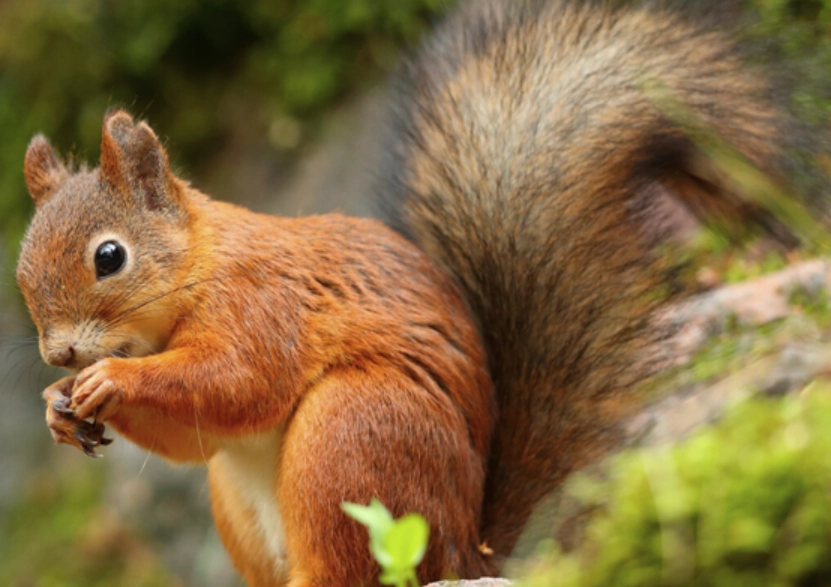
The Conservation Perspective: Are They in Trouble in Indiana?
This is a common question that comes up. People see a less common animal and worry. The official status of the red squirrel in Indiana is not listed as endangered or threatened by the state. Globally, the species is of "Least Concern" according to the IUCN Red List. Their population is stable and vast across Canada and the northern U.S.
However, that doesn't mean there are no concerns at the local level. In Indiana, they exist in a peripheral population. This means our state holds the southern, marginal edge of their range. These edge populations are often more vulnerable to local pressures.
Local Threats to Indiana's Red Squirrels:
- Habitat Loss & Fragmentation: The conversion of mature conifer stands to agriculture or development directly removes their home. Even within forests, a lack of management that allows hardwoods to outcompete pines can degrade their habitat.
- Climate Change: This is a longer-term, but significant concern. As temperatures warm, the suitable climatic zone for boreal-associated species like the red squirrel may shift northward. This could potentially squeeze them out of Indiana over decades.
- Competition: While not definitively proven as a major issue here, the ubiquitous gray squirrel is a generalist competitor for resources like nesting sites.
The Indiana DNR and organizations like the Nature Conservancy working in Indiana focus on preserving large, connected forest tracts. This kind of work indirectly benefits the red squirrel by maintaining the ecological integrity of northern forests. Management that includes maintaining or planting conifer components is specifically helpful.
So, no, you don't need to panic about them disappearing from Indiana tomorrow. But yes, their specialized needs make them a good indicator species for forest health.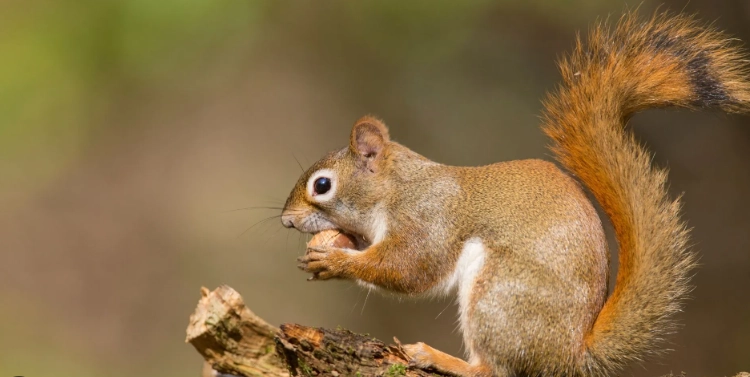
Your Guide to Observing Red Squirrels in Indiana (Ethically)
Let's say you want to go find one. How do you do it without stressing the animal or damaging its habitat? It's all about being a quiet, patient guest.
Step-by-Step Field Guide
- Pick Your Location: Choose one of the higher-probability areas mentioned earlier. A state park or nature preserve in northern Indiana with noted pine stands is your best bet.
- Timing is Everything: Go early in the morning. They're diurnal and most active just after dawn. Fall is spectacular because they're frenetically caching food, making more noise and movement. Winter is also great—they don't hibernate, and their tracks in the snow are easy to follow.
- Use Your Ears: Find a quiet spot, sit down on a log, and just listen for 10-15 minutes. That chattering or trilling call is your homing beacon. The Cornell Lab of Ornithology's Macaulay Library is a great resource to learn their calls beforehand.
- Look for Signs: Scan the ground for middens—piles of shredded pine cones that look like a messy woodchip pile. Look for small, neat tracks in mud or snow (about 1.5-2 inches long, with four toes in front and five in back).
- Practice Patience & Respect: Use binoculars or a long lens. Don't try to approach closely or lure them with food. Feeding wildlife alters their natural behavior and can make them dependent or aggressive.
What to Bring (The Essentials Checklist)
- Binoculars: 8x42 or similar. Crucial for observing from a distance.
- Field Guide or App: Like Sibley's or the Merlin Bird ID app (which also has mammal sounds).
- Quiet Clothing: Avoid bright colors. Browns, greens, grays.
- Patience: This isn't a zoo. It's wild animal spotting.
- Camera (optional): With a zoom lens if you want photos.
- Notebook: To jot down location, behavior, weather. Makes it more meaningful.
Common Questions About the Indiana Red Squirrel (Answered)
Let's tackle some of the specific things people are typing into Google. These are the questions that brought you here.
Are red squirrels in Indiana endangered?
No, they are not listed as a state or federally endangered species in Indiana. Their global population is secure. In Indiana, they are considered a locally common species within their specific northern habitat.
Can I have a red squirrel as a pet in Indiana?
Absolutely not. It is illegal in Indiana to keep native wildlife like the red squirrel as a pet without special permits, which are only issued for rehabilitation or educational purposes. They are wild animals with complex needs and do not adapt well to captivity. It's also unfair to the animal.
How can I attract red squirrels to my property in Indiana?
If you live in northern Indiana within their range, you could theoretically make your property more inviting, but attracting a specific wild animal is tricky and comes with caveats. The best thing you can do is plant native conifers like white pine, red pine, or hemlock. Provide a water source. And most importantly, leave wild, brushy areas and dead snags (if safe) that can provide natural nesting cavities. Do not put out food. This can attract more aggressive gray squirrels, create dependency, and spread disease.
What's the difference between a red squirrel and a chipmunk?
Another great ID question. Chipmunks are smaller, have prominent stripes down their back and face, and are primarily ground-dwelling. Red squirrels are tree squirrels, larger than chipmunks, lack facial stripes, and spend most of their time in the canopy or on tree trunks.
Do red squirrels damage property like gray squirrels?
They can, but it's less common simply because they are less common around homes. Like all squirrels, they may chew to wear down their ever-growing teeth. If a red squirrel took up residence in an attic (which is rare due to their habitat preference), it could cause similar issues. The best prevention is sealing potential entry points before they find them.
Honestly, the biggest "damage" you're likely to see from a wild red squirrel in Indiana is to your peace and quiet—in the best way possible. Their constant chattering is just part of the soundscape of a healthy northern conifer forest.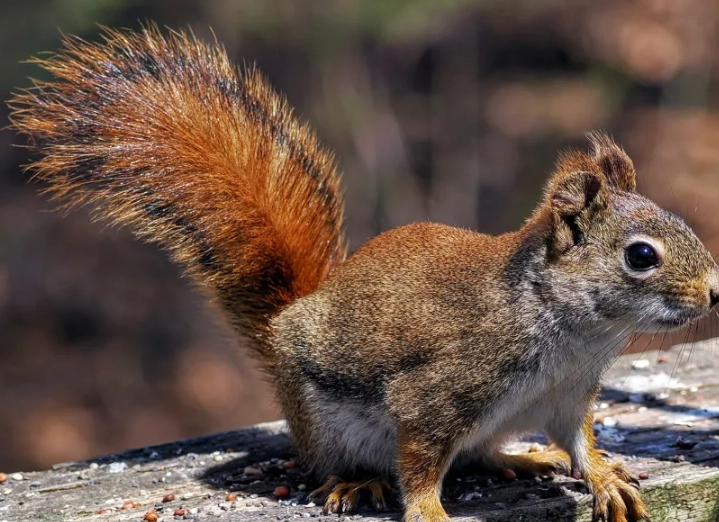
Final Thoughts: Why This Little Squirrel Matters
Chasing after the red squirrel in Indiana isn't just about ticking a box on a wildlife list. For me, it became a lesson in paying attention. It's about understanding that not every squirrel is the same, that ecosystems are precise, and that even a common animal can be rare in the wrong context.
They're a reminder of Indiana's ecological connections. Their presence in the north is a living link to the boreal forests of Michigan and Canada. They're a symbol of specialized survival in a state dominated by generalists. Finding one feels like discovering a secret.
So, the next time someone says they saw a "red squirrel" in Indiana, you can have a much more interesting conversation. You can ask: Was it the big, orange-bellied fox squirrel? Or did you get lucky and glimpse the smaller, chattering, pine-loving true red? That distinction is the key to understanding this whole story. And now, you're in on the secret.
LEAVE A REPLY
Your email address will not be published. Required fields are marked *