Quick Guide
- Breaking Down the Dimensions: Body, Legs, and Total Span
- The Critical Visual Comparison: Hobo Spider vs. The Usual Suspects
- Beyond the Ruler: How Behavior and Habitat Define Its "Size"
- The Life Cycle: How Size Changes from Spiderling to Adult
- The Bite Question: Does Size Correlate with Danger?
- Practical Steps: What to Do If You Find a Spider of That Size
- Frequently Asked Questions (The Stuff You Actually Search For)
- Wrapping It Up: Size is a Starting Point, Not the Answer
Let's be honest, when you find a spider in your basement or garage, the first thing you notice isn't its intricate eye pattern or the fine hairs on its legs. It's the size. Is it big enough to be a problem? That immediate gut reaction is why understanding the size of a hobo spider is so crucial for identification. But here's the thing most quick guides miss: a single number for body length tells you almost nothing. You need context, comparisons, and a good look at what those long legs are actually doing.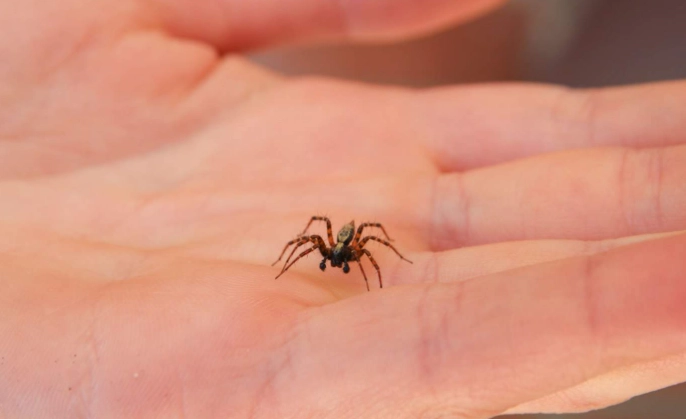
I remember the first time I thought I had a hobo spider. It was in a box of old books, and it looked massive scurrying across the cardboard. My mind jumped to the worst. But when I finally got a good look (from a safe distance, I'm not a hero), the proportions were all wrong. It got me digging deeper, past the scary headlines, into what the size of the hobo spider really means for telling it apart from its dozens of look-alikes.
The Core Measurement: An adult hobo spider's body typically ranges from 9 to 14 millimeters in length. That's about the size of a large aspirin or a standard USB-A connector tip. But the body is only part of the story.
Breaking Down the Dimensions: Body, Legs, and Total Span
If you just read "9-14 mm," you might picture something small. But spiders are mostly legs. The total size of a hobo spider is dominated by its legspan, which creates that intimidating silhouette.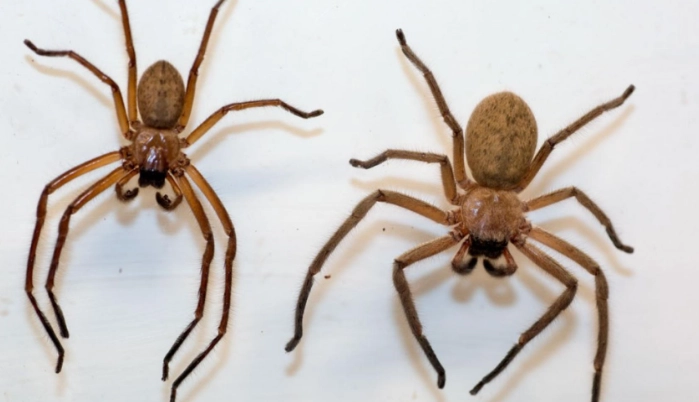
Body Length (Cephalothorax + Abdomen)
The body itself is divided into two main parts you can usually see: the fused head-and-thorax (cephalothorax) and the abdomen. The abdomen is often larger and more oval. Females tend to be at the upper end of that size range, sometimes looking noticeably plumper, especially when carrying eggs. Males might be slightly smaller in body but often have proportionally longer legs. This body size is key, but it's a terrible standalone identifier. Dozens of common house spiders fall into this range.
Legspan: The "Wow" Factor
This is where the perceived size of the hobo spider becomes real. Their legs are long, slender, and solid-colored (no bold bands). A full adult with legs extended can cover a circle 25 to 45 millimeters (1 to 1.75 inches) in diameter. Picture a quarter (24mm) or a half-dollar coin (30mm). That's the space they can occupy. The third pair of legs is often the longest. When at rest, they don't always sit in a perfect, spread-out pose, so they can appear smaller until they start moving.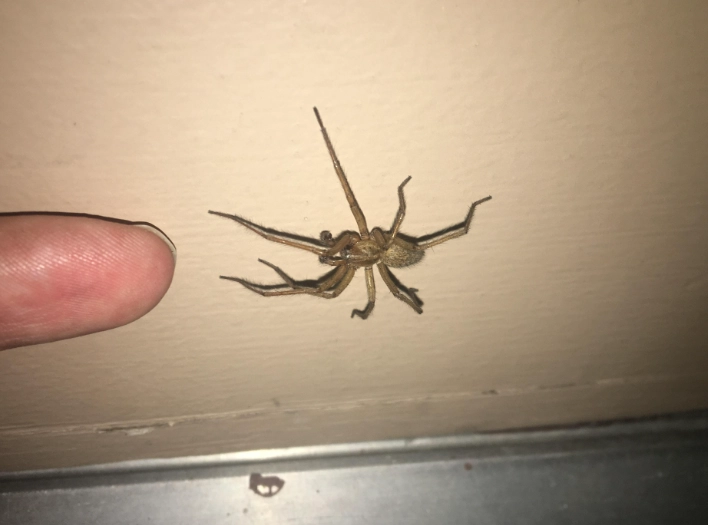
Why does leg length matter for ID? It's part of their posture. Hobo spiders are funnel-weavers. They don't have the thick, stocky legs of a wolf spider built for hunting runs, nor the delicate, spindly legs of some cobweb spiders. Theirs are built for speed across the sheet of their funnel web.
The Critical Visual Comparison: Hobo Spider vs. The Usual Suspects
This is where most online information falls flat. They give you the size of a hobo spider and call it a day. Useless. You need side-by-side, real-world comparisons. Let's clear up the most common confusions.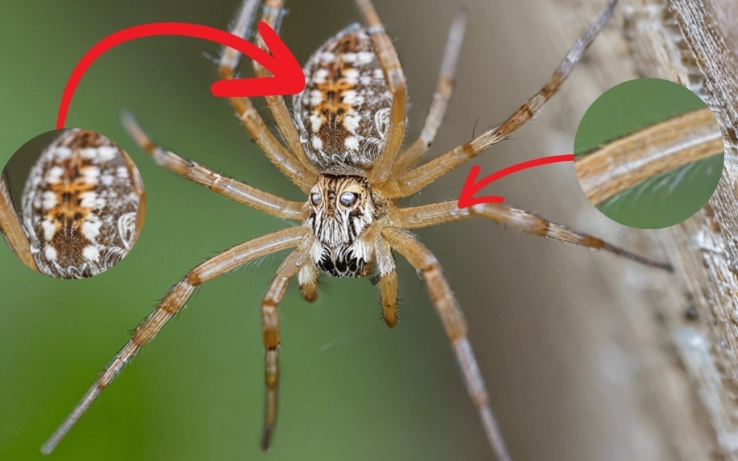
Size & Look-Alike Comparison Chart
| Spider | Typical Body Length | Typical Legspan | Key Visual Difference from Hobo | Common Habitat Overlap |
|---|---|---|---|---|
| Hobo Spider | 9 - 14 mm | 25 - 45 mm | Solid-colored legs, herringbone pattern on abdomen (often faint), builds funnel webs. | Basements, window wells, woodpiles, ground-level corners. |
| Giant House Spider | 10 - 18 mm | Up to 100 mm (4 inches) | MUCH larger overall, often has distinct light bands/chevrons on abdomen, legs have darker bands. Runs incredibly fast. | Same as hobo, but more common indoors in fall. |
| Brown Recluse | 6 - 11 mm | 25 - 40 mm | Dark violin mark on cephalothorax, 6 eyes (in pairs), uniform color, no patterning on abdomen. Hobo spiders have 8 eyes in two rows. | Seldom overlap geographically (Recluse in central/southern US). |
| Wolf Spider | 10 - 35 mm | 25 - 75 mm | Stocky, robust body and legs. Often hairy. Carries egg sac attached to spinnerets. Hunts actively, no web (hobo uses a funnel web). Eyes arranged in distinct pattern. | Ground level, gardens, under debris, sometimes indoors. |
| Common House Spider (Parasteatoda) | 5 - 8 mm | 15 - 25 mm | Smaller in all dimensions. Builds messy, tangled cobwebs in upper corners. Abdomen is bulbous with variable patterns. | Ceiling corners, window frames, eaves. |
See the problem? The size of a hobo spider overlaps with almost all of these. The Giant House Spider is a classic mix-up in the Pacific Northwest. People see a big, fast, brown spider and think "hobo." But the legspan difference is huge—a giant house spider can look like a small tarantula compared to a hobo. I've had friends send me panicked photos of "hobo spiders" that were clearly these harmless giants. The brown recluse comparison is a media-driven panic. Their ranges barely touch (parts of Utah, Colorado), and the violin mark is a dead giveaway. If you're not in the central/southern US, it's almost certainly not a recluse.
Myth Bust: The "herringbone" or chevron pattern on the hobo spider's abdomen is often highlighted in guides. In my experience, it's frequently very faint or even absent in adults, especially males. Relying on this alone is a mistake. Leg color and web type are more reliable.
Beyond the Ruler: How Behavior and Habitat Define Its "Size"
Think about it. A spider isn't just a static measurement. Its apparent size is tied to how and where you see it.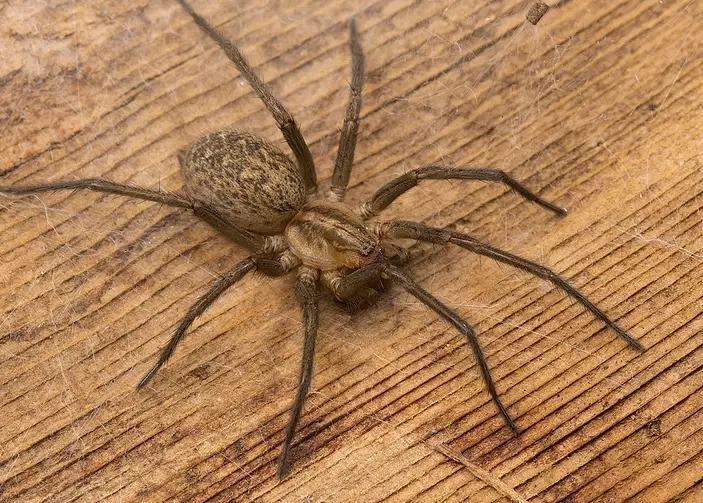
The Funnel Web: A Size Reference in Itself
Hobo spiders are poor climbers on smooth surfaces. Their world is horizontal. They build dense, non-sticky sheet webs with a distinct funnel or tube retreat in a corner or crevice. The web itself is a great indicator. The sheet can be palm-sized or larger. If you see a spider that fits the size of a hobo spider sitting at the mouth of a funnel-shaped web on the ground, in a basement window well, or along a foundation, you're on the right track. A wolf spider would just run away; it wouldn't have that home base.
Posture and Movement
They have a characteristic way of moving. It's not the lightning sprint of a giant house spider or the deliberate prowl of a wolf spider. It's a rapid, darting run across their web or flat ground. When threatened, they often retreat straight back into their funnel. This behavior makes them seem a certain "size"—not an ambush predator, not a wandering hunter, but a web-bound opportunist.
Their poor climbing ability also means you're unlikely to find one high on a wall or ceiling. If the spider is up high, the size of hobo spider might match, but the location strongly suggests it's something else, like a house spider.
Pro Tip for Identification: Instead of just estimating size, ask: "Where is the web?" No structured funnel web? Probably not a hobo. Can it climb this smooth wall or bathtub easily? Probably not a hobo.
The Life Cycle: How Size Changes from Spiderling to Adult
A pinhead-sized spiderling isn't helpful for ID. But knowing how they grow helps you understand the variations you see.
Hobo spider egg sacs are laid in the fall, often in the depth of the mother's funnel. The spiderlings emerge in spring. They are tiny, maybe 1-2 mm in body length. They undergo several molts (instars) throughout the summer, gradually approaching the adult size of a hobo spider. By late summer and early fall, they are mature. This means the largest individuals are usually seen in the fall, just before they die (males) or seek shelter to overwinter (some females). So, a medium-sized brown spider in July could be a juvenile hobo or a full-grown something else. Timing adds another layer to the identification puzzle.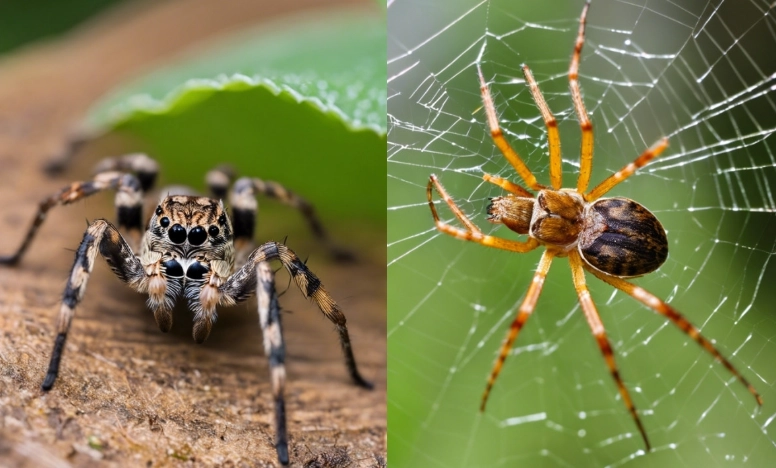
The Bite Question: Does Size Correlate with Danger?
This is the elephant in the room. For years, the hobo spider was vilified as a "dangerous" spider in the Pacific Northwest and parts of Europe, with its size often used to amplify fear. However, the scientific consensus has shifted dramatically.
Current research, including studies from Washington State University's Entomology program, suggests the hobo spider's venom is not significantly toxic to humans. Many documented "hobo spider bites" that caused necrotic lesions are now believed to have been misidentified or had other causes. The Centers for Disease Control and Prevention (CDC) does not list the hobo spider among spiders of medical concern in the United States.
So, does the size of the hobo spider make its bite worse? Not really. A larger spider can deliver more venom, but if the venom's main components aren't dangerously cytotoxic to human tissue, the size becomes less relevant. The bite might be locally painful, like a bee sting, due to the mechanical puncture and mild venom, but it's not the flesh-eating danger it was once thought to be.
Frankly, the overblown reputation is more dangerous than the spider itself, leading to unnecessary panic and pesticide overuse.
Practical Steps: What to Do If You Find a Spider of That Size
Okay, you've got a candidate. It matches the general size of a hobo spider and the habitat. Now what?
- Don't Panic. Remember, its medical significance is low. It's not aggressive. It wants to hide from you.
- Observe, Don't Touch. Look for the funnel web. Try to see the eye arrangement (use zoom on your camera). Note the leg color. Solid brown? Any bands?
- Capture for Closer Look (Optional). The classic glass-and-card method works. Place a clear glass over it, slide stiff paper underneath, and release it outside away from the house. Observe the underside if you can. Hobo spiders have no dramatic markings on their underside.
- Consult Reliable Resources. Take a clear, top-down photo. Compare it to verified images from university extensions. The University of Idaho Extension and Oregon State University Extension have excellent, science-based fact sheets that debunk the myths.
- Manage, Don't Eradicate. Hobo spiders are part of the ecosystem, eating pests. If they're in an undesirable location, removal of webs and egg sacs with a vacuum, sealing cracks in foundations, and reducing clutter (especially cardboard) near the ground are effective, non-chemical controls. They dislike dry, clean environments.
Frequently Asked Questions (The Stuff You Actually Search For)
How big do hobo spiders get compared to a wolf spider?
Wolf spiders can get much larger in body mass. A big wolf spider's body can be the size of your thumb nail, while a hobo spider's body maxes out around a dime. Wolf spiders are also hairier and have a completely different, more muscular build. The hunting behavior (wolf spider runs, hobo spider waits in a web) is the biggest giveaway.
Can the size of a hobo spider vary by region?
Not significantly. The 9-14 mm body length is pretty standard across its introduced range in the Pacific Northwest and parts of Europe. Local conditions like prey availability might cause slight variations, but not enough to confuse it with a distinctly larger or smaller species.
What size crack can a hobo spider fit through?
With their flattened bodies, they can squeeze through incredibly small gaps. Think about the width of their body, not their legspan. A crack or hole just 3-4 mm wide (the thickness of two credit cards) might be enough for them to enter if it leads to a sheltered, undisturbed space. This is why sealing cracks is so important for prevention.
I saw a huge spider with long legs. Was it a hobo?
If "huge" means a legspan over 2 inches (50mm), it was almost certainly not a hobo spider. You likely saw a Giant House Spider (genus Eratigena). They are incredibly common, harmless, and are the spiders most often mistaken for hobos due to their similar color and habitat. Their size is the easiest differentiator.
Do male and female hobo spiders differ in size?
Yes, but subtly. Females often have a larger, rounder abdomen, especially when gravid (full of eggs). Males might have slightly longer legs relative to their body size and often have enlarged pedipalps (the two small, leg-like appendages near the mouth) that look like boxing gloves. These are used for mating.
Wrapping It Up: Size is a Starting Point, Not the Answer
Focusing solely on the size of a hobo spider is like identifying a car solely by its color. It narrows the field, but you'll still mistake a lot of sedans. The 9-14 mm body and 1-1.75 inch legspan are essential data points, but they must be combined with the detective work of observing its web (a ground-level funnel), its legs (solid-colored, no bands), its posture, and its habitat.
The fear surrounding this spider has been, in my opinion, massively overhyped. The current science just doesn't support the "dangerous" label. It's a shy, web-building spider that happens to be medium-sized and brown—the most common spider color scheme out there.
So next time you see a spider that fits the classic size of the hobo spider, take a breath. Grab your phone for a photo, not a shoe. Look for the context. Chances are good it's just another harmless neighbor helping control the real pests. And if it is a hobo, now you know it's nothing to lose sleep over. Knowledge, not fear, is always the best pest control.
Comments