Quick Navigation
Let's be honest. When you think of squirrels in Ohio, the big, bold, and sometimes brazen Eastern gray squirrel probably comes to mind first. They're the ones hogging the bird feeders and darting across suburban streets. But tucked away in a specific slice of Ohio's landscape, there's a smaller, feistier, and honestly, more fascinating character: the Ohio red squirrel (Tamiasciurus hudsonicus).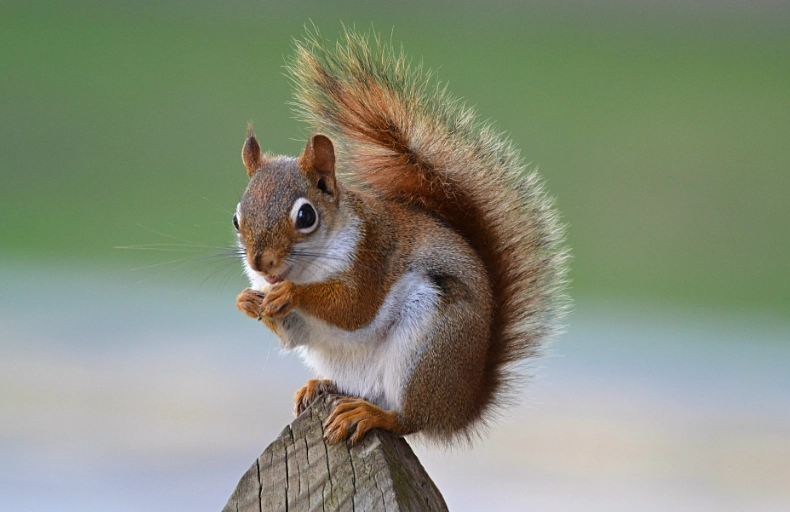
I've spent hours sitting quietly in northern woodlands, just watching them. They have a completely different vibe compared to their gray cousins. If the gray squirrel is the laid-back suburbanite, the red squirrel in Ohio is the high-strung, territorial forest guardian with a serious work ethic and a voice much bigger than its body.
Spotting the Difference: Is That a Red Squirrel in My Yard?
This is where most people get tripped up. You see a reddish-brown squirrel and think, "Aha! An Ohio red squirrel!" Not so fast. Gray squirrels can often have reddish or brownish fur, especially in summer. So how do you know for sure you've spotted the real deal?
It's all about the details. First, size is a huge clue. Red squirrels are significantly smaller. We're talking about a body length of 7-8 inches, plus a 4-6 inch tail, compared to the gray squirrel's 9-11 inch body. They're compact and agile. Their color is a more uniform reddish-brown or rusty gray on the back, with a crisp white or pale gray belly. The eye ring is often white, giving them a bright-eyed, alert look.
But the real giveaway, in my experience, isn't just sight—it's sound. I'll never forget the first time I heard one. I was hiking in Mohican State Park, and this incredibly loud, rapid chattering and chucking sound erupted from the pine canopy above me. It went on for a good minute. That's their signature. Gray squirrels are relatively quiet; red squirrels are the town criers of the forest, constantly announcing their presence and defending their turf.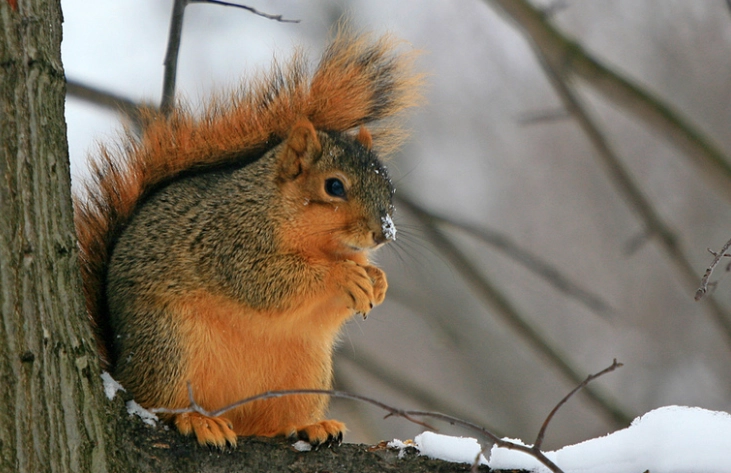
Side-by-Side: Red Squirrel vs. Eastern Gray Squirrel in Ohio
Here’s a quick comparison to keep in your back pocket. I find tables like this super helpful when I'm trying to ID something on the fly.
| Feature | Ohio Red Squirrel | Eastern Gray Squirrel |
|---|---|---|
| Size | Small (11-14" total) | Large (17-20" total) |
| Color | Rusty red/gray back, white belly, often white eye-ring. | Gray grizzled fur (but can be brown/red), white/gray belly. |
| Tail | Thinner, less bushy; tail edges not strongly fringed. | Very bushy, often with silver-tipped hairs. |
| Ear Tufts | Small, often present in winter. | None. |
| Voice | Loud, rapid chattering, chucking, and screeching. | Quieter barks, occasional screeches. |
| Primary Habitat in Ohio | Coniferous (pine, hemlock) and mixed forests. | Deciduous forests, urban parks, suburbs. |
| Behavior | Highly territorial, vocal, active year-round. | Less territorial, more social, active year-round. |
See the difference? Once you know, you can't un-know it. That loud, small, rusty blur racing along a pine branch is almost certainly our star, the Ohio red squirrel.
Where in Ohio Do These Feisty Red Squirrels Live?
This is crucial. You won't find red squirrels in Ohio just anywhere. Their distribution is like a map of Ohio's ancient glacial past. They are creatures of the north, clinging to areas with the right trees.
Their stronghold is the northeastern quadrant of the state. Think about the areas with more conifers—pine, hemlock, spruce. Counties like Ashtabula, Geauga, Portage, Trumbull, and parts of Summit are your best bets. They thrive in places like the Holden Arboretum (in Lake County), parts of the Cuyahoga Valley National Park where conifers are dense, and throughout the state forests up north.
Red squirrels are intimately tied to cone-bearing trees. Their main winter food source is the seeds from pine cones, spruce cones, and hemlock cones. A gray squirrel might bury acorns all over the place (and forget half of them, which is great for forest growth). But a red squirrel is a hoarder of a different sort. They create what's called a "midden"—a massive, centralized cache of cones, often at the base of a favorite tree or in a hollow log. I've seen these middens; they look like a messy pile of discarded cone cores, and they can be used for generations. This strategy requires a stable, cone-producing forest. No cones, no red squirrels.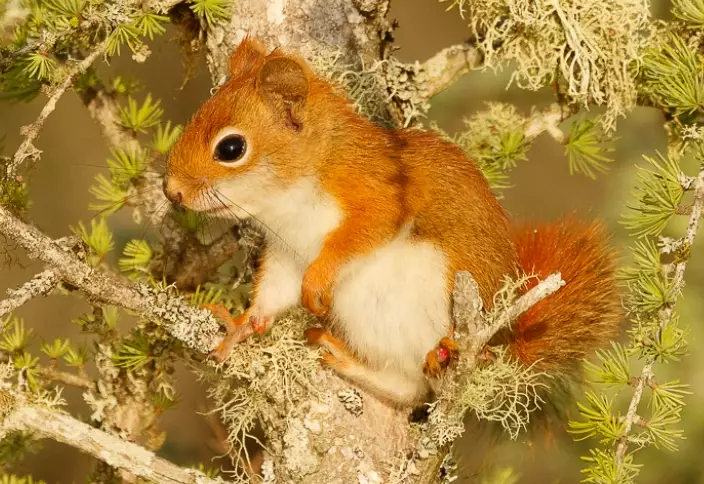
So, if you're in central or southern Ohio and see a reddish squirrel, it's almost certainly a color-morph gray squirrel. The true Ohio red squirrel needs that specific northern, coniferous habitat.
A Day in the Life: The Busy World of an Ohio Red Squirrel
Forget the lazy afternoon nap. The life of a red squirrel is a constant hustle. They don't hibernate. They're out there in the dead of winter, digging through the snow to reach their precious midden.
Their entire economy is based on their territory, which they defend with shocking ferocity. A single squirrel might claim an acre or two of forest rich with cone-bearing trees. From a high perch, they'll spot an intruder—another red squirrel, a gray squirrel (which they intensely dislike), a bird, even a human who lingers too long—and unleash that trademark chatter. It's a mix of "get out!" and "this is mine!" I find their bravery amusing; they'll scold a hawk or an owl with little regard for the size difference.
Their diet is more varied than just pine seeds, especially in summer and fall. They're opportunistic. The menu includes:
- Seeds: Obviously, from cones (spruce, pine, hemlock). This is the staple.
- Fungi: A surprising favorite. They'll harvest mushrooms and hang them in tree branches to dry (like a tiny forest gourmet).
- Berries & Nuts: When available, they'll eat berries, acorns, and beechnuts.
- Bird-related items: This is the controversial part. They are adept raiders of bird nests, taking eggs and nestlings. They'll also eat sap and even tree bark sometimes.
It's a tough world out there. Their main predators are the usual forest suspects: hawks, owls, foxes, coyotes, bobcats, and weasels. Their small size and loud nature make them a target, but their agility and vigilance are their best defenses.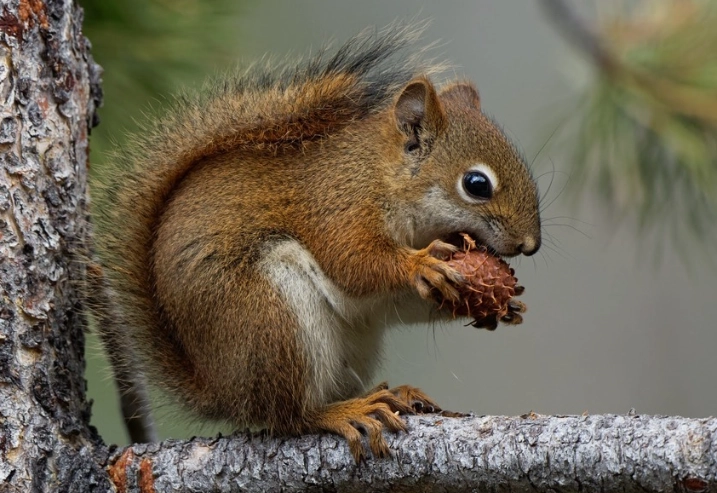
The Quiet Threat: Are Ohio Red Squirrels in Trouble?
This is the part that worries me. The Ohio red squirrel population isn't crashing, but it faces a slow, creeping challenge: habitat loss and fragmentation.
Their specialized need for coniferous and mixed forests makes them vulnerable. When a mature pine or hemlock stand is cleared for development or converted to a purely deciduous forest (like for timber), that's a direct hit to their livable space. Climate change adds another layer of uncertainty, potentially affecting cone crops and the health of their preferred tree species.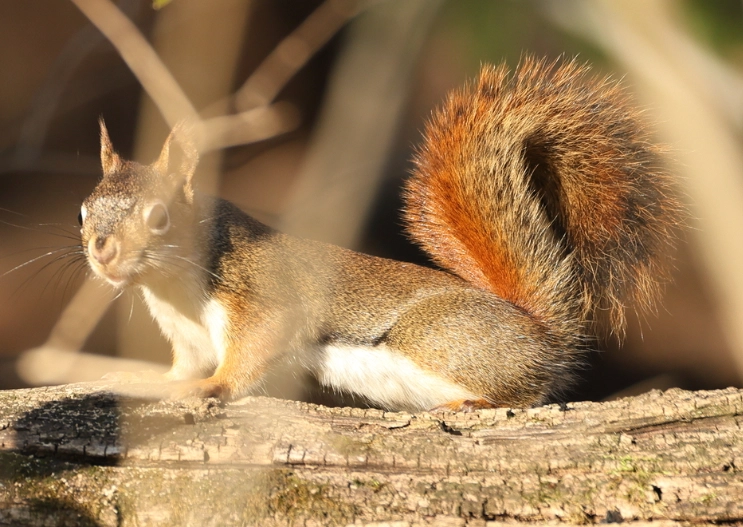
Then there's the competition. The Eastern gray squirrel is larger, more adaptable, and thrives in human-altered landscapes. In areas where forests become patchy, grays can move in and outcompete reds for resources, even though reds are more aggressive. It's a silent pressure.
So no, you don't need to panic, but you should be aware. Their future in Ohio is tied directly to the preservation of our northern coniferous forests.
What Can You Do? From Observer to Helper
Feeling like you want to help these charismatic little squirrels after reading all this? Good! You don't have to be a biologist to make a difference.
First and foremost, if you live in or visit their range, be a respectful observer. Enjoy their antics from a distance. Don't try to feed them or disturb their middens. Their survival strategy is finely tuned, and our "help" can often do more harm than good.
For landowners in northern Ohio, consider managing your woodlot for diversity. If you have conifers, cherish them. Planting native conifers like white pine or hemlock can create future habitat. Supporting land conservation trusts that protect forested areas in the Snowbelt region is one of the most powerful things you can do.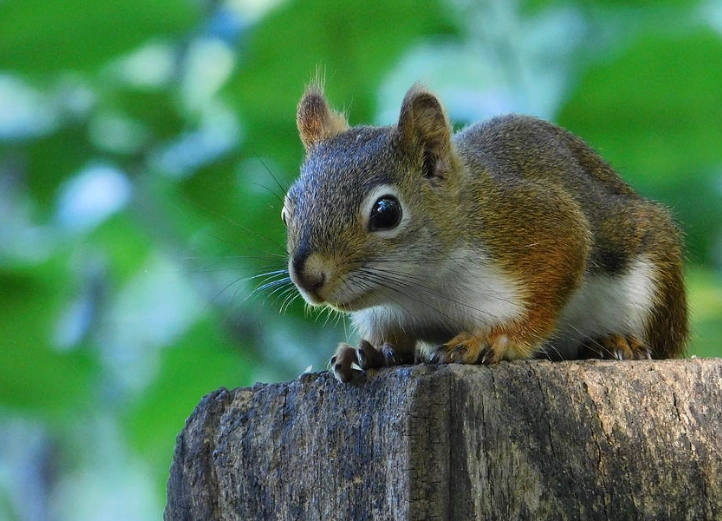
You can also contribute to science. Platforms like iNaturalist or eBird (which now includes mammal observations) are fantastic for logging sightings. When you report a verified red squirrel in Ohio, you're adding a valuable data point that helps organizations like the ODNR track their distribution and population health.
Finally, just spread the word. Most people don't know Ohio has a native red squirrel species distinct from the gray. Tell your friends, your hiking buddies. The more people know about and appreciate the Ohio red squirrel, the more likely we are to protect the forests it calls home.
Your Ohio Red Squirrel Questions, Answered
I get a lot of the same questions whenever I talk about these squirrels. Let's tackle some of the big ones head-on.
Are Ohio red squirrels aggressive to humans?
Not in an attacking sense. They are defensively aggressive about their territory. They'll chatter and scold you if you're near their midden or nest tree, but it's all bluster. They have no interest in actually confronting a human. Just enjoy the show and move along gently.
Why is the red squirrel so loud and noisy?
Think of it as their security system. In a dense forest, sight lines are short. Sound is the best way to advertise ownership of a territory and to warn others of danger. That loud "chuck-chuck-chuck" is essentially a "Trespassers will be prosecuted!" announcement. It saves them the energy of physically fighting every intruder.
Can I attract red squirrels to my backyard in Ohio?
If you live in their core northern habitat and have mature conifers on your property, you might already have them. Deliberately attracting them is tricky and not generally recommended. They are wild, territorial animals, not backyard pets. Providing habitat (conifer trees) is better than providing food, which can lead to unhealthy dependence and conflict. If you're desperate to see one, visit a northern state forest or park in the winter—look for the telltale midden piles and listen for the chatter.
What should I do if I find a baby or injured red squirrel?
This is super important. Do not try to raise it yourself. It's illegal in Ohio to keep native wildlife without a permit, and it's almost never in the animal's best interest. The best course of action is to contact a licensed wildlife rehabilitator immediately. The ODNR Division of Wildlife website has a directory of rehabilitators. Keep the animal warm, dark, and quiet in a ventilated box until you can get help.
How does their conservation status compare nationally?
Globally, the American red squirrel species is listed as "Least Concern" on the IUCN Red List due to its vast range across Canada and the northern U.S. However, that's a species-wide assessment. At the state level, like in Ohio, they exist at the southern edge of their range, where populations are more isolated and vulnerable to local habitat changes. So, while the species is doing okay overall, the Ohio red squirrel population requires specific state-level attention.
Next time you're hiking in a pine forest up north, stop and listen. That furious, chattering soundtrack? That's the sound of a thriving, feisty, and utterly captivating little animal making its stand. That's the sound of the Ohio red squirrel.
LEAVE A REPLY
Your email address will not be published. Required fields are marked *