You see a weird, shield-shaped bug crawling on your curtain. It’s not a beetle, not a roach. Could it be a stink bug? If you’re asking "what does a stink bug look like," you're in the right place. I’ve spent years dealing with these odorous home invaders, and I can tell you that recognizing one is the first step to managing them. Let’s cut to the chase: a stink bug’s signature look is a broad, shield-shaped body, often in shades of brown or green, with a pair of noticeable antennae. But there’s more to it than that, and confusing them with other bugs is a common mistake.
What You’ll Learn in This Guide
What Does a Stink Bug Look Like? A Detailed Breakdown
Forget vague descriptions. Let's get specific. Picture a small, flat insect that looks like it’s wearing a knight’s shield or a heraldic emblem. That’s the stink bug’s most defining trait.
The Shield (Pronotum): The wide, triangular section behind the head isn't just for show. It’s called the pronotum, and it extends back like a cape, covering part of the wings and abdomen. This creates that distinctive, angular silhouette. On the brown marmorated stink bug (the most common home invader in the US), the edges of this shield have small, alternating light and dark bands, almost like tiny teeth.
Body Shape & Size: They’re not round. They’re broad and flat, perfect for squeezing into cracks. An adult is about the size of a dime in length and width—roughly 12 to 17 mm long (that’s about half an inch). They have six legs that splay out to the sides.
Color Palette: This is where people get tripped up. The infamous brown marmorated stink bug is, well, brown. But it’s a marbled or mottled brown, with subtle patterns of gray, off-white, and copper. It’s not a solid color. Other species, like the green stink bug, are a vibrant, almost neon green. Juveniles (nymphs) can be wildly different, starting off black or red and changing color as they grow.
Head and Antennae: Look closely at the head. You’ll see two fairly long, segmented antennae sticking out. On the brown marmorated species, these antennae have two distinctive white bands on the last segments—a key giveaway. Their mouthparts are a sharp, needle-like beak tucked under the body, used for piercing plants.
Quick Tip: The "shield" shape is your number one clue. If it looks like a tiny, bad-weather radar dish or an armored vehicle, you’re probably looking at a stink bug.
Not All Stink Bugs Are the Same: Common Species You’ll Meet
"Stink bug" is a family name. Think of it like "dog"—there are different breeds. Here are the ones you’re most likely to encounter, especially in North America and Europe.
| Species Name | Key Visual Features | Where It's Found & Notes |
|---|---|---|
| Brown Marmorated Stink Bug (Halyomorpha halys) | Marbled brown/gray body. White bands on antennae. Light bands on leg joints. Shield shape with "toothed" edges. | The major invasive pest. Found across the US, Canada, and Europe. Infamous for invading homes in fall. Source: USDA APHIS tracks its spread. |
| Green Stink Bug (Chinavia hilaris) | Bright, solid green body. Narrow yellow-orange border around the shield and abdomen. | Common in gardens and farms across North America. Rarely enters homes in large numbers. Prefers crops like soybeans. |
| Southern Green Stink Bug (Nezara viridula) | Similar vibrant green, but often with three small white spots in a row behind the head. | A global tropical/subtropical species. Can be a major agricultural pest. |
| Rough Stink Bugs (Genus Brochymena) | Gray or brown with an extremely rough, bark-like texture. Edges of the shield are more rounded. | Often found on trees. They are native predators and generally beneficial. Rarely a household nuisance. |
Most of your home-invasion headaches will come from the brown marmorated stink bug. I remember one fall, I found over two dozen clustered on the sunny side of my house, all trying to get in through the window frames. Their sheer numbers and determination are what make them such a notable pest.
How to Tell Stink Bugs Apart from Other Insects?
This is crucial. Misidentification leads to the wrong response. Here’s how to avoid mixing them up.
Stink Bug vs. Beetle
This is the most common confusion. Beetles (like ladybugs or ground beetles) have hard wing covers that meet in a straight line down the middle of their back. A stink bug’s shield-like pronotum is wider at the "shoulders," and its folded wings create an X or diamond pattern at the rear. Beetles are also usually more rounded or oval.
Stink Bug vs. Western Conifer Seed Bug
Another shield-shaped bug that invades homes. The seed bug is longer, more slender, and has a distinctive, leaf-like expansion on its hind legs. Its color is a more uniform dull brown. No marbled pattern.
Stink Bug vs. Squash Bug
Very similar shape, but squash bugs are usually darker brown or gray and lack the pronounced marbling. They also emit a foul odor when crushed. The key difference is habitat—they’ll be on your pumpkin plants, not your living room wall.
Stink Bug Nymphs (Babies)
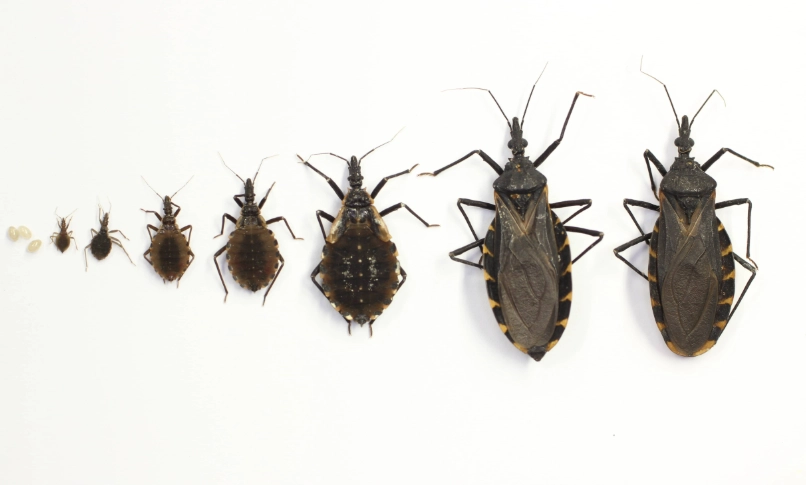
These don’t look like adults at all. They’re smaller, rounder, and often brightly colored—red, orange, or black with spots. They have no wings, so they can’t fly. Many people mistake them for ticks or small spiders. The giveaway is they still cluster on plants and have that piercing beak.
A subtle mistake I see often? People focus only on color. "It’s green, so it’s not a stink bug." Wrong. Always look at the overall shield shape first, then check the antennae and leg markings.
Where and When You’ll Find Them (The Seasonal Pattern)
Understanding their behavior completes the picture. You don’t just identify a bug; you identify it in context.
From spring to late summer, stink bugs live outdoors on a huge variety of plants—fruits, vegetables, ornamentals, trees. That’s when you’ll see the green species more often. They’re feeding and reproducing.
Come early fall, as temperatures drop, the brown marmorated stink bug starts looking for a warm place to overwinter. This is the home invasion season. They’re attracted to sunny, warm exteriors (like the south-facing side of a white house). They’ll crawl through any gap: loose window screens, utility line entries, vents, siding cracks.
Once inside, they don’t eat, breed, or cause structural damage. They just hide in attics, wall voids, or behind baseboards in a semi-dormant state. On warm winter days, they might clumsily fly or crawl out into your living space, which is when you most commonly spot them. They’re slow, awkward fliers, often bumping into lights.
Then, in spring, they become active again and try to get back outside to find plants.
So, if you’re seeing a shield-shaped bug in your house in October through April, it’s almost certainly a brown marmorated stink bug seeking shelter. Seeing one on your tomato plant in July is more likely a green stink bug.
Comments