You hear a loud, low buzz near your deck, and there it is—a big, black bee hovering around the wood. Your first thought: will it sting me? It's a carpenter bee, and the short answer is more complicated than a simple yes or no. The real question isn't just "do carpenter bees sting?" but "which carpenter bees sting, and when?" After dealing with these insects around my own home for years and talking to entomologists, I've learned that most of the common advice misses a crucial, simple detail that changes everything. Let's clear up the confusion.
What You'll Discover in This Guide
The One Fact That Changes Everything: Males Can't Sting
Here's the non-negotiable truth that most quick articles gloss over: Male carpenter bees cannot sting at all. They don't have a stinger. Females do possess a stinger, but they are remarkably reluctant to use it. This single fact flips the script on how you should react to them.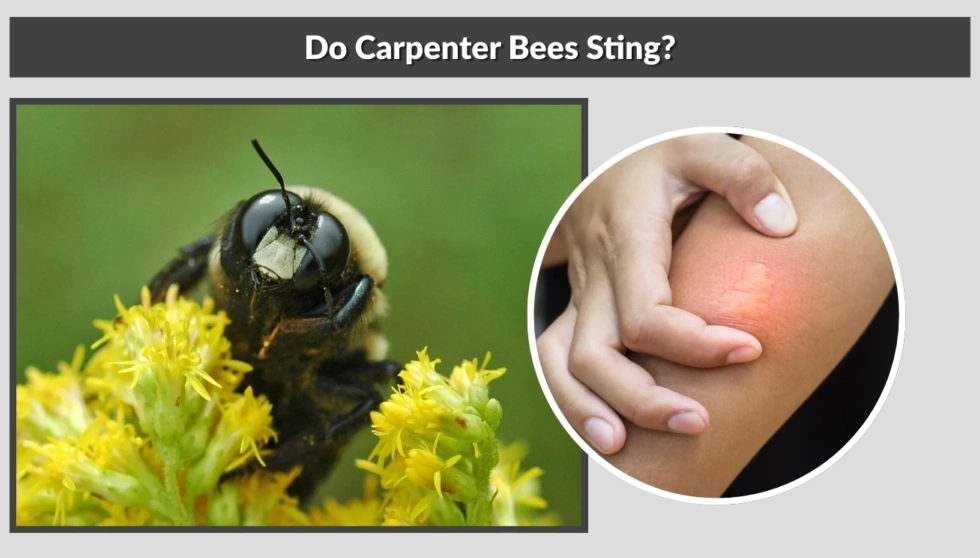
The large, bold bee that dive-bombs your head when you get near its nest? That's almost certainly a male. His entire job is to patrol the territory and scare off threats. He's all bluff. He'll buzz loudly, fly aggressively close to your face, and seem incredibly intimidating—but he physically cannot sting you. I've watched them bounce off my hat while gardening. It's startling, but harmless.
The female is the real worker. She's the one drilling the perfect, half-inch diameter holes into soft, unpainted wood to create tunnels for her eggs. She's busy. She's focused on gathering pollen and nesting. She wants nothing to do with you. A female will only sting if she is directly handled, squeezed, or trapped against her body. Simply walking past her nest entrance won't trigger an attack.
Quick ID Tip: Look at the head. Males have a distinctive white or yellow face patch. Females have a solid black head. If you see that white spot, you can relax—it's all noise, no sting.
Is That Hovering Bee About to Sting? How to Read Its Behavior
People often mistake territorial defense for an imminent attack. Let's break down what you're seeing:
- The "Hover and Stare" Patrol: A male bee hanging in the air 2-3 feet away, tracking your movement. This is a warning. He's saying "you're in my zone." He might dart closer. Action: Stay calm, move slowly away from the immediate nest area. He will not pursue you far.
- The "Land and Guard" Posture: A bee (usually male) sitting at the nest entrance, facing out. He's on sentry duty. Action: Give that spot a wide berth. No need to swat.
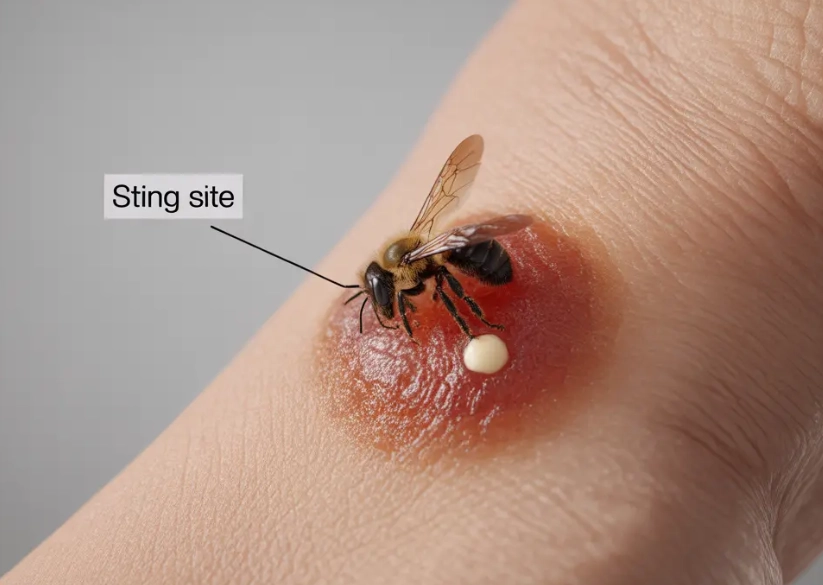
- The True Threat Posture (Female): This is rare. If you accidentally block the nest entrance or touch the female, she may adopt a defensive pose—wings spread, abdomen curled slightly. You might hear a higher-pitched buzz. Action: Freeze for a second, then back away slowly and deliberately. Sudden movements are more likely to be perceived as a threat.
I learned this the hard way years ago. I was pressure-washing my fence and didn't see the clean, round hole under a rail. I got too close, too loud, and too disruptive. One bee (a female, I realized later) came out and stung my glove. It was my fault for creating a situation where she felt her nest was being destroyed.
What a Carpenter Bee Sting Feels Like and How to Treat It
So, a female carpenter bee stung you. What now? First, don't panic. Unlike honey bees, carpenter bees are not social insects with a hive to defend. One sting is usually the end of it; she's not releasing pheromones to summon a swarm.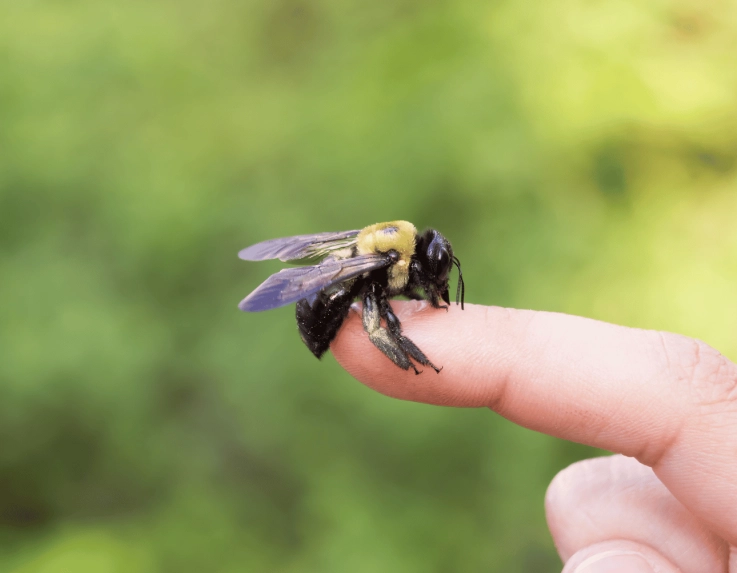
The sting itself is often described as a sharp, immediate pain, similar to a strong pinch or a mild wasp sting. It's typically less intense than a honey bee sting for most people. The venom is mild.
Here’s a simple treatment protocol I follow and recommend:
- Wash the area immediately with soap and cool water to remove any venom on the skin and prevent infection.
- Apply a cold compress (ice pack wrapped in a cloth) for 10-15 minutes to reduce swelling and numb the pain.
- Take an over-the-counter oral antihistamine (like Benadryl) if itching is significant, and use a hydrocortisone cream on the site.
- Monitor for allergic reactions. This is critical. Severe allergies to carpenter bee stings are uncommon but possible. Seek immediate medical attention if you experience difficulty breathing, swelling of the face/throat, dizziness, or a widespread rash.
Important: Carpenter bee stingers are not barbed like honey bee stingers. A female can sting repeatedly if provoked. Do not try to "brush" her off if she lands on you. Gently blow or encourage her to fly away instead.
Preventing Carpenter Bees: Protecting Your Wood Without Declaring War
Your goal shouldn't be eradication—these are important native pollinators. Your goal should be convincing them your house isn't a good hotel. It's about making your property less attractive than your neighbor's untreated shed.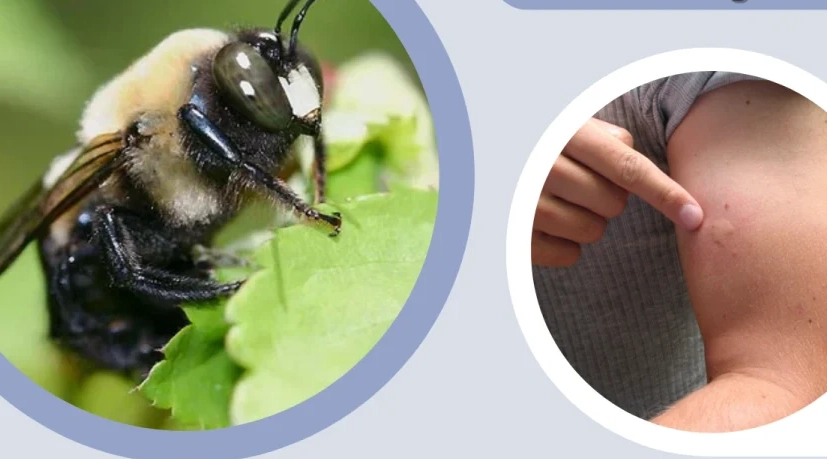
The #1 most effective tactic is paint or stain. Carpenter bees strongly prefer bare, weathered, softwood. A good coat of oil-based paint or solid stain on all exposed wood surfaces (especially soffits, fascia, decks, railings, and siding) is a powerful deterrent. I made the mistake of only staining the top of my deck boards; the undersides were a buffet. Now I coat everything.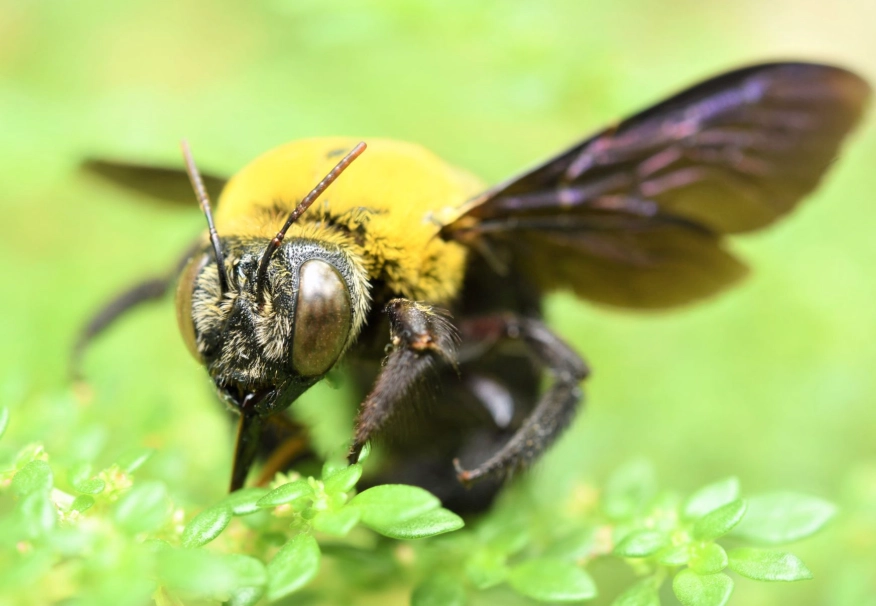
For already-active nests, wait until evening when bees are inside. Then, you have options:
| Method | How It Works | Pros & Cons |
|---|---|---|
| Insecticidal Dust (e.g., Delta Dust) | Puffed into the nest hole. Bee contacts it and dies. | Pro: Very effective for existing tunnels. Con: Chemical use; must plug hole after. |
| Plugging & Sealing | Fill hole with wood putty, caulk, or a wooden dowel after bees are gone. | Pro: Permanent physical barrier. Con: Must ensure bee is not trapped inside alive. |
| Preventative Sprays (Cypermethrin-based) | Applied to wood surfaces in early spring before nesting begins. | Pro: Creates a repellent barrier. Con: Needs reapplication; can affect other insects. |
| Alternative Nesting Sites | Hang untreated pine blocks or commercial "bee blocks" away from your house. | Pro: Eco-friendly; provides pollination. Con: May not fully divert them from your prime wood. |
My personal, less-than-perfect strategy involves a mix. I keep my trim well-painted. I use alternative blocks at the back of my garden. And for the occasional stubborn hole in a hard-to-paint spot, I use a dust and seal it. It's not 100%, but it keeps the damage manageable and lets the bees do their pollinating job elsewhere.
For authoritative information on carpenter bee biology, resources from universities like the University of Kentucky Entomology department are excellent.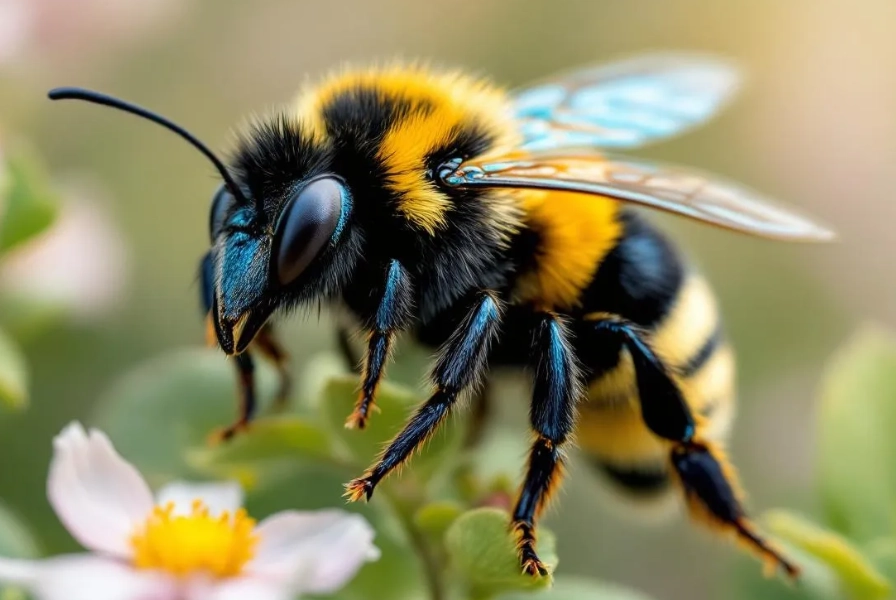
Comments